Palestinian Rights vs. Israeli Fears: When Self-determination For One Threatens the Other
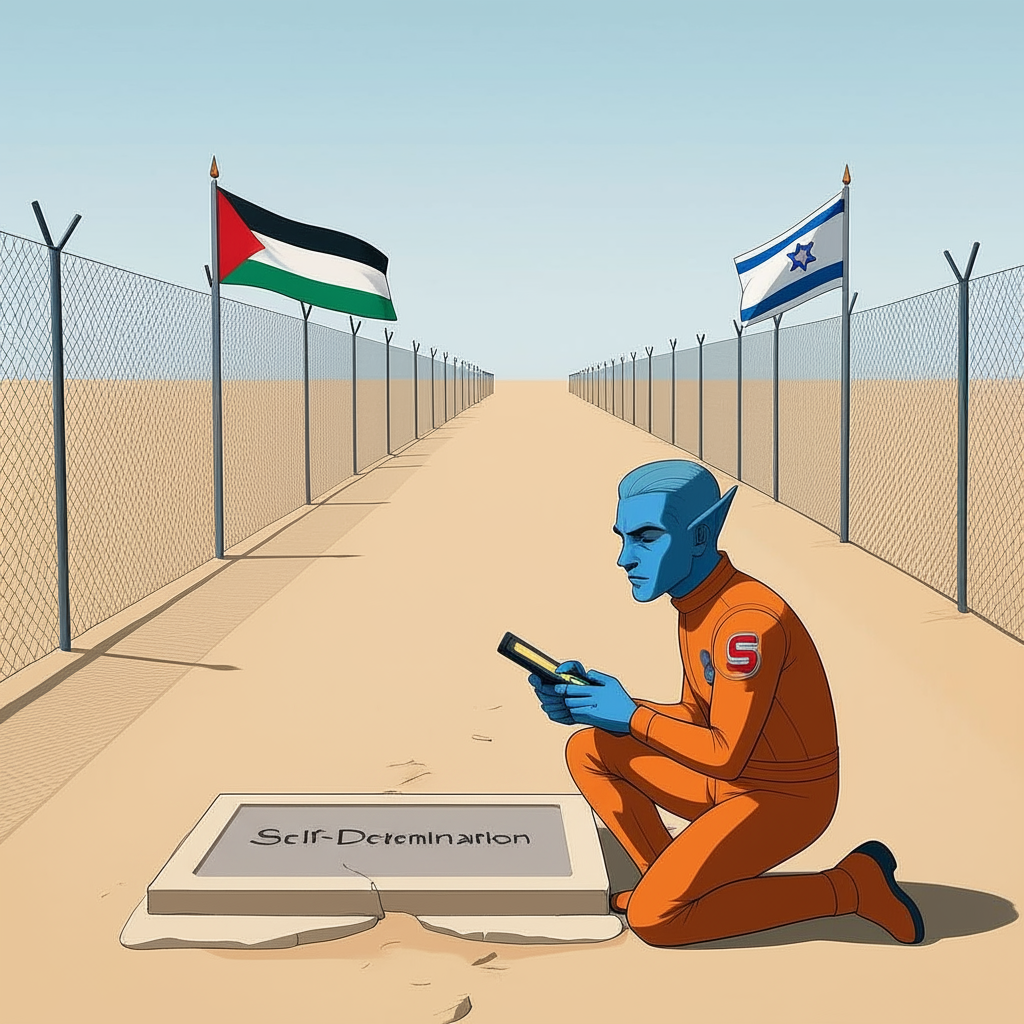
The principle of self-determination is enshrined at the heart of international law. Article I of the UN Charter states, for example, that a purpose of the United Nations is, “To develop friendly relations among nations based on respect for the principle of equal rights and self-determination of peoples.”
The most fundamental meaning of Self-determination is that no group should be ruled over by another. An obvious application is with regard to colonialism- for a far-away power to rule over a less developed territory violates that territory’s right to self-determination.
The rationale behind this right is clear. When one group is ruled by another, they are vulnerable to abuse, exploitation, and having their rights violated. Self-determination enables people to both defend their rights and live according to their own values.
The United Nations has long recognized that Palestinians are ‘a people,’ and therefore entitled to self-determination. And in this context there are clear reasons why this should be implemented. By becoming a state, Palestinians would enjoy the full political and legal rights that are unavailable to them while they are under the control of Israel.
But there is an objection sometimes raised. Some subset of Palestinians seems devoted to Israel’s destruction and would see a state in Gaza and the West Bank as merely a stepping stone towards those ends. A Palestinian state could easily be used to launch more rockets and repeat terrorist attacks such as the massacre of Oct. 7th.
The reason peoples are entitled to self-determination is because self-determination is a powerful tool to help safeguard their rights. So if a group may reasonably be expected to exploit the right of self-determination in pursuit of aggression or other crimes, should the right of self-determination should be denied?
Of course, in spite of the ugly rhetoric from some Palestinian leaders, it’s possible that a Palestinian state would in fact live in peace with Israel. We can’t know in advance what a future Palestinian State would do.
One might also suggest that these fears do not justify denying Palestinians the right of self-determination, but instead should be addressed by other means. These could include demilitarisation, security guarantees, or other arrangements that would enable Israel to defend itself from threats a potential Palestinian State might present.
It should also be pointed out that no existing state fully upholds human rights, and well-established countries commit atrocities and threaten world peace and security all the time. Even as they do so, they do not lose their right to exist. That’s the case even when they commit flagrant breaches of international law. So for that reason, the possibility that a future state of Palestine might commit acts of aggression hardly seems a reason why Palestinians should lose their right to a state in the first place.
The question becomes, how do reasonably well-founded fears that a right may be abused impact entitlement to exercise that right? What do we do when in order to help fulfill one group’s rights we may simultaneously be creating conditions that will facilitate the violation of the rights of others?
One story or question each Friday in your inbox
Glad You're On Board
You'll receive an email each Friday, one week a story, a question the next.
All of Shalzed's emails are sent via Substack.