Who Should Keep the World’s Human Rights Scorecard?
Trump Stops the U.S. from Doing It- But Now Who Will?
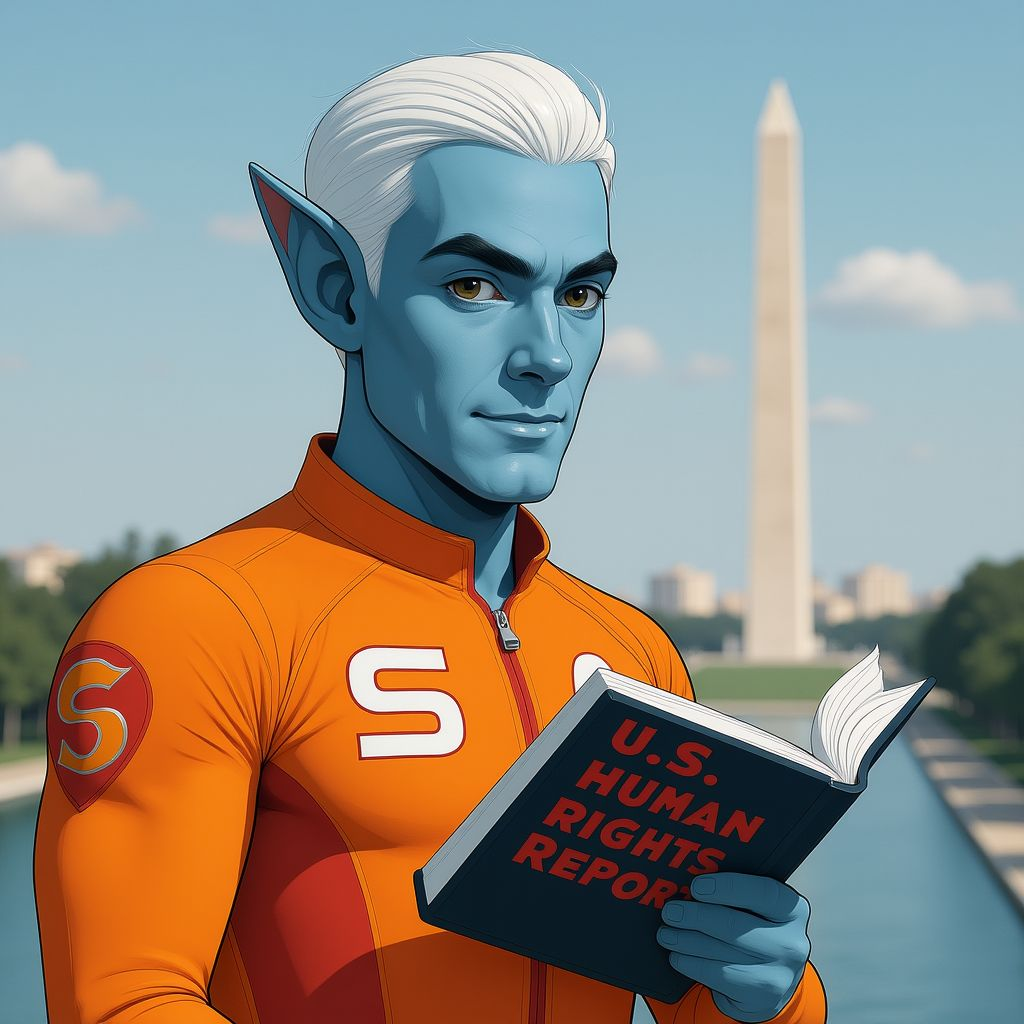
U.S. Human Rights Reports
Every year since 1977, the U.S. State department has compiled an enormous report tracking the human rights record of nearly every country in the world. These human rights reports have traditionally covered the entire gamut of internationally recognized human rights, along with workers’ rights such as collective bargaining, the prohibition of forced and child labor, and much more.
These reports are a massive undertaking, compiling information from governments, victims of alleged human rights abuses, media reports, academic studies, and non-governmental organizations. While their official purpose is to help Congress make decisions about foreign aid and security assistance, they are also relied upon for many other things. For example, information in the reports helps determine whether illegal immigrants face a credible fear of persecution if returned to their home country, and international advocacy organizations and human rights lawyers use the reports for their work as well.
Trump Scales Down
Now the Trump administration has decided to vastly scale this down. Last week the State Department released the reports for 2024, and entire sections were removed. The parts about LGBTQ rights, indigenous rights, and government corruption were eliminated. It no longer condemns governments for retaining political prisoners without due process or restrictions on free and fair elections. It also no longer highlights forcibly returning a refugee to a place where they may face torture or persecution, or governments denying freedom of movement or peaceful assembly. Even more important, the 2024 reports are much slimmer. They speak only in broad generalities, mostly giving just basic information that is already widely known.
Many human rights groups are up in arms about the change. They say it means the United States is abandoning its traditional role as human rights defender and advocate. They also fear that not only has much of the content they’re used to from the old reports been lost, but also what remains is now politicized and unreliable.
Two Reasons
While the administration has not provided a formal justification for the changes, two simple and straightforward ones come to mind. First, the U.S. government itself routinely violates many of the rights in the reports. It seems especially hypocritical, for example, for the U.S. government to criticize other countries for inhumane prison conditions while it is building ‘Allegator Alcatraz’ in Florida and subcontracting with El Salvador to house prisoners in its notorious 40,000 mega prison which has been widely accused of violating prisoners’ rights. So what entitles the U.S. to judge the rest of the world?
Second, the reports require immense time and resources to compile. Why should the United States be expected to investigate human rights abuses in all corners of the world at its own taxpayers’ expense? This slimming down is a version of Trump putting America first and letting foreigners deal with their own problems by themselves.
Who Can Take the U.S. Place?
But these reports are vital for human rights advocacy, and if the U.S. doesn’t compile them, who will? Non-governmental organizations such as Amnesty International, Freedom House, and Human Rights Watch play a role. But they lack the resources to do as thorough and comprehensive a job as the State Department, particularly in less prominent places and regarding issues that are less in the news. Also, these groups are funded via private donations and so are not accountable to the public. Their priorities and methodology may be skewed or unknown.
Intergovernmental organizations such as the United Nations might seem right for this role. The United Nations, and particularly its Human Rights Council, ought to have the resources to objectively examine human rights around the globe. But sadly, we see how biased and prone to political manipulation the U.N. can be. Do we really want a body with many countries that are among the worst human rights offenders as members to do this investigating? With the UN Human Rights Council in charge, the reports would certainly be subject to extreme political meddling and bias.
So if NGO’s don’t have the transparency or resources, the U.N. is too politicized, and it’s both hypocritical and too much of a burden to ask of the United States, where should authoritative, comprehensive human rights reporting come from? Or is the incomplete patchwork of reports non-governmental organizations decide to compile the best we can do? I’m curious to hear your thoughts.
One story or question each Friday in your inbox
Glad You're On Board
You'll receive an email each Friday, one week a story, a question the next.
All of Shalzed's emails are sent via Substack.