Can the ICC Bite the Hand That Feeds It?
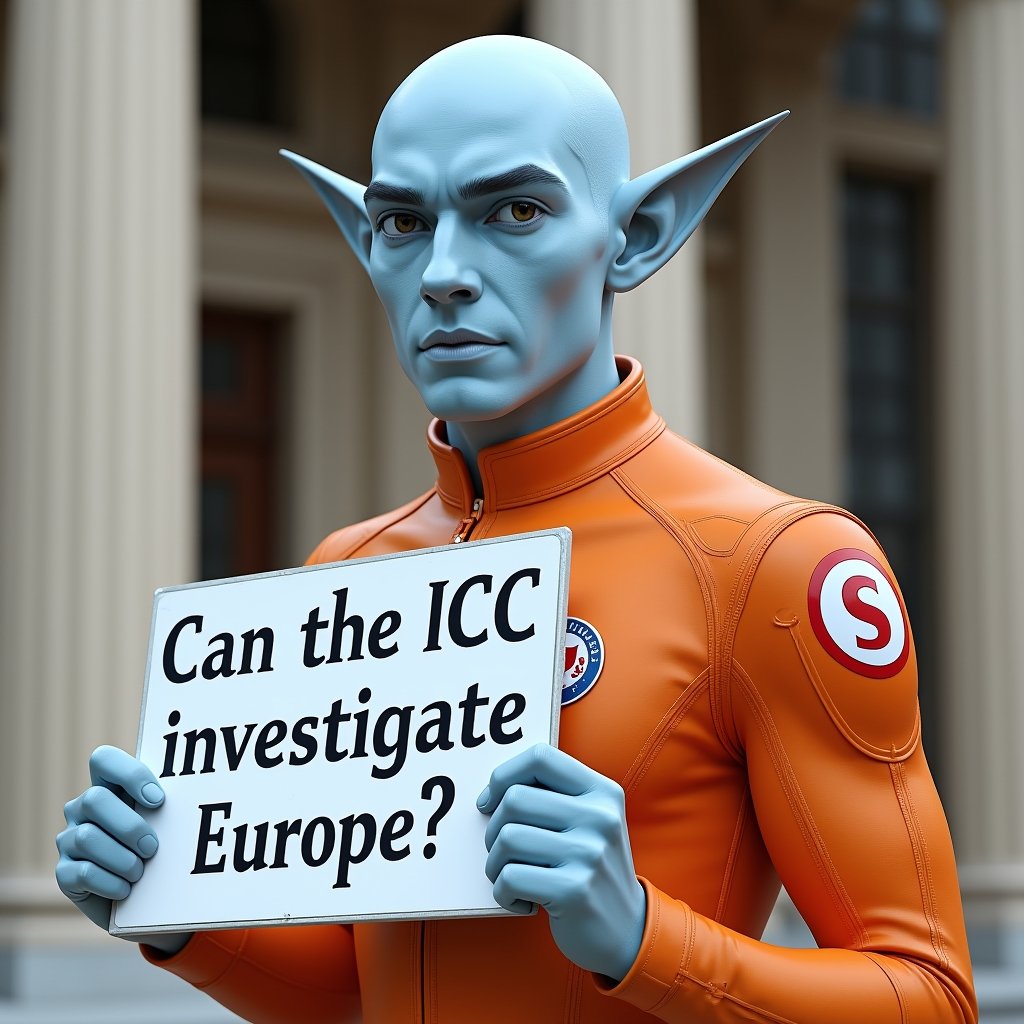
European countries played a key role in the establishment of the International Criminal Court (ICC). Every member of the European Union has become a member, and the ICC is headquartered in Europe (read more about Europe’s connection to the ICC here.) European countries are also the court’s biggest financial supporters (see here pp. 44-45).
The court began operations in 2022, and so far has opened 17 investigations, leading to charges against 49 defendants and five convictions. Most of its initial investigations involved Africa, leading to criticism that the court was focused on exporting European-style justice to that continent. But in the last few years the court has expanded geographically, indicting leaders of the Taliban in Afghanistan, Rodrigo Duterte of the Philippines, Russian leaders for conduct in the Ukraine war, and leaders of Israel and Hamas over conduct in Gaza. European governments have, with a few exceptions, been by and large supportive of the ICC’s work, and supported all these indictments as well-intended attempts to bring perpetrators of atrocity crimes to justice.
While 125 countries have joined the ICC, several prominent ones, such as the United States, Russia, and China, have not. Russia has been particularly hostile towards the ICC due to the recent indictments of its leaders, going so far as to issue threats against individual ICC judges. The United States recently issued sanctions against ICC personnel as well. But the European Union has stuck up for the court, opposing these sanctions and criticizing the United States.
Now, several prominent human rights lawyers culminated six years of investigation by filing 700 pages of evidence with the ICC, claiming that over 120 European leaders are guilty of crimes against humanity. These lawyers urge the ICC to follow up with indictments. French President Macron, Former German Chancellor Merkel, Polish Prime Minister Tusk, and other highly prominent officials are on the list.
The alleged crimes relate to Europe’s treatment of refugees fleeing Libya and attempting to reach the continent by crossing the Mediterranean. The lawyers claim that the European leaders caused the deaths of at least 25,000 of these asylum seekers, and caused 150,000 more to be tortured, raped, and enslaved.
This raises a key question. The ICC has so far never as much as investigated, let alone indicted, a leader of Western Europe. Can it be trusted to handle allegations against its biggest supporters impartially, even as it relies on European leaders for both financial support and political backing as both Russia and the United States seek to undermine it?
More broadly, what does this say about international justice? International courts, such as the ICC, are created and funded by groups of countries. So how can we expect them to be impartial and non-political? Isn’t it inevitable that they be pushed to investigate whoever the court’s members disfavor, and to refrain from investigating supporters?
But what is the alternative? No non-governmental organization has the authority or resources to create any sort of international criminal court. And would we really want an organization that is privately funded and not beholden to any voters to be in charge of international justice?
One of the lawyers who helped prepare the 700 page document was quoted as saying:
The law of the ICC was born out of European crimes but only applied so far to crimes committed outside of Europe. Our request is simple: to apply the law impartially, also upon European nationals.
Do you think the ICC is actually going to do that? No matter what the ICC prosecutor decides, will you believe that they have acted based only on considerations of truth and law, not politics? Is there a better way? I’m anxious to hear your thoughts.
One story or question each Friday in your inbox
Glad You're On Board
You'll receive an email each Friday, one week a story, a question the next.
All of Shalzed's emails are sent via Substack.