The Camera That Solved a Shooting — and Tracks You, Too
When security wins, Does Freedom Lose?
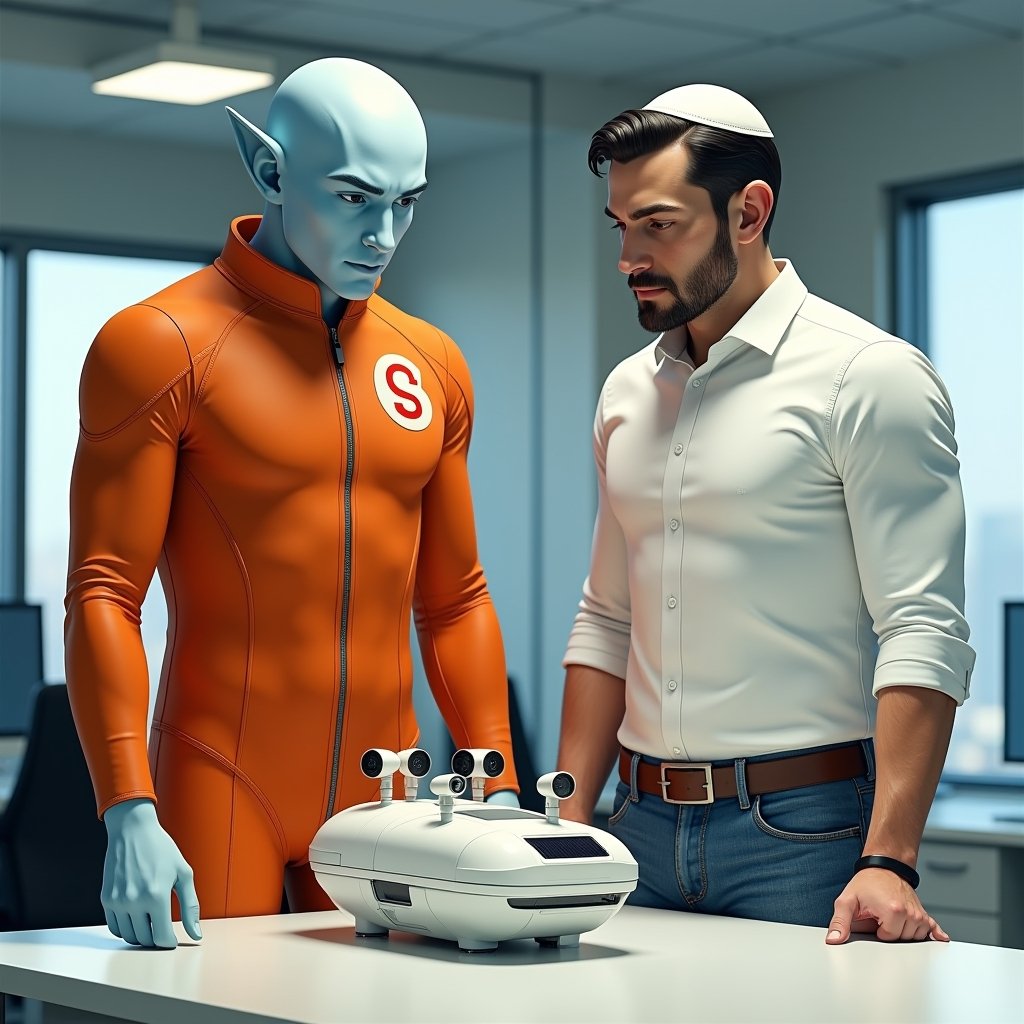
The Brown University shooter was caught using Flock cameras — AI-powered systems that track cars by unique “vehicle fingerprints,” now installed across the U.S.
These cameras aid investigations, but do they also open the door to mass surveillance and invite police abuse?
Shalzed and Simon meet Flock’s CEO to find out.
The Camera That Solved a Shooting — and Tracks You, Too
I was sitting on my couch watching the evening news, which had on a long segment explaining how the police were able to track down the person responsible for the shooting at Brown University and killing an MIT professor. Once they got a tip on the suspect’s car, they used artificial intelligence cameras from a company called Flock to locate it. Flock cameras identify every car that passes within range, not only by license plates but also by developing what they call a ‘vehicle fingerprint’ which consists of anything distinctive like a bumper sticker, dent, or aftermarket part. That’s how the police caught the suspect even though he switched the car’s license plates.
As soon as the news switched to weather Shalzed called. “I don’t understand,” he told me. “How can AI cameras be in such wide use? Aren’t they a threat to basic freedom?”
I had never really thought about that. “Well, if the cameras just record cars going by I don’t see why it’s a problem,” I told him.
“But it’s a form of mass surveillance. Humans will become afraid to exercise their freedom if they know they can easily be watched.”
All of a sudden I was back in the black tunnel I was by now getting used to, staring at little points of light. Then I was standing in the Atlanta office of Flock Safety CEO Garrett Langley. Langley looked so young he might still even be in his twenties- maybe not surprising since he only founded the company in 2017 after tinkering with surveillance cameras at his own dining room table. His desk was clear, and he was staring intently at his laptop computer. Someone on the computer screen yelled, ‘Help, help!’ and Langley smiled.
“Watching a movie?” I asked.
Langley looked up and noticed us for the first time. “Who are you?” he asked.
“Don’t the cameras you sell threaten people’s basic rights and freedom?” Shalzed asked.
Langley waved his hand. “What we do is make communities safer,” he said. “Just look at how we helped catch the Rhode Island shooter last week.”
“But what if these cameras are abused?” Shalzed asked. “They could be used to track anyone who attended a political demonstration.”
Langley shrugged. “Our cameras are just a tool,” he said. “If law enforcement misuses it, hold them accountable, not me. Now I want to know how you got into my office.”
“Check your surveillance cameras,” Shalzed said. I laughed. Shalzed refused to tell me anything about how his transport system works, but I was pretty sure we wouldn’t show up. “Police could even use your cameras to track women who travel out of state for an abortion.”
The phone on Langley’s desk buzzed. “Matt Feury is here,” a female voice said.
“Send him in,” Langley said. Then he looked at Shalzed. “I most certainly intend to check surveillance, and if you broke any trespassing laws you’ll be hearing from the authorities.”
“What stops individual police officers from using Flock cameras for stalking?” Shalzed asked. “Like the police chief in Kansas who used your cameras to keep tabs on his ex-girlfriend? Or the police chief in Georgia who used the cameras to stalk women? Or the one in Wisconsin who went so far as to have a Flock camera installed right outside of his house to monitor his wife during their divorce?”
Langley shook his head. “Like I told you, blame the officers and hold them accountable, not us.”
I have to admit I was kind of shocked. “Do you mean that any policeman anywhere can just type the description of a car or a license plate into the computer and find out exactly where that car has been driven?” I asked. I imagined how easy it would be, then, for police to spy on their wives or girlfriends, or on anyone else they had an interest in.
“They’re not supposed to,” Langley replied. “And anytime a law enforcement officer does a search they are required to enter the reason.”
“But they can enter anything,” Shalzed said. “They can easily just type ‘investigation’ in the reason field, or something generic like that. How many officers need to misuse it before that misuse becomes an expected feature??”
Matt Feury entered the office, carrying a large round device with an array of what looked like microphones sticking up on top.
“I was just reviewing the test results,” Langley said to him.
“Who are these people?” Feury asked.
“What is that?” Shalzed asked, pointing to the device in Feury’s hands.
Feury glanced at Langley. “It’s no secret,” Langley said, nodding permission for Feury to respond.
“It’s called Raven. The old models can detect sounds like gunshots and immediately notify police. Now we’ve upgraded it to detect sounds of human distress also.”
“Human distress?” I asked, not sure what he meant.
“Like someone yelling ‘Help, Help!’ Feury explained. “Our new Ravens can sort through background noise to detect someone yelling for help and immediately notify police.”
“While recording everything the raven is able to pick up?” Shalzed asked.
“And if you can identify cars by dents or bumper stickers, I imagine you can also identify people by their faces,” I added. The thought of these devices recording so much information began to make me feel uneasy.
“The alternative is letting mass shooters go free. Now do I need to call security?” Langley asked, gesturing towards his office door.
“Don’t bother,” Shalzed replied. “Just one more question. How can we be sure you’ll only sell these devices to law enforcement?”
“We don’t,” Langley replied. “We sell to homeowner associations, private businesses, neighborhood associations, and property managers too.”
“You mean they all have access to location data on cars?” I asked.
“What if a private business owner buys a camera and then uses it for stalking or harassment?” Shalzed asked. “Who can hold them accountable for that?”
“We have systems in place to prevent that,” Langley said. “Now Matt and I have a meeting. There’s the door.”
“I don’t think your privacy protections are strong enough,” I told him.
“Good to hear your thoughts. Should I call security?” Langley asked, gesturing for Feury to take a seat.
All of a sudden I was back in the dark tunnel. I waved my arms a bit, wondering if I could touch anything. Was I inside some sort of machine, or maybe somehow flying? I felt like by now Shalzed owed it to me to at least explain a little bit about how this works. Then I was back in my apartment. The news was over and now a late-night comedy show had come on.
Shalzed was with me, standing next to the kitchen table. I realized this was the first time he had ever been in my apartment.
“What’s that?” Shalzed asked, pointing worriedly at the mezuzah on my bedroom door.
“It contains a scroll with passages from the Torah,” I told him, not sure why he looked upset. “It’s called a mezuzah. According to the Jewish tradition, we put them on doors.”
Shalzed relazed. “I thought it might be a listening device,” he said.
I laughed. “No listening devices in my apartment, at least as far as I know.” Then I wondered about my Ring doorbell and Amazon Alexa. Could Flock access their data and combine it with their traffic cameras too?
“Do humans realize how much of their freedom they are potentially sacrificing in order to fight crime?” Shalzed asked. “Because fighting crime is hardly the only use these cameras can be put to.”
I used the remote to turn off the TV. “Now I have a serious question,” I said. “I think I deserve at least a little information about how you transport the two of us anywhere in the world.”
“I have to be going,” Shalzed said.
“Please. Just a little information would be nice. I mean, is it dangerous?” I asked him.
Shalzed opened the door. “Another mezuzah,” he said, pointing to the silver one I had on the entrance.
“I promise whatever you tell me will stay a secret,” I said. “But since you’re transporting me with you, I think I have the right to know.”
“But maybe your apartment really does contain some secret listening device,” he said. “With AI everywhere, it’s best to be careful.” He slipped out and closed the door.
I sighed, then pushed live view on my phone and watched Shalzed leave via my Ring doorbell. I wondered where he stayed when I wasn’t with him. Maybe if I had access to Flock’s surveillance systems, I would be able to know.
Subscribe to Receive Shalzed's adventures in your inbox
One story or question each Friday in your inbox
Glad You're On Board
You'll receive an email each Friday, one week a story, a question the next.
All of Shalzed's emails are sent via Substack.