The Fifth Question: Modern Slavery
If God hadn't redeemed us, would we still be slaves? What about the Universal Declaration of Human Rights?
The Fifth Question: Modern Slavery
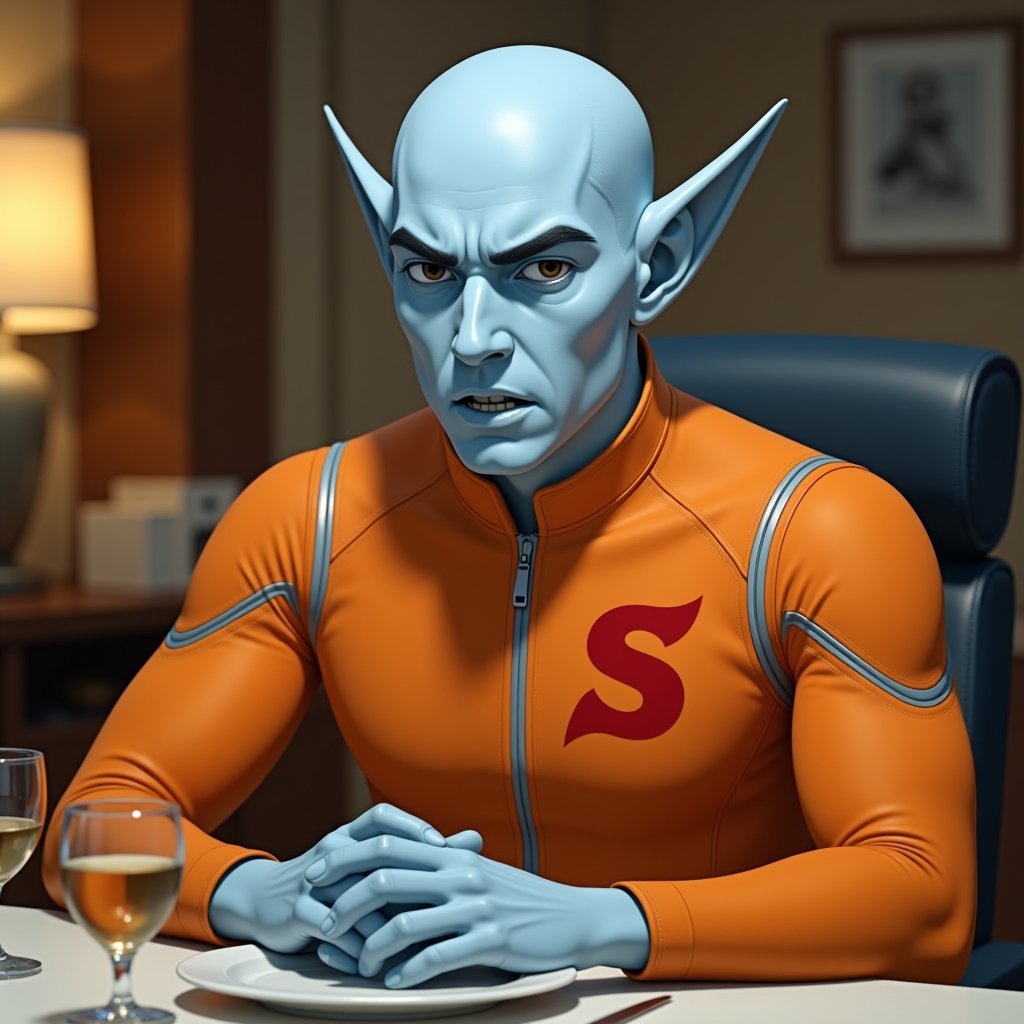
I was nervous my family wouldn’t accept Shalzed. We always invited guests to our seders, but being from another planet made Shalzed a little bit- different. He had come to Earth to learn about human rights, but to my surprise when I told him about Passover he wanted to join us too.
My dad greeted him with a handshake. When my mother said hello, she mumbled loud enough for me and my dad to hear that Shalzed was nice, but maybe next year I’d come with a girlfriend. I wished she would stop pushing.
Shalzed was enchanted by the charsoset. My mom gave him a spoonful to try, and I think he would have eaten the whole thing if she hadn’t stopped. After all, we needed it for the seder. Then everyone sat down around the table and we were ready to begin.
My dad said kiddush. Then he got mad at Maya, my niece, because she had her phone out. Maya ran off to the bathroom, and we had to wait for my sister to convince her to come back for Mah Nishanta. Then my dad read from the Haggadah in his deep, serious voice that we were once slaves to Pharoah in Egypt, and if God had not redeemed us then we would be slaves there still.
“Not true,” Shalzed said all of a sudden. “Slavery was done away with by the Universal Declaration of Human Rights.”
My dad stared. He always encouraged us to ask questions at the seder, but usually we didn’t.
My sister waved her hand. “Everyone working at McDonalds or making minimum wage is a slave,” she said. She had a ‘Fight for $15’ bumper sticker on her car.
“That’s not true,” my dad said. “Slavery isn’t just being underpaid, it’s when someone can’t leave.”
“And if you leave your job you can’t afford rent? Or groceries?” my sister asked.
“When do we eat?” Maya interrupted. I had a feeling she was again sneaking peeks at her phone.
“If you’re hungry there are carrot and celery sticks on the table,” my mom said sternly. I remember her telling me that when I was little, too. I gave Maya a sympathetic smile.
Nathan, my sister’s husband, was usually very quiet. But every once in a while when there was something he felt strongly about he spoke up. “The minerals in every single cell phone battery were most likely dug up by kids Maya’s age who aren’t ever even allowed to leave the mine,” he said.
“And don’t think it’s only Africa,” my sister added. “A lot of farms in the U.S. use illegal workers who can’t leave their jobs because their boss has their passport, or if they quit they’d face deportation.”
My cousin Nora made a snort. The only Jewish thing she did was come to a seder, and I’m pretty sure it was only because my mom insisted. “I think if we would continue reading those little booklets you have, I forget what you call them, everything would be clear. Doesn’t it explain all this later on?”
Nathan and my sister looked back at their haggadahs, expecting my dad to ask one of them to read the next page. But Shalzed spoke. “I don’t understand. How can there still be slavery of any form on Earth, after all countries agreed to ban it?”
“There are new kinds of slavery,” my sister said.
My father, noticing Nora’s scowl and that Maya had her head down, looking at something under the table, said that we needed to continue. He asked Nora to read the wise son, and then Maya complained that she was always the wicked one.
Shalzed seemed deep in thought. “Just because something is in a declaration, that doesn’t mean it’s true in the real world,” I whispered.
He looked at me. “Why not?” he whispered back.
My dad glared because Maya was finally reading what the wicked son says, and we were supposed to be paying attention. I looked back into my Haggadah, and Shalzed followed along in his. But I wondered- even if we wouldn’t still be slaves held in chains building storehouses for Pharoah, could we have become slaves of some other type?
Questions for Discussion:
- Can coercion, hard working conditions, and low wages combine to create conditions that are similar to slavery?
- Nathan says minerals in cell phone batteries are produced by slave labor. Are we responsible for checking to make sure products we buy are not made this way?