The Ten Plagues: The Hardest Question at the Seder
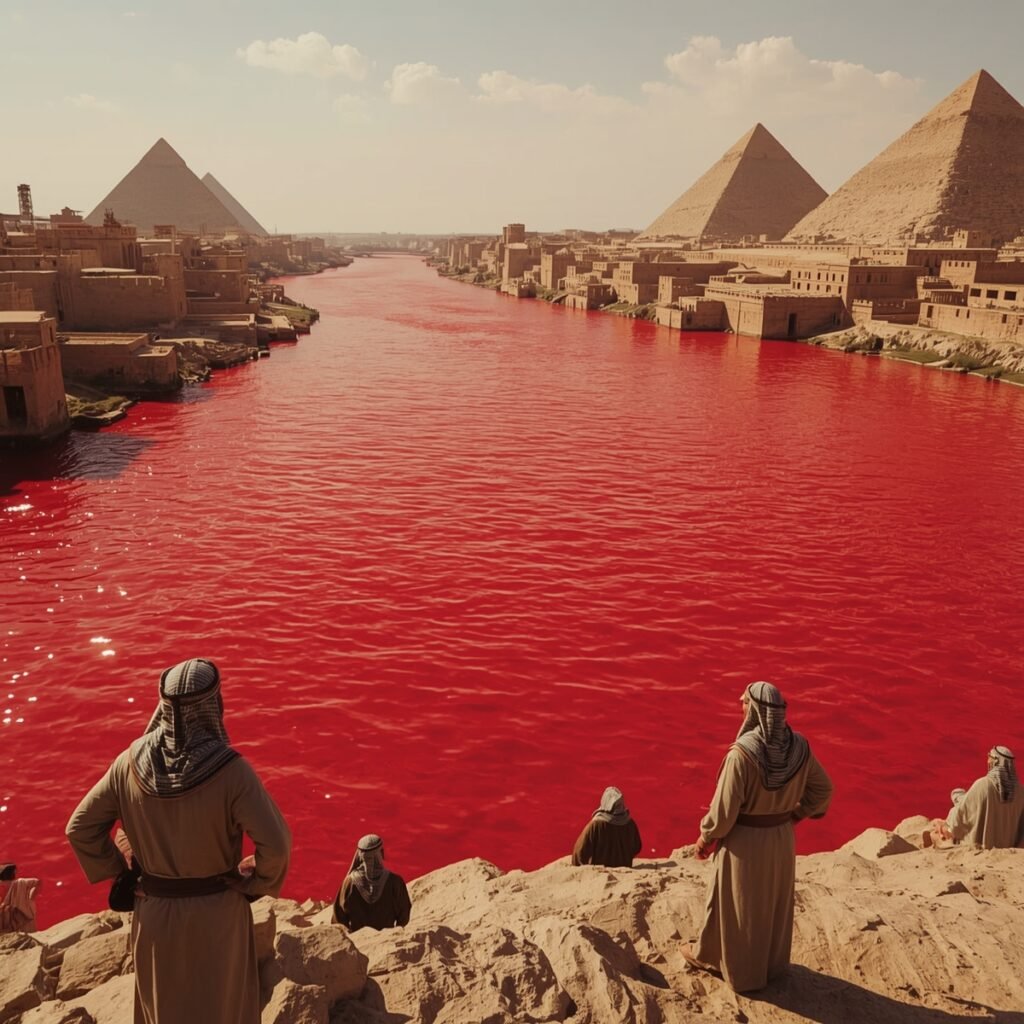
The Ten Plagues: The Hardest Question at the Seder
My dad liked reciting the ten plagues, and this year he bought what he called a ‘plague bag’ for our seder. It had a plastic frog he pretended to hop around the table, ping pong balls to toss in the air for boils, and cheap plastic sunglasses he made everyone put on when he mentioned the plague of darkness. For the death of the firstborn, he gave everyone a frowny face sticker for their Haggadah as he spilled a drop of wine from his glass.
“All the first born of Egypt were killed?” Shalzed exclaimed. “But they couldn’t all be guilty.”
Nora made a heavy sigh. “Isn’t this something we could talk about over dinner?” she asked.
There were some things my mom had strong opinions about, and when she did she always spoke up. “Of course they were,” she said. “All the Egyptians were happy having slaves do their hard labor.”
That bothered me, because that logic could apply to just about anyone. “What about a lot of the stuff we buy at Walmart?” I asked. “Lots of products could have been manufactured with slave labor. Does that make us liable for using slave labor too?”
“It’s what they say about Gaza,” my sister added. “Since so many of them celebrated on Oct. 7th, everyone is responsible.”
I was afraid my dad would get upset. My sister was very left wing, but after Oct. 7th he had become much more staunch about defending Israel. One time they had an argument that ended with my sister running out the door in tears, and I didn’t want that to happen again. “God did the plagues, so there must be a reason why they were right,” I said. “But it’s certainly not an example for us to follow.“ I assumed both my dad and my sister would agree with that.
My mother stood up abruptly. “I’m going to start heating up the soup,” she said as she went into the kitchen. She was probably angry my sister made a remark she knew would aggravate our dad.
My brother-in-law Nathan shared with my sister’s views, but I think he also realized that tonight at the seder it would be better to keep quiet. “We can at least all agree it’s immoral to punish innocent children,” he said. “Whether in Gaza or ancient Egypt.”
“So you think you’re more moral than God?” my father asked.
I knew my dad liked Nathan, so his sharp tone surprised me. Nora let out a heavy sigh and my niece Maya went into the living room.
“It’s not a question of more moral,” I said, trying to calm my dad. “But you have to agree that punishing the entire Egyptian population because Pharoah wouldn’t let the people go doesn’t seem right.”
Nathan smiled and said that’s exactly what he meant.
“I think Maya would appreciate if we could have dinner before midnight,” Nora remarked, even though it was only nine o’clock.
“Where is Maya?” my dad asked, finally noticing that she was gone.
“She’s probably tired, let her be,” my mom called from the kitchen.
My dad hesitated, deciding whether to try to get Maya to come back or not. Finally, he turned to Nathan. “Listen, the Jewish people had been enslaved by Pharoah. They were fighting for their freedom. Did you expect them to follow every rule about morality if that would mean they have to remain slaves?”
My sister clicked her tongue. “So if people are fighting what they see as occupation, does that make anything they do alright?” she asked.
My dad slapped his hand on the table. “That’s outrageous,” he said. “How can you say something like that?”
My mom came back from the kitchen with her hands on her hips. “Could we please continue with the seder?” she said.
“That would be a very good idea,” Nora added.
“I agree,” I said. “Why don’t we sing Dayenu?” My dad also liked that song.
“Maya,” my dad called. “Would you come back here please and join us for dayenu?”
There was a tense silence as everyone waited to see if Maya would appear. Shalzed turned to me. “If the plagues aren’t an example, why do you continue reading the story?” he asked.
“And who are we to judge?” my dad replied.
“It’s in the Bible, and Jewish people have been reading it for thousands of years,” I told Shalzed.
Maya came into the room silently, and slowly went to her chair. “What page is dayenu?” Nathan asked.
“Earth has changed,” Shalzed said to me quietly. “Bringing plagues against an entire population would be unthinkable today, wouldn’t it?”
“Dayenu,” my dad said firmly. He began, and instead of answering Shalzed I joined him singing.
Questions for Discussion:
- Plagues against the entire Egyptian population, rather than just Pharoah and his guards, would seem to violate the laws of warfare established today. How does that affect how we relate to the Passover story?
- Some try to justify the sweeping nature of the plagues by claiming all Egyptians were guilty because they approved of enslaving the Israelites and benefited from Israelite labor. Others say that since the Israelites were fighting the great injustice of national enslavement it’s understandable if they harmed innocent people in their quest for freedom. What do you think?