Shalzed Asks Why 500 People Are Being Tried At Once
El Salvador's President is widely condemned, but popular
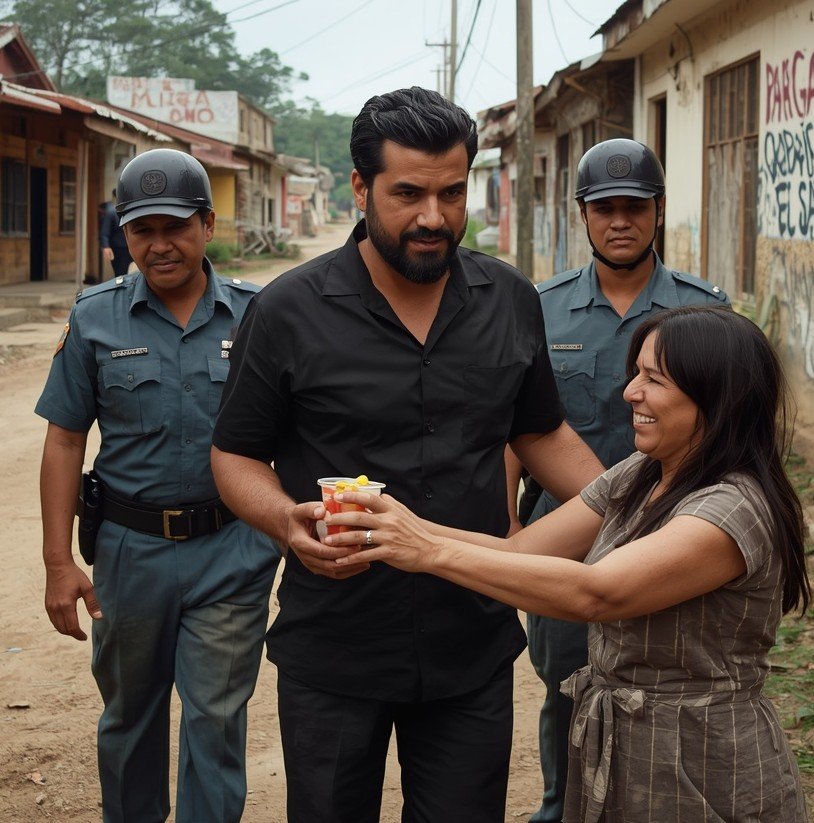
To villagers, Bukele is a hero. They hand him food in the street, and say their children can finally play outside again.
To human rights groups, Bukele is a villain, making laws that deny accused criminals of their most basic rights.
Shalzed investigates.
Shalzed Asks Why 500 People Are Being Tried At Once
I was at the kitchen table grading homework from my Mishnah class when Shalzed called. “How can 500 people be put on trial all at once?” he demanded.
I had never heard of anything like that. “Are you sure?” I asked.
“I just read about it. El Salvador is holding a trial for 500 gang members all at once.”
The paper I was grading seemed to tilt back and forth, and the writing became blurry. “Maybe in El Salvador. They’ve been battling gangs there for a while.”
“But battling gangs doesn’t mean it’s okay to throw innocent people in jail,” Shalzed said.
My apartment stretched, and I felt myself moving away. I was in blackness for a moment, then standing with Shalzed on what seemed like the main street of a dusty village. A middle aged man with a black beard, black moustache, and wearing a black button up shirt was next to us, accompanied by several guards. An elderly woman who seemed to have come from a nearby house was handing him a plastic cup filled with cut pineapple.
“Muchos gracias, Presidente Bukele,” the woman said. She gestured to some children kicking a soccer ball down the street. “Only because of you. Before, no one could go out at night.” She pointed to a nearby grocery store, and I noticed that a water cistern on its roof was riddled with holes from bullets. Bukele looked at the pineapple, then glanced at one of the guards who obediently took it.
“Mass trials mean you are probably going to punish a lot of people who are innocent,” Shalzed said.
Bukele turned to us, and the guards took small steps in our direction. I got the feeling Bukele was out in the village to try to interact with the people, so they had been instructed not to act unless there was any sign of actual danger. “So what should we do, let all the gang members back onto the streets and go back to having shootouts each night?” he asked.
Shalzed waved his arm. “How about just giving each suspected gang member a fair trial. What’s so hard about that?”
“Are you from one of those stupid human rights groups?” Bukele asked. “The ones that come here now demanding rights for gang members but didn’t say a thing when they were terrorizing the country with guns and drugs?”
“No,” I interjected. “He just has some questions, he’s from far away.”
“El Presidente is our hero,” the woman said to Shalzed. She took a half step closer to Bukele, like she was trying to protect him.
“Of course gang members should be arrested,” Shalzed said. “But each one is still entitled to a fair trial.” I felt myself nodding.
Bukele waved his arm. “There are tens of thousands of them,” he said. “A trial for everyone would take decades.”
“So you need more judges,” I said. I mean, that seemed like common sense.
“Money is to build schools, to build playgrounds,” the woman said. “We don’t want El Presidente to spend our money on people who tried to destroy our country.”
“Not only that,” Bukele added. “It’s almost impossible to prove which gang member committed which crime. There’s never enough evidence. So we made it that if you’re a gang member, you’re responsible. That’s enough.”
“So some kid who just joined a gang because it seemed cool gets the same punishment as actual murderers?” I asked. To me that seemed more than a little outrageous.
“Everyone knew what the gangs were up to,” the woman said. “Whoever doesn’t want to be punished shouldn’t have joined.”
“Gangs used to use teenagers to do their dirty work because they knew that teens didn’t face much from the legal system,” Bukele said. “No more loopholes. Have you forgotten that a few years ago, in just one night, 62 innocent people were murdered?”
“But if you toss thousands of innocent people in prison, is that really any better?” Shalzed asked.
Another woman approached, carrying a piece of some sort of cake or pastry in a napkin. “Para usted, el presidente,” she said, handing it to Bukele.
Bukele dutifully took it from her, then turned to Shalzed. “People who never lived under gangs love lecturing us. Why don’t you ask some of these mothers what’s more important- the rights of accused gang members or the right of children to play freely in the street?”
Shalzed blinked three times, like he always does when he’s surprised. “But I thought the right to a fair trial can’t be violated under any circumstances.”
“And what about people’s right to go out at night without fear of being struck by bullets,” Bukele said. “For years no one could go out because of the gangs.”
As both of the women nodded, they seemed to move farther away. A man approached, cell phone in hand, apparently wanting a selfie with Bukele. And then I was in darkness, and back in my apartment, standing next to my kitchen table. I put a hand on the wall to steady myself as I felt my stomach lurch.
I took a glass of water, then sat down at the table. My students’ Mishnah papers were in front of me. According to Torah law, two witnesses are required to convict someone of a crime. I had asked the kids about a passage which said that a Jewish court had to quiz each witness about the exact time and place of a crime, and any discrepancy meant that the testimony was disqualified and the accused went free.
I had always wondered whether that actually work in the real world, or would people start violating the law left and right when they realized how easy it was to get away with it? Would the rabbis insist on upholding laws that let criminals go free even if their own children couldn’t go out of the house because of gangs and gunfights?
Subscribe to Receive Shalzed's adventures in your inbox
One story or question each Friday in your inbox
Glad You're On Board
You'll receive an email each Friday, one week a story, a question the next.
All of Shalzed's emails are sent via Substack.
Sources:
For coverage of Bukele’s mass trials from the Associated Press, click here.
For criticism of Bukele’s policies from Human Rights Watch, click here.