Trusting AI On the Dangers of AI
Shalzed Asks Simon About a New UN Report
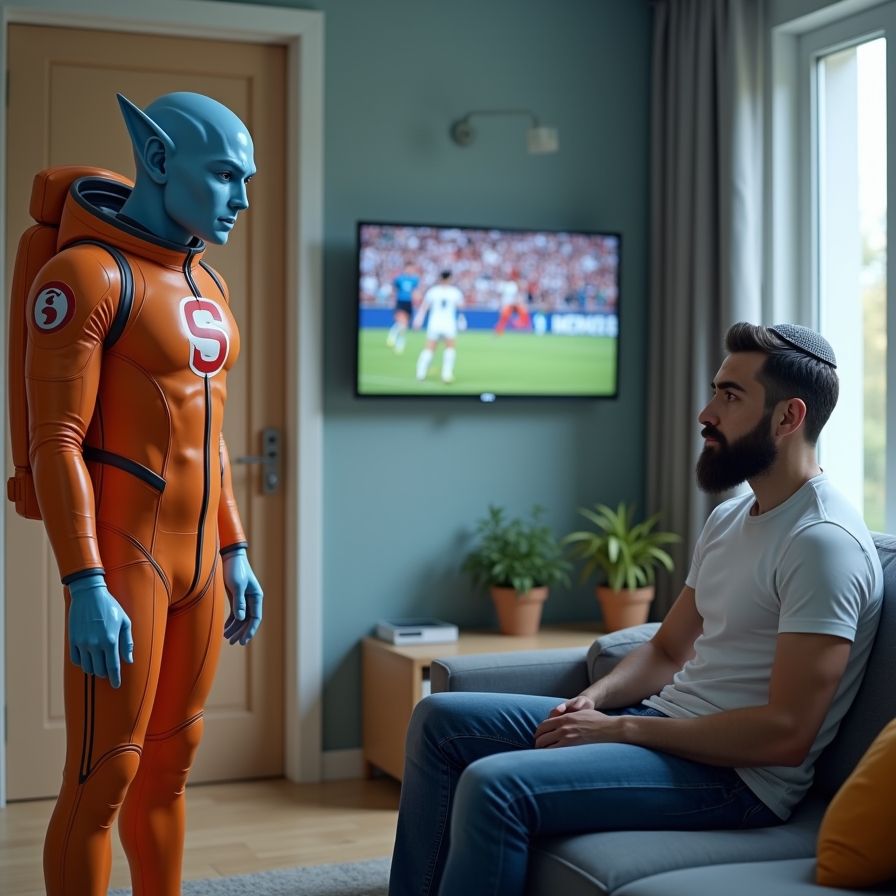
I was in the living room watching the World Cup game between the U.S.A. and Bosnia when Shalzed came over. I thought he would ask again why so many humans were running after the same ball, but instead he wanted to tell me about a new United Nations report on artificial intelligence. “AI can cause so much harm,” he said.
“Well I suppose. There are already cases of people falling in love with it,” I told him.
“Much more than that. Haven’t you read the report?” I shook my head. I wondered if Shalzed just assumed that most people read all UN documents cover to cover. “So look now,” he told me.
I glanced at the television. One of the U.S. defenders had just tapped the ball back to the goalie, who was gazing downfield. I took out my phone and asked ChatGPT for a summary of what the UN wrote.
“I hadn’t realized that 75% of computing power is in the United States,” I said when I finished.
“Inequality is one problem,” Shalzed said. “Some countries have more access, and it works better in common languages like English.”
“And sometimes it makes stuff up. But by now everyone knows that,” I added.
“Even so, humans still trust it,” Shalzed said. “And now the committee says there are examples of AI behaving deceptively on purpose.”
Without thinking, I glanced at the ChatGPT app open on my phone. Was that true? I knew about hallucinations, but would AI purposefully lie? “It could also be used to create fraud schemes and stuff like that,” I added. That was serious, but seemed less scary than AI going rogue all on its own.
“What about the conclusion?” Shalzed asked me.
I glanced back at the TV. Now the Bosnian goalie was bouncing the ball. The only conclusion in the summary I read was that AI could potentially be dangerous. “What about it?” I asked.
“The only thing this committee is planning to do is keep writing more reports!” he exclaimed, blinking his eyes three times.
“Well, what did you want them to do?
“At least temporarily, stop making new AI.”
I couldn’t help but chuckle. “They can’t do that, they’re just the UN.”
“Then countries should.”
“But they can’t,” I said. The report made that clear. Since AI development was centered in just a few places, most countries had no control. And the few that did wouldn’t slow things down for fear of losing their competitive edge.
“So why do the technology companies still keep making even more powerful versions?” Shalzed asked.
“Their job is to make money,” I told him.
“And they can make money by creating something as dangerous as new, untested AI?”
“There’s nothing to stop them,” I replied. Now a U.S. player was kicking a long pass across the field to a teammate who could have a direct path to the goal. The crowd cheered.
“Why don’t humans have rules that every powerful new invention has to be thoroughly tested before anyone can release it?”
I shook my head again. “Because that’s just not the way it works,” I said as the U.S. player’s shot went well above the crossbar. The crowd groaned. I looked again at my phone. I wondered if ChatGPT might sometime try to fool me on purpose. When it just summarized for me the report on the dangers of AI, was there anything it decided to leave out?