Human Rights Watch Says Cluster Munitions Aren’t Worth the Risk. But Whose Risk Is It?
By Shlomo Levin
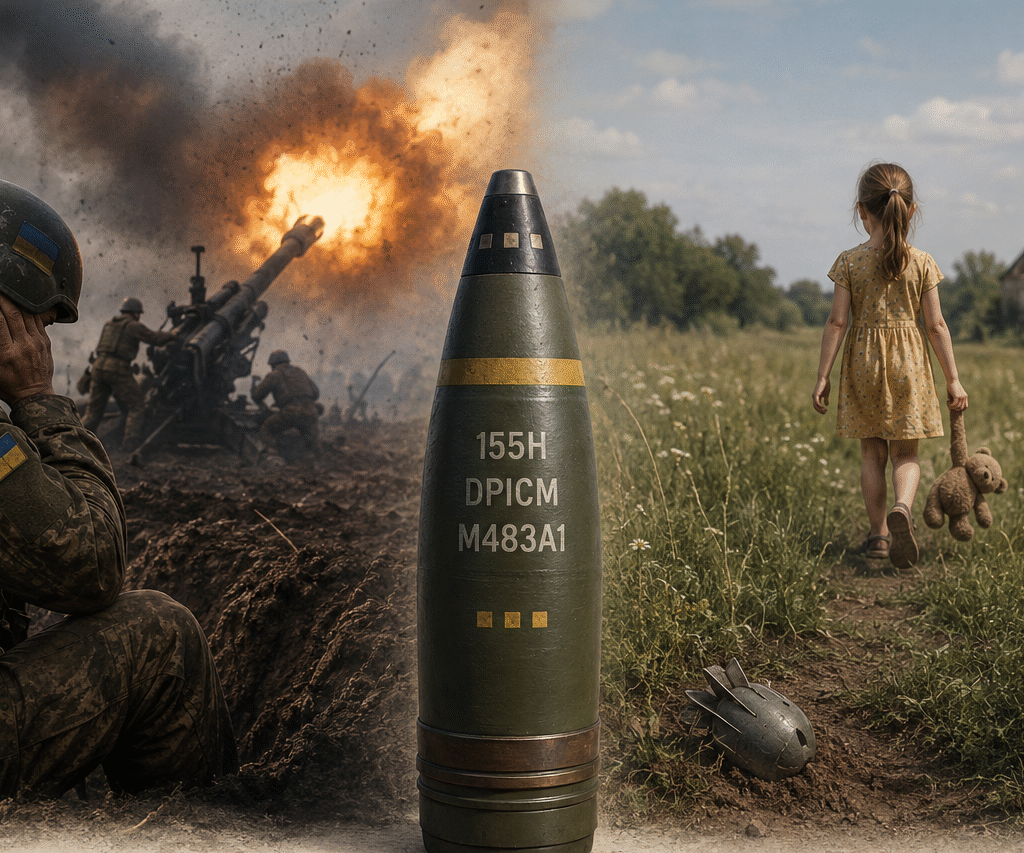
What’s worse: the chance that future children may be killed or injured by unexploded bomblets, or the risk of more soldiers dying while failing to prevent further enemy occupation that may cause great harm?
To Human Rights Watch, the answer seems obvious. They say that no military necessity justifies the use of cluster munitions, since some may fail to detonate and later harm civilians. But should their opinion carry much weight? Or should those who will actually suffer the consequences be given a greater voice?
Ukraine is seeking to acquire approximately $256 million worth of U.S. cluster munitions currently stockpiled in Turkey. The Trump administration supports this transfer, and on August 6 provided the legally necessary notification to Congress. Human Rights Watch subsequently issued a statement urging Congress to block the transfer.
Cluster munitions spread over a large, imprecise area and can linger for decades after a conflict, posing a continuing danger to civilians. Human Rights Watch therefore claims cluster munitions are inherently indiscriminate and should never be used.
But both the U.S. and Ukrainian governments are already well aware of these dangers. In 2023, in order to convince the United States to provide it directly with cluster munitions, Ukraine offered the United States written assurances that it would not use them in urban areas, and would keep a detailed record of where they are used to aid later demining. And Ukraine also pointed out that Russia is already using vast numbers of cluster munitions all across its territory, meaning that demining will eventually be required whether Ukraine also uses cluster munitions or not.
Military analysts have pointed out the benefits the weapons currently in Turkey will provide to Ukraine. They are particularly well suited to attacking Russian trenches, infantry, and vehicles. Also, since one cluster shell can cover a much larger area than a regular warhead, many fewer must be fired to achieve the same effect. This means Ukrainian artillery units employing cluster munitions are less exposed to Russian counterattack, reducing casualties and the loss of valuable weapons.
This certainly does not mean that using cluster munitions is the right decision. As Human Rights Watch points out, even though this may be most militarily expedient today, unexploded bomblets could easily continue maiming children decades into the future. Who is looking out for future generations’ rights?
And Human Rights Watch may also fear that Ukraine using these weapons will undermine the growing global consensus against cluster munitions and other weapons that may remain hazardous long after a conflict. But why should Ukraine be asked to bear greater immediate military risk just because outsiders believe it is for the greater good?
The great difficulty with human rights is that they often involve competing values and sometimes also limited information. That means there will likely be multiple legitimate views, all from people who share a commitment to the same universal values.
Human rights advocates need a heavy dose of humility. What they think is too risky or indiscriminate may seem very different to someone under fire or preparing to flee advancing enemy lines. Safe distance from a conflict can help provide valuable objectivity. But insulation from consequences and danger can also create a new bias, making it easier to ask others to accept immediate danger in pursuit of long-term humanitarian goals.
Jake Sullivan, National Security Adviser under Biden, made this point to justify the original transfer of cluster munitions to Ukraine:
Ukraine would not be using these munitions in some foreign land. This is their country they’re defending. These are their citizens they’re protecting. And they are motivated to use any weapons system they have in a way that minimizes risk to those citizens.
Human Rights Watch may be right about the dangers of cluster munitions. But those whose lives are on the line may be best suited to deciding what risks are worth taking. Human rights organizations can help clarify difficult moral choices, but they have no special authority to make them.