
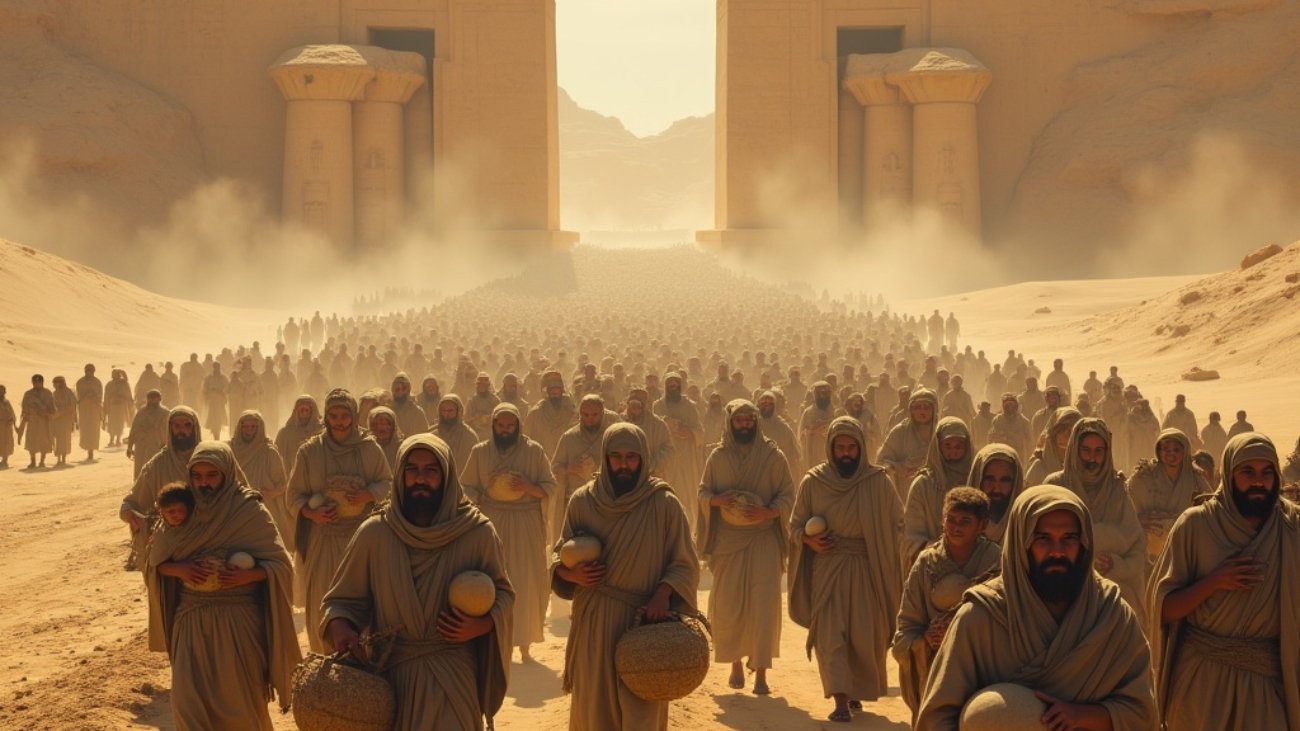
refugees coming to egypt

Refugees: If Everyone Came To Egypt

Refugees: If Everyone Came to Egypt. . .

Could Pharoah have told Jacob and Family No?
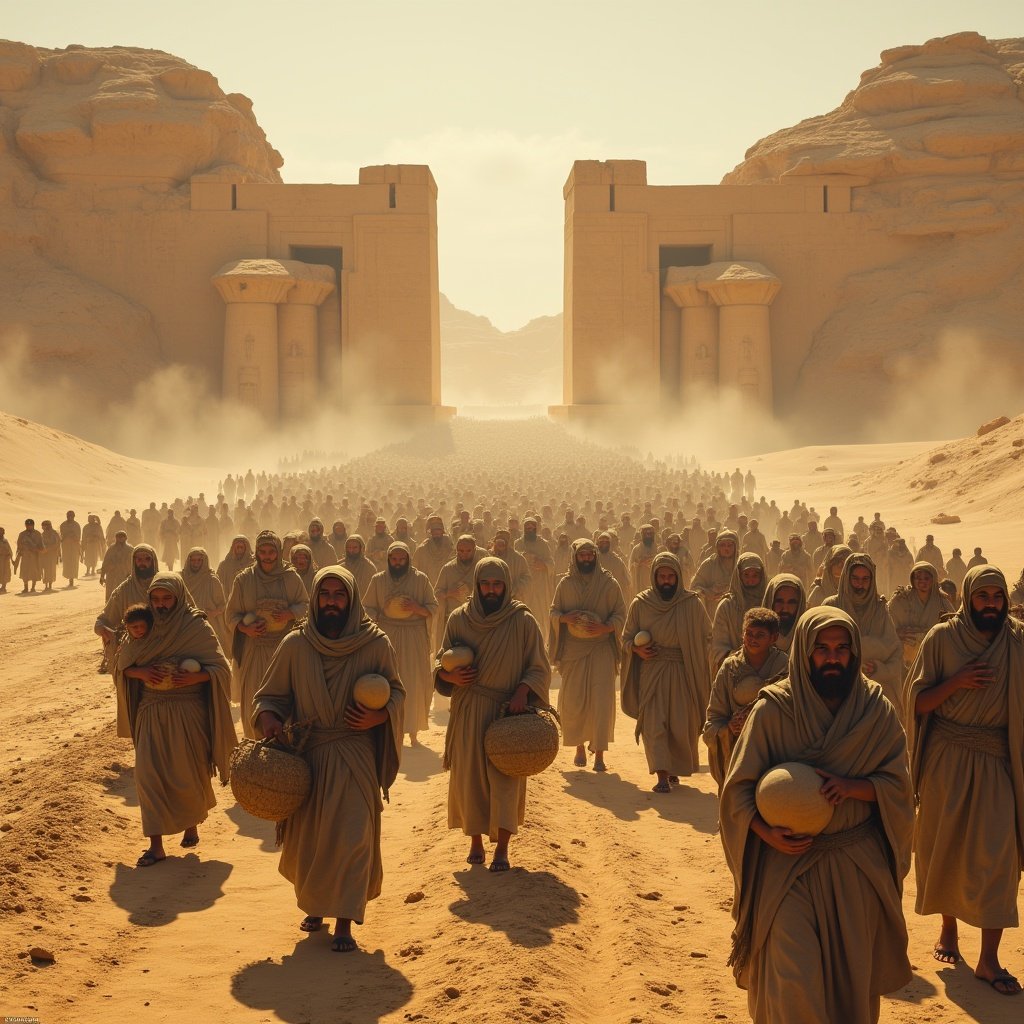
Refugees fleeing famine in Canaan heading to Egypt

Refugees: If Everyone Came to Egypt. . .

My dad had everyone take a turn reading a section of the Haggadah. Maya read her part very well, including all the big words. My mom and dad said how impressed they were. But I think she realized that they were just having trouble coming to grips with the fact she was already in 7th grade and growing up fast.

When it was Shalzed’s turn I showed him the place. My mom gave him a funny look, like she wasn’t sure if this was really appropriate, but didn’t say anything. Then Shalzed began in his super deep voice, “Jacob went down to Egypt, forced to go according to the Torah. He only went to dwell in Egypt temporarily.”

Nora made a snort. “That’s just like what the people from Haiti and Venezuela and all the rest of them say,” she interrupted. “They say they’re just coming to the U.S. for a short time, but then they figure out ways to stay longer.”

My sister looked upset. “You can’t possibly blame them for trying to escape what they’ve been through,” she said, glaring at Nora.

My mom and sister always clashed with Nora about politics, and I was afraid they’d start to argue now at the seder, too. “Well, it’s lucky Pharoah let Jacob stay,” I said, trying to be light-hearted. “Otherwise we wouldn’t all be here right now.”

Shalzed wrinkled his forehead. “Pharaoh was obviously required to allow Jacob and his family to resettle. If he refused, they might have died.”

“Is that the way it works wherever you’re from?” Nora asked in a nasty voice. I put a hand on Shalzed’s shoulder because I didn’t want him to get upset either. “What about the Egyptians? If everyone from everywhere came to settle in Egypt, they might have run out of food for themselves, too, and that way everyone would perish.”

“I don’t think any Americans will die if we let in refugees,” I told Nora.

“I’m only saying that countries need to be realistic about what they can handle,” she said back.

Maya made a loud sigh, and my sister chimed in. “It would be really great if we could have just one seder without arguing,” she said

“It’s not arguing,” my dad said. He often came to Nora’s defense in a way that aggravated my mother. “Nora is simply pointing out that accepting refugees can be a significant burden, that’s all.”

My mother seemed annoyed, and she was the kind of person who, when something bothered her, wasn’t going to be quiet. “I think one of the messages of the holiday is that we were once refugees ourselves, and so we should be kind to others in that same situation,” she said.

My brother-in-law Nathan cleared his throat. “It’s getting late,” he said.

I point to the place in Shalzed’s Haggadah. “Why don’t you keep reading?” I told him.

He frowned as everyone stared expectantly at him, then finished the section quoting the verse in which Jacob pleads to be able to stay in Egypt because of the famine.

“You know that the people coming into the U.S. aren’t actually fleeing famine,” Nora said as soon as he was finished. “They’re just poor and think in the U.S. they can have a better standard of living.”

“Some of them are also victims of gangs or domestic violence,” my sister said. “Or they are fleeing from a hurricane or some other natural disaster.”

“I think we need to get to dinner before eleven o’clock,” Nathan said.

“It is currently just 8:30 post meridium in your local time zone,” Shalzed replied.

Nathan chuckled. “I think that was just his way of saying some of us are hungry,” I said.

“Maybe where you’re from, you all just eat in the middle of the night,” Nora said to Shalzed.

“There are various patterns of eating and sleeping due to the great variety in the number of hours of light,” Shalzed began.

“Maybe you can tell us later,” my father interrupted.

I was actually quite curious, because Shalzed almost never revealed anything about himself, his home, or  his technology. Nora could be very persistent, so I wondered if maybe we both asked him questions when we got to the meal, we’d be able to make him talk.

Questions for Discussion:

  1. Does the Torah story of Jacob in Egypt suggest that nations have an obligation to accept refugees? Or is it okay for a country to put its own economic needs or preserving its own culture first?
  2. Does it matter whether refugees are fleeing a natural disaster, such as Jacob and the famine in Canaan, or a man-made problem such as violence, war, or persecution? Should Jewish history affect how we answer that question?

Shalzed at the Seder Table

The Fifth Question: Modern Slavery

The Fifth Question: Modern Slavery

If God hadn't redeemed us, would we still be slaves? What about the Universal Declaration of Human Rights?

Shalzed at the seder table

The Fifth Question: Modern Slavery

I was nervous my family wouldn’t accept Shalzed. We always invited guests to our seders, but being from another planet made Shalzed a little bit- different. He had come to Earth to learn about human rights, but to my surprise when I told him about Passover he wanted to join us too.

My dad greeted him with a handshake. When my mother said hello, she mumbled loud enough for me and my dad to hear that Shalzed was nice, but maybe next year I’d come with a girlfriend. I wished she would stop pushing.

Shalzed was enchanted by the charsoset. My mom gave him a spoonful to try, and I think he would have eaten the whole thing if she hadn’t stopped. After all, we needed it for the seder. Then everyone sat down around the table and we were ready to begin.

My dad said kiddush. Then he got mad at Maya, my niece, because she had her phone out. Maya ran off to the bathroom, and we had to wait for my sister to convince her to come back for Mah Nishanta. Then my dad read from the Haggadah in his deep, serious voice that we were once slaves to Pharoah in Egypt, and if God had not redeemed us then we would be slaves there still.

“Not true,” Shalzed said all of a sudden. “Slavery was done away with by the Universal Declaration of Human Rights.”

My dad stared. He always encouraged us to ask questions at the seder, but usually we didn’t.

My sister waved her hand. “Everyone working at McDonalds or making minimum wage is a slave,” she said. She had a ‘Fight for $15’ bumper sticker on her car.

“That’s not true,” my dad said. “Slavery isn’t just being underpaid, it’s when someone can’t leave.”

“And if you leave your job you can’t afford rent? Or groceries?” my sister asked.  

“When do we eat?” Maya interrupted. I had a feeling she was again sneaking peeks at her phone.

“If you’re hungry there are carrot and celery sticks on the table,” my mom said sternly. I remember her telling me that when I was little, too. I gave Maya a sympathetic smile.

Nathan, my sister’s husband, was usually very quiet. But every once in a while when there was something he felt strongly about he spoke up. “The minerals in every single cell phone battery were most likely dug up by kids Maya’s age who aren’t ever even allowed to leave the mine,” he said.

“And don’t think it’s only Africa,” my sister added. “A lot of farms in the U.S. use illegal workers who can’t leave their jobs because their boss has their passport, or if they quit they’d face deportation.”

My cousin Nora made a snort. The only Jewish thing she did was come to a seder, and I’m pretty sure it was only because my mom insisted. “I think if we would continue reading those little booklets you have, I forget what you call them, everything would be clear. Doesn’t it explain all this later on?”

Nathan and my sister looked back at their haggadahs, expecting my dad to ask one of them to read the next page. But Shalzed spoke. “I don’t understand. How can there still be slavery of any form on Earth, after all countries agreed to ban it?”

“There are new kinds of slavery,” my sister said.

My father, noticing Nora’s scowl and that Maya had her head down, looking at something under the table, said that we needed to continue. He asked Nora to read the wise son, and then Maya complained that she was always the wicked one.

Shalzed seemed deep in thought. “Just because something is in a declaration, that doesn’t mean it’s true in the real world,” I whispered.

He looked at me. “Why not?” he whispered back.

My dad glared because Maya was finally reading what the wicked son says, and we were supposed to be paying attention. I looked back into my Haggadah, and Shalzed followed along in his. But I wondered- even if we wouldn’t still be slaves held in chains building storehouses for Pharoah, could we have become slaves of some other type?

Questions for Discussion:

  1. Can coercion, hard working conditions, and low wages combine to create conditions that are similar to slavery?
  2. Nathan says minerals in cell phone batteries are produced by slave labor. Are we responsible for checking to make sure products we buy are not made this way?