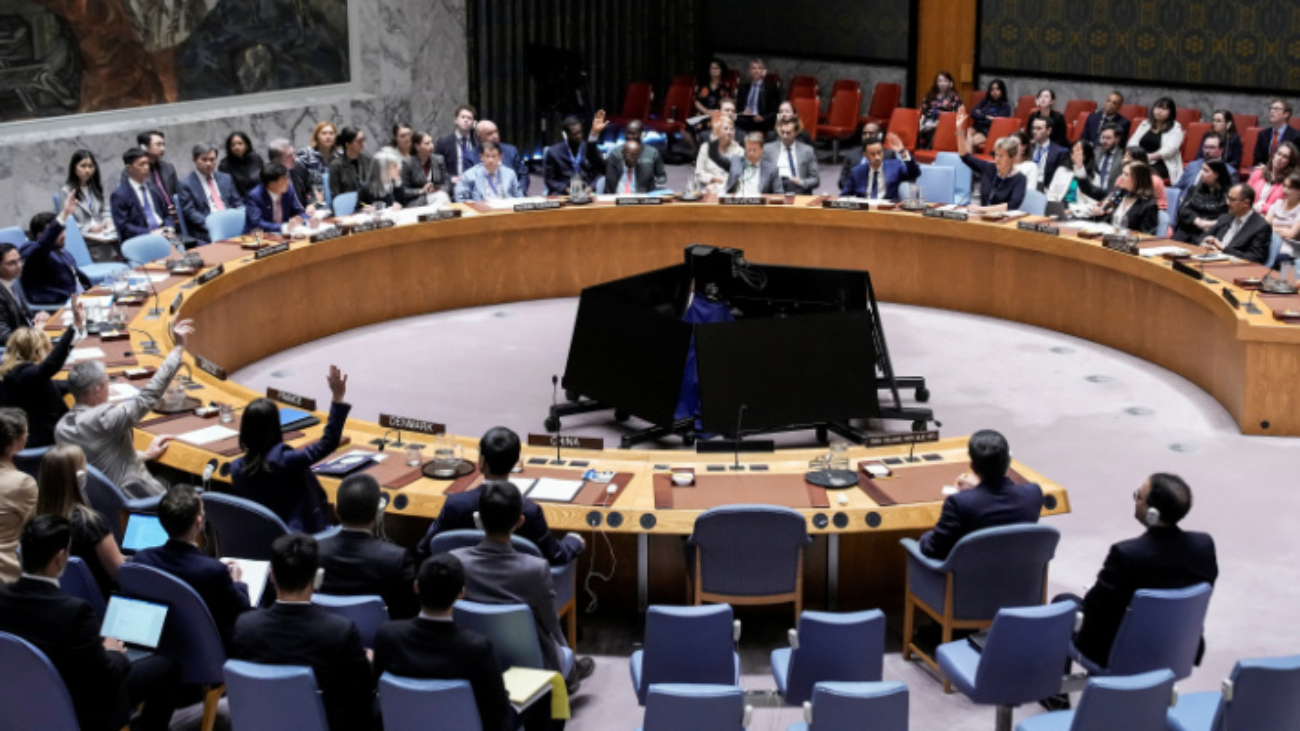
Shalzed test in progress

Can a State Fund What it Doesn’t Believe?

Can a State Fund What it Doesn’t Believe?

Shalzed thought tests were about knowledge—until three women weren’t allowed to take one

After years of wrangling, the Israeli Supreme Court ordered the Chief Rabbinate to allow women to take its rabbinical exams. When three women recently came to become the first ever to take Israel’s rabbinic tests, they were sent to a separate building and made to wait for hours. Shalzed tries to understand why a test about knowledge isn’t only about knowledge.

Can a State Fund What it Doesn’t Believe?

              I was almost done grading my 8th graders’ homework when Shalzed called. “Why aren’t women being allowed to take tests?” he asked. “Doesn’t Israel believe in equal rights?”

              “What are you talking about?” I asked.

              “Three women are being denied the right to take rabbinical exams administered by the Chief Rabbinate.”

              “Well that’s different,” I told him. My kitchen table seemed to wobble. “According to Jewish tradition, only men can be rabbis.”

              “But I thought tests are just about knowledge,” Shalzed said. My kitchen seemed slanted, then farther away. There was darkness for a moment, and then I was standing next to Shalzed in a plain room set up with small tables and folding chairs. Three women, dressed in skirts, with their heads covered, were sitting together sharing a bag of chips. They looked anxiously at us.

              “So do you have the exams?” one of them asked.

              I looked around, feeling uncertain. “Of course not,” I said. “We don’t have anything at all.”

              “We’ve been waiting more than four hours,” she said.

              “There was already an appeal to the Supreme Court. The Rabbanut either has to give us the exam, or cancel the men’s exam as well,” the woman next to her added.

              “I don’t understand. . .” Shalzed began.

              This, I could explain. “In Israel, the Rabbanut controls marriage, divorce, kosher certificates, and stuff like that. And since they’re Orthodox, they won’t allow women to be rabbis.”

              “But we aren’t asking to be called rabbis,” the three women said together. They were so in unison that I almost laughed.

Shalzed looked perplexed. “Well, if you pass the rabbinic exams, why wouldn’t you be rabbis?”

“For women to become rabbis would be too much of a change,” one of them said.

              Shalzed blinked three times. “But if you agree that you’re not allowed to be rabbis, then why do you want to take the rabbinic exams?” he asked.

The woman who hadn’t spoken yet let out a loud sigh. “We want to be able to fill roles that halacha does allow,” she said.

              “There are other jobs we can do. Like kosher supervising. And the tests should finally put us on an equal pay scale with rabbis if we teach in religious school,” the first one added. “And the Rabbanut has to let us, since they are funded by the Israeli government.”

              Another woman, also modestly dressed, entered the room. “The tests are on their way,” she said. The three women clapped. “We just have to wait for the other proctors to arrive.”

              “So you want to pass the rabbinical exam in order to get jobs usually done by rabbis but not be called rabbis yourselves?” Shalzed asked again.

              “Just for now,” the proctor said before any of the three could respond.

              “Not true,” one of the three said back.

              The proctor turned to Shalzed and me. “That’s the problem,” she said. “Today, they say they don’t want to become rabbis. But eventually, they will.”

              “And what’s wrong with that?” Shalzed asked. “Aren’t men and women equal?”

              “Because the Chief Rabbinate is Orthodox, and it’s up to them,” one of the women said.

              “Even though the Chief Rabbinate is funded by the government,” I added.

              A man, clearly a rabbi, came into the room. He was wearing a black suit jacket, black hat, had tzitzit hanging out, and was carrying a large briefcase. He was accompanied by another woman proctor. “We’re ready to begin,” he said. The three women quickly sat at separate tables and put away their snacks.

              “Who are you?” the rabbi asked, noticing us.

              “Can you explain why the government of Israel funds the Chief Rabbinate if the Rabbinate doesn’t believe in equality for men and women?” Shalzed asked.

              He gave Shalzed a funny look. “That’s clear- Israel is a Jewish state, so it needs the Rabbinate to maintain the state’s Jewish character.”

              “But if the Rabbinate doesn’t treat men and women equally, it’s not compatible with the state,” I added.

              The rabbi shrugged. “Even though it’s government funding, the Chief Rabbis are completely independent,” he said.

              “So they want the state’s funding, but to still be free to go against its values,” I said.

              The three women looked impatiently at the rabbi’s briefcase. “We need to get started,” one of the proctors said.

              The rabbi looked at me. “Obviously, the Rabbinate are the only ones who can decide matters of Jewish law. The government has no business in that.”

              The room started to feel more distant.

              “Good luck on the test,” I said to the women as I felt myself drawn into the familiar blackness, then a moment later I was back in my apartment. I put a hand on the kitchen table to steady myself. I looked around, but Shalzed wasn’t with me.

              I took a moment to catch my breath, then noticed the pile of homework still on the table. Shira Tavor’s paper was the only one left. I was happy that my day school taught boys and girls together. But that was our decision, not because of the government. If the government tried to change our religious curriculum, I wondered what we’d do.  

Subscribe to Receive Shalzed's adventures in your inbox

Sources:

An account of how the women were initially not allowed to take the test, then given the tests four hours later from Times of Israel.

News coverage from the Jerusalem Post.

war statue of jesus

A statue gets 75,000 reactions. The war gets less

A statue gets 75,000 reactions. The war gets less.

A single photo goes viral. Shalzed wants to know why this one—and not the others.

A photo of a statue of Jesus being smashed gets hundreds of thousands of reactions.
Photos of actual people suffering don’t get anywhere near the attention.

This week, Shalzed asks why.

A statue gets 75,000 reactions. The war gets less. Shalzed Wants to Know Why.

After school, I met Shalzed at Stop’n Shop. He was fascinated by what we ate, and wanted me to explain what some of our processed food products were.

“But why do you put acids that decay teeth inside your water?” he asked when he saw a display of coca-cola at the entrance.

“Some people like it,” I told him. “And if so many people drink it, it can’t be that bad.” I was trying to decide whether I should mention that in the summer I sometimes got coke slurpees at 7-eleven when my phone buzzed. I swiped and it was a notice asking me to check out a viral post on Facebook.

“Can I see it?” Shalzed asked, looking over my shoulder.

I held up my phone. It was a picture of an Israeli soldier destroying a statue of Jesus somewhere in Southern Lebanon, under the headline, ‘This is what impunity looks like.’ It already had 75k reactions and thousands of comments.

“I don’t understand- it’s a statue,” Shalzed said.

At school, people had already been talking about this in the teachers’ lounge. “Yeah, but it’s a statue of Jesus. Christians are offended.”

“Has any photo showing people killed in the war gotten anywhere close to that many likes?” he asked.

“Excuse me, you’re blocking the aisle,” a familiar voice said from behind me. I turned to see Rabbi Meyer pretending to reach for a the two liter bottle.

“Have you met Shalzed?” I asked. “He’s from. . . far away.”

“Yes, we met once outside the library,” the rabbi said. That’s right- Rabbi Meyer had passed by when we were discussing the story of Purim.

“We were just talking about why the photo of the IDF soldier destroying the Jesus sculpture is so viral on Facebook,” I said, hoping to change the topic. I didn’t want the rabbi to ask any more questions about how I knew Shalzed.

“So horrific,” Rabbi Meyer replied. “It’s a desecration of God’s name. I already signed a statement of Jewish leaders offering an apology.”

“You must issue statements every day, then,” Shalzed said.

Rabbi Meyer frowned. “What do you mean?”

“Countless people have been killed over the last three years. Tens of thousands are homeless. . .”

Rabbi Meyer interrupted. “The photo of the soldier destroying the statue is uniquely harmful to Israel’s image. It could ruin relations with the Christian community, just when we need allies the most.”

“So the main problem is image?” Shalzed asked.

“I think he means that this photo is being exploited by people who want to stir up hatred of Israel,” I interjected.

“That’s right,” Rabbi Meyer said. He stepped past Shalzed to grab a bottle of cherry coke and put it in his cart. “Antisemitism is at an all time high. Just last week, synagogues were attacked in London. The last thing we need right now is a picture like that.” He began pushing his cart towards the produce.

“See you in shul,” I said as he went over to the grapes. I turned to Shalzed. “It gets so much attention because Jesus is a religious symbol,” I said.

“And symbols are what matter most?” he asked.

“No,” I said quickly, but I couldn’t think of a good explanation. Do you want me to show you the cereal aisle? There are probably more than a hundred different kinds.”

Shalzed ignored me. “Has any other picture of the war gotten as much attention?”

I told him I didn’t know, then paused to consider. “It’s just that in this picture it’s obvious that the soldier is doing something wrong,”

Shalzed shook his head. “Humans only know what’s wrong when the victim is a statue?”

I clicked my tongue. “It’s not that,” I told him. “It’s just that most of the time the facts are complicated. Here, it’s simple- why destroy a religious object?”

A mom came into the store, pushing a young child in a dinosaur shaped shopping cart. The kid pointed eagerly at the coca cola, and the mom sighed. She reached around Shalzed, hardly noticing he was there, and picked up a two liter bottle. “I’m putting this in the cart now, but I’ll only buy it if you behave nice the whole time we’re in the store,” she said. The child clapped, then they also headed towards produce.

“Children drink this too?” Shalzed asked. He wrinkled his nose and began blinking.

“Sometimes,” I told him. “Let me show you the cereal.”

Shalzed blinked again, and I could tell his mind was still on the photo. “Is the soldier going to be punished?” he asked.

I checked my phone. “Not only was the soldier who smashed the statue already put in prison, but Israel replaced the statue with another one as well,” I told him.

“It’s been less than two days,” he exclaimed.

I smiled. “That’s right,” I said. “Every army has soldiers who break the rules, but Israel at least tries to do what’s right.”

“What about other accusations against Israeli soldiers? Why don’t those investigations move as quickly?”

“I don’t know. Why don’t we go to the cereal aisle so we’ll be out of the entrance.”

An obese man in a mobility scooter stopped right next to me and said excuse me in an annoyed tone. I stepped aside and he reached over to grab a bottle of diet coke. “Lots of people coming through here,” he mumbled at us as he continued into the store. “Maybe run for Congress if you just want to stand around.”

Shalzed turned away from me, and fixed his gaze on the coke display. “So only when there’s a photo that makes things clear, you act immediately. Otherwise, you just argue,” he said.

“Not exactly,” I told him.

Shalzed pointed to a big picture of smiling people holding cans of coca-cola on the wall above the bottles. “Maybe simple images like that are why humans drink acid water without asking questions,” he said.

He paused. “And don’t act unless the situation is obvious.”

Subscribe to Receive Shalzed's adventures in your inbox

Sources:

For more information on this incident from Times of Israel, click here.

For details on the international statement of apology from the Jerusalem Post, click here.

For information on the soldiers’ punishment from Reuters, click here.

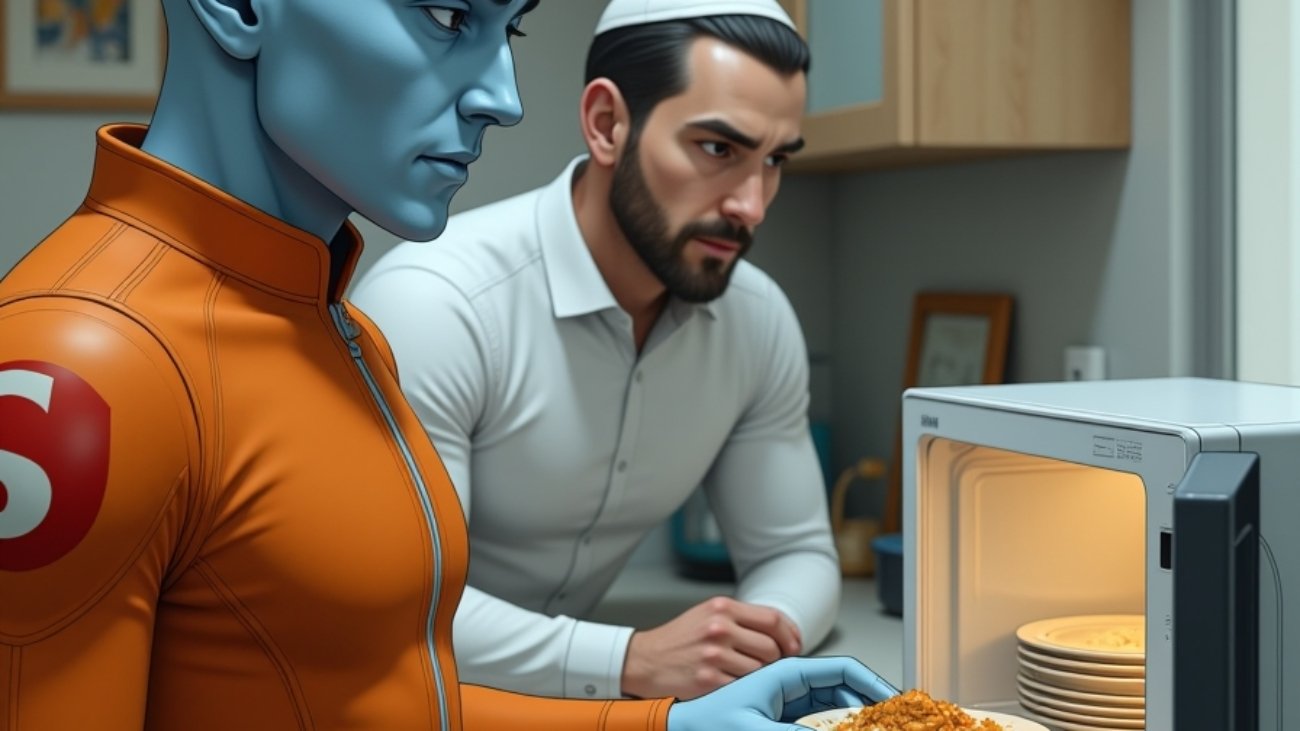
Shalzed and Simon plates in  microwave

I Put the Dishes in the Microwave. Then Shalzed Asked About Nukes

I Put the Dishes in the Microwave. Then Shalzed Asked About Nukes

Why do we trust some countries with nuclear weapons, but not others?

If the same rules don’t apply to everyone, are they really rules—or just power?

That becomes a sticking point this week when Shalzed asks Simon why Iran can’t have nuclear weapons—even though the U.S. and Israel already do.

I Put the Dishes in the Microwave. Then Shalzed Asked About Nukes

I was watching an NBA play- in game when Shalzed rang the doorbell. I buzzed him up, then put the dirty pans I had left on the stovetop into a pile and shoved some dirty plates in the sink into the microwave while he came upstairs.

“I have some questions,” Shalzed said as he opened the door, holding a human rights textbook in his hand.

I glanced reflexively at the television. There was a commercial, and anyway it was almost halftime. “Okay,” I said, doubting I would really be able to help.

Shalzed followed my gaze, but remained staring at the screen. The commercial switched to a preview of the news, and it was showing a clip of Marco Rubio saying that the U.S. would never allow Iran to acquire nuclear weapons.

“Why not?” Shalzed asked, turning to me. “The U.S. and Israel have nuclear weapons. Why can’t Iran have them too?”

“Because they want to destroy us,” I said quickly.

Shalzed blinked his eyes three times, which by now I knew meant he was either surprised or thinking. “But the United States and Israel are the ones who just attacked Iran,” he said.

“Yes, but that was to stop them from attacking us in the future.” My phone rang, and I saw that it was my mom. “Do you mind if I answer?” I asked.

”When your transmitter boxes signal, aren’t you required to take action? I have never observed a human fail to do so.”

I smiled as I swiped. “Hello imma,” I said, putting the phone on speaker.

“I just wanted to ask if you’re bringing anyone Friday night,” my mom asked me.

I clicked my tongue. I had told my parents that I was going out with someone last Sunday, but it was just a first date from JDate. It hadn’t gone well, either, and by now I couldn’t even remember her name. But of course my mom already wanted to meet her. “No, mom,” I said. “Just me for Shabbat. But maybe you can help me explain to Shalzed why we can’t let Iran have a nuclear weapon.”

My family were the only ones I had told about Shalzed, since I had invited him to our seder. “What kind of a question?” my mom asked. “The Ayatollahs are crazy. You know the things they say. And they should have nuclear weapons?”

I couldn’t help but chuckle. “Like Trump isn’t crazy at all,” I said.

“At least we have a constitution. The President has to listen to the cabinet,” my mom said.

“Iran signed the non-proliferation treaty,” my dad added.

“Abba, I didn’t know you were on the line,” I said.

“I have you on speaker too,” my mom answered.

“When countries sign the treaty, they give up their right to build nuclear weapons.”

Shalzed frowned. “Did the U.S. sign?” he asked.

“Of course,” my dad said.

“So why does the U.S. have nuclear weapons?” Shalzed asked.

My dad was a college history professor, and his tone switched to explanation mode. “Because the treaty says that the five countries that had nukes before they signed could keep them, and the U.S. is one of those,” he said.

Shalzed frowned. “So the countries that got nukes first can keep them, but all the other countries are never allowed?” he asked.

“Exactly. Otherwise there would be a nuclear arms race as all the other countries tried for the bomb,” my dad replied.

“What about Israel?” I wondered.

“Israel never signed the treaty,” my dad said. “That’s why Israel isn’t violating anything if it develops nukes, but Iran is.”

I heard the doorbell chime in the background. “That’s probably Rosalie Goodman. Bridge starts in half an hour, but she always arrives early,” my mom said.

“Okay, have a good time,” I said. My mom loved playing bridge, mahjong, and every other sort of card game. It bored me to pieces.

I looked around the kitchen as my mom hung up. “Would you like something?” I asked. Shalzed was fascinated with Earth food.

He looked at a nearly empty bowl with just a few kernels of popcorn on the counter. I smiled. “I’ll make you some,” I said, taking a packet of microwave popcorn from a cabinet. Then I added, “Iran is devoted to Israel’s destruction. They give weapons to Hamas and Hezbollah. If they had the bomb, that would be the end.”

“So you think Iran isn’t responsible, but Trump is. And Iran has to follow a treaty that says five countries can have nukes but not any others, even though Israel went ahead and got nukes anyway, along with a bunch of others?”

I stood in place for a moment, thinking. “The point is that leaders who go around saying death to Israel and death to America shouldn’t have the bomb,” I told Shalzed.

“But it’s okay for the U.S., even though Trump just threatened to destroy all Iranian civilization?” he asked.

“That’s just the way Trump talks,” I said. “Everyone knows he’s not serious.”

“Are the Iranians sure he’s not serious?” Shalzed asked.

I didn’t know what to answer, so I opened the microwave. I was about to toss in the popcorn when I saw my dirty plates.

“How does radiation wash dishes?” shalzed asked, frowning.

“It doesn’t,” I told him.

“But then why. . .,” he began.

“There are some things I can’t explain,” I said, looking at the plates.

“Like why Iran can’t have nuclear weapons, while Israel and the U.S. can?” he asked.

I shrugged. “I feel much safer if they don’t.”

“Do you think they feel safer, too?” he asked.

I looked at the microwave, then back at Shalzed. I didn’t know what to say.

Subscribe to Receive Shalzed's adventures in your inbox

Shalzed waits for ben gvir

Shalzed stopped me on my way to buy a post-Passover pizza to ask about Israel’s death penalty law.

Shalzed stopped me on my way to buy a post-Passover pizza to ask about Israel’s death penalty law.

If the same crime gets different punishments, is it still justice?

As soon as Passover was over, I started walking over to Stop’n Shop to buy a frozen pizza. The truth is, it took nearly the whole holiday to finish leftovers from the seder, and I loved my mom’s brisket and sweet potatoes. But I was ready for some chametz. As I got to the parking lot, Shalzed called.

“Did you hear that Israel passed a law giving the death penalty for Palestinian terrorists, while exempting Israelis?” he asked.

“I heard.” There had been lots of talk about it at shul.

“So the same crime gets different punishments depending on who does it?” Shalzed asked.

That made me feel uncomfortable, but Israel also has special security challenges to deal with. “It’s to deter terrorists,” I said.

“But there can be terrorists on both sides.” The Stop’n Shop sign began to look twisted, and the grocery store seemed to be getting farther away. “Punishments should be the same, no matter who commits the crime.”

Stop’n Shop seemed to dissolve into thin air. It felt like I was in a thick fog. I extended my arms but couldn’t feel anything around me. Then I was in what I could tell at once was an Israeli settlement due to the rows of red-roofed houses rising against the dry, hilly landscape. Shalzed was next to me, and he immediately stepped forward and called to a heavyset man wearing a suit and large kippah who was about to get into the back seat of a large, black car that was waiting in the driveway. “Why should the death penalty be only for Palestinians, but not Israelis?” Shalzed asked.

It was easy to recognize that he was talking to was Itamar Ben Gvir, since his picture was in the news so often. He gave Shalzed a long look. “It’s not just about Palestinians, the new law applies to anyone who’s goal is to destroy the state of Israel,” he said.

“So why doesn’t it apply to Israelis who kill Palestinians?” Shalzed asked.

I really hoped Ben Gvir wouldn’t respond with something about how the Torah regards killing Jews as more severe than killing people who aren’t Jewish. “Thou shalt not murder applies to everybody,” I added.

A woman came out of the house, holding something in her hand. As soon as she saw us she stepped back inside, behind the door, probably because her head was uncovered. “Itamar, you forgot something,” she yelled.

Ben Gvir seemed annoyed, but went back. Then he smiled when he saw what was in her hand.  It was a pin with an image of a noose that he promptly put on his jacket. It made me upset how he celebrated the death penalty like that. “What’s discriminatory is calling Palestinian terrorists freedom fighters and saying that Palestinians who have killed Jews are somehow political prisoners who should be set free,” Ben Gvir said as he reapproached the car.

“What does that have to do with the death penalty?” I asked.

He turned to face me, hands on hips. He seemed so adamant that I almost felt frightened and took a step back. “The human rights groups are so racist and biased that they want every Palestinian prisoner released, no matter their crimes. If we don’t use the death penalty, they’ll keep trying to force us to set them free.”

Shalzed frowned. “There are Palestinians Israel has held in prison for years,” he said.

Ben Gvir shook his head. “Look at how many we had to free to get the hostages from Gaza. Every minute we keep Palestinians alive in jail, it’s an incentive for them to take hostages to trade. And the world encourages it.”

He was certainly right about that. I thought back on when Israel released over a thousand prisoners in return for Gilad Shalit. “But will it really work?” I asked. “Even if Israel executes Palestinians guilty of murder, there will still be lots more in jail.”

“It’ll be a deterrent,” Ben Gvir said. His phone rang. He listened for a moment, then said b’seder. “Bibi wants to talk to me, and he’s coming on the line in a minute.”

“Haven’t most Earth countries stopped using the death penalty altogether?” Shalzed asked.

Ben Gvir gave him a funny look. “Not Iran. Not Saudi Arabia- they carry out executions at a rate of one person per day. Hamas executes anyone they believe is a traitor. And the world is all up in arms because we want to kill terrorists.” Ben Gvir raised his palms in the air.

“The Jewish tradition is very hesitant about the death penalty,” I said. Last year, in my 8th grade  class, I had the kids read the Mishnah which says that a beit din which carries out the death penalty more than once in seventy years is a killer court.

“That’s in normal times,” Ben Gvir said. “Today we have a whole Palestinian society trying to destroy us, while most of the world applauds.”

I heard a voice that sounded like Bibi come from Ben Gvir’s phone. He gave us a wave, then jumped into the back seat of the car as he put the phone to his ear. The driveway started to look curved, and then wavy, as the car sped off. A moment later I was back outside Stop’n Shop.

When I got to the entrance, a guy wearing a store apron was opening the door to let people out. “We’re closed,” he called at me.

I decided to try 7 Eleven. On the way, I passed a house with signs that said ‘End Israel Apartheid’ and ‘Equal Rights for Equal People’ in every window. I understood why Israel wanted the death penalty. But if the same crime leads to death for Palestinians but not Israelis, is there really equal justice?

Subscribe to Receive Shalzed's adventures in your inbox

For more background on Israel’s new death penalty law from CNN, click here.

Simon getting ready for Passover with a conquistador helmet

Spain apologized for 1521. Shalzed is upset. What if Passover is next?

Spain apologized for 1521. Shalzed is upset. What if Passover is next?

Why should anyone today answer for what happened long ago?

Today Shalzed asks why Spain was made to apologize for events that took place in 1521. It seemed unrelated- until Simon wondered whether, by that logic, Jewish people might have to apologize for the ten plagues too.

Spain apologized for 1521. Shalzed is upset. What if Passover is next?

I was at my parents’ house, because my mom and dad needed my help to get the heavy boxes of Passover stuff from the basement up to the kitchen. My mom had just sent me down to get the haggadot when Shalzed called and asked me a question I didn’t know how to answer. “The King of Spain just apologized for something a Spanish explorer named Hernan Cortez did in 1521,” he asked. “I can’t understand why.”

I pulled out my phone. “Mexico’s been pushing for that for years,” I said. “The Spanish destroyed Tenochtitlan to make it their capital. Everyone knows colonialism meant horrible crimes.”

The Passover boxes swayed in front of me.

“But what does that have to do with current day Spain?” Shalzed asked.

It felt like the basement was moving, and the floor seemed to tilt. Then it was gone. A moment later, Shalzed and I were in the midst of a large group of people walking along a scenic road through some mountains, with a heavy contingent of Mexican police along the side. I felt someone push into me from behind, and so I started to walk along.

“Señora Presidenta,” Shalzed called. A woman leading the group turned. She was wearing an elegant burgundy dress, with elaborate, elegantly embroidered flowers on the front. I had seen the news enough to recognize her as Mexican President Claudia Sheinbaum. “Why do you want Spain to apologize for things that happened hundreds of years ago? The people who did it aren’t even alive.”

Shalzed quickened his pace to catch up with her, and I hurried to stay with him. Sheinbaum frowned. “Are you accompanying us as part of the honour guard?” she asked. Shalzed’s bright orange spacesuit looked nothing like the Mexican men accompanying her, wearing white shirts with colorful embroidery and large sombreros.

“No,” I said quickly. I was wearing jeans and a Camp Ramah staff T-shirt, so maybe not quite as much as Shalzed, but I also stood out.

“No one now living in Spain has anything to do with what happened five hundred years ago,” Shalzed said. “Do you believe that just by being born Spaniards they inherited guilt?”

Sheinbaum turned towards him without slowing down. “Not guilt, but responsibility,” she said. “Countries evolve, while laws, language, and identity all continue on.”

“So Spanish citizens are responsible for Hernan Cortez, because he is one of their ancestors?” Shalzed asked.

“For centuries the suffering of indigenous Mexicans was denied or minimized,” Sheinbaum said. “An apology says it was real, and it mattered.”

“How? It’s just words that won’t make any practical difference,” Shalzed said.

A man wearing an elegant, black Mexican shirt with red embroidery running down the right side who had been walking with Sheinbaum moved closer. “For the King of Spain to finally apologize acknowledges that their suffering was a real injustice, after so many years of being pushed aside,” he said.

We were walking quickly, and I saw up ahead a small plaza with a giant, black statue of a seated man with a stern expression above the crowd. People gathered at the edges of the square, with a large group of reporters waiting in front of a podium.

“What is this?” I asked.

President Sheinbaum, the man in the black shirt next to her, and a number of other people around us looked at me suspiciously, and I realized I had said something stupid. “The President is about to lay a wreath for Benito Juarez,” the man in the black shirt said. “If you’re not part of the honor guard, then you shouldn’t be here.”

“How can you hold people responsible for things they didn’t do?” Shalzed asked. “Let alone things done by their ancestors?”

She clicked her tongue. “It’s not about saying present day Spaniards are guilty,” she said. “It’s that this apology is a step towards rewriting history so it’s more balanced. So we finally include the perspectives of those who were colonized, too.”

“If indigenous people are suffering today,” Shalzed said, “wouldn’t it be better to focus on what you can change now, rather than worrying about who in the past was to blame?”

We were now at the edge of the square, and everyone slowed. Some military officials who had been waiting started to come over to greet Sheinbaum. “We need both,” she told Shalzed. “Without addressing the past, we will never be able to build a solid future.” She turned and started to shake the men’s hands.

“If you don’t have a part in the ceremony, you need to go behind that ribbon,” the man in the black shirt told us. A policeman stepped to his side.

“If people are held responsible for crimes of their ancestors, when does it ever end?” Shalzed asked. “Every nation and ethnic group throughout history is guilty of something.”

The man glanced at Sheinbaum. She turned to us, signaling the officers to wait. “Gestures matter,” she said. “Owning up to the past does not divide us, it makes us stronger.” Then she accompanied the officers to the center of the square.

“It’s part of what we’re doing here,” the man in the black shirt added. “Benito Juarez was Zapotec, and he overcame tremendous discrimination to become President of Mexico. Laying a wreath on his birthday acknowledges the unfair hurdles indigenous people face.”

The policeman raised his eyebrows and gestured towards the ribbon. I opened my mouth to respond- but he wasn’t looking at us anymore. The sounds of the square softened, like they were moving farther away.

The crowd and the statue dissolved into nothing, and then I was back in the basement of my parents’ house. Shalzed wasn’t with me, and my mom was calling my name. “I’ll be right up,” I yelled. I had no idea how long I had been gone, and I hoped she hadn’t worried. My stomach was churning. I took a deep breath, and for a moment I leaned against the wall.

When I started to feel better, I began putting all the Haggadot in the box. The ones that my dad liked had a picture of the splitting of the sea on the cover. If we are all supposed to be responsible for our ancestors, I wondered how far it goes. Should Egypt apologize for enslaving the Israelites? Should Israel apologize for the plagues?

“Is everything okay down there?” My mom called.

“Coming,” I said back.

History matters. But if responsibility never ends, conflict will never end either.

Subscribe to Receive Shalzed's adventures in your inbox

Sources:

For more information on Spain’s apology from Reuters, click here.

For detail on Claudia Shenbaum’s reaction from the BBC, click here.

shalzed and Simon

I told Shalzed it was just tough talk about the war. Then he surprised me. . .

I told Shalzed it was just tough talk about the war. Then he surprised me. . .

I had just emptied my fridge onto the kitchen table for Passover cleaning when Shalzed came upstairs, blinking rapidly. He was upset about something outrageous Pete Hegseth said at a press conference. I try to explain that Hegseth probably didn’t mean his words literally. Then Shalzed asks why I don’t give our enemies the same benefit of the doubt.

I told Shalzed it was just tough talk about the war. Then he surprised me. . .

I decided to get started early with Passover cleaning this year and start on my fridge. I figured if I did the freezer and all the drawers now, I’d only have to wipe it down right before the holiday. But just as soon as I had put everything from the fridge out on my kitchen table, Shalzed buzzed from the street. As he came up the stairs, I put the Haagen Daz ice cream back in the freezer so it wouldn’t melt.

“I just saw a news report that I can’t understand,” he began. “Pete Hegseth, your Secretary of Defense, said at a news conference, ‘We will keep pushing, keep advancing, no quarter, no mercy for our enemies.’

“He’s probably just trying to sound tough,” I said.

Shalzed blinked his eyes rapidly, which is what he did when he felt shocked. “But how?” he demanded. “How could he? Aren’t those words which must never be uttered?”

The truth is that I had no idea what ‘no quarter’ really meant. But wasn’t it normal in war not to have mercy for the enemy? I looked ‘no quarter’ up on my phone and was surprised by what I found. To declare ‘no quarter’ was to say that enemies would be killed even if they were already wounded or trying to surrender. “I doubt he really meant it,” I told Shalzed. I couldn’t imagine that the U.S. army would actually kill surrendering Iranian troops.

“But by just having said those words enemies are less likely to be willing to surrender.” Shalzed blinked his eyes some more. “Even the mere suggestion that prisoners may be killed or mistreated could have the effect of increasing fighting and lengthening the war.”

I looked at all my refrigerator stuff on the table. “Is there any Earth food here you haven’t yet tried?” I asked. I realized the thing he would probably most like was the ice cream. When he discovered vanilla soft-serve he ate three cones, so if I gave him strawberry cheesecake Haagen Daz he might finish the whole container. I needed it for my cousin’s birthday party, so I was glad I had put it back.

Shalzed glanced over the table, then looked back at me and blinked again. “How could he say that and remain in charge of the army?” Shalzed asked again. “Hasn’t he violated your laws just with what he said?”

My phone rang, and I saw it was a call from my brother Yoni in Israel. I swiped to answer. With the war going on I wanted to make sure Yoni was okay, and Shalzed seemed so upset that it was starting to make me uncomfortable. “Everything alright?” I asked.

“Yeah, we just got out of our shelter,” Yoni said. “A missile fell a kilometer from us, I wanted to call in case you were worried.”

I felt guilty that I hadn’t heard. “Good,” I told him. “Was anyone hurt?”

“They’re not sure yet. It fell on a street, but hopefully everyone in the houses nearby was in a safe room.”

I glanced at Shalzed. He had his hands on his hips and wasn’t even looking at the table. I put the phone on speaker. “Yoni, I have a friend over,” I said. I had mentioned Shalzed to Yoni in passing, but never said anything about where Shalzed was from. I hadn’t mentioned that to anyone, actually, since I figured there was no way they’d believe it. “Do you know what it means to give no quarter?”

“Don’t give loose change to someone asking for money,” he replied.

I wasn’t sure if he was trying to be funny. “No,” I told him. “Like in war.”

“Yeah, they taught us stuff like that at the end of basic training.” Yoni did a full three years of army duty after he made aliya. “It’s the kind of thing that even if your commander tells you to do it, you’re supposed to disobey.”

Shalzed leaned forward. “What if the order comes from the Secretary of Defense?”

I told Yoni about Hegseth’s statement. “He was probably just saying how unfair it is that we are expected to follow all the Geneva Convention even when fighting terrorists who don’t,” he said.

“So he was serious!” Shalzed exclaimed.

“But it doesn’t matter, because troops are trained to disobey that type of thing, right?” I asked Yoni.

“Yeah, that’s true. Also, soldiers listen to their commander, not what’s on the news,” he said. “The main thing is that the U.S. is helping us get rid of the Iranian threat.”

“Was Iran a threat?” Shalzed asked. He had already taken me to confront the United States UN ambassador Mike Waltz about whether the war was legal, so I hoped he wasn’t going to bring that up again.

“Of course it was,” Yoni replied. “Khomeini led chants of death to Israel and death to America. He even put up a clock counting down to Israel’s destruction.”

“But maybe he wasn’t serious. Maybe he was just trying to boast about the strength of Iran’s armed forces,” Shalzed said.

I laughed. “I think we have to assume he was serious. Otherwise, why was he stockpiling missiles and trying to build nuclear weapons?” I asked.

“Listen, if it was just a one time statement I’d agree with you,” Yoni chimed in. “But we have to understand it in context. Khomeini was Iran’s supreme leader. And he was close to having the means of carrying it out.”

“Then what about Hegseth?” Shalzed asked.

“What do you mean?” I replied, not sure what he meant.

Shalzed frowned. “Hegseth announced that the United States intends to kill Iranian troops even if they are wounded or attempting to surrender, which is completely against the law. He is in charge of the military, the U.S. is currently at war, and U.S. soldiers have the means to carry out his threat. Nevertheless, you’re still sure he was joking.”

That didn’t make any sense to me, but I didn’t know how to answer. “It’s completely different,” Yoni said.

“Why?” Shalzed asked.

“Because the United States would never actually do it,” Yoni replied.

“Maybe Iran wouldn’t actually launch nuclear missiles,” Shalzed said.

“I wouldn’t count on it,” I said quickly.

“Of course they would,” Yoni added. “Look at what they’ve done already.”

Shalzed paused. “So you decide what people mean not by what they say, but by what you already believe about them and their country?”

I shrugged. “Have you tasted kefir?” I asked, pointing to a container of mango Lighthouse kefir on the table. “If we don’t finish it now, it might spoil.”

“I have to go,” Yoni said. “Remember, by us it’s already night.”

I wished Yoni that he and his family should be safe, then turned to Shalzed. “You can’t expect Israel to take risks when Iran is threatening it with destruction,” I told him.

He took the cap off the kefir container and sniffed. “Maybe you’re right about Iran,” he said. “Maybe they would use nuclear weapons if they had them. But would you blame Iranian soldiers if they don’t risk surrendering now that Hegseth has threatened to kill them even if they do, and decide instead to keep fighting?”

Subscribe to Receive Shalzed's adventures in your inbox

For the legal context of Hegseth’s statement from Just Security, click here.

The noise outside

The Noise Outside

The Noise Outside

When the sound of breaking glass interrupts the seder

The Noise Outside

“Everyone take some matzah,” my dad said as he passed around the plate. Shalzed inspected the matzah carefully, then cracked off a small piece and passed it along to Nora.

“We’re supposed to eat it while reclining,” Maya said.

“Very good,” my dad responded. “Do you know why?”

“We didn’t learn that,” Maya replied.

“But wouldn’t eating while leaning back be dangerous for humans?” Shalzed asked. “The odd construction of your throat makes you prone to choking.”

There was a sharp crack outside, then a crashing noise that made it sound like a window had shattered. “What was that?” my mom asked, standing up quickly. Everyone looked around.

“We should call the police,” my sister said, taking out her phone.

“It was probably just the wind,” Nathan said, putting a hand on her shoulder. “Or maybe an animal.”

“These days we’re all targets,” my mom said. “Some people hate Jews no matter where we are.”

“He can protect us,” Maya said, pointing at Shalzed.

I wondered if Shalzed had any advanced sort of item he could use in self-defense. I hoped so. I felt a little scared myself.

“Why would anyone want to harm a family’s holiday celebration?” Shalzed asked.

My mom put her hands on her hips. “Don’t you know about anti-semitism?” she asked.

I stood up. “Let me take a look,” I said, starting towards the windows.

“Be careful,” my mom told me.

I looked out as best I could. “I don’t see anyone on the sidewalk. One car just drove by, and it’s turning left at the corner.”

“Can you see the license plate?” my mom asked. “They could have done it.”

“Done what?” Nathan asked.

“Maybe thrown a rock through the downstairs window,” my mom said.

“But honey, why?” my dad asked. “How would anyone know that we and the neighbors downstairs are Jewish?”

“They could have seen holiday candles,” my mom said. “Or maybe the mezuzah. . .”

“Listen,” Nathan interjected. “Antisemitism is real, but you have to remember that we still are very fortunate. Even with everything that’s happened, here in the United States Jews are safer than almost anywhere else in the world.”

“Not for long,” my dad said. “That’s why I’m getting a concealed carry permit.”

“Are you really?” my sister exclaimed. He had told me a few weeks ago. The idea made me uncomfortable, but I knew my dad would be responsible.

“We have to check downstairs, make sure they’re alright,” my mom said.

“I’ll call, do you have the number?” my sister asked.

My mom shook her head. “I don’t think they’ll talk on the telephone when it’s a holiday.”

“So I’ll go down,” my sister replied. She got up quickly and went out the front door.

Everyone was silent for a moment. There was no more noise outside, and no sound of anything else breaking.

“I just don’t understand,” Shalzed said again. “Why would anyone attack a Jewish family celebration?”

“Don’t you know what just happened in Michigan?” my dad said. “A man attacked a synagogue with his car because he’s upset about the war in Lebanon.”

“Don’t forget the Tree of Life shooting in Pittsburgh,” I added. “And there have been plenty more synagogue shootings since.”

Nora suddenly spoke up. “That’s why I’ve been pleading with you all to stop wearing anything that makes you look Jewish,” she said. “It’s not worth the risk. Personally, I don’t even want to go to the Jewish Community Center, even for exercise.”

My dad cleared his throat. “I’m sorry, Nora, that’s letting them win. We cannot live in fear. There’s no reason we shouldn’t be proud of our identity.”

“Even if you say you hate Israel, it won’t help,” my mother added. “A Jew is a Jew and they hate us all.”

There was another moment of silence, and then we heard my sister’s voice in the stairway. A moment later she came back.

“Everyone is fine,” she said. “Something made of glass fell on their patio. It looks like it was some sort of pitcher or something like that.”

“A glass pitcher on their patio?” my dad asked.

“They’re going to clean it up after the seder,” my sister said.

My dad stood up. “Just a minute, I want to check something,” he said as he went into the kitchen.

“Who would throw a glass pitcher?” my mom asked.

“Not onto the patio,” Nathan said. “That would be impossible.”

I thought about that, and he was probably right.

My dad returned, his shoulders slumped forward and looking down at the ground. “I think I know what happened,” he said.

“What?” my mom asked.

“Well, when I went to bring more charoset I also hid the afikomen,” he said. Maya stared, probably realizing something must be really wrong for him to admit to hiding the afikomen. “I put it on the porch, under the pitcher. . .”

“Do you mean the pitcher that used to belong to your grandmother?” my mom asked.

My dad nodded. “I guess when I put the matzah under it, it was on a bit of an angle. Then maybe there was wind or something and. . .”

“So now it’s gone?” my mom interrupted again.

My dad shrugged. “Well, it’s not there anymore. And our porch is right above the patio downstairs.”

“Why would anyone have even left that pitcher on the ledge?” my mom demanded.

“Well there was nowhere else to put it,” my sister said. “The kitchen is full, and everything else on the porch is chametz.”

“It’s okay,” my dad said. “We still have plenty of other utensils from my grandmother, and that’s the way it is. Things break every once in a while.”

My mom took a deep breath. “Well thank goodness it wasn’t anything worse,” she said, sitting back down at her place. “Let’s just continue with the seder.”

“Does everyone have a piece of matzah?” my dad asked.

Shalzed picked up the little piece on his plate. “But why would anyone hold Jewish people here responsible for violence far away?” he asked. “It makes no sense.”

No one answered for a moment. Then my sister said, “Welcome to planet Earth,” rather rudely.

Questions for Discussion:

  1. If you were sitting at the table, what would you have said during the conversation?
  2. Some characters want to change their behavior to stay safe, such as by not wearing Jewish symbols. Others say that would mean “letting them win.” How do we balance safety with living openly as who they are?
  3. Why does Shalzed find the situation confusing? What assumptions about fairness or responsibility does he seem to have that people on Earth sometimes do not follow?
shalzed drone and war etf

The Drone Fund: Should War Be an Investment?

The Drone Fund: Should War Be an Investment?

Shalzed and Simon outside Cafe Maya, next to Amnesty International Headquarters in London

For investors, war can be profitable. A new fund seeks to capitalize on rising demand for drones and ammunition — but is the right way to boost your savings? Shalzed investigates.

The Drone Fund: Should War Be an Investment?

I was at home doing my taxes when Shalzed rang the doorbell. I buzzed him up. “Welcome,” I said as he came in the door.

“I wanted to. . .” he began. Then he noticed that I was working at my computer and asked if I was busy.

I smiled. “Just finishing up my taxes,” I told him.

He noticed a paper on my desk. “What’s that?” he asked, wrinkling his forehead.

“It’s the fact sheet for an investment a friend of mine recommended,” I replied. “I’m going to make a contribution to my retirement fund before I file, and I need to decide what to do with it.”

Shalzed picked up the paper. “A fund for drones and modern warfare?” he asked.

I shrugged. “With the current war in Iran, along with what’s been going on in Ukraine, defense spending is sure to go up,” I told him. “And now every military needs drones.”

Shalzed looked aghast. “You want to make money by investing in companies that build robots that kill people?” he asked.

I hadn’t really thought about that before, and suddenly I felt uncertain. “It’s just an investment,” I mumbled. Then I found myself inside the familiar black tunnel, and a moment later I was standing next to Shalzed in a large executive office. A middle aged man wearing a blue suit and blue tie was sitting behind a desk, staring at his computer. A name plaque on the desk said Matthew Bielski, CEO of Defiance ETFs. Behind him, a city skyline showed through a wall of glass.

“How can you encourage people to invest in companies that make weapons?” Shalzed asked.

Bielski shook his head in surprise. “Who are you?” he asked.

“I had been thinking of investing in your drone warfare fund,” I told him. “My friend is here to learn about human rights, and he has some questions.”

“Our funds have a solid track record of outperforming the market. I believe drone technology could be Wall Street’s next big winner.”

“But do you really want to profit from making machines that kill?” Shalzed asked.

Bielski frowned. “If it wasn’t for drones, Russia would have already taken over Ukraine.”

“What if drones are used for war crimes?” Shalzed asked.

“That’s the responsibility of whoever uses them, not us,” Bielski said.

A guy in his twenties carried a stack of papers into the office. “The DRNL documents are ready for you,” he told Bielski.

“Great,” Bielski said. “I’ll take care of it in a minute.”

“DRNL?” Shalzed asked.

“It’s a new, leveraged fund that gives twice the daily performance of companies making drones and their ammunition,” he said. Then he looked at me. “It’s for active, experienced traders,” he said.

I guess he could sense that I was a teacher with just a few thousand dollars in my IRA, not someone who played the stock market.

“So you’re hoping for more wars,” Shalzed said, pointing one of his long, blue fingers at Bielski. “Because every time there’s a war, you profit.”

The guy who brought the papers looked smug. “If they aren’t fighting a war, they’re arming for the next one,” he said.

Bielski clicked his tongue. “We don’t start wars,” he said. “The companies we buy stock in just give governments the tools they need to protect their citizens.”

“But buying the stock of companies that make weapons enables them to develop. Then you’re part of the whole war machine,” Shalzed said.

Bielski leaned back in his chair and rolled his eyes. “So just one question,” he began.

“What?” I asked, feeling uncomfortable with the silence.

“If you don’t like weapons, what do you think would be a better investment?”

“How about companies that make food?” Shalzed said quickly. “That’s something all people need.”

Bielski scoffed. “Do you really want to support factory farming? Or companies that make cheap processed food that’s a health disaster?”

“What about companies that make clothing?” Shalzed asked.

Bielski smiled. “Most of them operate sweatshops and many are accused of modern slavery.”

Shalzed wrinkled his forehead. “What about transportation? Trains, planes, and automobiles?”

“Ever heard of climate change?” Bielski asked. “Car companies are lobbying against rules requiring cars to be more efficient. Airplanes are one of the biggest polluters.”

Shalzed looked down.

“Well right now I just own an index fund,” I said.

Bielski grinned. “So congratulations, you already have weapons companies in your portfolio,” he said. “There are at least a dozen in the S&P 500.”

Suddenly I was in the tunnel, and a moment later back in my apartment. This time Shalzed was still with me. I turned to my computer. I don’t know why, but I felt it would be embarrassing for Shalzed to see how much money I made. But the tax program had timed out.

Shalzed picked up the fund’s fact sheet again. “So are you really going to buy stock in companies working to perfect drone warfare?” he asked.

I wasn’t sure. “The amount I’d invest is almost nothing compared to what companies are worth. It’s not going to make any difference,” I told him.

“If you see on the news that children were killed in a drone strike, do you want to feel like you had even a small part in that?” he asked. “When you see countries launching waves of drones, will it make you happy to think that means more orders?”

I swallowed. “I’m just trying to make my retirement account go up,” I said.

Shalzed turned towards the door, then stopped to glance at the drone fund fact sheet, still on my desk. “And do you want Earth fighting wars with even more advanced weapons by the time you retire?” he asked.

Subscribe to Receive Shalzed's adventures in your inbox

Shalzed with Mike Waltz outside the UN

Before It’s Too Late

Before It’s Too Late

Shalzed asks UN Ambassador Mike Waltz if a country is likely to become a threat someday, can you bomb it now?

Shalzed wtih UN Ambassador Mike Waltz outside the United Nations

The United States and Israel claimed self-defense as the justification for their attack on Iran. But even though Iran is a hostile country that has threatened the U.S. and Israel many times, it didn’t seem to be a significant threat right now. Shalzed confronts U.S. Ambassador to the United Nations Mike Waltz with this question.

Before It’s Too Late

I was on the phone with my brother, who had moved to Israel four years ago. He was telling me about how his daughter was very upset about school being cancelled when the siren sounded. I hung up right away so he and his family could get to their shelter. Then Shalzed called.

“I don’t understand,” he said. “How could the U.S. and Israel launch such an attack?”

“Well, we can’t let Iran get nuclear weapons.”

“But that’s not a reason to start a war,” Shalzed said.

I figured Shalzed probably didn’t know much about Iran. Before I could say anything, though, I was in the black tunnel. By now I was used to it enough that I was no longer afraid, and I really wanted to find out how it worked. A moment later I was outside the United Nations in New York, with Shalzed next to me. A man wearing a blue suit with a U.S. flag pin on his jacket was standing nearby, trying to attach a lapel microphone to his jacket. “Ambassador Waltz,” Shalzed called.

The Ambassador turned and looked at Shalzed. “Who are you?” he asked.

“I don’t understand. Countries can only use force to defend themselves,” Shalzed began.

“I’m sorry, I’m just about to go live on Fox News,” Waltz replied, gesturing Shalzed and I to move along. A few steps away, a reporter was conferring with a cameraman.

“But didn’t the U.S. and Israel just violate the UN charter?” Shalzed persisted.

Waltz shook his head and sighed. “Absolutely not,” he said. “Iran has thousands of missiles and is attempting to develop nuclear weapons besides.”

“But how can you say it’s self-defense if they didn’t attack?” Shalzed asked.

“Almost ready,” the reporter called. “Do a sound check, please.”

Waltz nodded. “The Iranian government killed thousands of its own citizens in recent protests,” he said in a robot-like monotone. The reporter gave him a thumbs up. Then he continued in a normal voice, “Some say tens of thousands. We may never know the real number.”

“And that means you can bomb their nuclear facilities?” Shalzed asked.

“Iran’s leaders have been leading chants of death to America and death to Israel for decades,” I interjected. “They even put a clock in the center of Tehran counting down the days until Israel is destroyed.”

Shalzed looked shocked. “Well how can they do that? Didn’t the UN tell them to take it down?”

I laughed, and Waltz also chuckled. “No,” he said. “Evidently, there’s nothing against countdown clocks in the UN charter.”

The reporter walked over. “I’m sorry, we’re delayed just a couple of minutes,” she said. “They broke in with an update from Tel-Aviv.”

“What happened?” I asked, worried people may have been killed.

“Direct hit on a school. But it wasn’t occupied, no injuries.”

“You see, Iran doesn’t follow any international law,” Waltz said. “They shoot missiles at schools, they fire randomly at cities. Then we’re the ones that get criticized.”

“Can you say that when we’re live?” the reporter asked.

“Of course,” Waltz replied. “And I’ll also mention that right now they are carrying out aggression against Saudi Arabia and the Gulf States too. Then people make it out like the United States is the one that doesn’t follow the law.”

Shalzed crossed his hands against his chest. “I understand the government of Iran does bad things. But can that justify an invasion?”

The reporter looked at Waltz expectantly. I had a feeling she was interested to hear his reply, too.

“So should Israel wait until they have ten thousand missiles, many armed with nuclear warheads, and then it’s too late?” he asked.

“Israel can’t risk a nuclear armed Iran,” I added.

“Almost ready,” the cameraman called as he lifted a bulky tv camera onto his shoulder.

Waltz straightened his hair with his hand. “Bottom line,” he said. “Countries are entitled to defend themselves. Iran has been a threat in the past, and we have every reason to believe they will continue to be a threat in the future.”

“Say that on air,” the reporter said.

“But Iran wasn’t a threat right now,” Shalzed interjected. “And any country could potentially be a threat sometime in the future.”

A light on the camera turned on. “Five,” the cameraman said, then he started counting down.

The reporter stepped in front of us, right next to Waltz. As the light on the camera changed color she began. “I’m here at the United Nations with U.S. Ambassador Mike Waltz. Mr. Waltz, you just explained to the security council that the action against Iran is completely in keeping with international law. Give us a recap.”

As Waltz began speaking I was back in the black tunnel. I tried to feel around for any clues about what it was made of or how it operated, but before I found anything I was back in my apartment. My phone was ringing- it was my brother calling back.

“Everything alright?” I asked as I picked up.

“Yeah,” he said. “A missile got through the iron dome and hit a school. The building was destroyed, but no one was hurt.”

“Near you?” I asked.

“Just a few kilometers away. Thank God we’re fighting this war now, while Iran still doesn’t have nuclear weapons.”

I told him I was glad he was safe, then I shook my head. Once Iran got the bomb, it would be too late. But if every country struck before it was too late, war would also be endless.  

Subscribe to Receive Shalzed's adventures in your inbox

Sources:

To read a transcript of Mike Waltz’s explanation given to the Security Council, click here and here

plague of blood

The Ten Plagues: The Hardest Question at the Seder

The Ten Plagues: The Hardest Question at the Seder

The plague of blood

The Ten Plagues: The Hardest Question at the Seder

My dad liked reciting the ten plagues, and this year he bought what he called a ‘plague bag’ for our seder. It had a plastic frog he pretended to hop around the table, ping pong balls to toss in the air for boils, and cheap plastic sunglasses he made everyone put on when he mentioned the plague of darkness. For the death of the firstborn, he gave everyone a frowny face sticker for their Haggadah as he spilled a drop of wine from his glass.

“All the first born of Egypt were killed?” Shalzed exclaimed. “But they couldn’t all be guilty.”

Nora made a heavy sigh. “Isn’t this something we could talk about over dinner?” she asked.

There were some things my mom had strong opinions about, and when she did she always spoke up. “Of course they were,” she said. “All the Egyptians were happy having slaves do their hard labor.”

That bothered me, because that logic could apply to just about anyone. “What about a lot of the stuff we buy at Walmart?” I asked. “Lots of products could have been manufactured with slave labor. Does that make us liable for using slave labor too?”

“It’s what they say about Gaza,” my sister added. “Since so many of them celebrated on Oct. 7th, everyone is responsible.”

I was afraid my dad would get upset. My sister was very left wing, but after Oct. 7th he had become much more staunch about defending Israel. One time they had an argument that ended with my sister running out the door in tears, and I didn’t want that to happen again. “God did the plagues, so there must be a reason why they were right,” I said. “But it’s certainly not an example for us to follow.“ I assumed both my dad and my sister would agree with that.

My mother stood up abruptly. “I’m going to start heating up the soup,” she said as she went into the kitchen. She was probably angry my sister made a remark she knew would aggravate our dad.

My brother-in-law Nathan shared with my sister’s views, but I think he also realized that tonight at the seder it would be better to keep quiet. “We can at least all agree it’s immoral to punish innocent children,” he said. “Whether in Gaza or ancient Egypt.”

“So you think you’re more moral than God?” my father asked.

I knew my dad liked Nathan, so his sharp tone surprised me. Nora let out a heavy sigh and my niece Maya went into the living room.

“It’s not a question of more moral,” I said, trying to calm my dad. “But you have to agree that punishing the entire Egyptian population because Pharoah wouldn’t let the people go doesn’t seem right.”

Nathan smiled and said that’s exactly what he meant.

“I think Maya would appreciate if we could have dinner before midnight,” Nora remarked, even though it was only nine o’clock.

“Where is Maya?” my dad asked, finally noticing that she was gone.

“She’s probably tired, let her be,” my mom called from the kitchen.

My dad hesitated, deciding whether to try to get Maya to come back or not. Finally, he turned to Nathan. “Listen, the Jewish people had been enslaved by Pharoah. They were fighting for their freedom. Did you expect them to follow every rule about morality if that would mean they have to remain slaves?”

My sister clicked her tongue. “So if people are fighting what they see as occupation, does that make anything they do alright?” she asked.

My dad slapped his hand on the table. “That’s outrageous,” he said. “How can you say something like that?”

My mom came back from the kitchen with her hands on her hips. “Could we please continue with the seder?” she said.

“That would be a very good idea,” Nora added.

“I agree,” I said. “Why don’t we sing Dayenu?” My dad also liked that song.

“Maya,” my dad called. “Would you come back here please and join us for dayenu?”

There was a tense silence as everyone waited to see if Maya would appear. Shalzed turned to me. “If the plagues aren’t an example, why do you continue reading the story?” he asked.

“And who are we to judge?” my dad replied.

“It’s in the Bible, and Jewish people have been reading it for thousands of years,” I told Shalzed.

Maya came into the room silently, and slowly went to her chair. “What page is dayenu?” Nathan asked.

“Earth has changed,” Shalzed said to me quietly. “Bringing plagues against an entire population would be unthinkable today, wouldn’t it?”

“Dayenu,” my dad said firmly. He began, and instead of answering Shalzed I joined him singing.

Questions for Discussion:

  1. Plagues against the entire Egyptian population, rather than just Pharoah and his guards, would seem to violate the laws of warfare established today. How does that affect how we relate to the Passover story?
  2. Some try to justify the sweeping nature of the plagues by claiming all Egyptians were guilty because they approved of enslaving the Israelites and benefited from Israelite labor. Others say that since the Israelites were fighting the great injustice of national enslavement it’s understandable if they harmed innocent people in their quest for freedom. What do you think?