Doctors Without Borders Landing

Who Decides Who’s Neutral:

Can Doctors Without Borders Stay in Gaza?

Shalzed speaks with Doctors Without Borders Emergency Coordinator for Palestine Claire San Felippo

Who Decides Who’s Neutral?

I got a match on Bumble for the first time in two weeks. Her name was Rose, and I really liked her profile. As an ‘opening move question’ she asked, ‘What’s your ideal first date,’ so I responded, ‘Holding hands while sky diving- although that’s definitely not happening on our first date!’ Then I sat in the living room watching NBA highlights, hoping she would reply.

I grabbed my phone as soon as it chimed, but instead of Rose it was Shalzed. “Doctors Without Borders is planning to stop working in Gaza,” he said.

“Okay,” I replied, checking if maybe by chance Rose had also messaged at the same time.

“I can’t understand it,” Shalzed continued. “Israel is just asking basic questions for its own security. How could an organization devoted to helping victims of conflict pick up and leave because of that?”

Suddenly, I was in the black tunnel with points of light. I wished I had my phone with me, but it was no longer in my hand. It might not even work wherever Shalzed was taking me. Then I was outside a large, white medical tent. It had rows of folding chairs, filled with people waiting. Children were running and crawling around on the floor. There was a row of smaller tents with examining tables outside. Doctors and nurses wearing white scrubs with the Doctors Without Borders logo hurried about.

Shalzed was next to me, looking around. “Gaza city,” he said. Then he caught site of a woman with short hair and large, round glasses walking towards the road. He strode towards her, and so I followed.

“Excuse me,” Shalzed called. “Can you explain why Doctors Without Borders is threatening to leave?”

The woman turned, and I saw she was wearing an ID that said ‘Claire San Felippo, Emergency Coordinator for Palestine.’

“Are you with Israel?” she asked, looking at Shalzed suspiciously. “If so, you can’t be here.” She put her hands on her hips.

Even though I wasn’t an Israeli citizen, I still felt uncomfortable being in Gaza. I moved closer to Shalzed.

Shalzed shook his head. “I just want to understand why you are threatening to leave rather than complete the simple registration process the Israeli government now requires.”

San Felippo glanced towards the road, where a man holding a clipboard was waiting. “Simple process?” she asked. “They want to know the identities of all our staff, Palestinian and international. What if Israel uses the information to target them? Do you know how many humanitarian workers have already been killed by the Israeli army?”


“A lot of so-called humanitarian workers are also Hamas,” I told her.

“We would never knowingly employ anyone engaged in military activity,” she shot back.

To my surprise, Shalzed interrupted. “Israel says you have.”

San Felippo shook her head. “It was just a few isolated incidents. We dealt with it right away.”

A woman in her early twenties wearing a badge identifying her as a nurse passed by. “I don’t want you giving my name to the genocide army,” she said.

One of my brothers moved to Haifa and is in IDF reserves, and I have several cousins also in the army. It makes me mad to hear people say that.

“We won’t do anything without your consent,” San Felippo told to the nurse. Then she turned to Shalzed. “That’s what this is really about, Israel is trying to scare away all our employees to force us out.”

“If you go around accusing Israel of genocide, why would you expect its government to cooperate?” I asked San Felippo.

She turned to me. “Bearing witness is one of our key principles, no matter where we work. We see genocide with our own eyes as we struggle to treat the wounded. Our mission requires us to speak up.”

“You can’t see genocide,” I told her. “That’s just your opinion. Israel believes everything it does is necessary in self-defense.”

“Isn’t neutrality one of your core principles also?” Shalzed asked her. “Accusing Israel of genocide, along with calling for boycotts and arms embargoes, hardly seems neutral.”

I heard a siren in the distance. All three of us turned, and I saw what looked like an ambulance approaching.

“Neutrality means we give medical treatment to anyone in need without conditions,” San Felippo said. “But neutrality doesn’t stop us from speaking out about what we are witnessing here on the ground.”

A nurse went to the waiting tent and called a name. A boy who seemed like eight or nine got up. His left foot was in a bandage, and he hopped along by leaning on what looked like a broomstick under his armpit. The siren was getting louder. A man came by, pushing an empty wheelchair towards the road. “Just in case,” he said to San Felippo.

“Do you know what it is?” she asked.

The man shook his head. “Electricity is out, so there’s no internet. I know nothing.”

San Felippo turned to Shalzed as soon as the man passed by. “The security concerns are just lies Israel is using to try to push us out and deny Gaza residents medical care. And if we leave, they know exactly what will happen,” she said.

“Rather than address Israel’s concerns, you’re trying to stir up global outrage about hundreds of thousands of people left without medical care so you can keep doing everything exactly the way you want,” I told her.

“Look at the Red Cross,” Shalzed added. “They don’t go on social media campaigning for embargoes or boycotts, and Israel has never threatened to kick them out.”

“That’s their choice,” San Felippo said. “The Red Cross stays silent in order to preserve access. Our values are different than theirs.”

A Red Crescent ambulance pulled up and several people got out. The driver immediately started arguing with the man who had brought the wheelchair, who was helping an elderly man who was clutching both hands to his chest out the back. They spoke in Arabic, so I couldn’t understand them.

“I’ve got to go,” San Felippo said, starting towards the road. “But just to let you know, in the end we are planning to comply with Israel’s requirements. They’ll probably still try to kick us out anyway.”

The man with the wheelchair smiled when he saw her, and she said something to the driver that seemed to calm him down. Then I was back in the black tunnel, and a moment later in my apartment. It took me a moment to orient myself to being back home. I suddenly felt thankful that I lived in the United States, where we have electricity and health care, rather than Gaza.

My phone chimed. I looked around and Shalzed wasn’t with me, so I thought maybe he was calling. But instead it was a message from Rose. It said, ‘Ha ha. I’d rather donate the money we’d spend on sky diving to an organization that helps people in need, like Doctors Without Borderes. What about you?”

I chuckled. I’m all for helping people in need, but I’d prefer an organization that isn’t so anti-Israel. I wondered whether I should try to explain that to Rose, or if that would end our relationship before it even had a chance to get started.

That's one story- every Friday Shalzed has another

Get the next via Email

Sources:

Israel Tells Doctors Without Borders to End Its Work in Gaza- New York Times article click here.

Text of Israel’s new requirements law, click here.

Israel’s report on Doctors Without Borders non-compliance, click here.

Doctors Without Borders press release protesting Israel’s requirements, click here.

Doctors Without Borders Jan. 24th statement agreeing to comply with Israeli requests, click here.

shalzed and simon outside cafe maya

The Human Rights Report Amnesty Doesn’t Want You To See

The Human Rights Report Amnesty Doesn’t Want You to See

Shalzed asks Amnesty International’s Secretary General Why She’s Hiding Their Report on Hamas

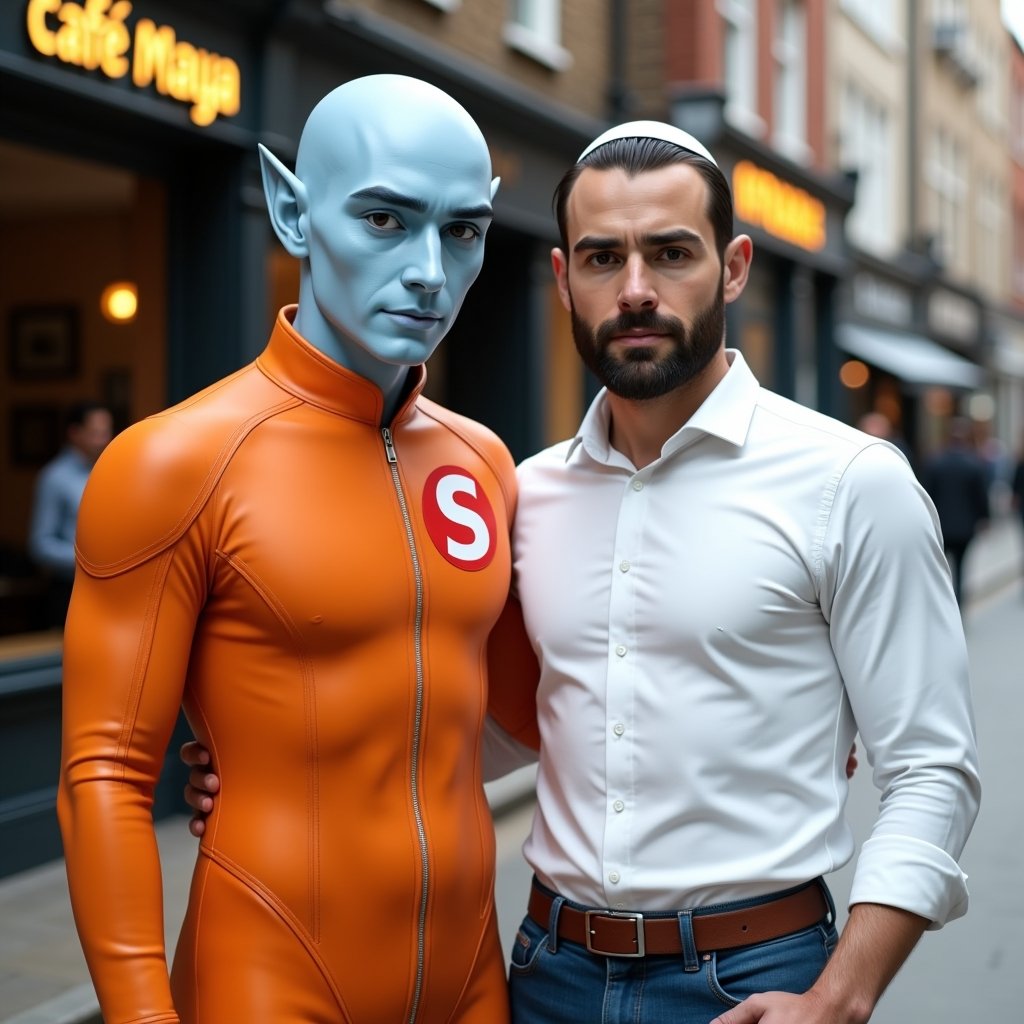
Shalzed and Simon outside Cafe Maya, next to Amnesty International Headquarters in London

This week Amnesty International finally released a report documenting Hamas atrocities. But it’s camouflaged under a misleading title and hidden on their website. Shalzed and Simon travel to London to ask Amnesty’s Secretary General why.

The Human Rights Report Amnesty Doesn’t Want You to Find

I had stopped grading Mishnah quizzes to watch the second half of the game between the Chargers and Seahawks. The game was tied, but Stafford just completed a 50 yard pass to Puka Nacua to set the Rams up first and goal in position to score another touchdown. Then Shalzed called.

“I heard Amnesty International released a report about war crimes and crimes against humanity perpetrated by Hamas against Israel,” he said. “But I can’t find it.”

“It would have to be on their website,” I said as the Rams got stuffed trying to run up the middle.

“Their home page has links to articles titled, ‘Stand with women accused of witchcraft in Ghana’ and ‘Demand accountability in Tanzania’, but there is nothing about Hamas.”

I typed Amnesty.org into my phone and clicked on the page about Israel and the Occupied territories. There was nothing about Hamas there, either.

“Maybe I heard wrong, and they didn’t write it?” Shalzed asked.

The most recent post was titled, “Sustainable peace requires international justice for all victims of all crimes in Israel and the Occupied Palestinian Territory.” Even though it sounded like a general press release, I clicked to read. It contained a long summary of Amnesty’s evidence that Israel is guilty of genocide, ethnic cleansing, and apartheid. Then I noticed a sentence about Hamas that linked to the new report.

“Found it,” I said.

“Where?” Shalzed asked. “Why is it so hard to find? I want to find out what’s going on.”

Just as the Rams were lining up for second down I was back in the black tunnel I had become used to, with points of light all circling around. Then I was inside a place called Café Maya in central London, right near the Peter Benenson House where Amnesty International is headquartered. Shalzed was next to me, as Amnesty Secretary General Agnès Callamard paid for her latte.

Shalzed approached her as she made her way to the area where people wait to pick up their orders. “Bonjour, Madam,” he said. “I wanted to read Amnesty’s report on Hamas war crimes, and I don’t understand why it is so difficult to find on your site.”

She looked him over carefully, probably trying to judge whether he was a threat to her safety. “It’s there,” she said simply.

“The title makes it sound like it’s just a general op-ed. Hamas isn’t even mentioned,” I said.

“C’est comme ça,” she said, waving her hand. “The title mentions justice, that’s what it’s really all about.”

I looked more at Amnesty’s website, still open on my phone. “On November 27th you released a report titled ‘Israel’s genocide in the occupied Gaza strip continues’. The report before that is titled ‘What states and companies must do to stop fueling Israel’s genocide, apartheid, and unlawful occupation.’ When it comes to criticizing Israel you’re quite outspoken, then when Hamas commits crimes you seem to have trouble even saying it directly.”

“Listen,” Callamard said. “We must be very conscious that Hamas violations can be instrumentalized to justify further large-scale harm to Palestinian civilians.”

“And isn’t there a fear that the inflammatory accusations against Israel you make so often will encourage violence against Israelis and Jews,” I asked her, thinking of the recent Chanukah attack in Australia along with many others.

“If Hamas’s crimes aren’t clearly condemned, why shouldn’t they commit them again?” Shalzed asked.

She checked her phone, as though she might be worried about being late for an appointment. “You have to remember, Israel is a sovereign state with a powerful army,” she said softly. “Palestinians are resisting discrimination and oppression. The situations are not equal.”

“Can I get something for you two, mates,” the barista called to us. She was probably wondering why we hadn’t gone straight up to the counter since there was no one in line.

“I’m good,” I told her.

“You just came in to talk to the ladies?” she asked with a frown.

“I have to be going,” Callamard said, giving the check out barista a smile. She glanced at the man behind the counter preparing her drink.

“Why did it take so long for this report to come out?” Shalzed asked. “It’s been well over two years since the attack of October 7th, 2023.”

“We pride ourselves on doing careful research and documenting our sources. That’s extremely difficult in a war zone,” Callamard said.

I couldn’t help but speak up. “In that period of time you’ve managed to release countless reports against Israel. Already a year ago you put out a 290 page report saying Israel was guilty of genocide.”

Callamard sighed. “There was significant internal disagreement about whether releasing a standalone report on Hamas was even responsible in the current context.”

Shalzed looked shocked. “What context?” he asked, his eyes going wide. “Isn’t Amnesty’s entire mission to document violations of all human rights, without exception?”

“Agnes,” the barista called, putting a medium size paper cup on the counter. “You did say it’s for taking away?” he asked.

“Oui oui,” she replied, grabbing the cup.

I quickly clicked to view the ‘our mission’ page on Amnesty’s website. “It says right here that universality and impartiality are your core values,” I added, showing her my phone.

“Some people were worried that a report focused on Hamas could be instrumentalized to justify harsher measures in Gaza,” she said. “Or even undermine efforts toward Palestinian statehood at the UN.”

“That doesn’t sound like impartiality,” I told her. “It sounds more like advocacy for Palestine.”

“Well of course,” she said. “Palestinians are powerless victims fighting state-backed oppression of the most brutal kind. As human rights advocates, how could we not take their side?”

“What about Israelis who are victims of indiscriminate rocket attacks, terrorism, boycotts, and other harassment?” I asked her. “Let alone told their country is racist, illegitimate, and should be dismantled? How about advocating for their rights?”

Callamard shook her head. “Of course Israelis also suffer. But they are the powerful group, benefiting from injustice. Palestinians are the ones whose human rights are being violated systematically.” Her phone buzzed. “And now I have to run back for a meeting at my office. Au revoir,” she said, heading out the door.

Shalzed turned to me. “I don’t understand. I thought human rights always applied to everyone equally? That’s how Earth maintains peace, even when groups of humans come into conflict and disagree about who’s right and who’s wrong.”

I sighed. “Did you two mates want to place an order?” the barista at the register asked again, raising her eyebrows.

I was about to ask for a smoothie when Shalzed said no thank you. Then I was back in the black tunnel, watching points of light go by, and a moment later back in my apartment, in the same chair as before I left.

“If groups that consider themselves oppressed are held to a more lenient standard of judgment, then every side in a conflict will say they are the oppressed one,” Shalzed said.

I looked around but didn’t see him. Then I realized we were still connected on the phone.

“You’re right,” I told him. “Agnes Callamard should stick to the principles on her organization’s website.”

I noticed that the Seahawks now had the ball right at midfield, but the score was the same. I wondered what happened. Maybe a turnover? It’s hard to believe they would have missed such a short field goal.

“If humans who call themselves human rights defenders end up just using human rights to promote whatever side in a conflict they think is right, human rights are really just another weapon for law and politics,” Shalzed said.

His voice was sad, and I wanted to console him. “That’s not what human rights should be,” I said. “They are supposed to apply equally to all sides.” Sam Darnold threw a ball that was tipped at the line and intercepted- one of the Rams players ran it back all the way to the twenty yard line.

“What is that noise? Do herds of humans all yell and scream together at once to make music?” he asked.

I laughed. “No, I’m watching a football game.”

“I dislike the sound,” he told me.

“And I still have quizzes to grade,” I said.

Shalzed hung up, and on the next play Kyren Williams ran through the left side of the line all the way for a touchdown. But just as the Rams started to celebrate, they realized the play was coming back for holding. The crowd was livid, and the announcers kept showing replays, unable to spot any infraction.

“Maybe the referee who threw that flag is a Seahawks fan, and he figures they need some extra help playing in front of this rowdy crowd on the road,” one of the announcers quipped.

Sounds exactly like a certain human rights person I just spoke with, I thought to myself. Applying rules differently depending on which side you’ve decided to be on.

That's one story- Every Friday Shalzed has another

Get the next via email

Question:

Should human rights organizations be strictly impartial—investigating and publishing findings without regard to political context—or is it legitimate for them to weigh power disparities, advocacy impact, and timing when deciding how and when to release reports?

Sources:

Background on Amnesty’s conduct leading up to the release of the report from The Free Press.

Page on Amnesty’s website containing a link to the Hamas report.