
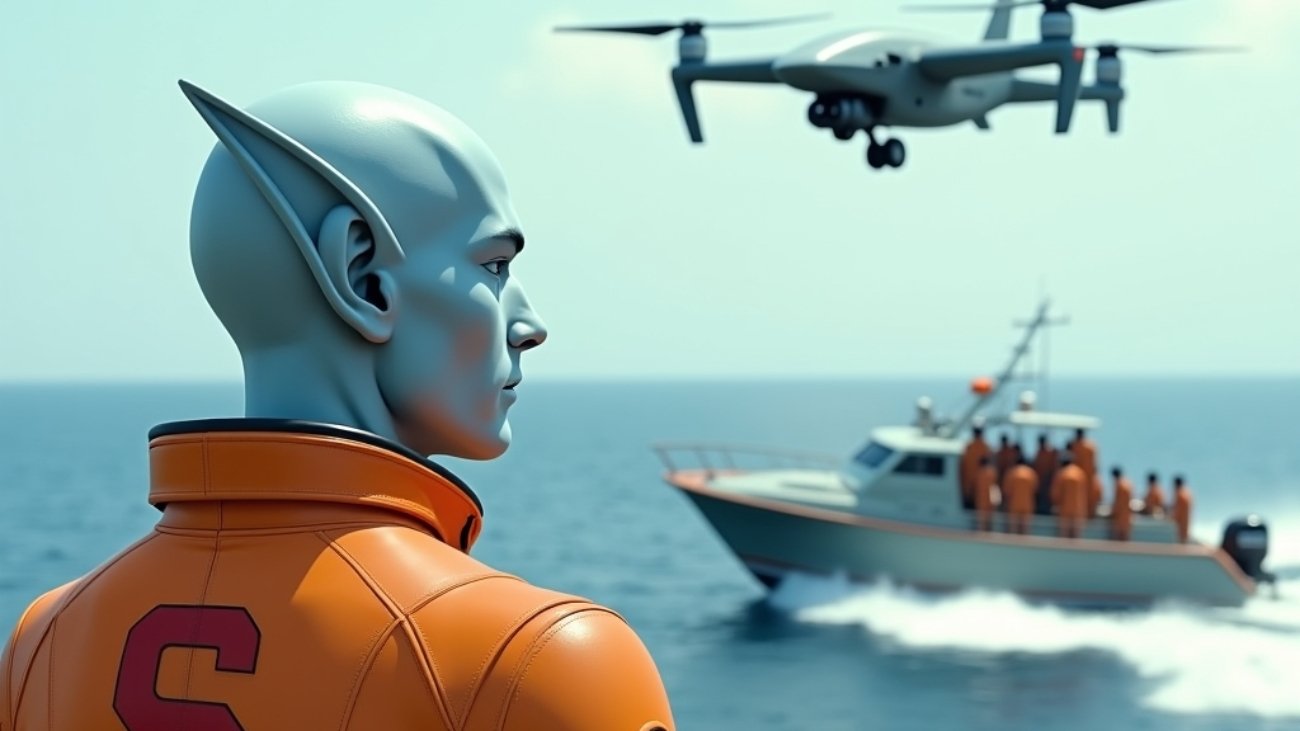
War on Crime: Just Murder or Justice?
Was Trump’s decision to declare war on cartels a resourceful tactic or a frightening switch?

War is a temporary legal situation in which the prohibitions of murder and destruction are lifted. Ordinarily it is against the law to kill people- but should war be declared, for the duration of the conflict soldiers may kill one another. As long as they do so in accordance with the laws of armed combat they’ll face no legal repercussions at all.
Declaring war is therefore an extraordinary power, so much so one might wonder how on Earth anyone can possibly be able to do it (on my planet such a thing can’t be done!). But simply as a matter of custom, we accept it as given that governments can in fact declare war and thereby permit murder, arson, and so forth for limited periods of time.
Bringing drugs to the U.S. for sale is a crime. According to Article 11 of the Universal Declaration of Human Rights, anyone suspected of a crime has the right to a presumption of innocence and a fair trial. Therefore, common practice has always been that should a boat be suspected of smuggling drugs to the U.S., the Coast Guard intercepts it to search for evidence. If evidence is found, those on board are arrested and put on trial. The Coast Guard may only use force in self-defense or if the boat attempts to flee.
However, the U.S. military has recently begun bombing such boats with no warning and killing everyone on board. While this would at first appear to be a gross violation of human rights, President Trump justified this by determining that the U.S. is now at war. Therefore, with regard to these boats murder and destruction are allowed. He has not made clear exactly what gangs or cartels the U.S. is at war with, or how the U.S. military decides if a given boat is connected to those entities.
As a mater of domestic law, it is questionable whether the president can do this without the approval of Congress. But be that as it may, is this a proper use of war?
Trump may argue that drug smugglers abuse their rights in order to enable themselves to commit their crimes. They find ways to destroy contraband before being caught and know how hard it is to construct a legal case against them. And they exploit the vastness of the ocean and the limits on the Coast Guard’s use of force to evade detection, and should they be detected to escape. Illegal drugs cause countless harms, including numerous overdose deaths, and the government has to find a way to stop these drugs from entering the country. Declaring war to enable bombing the boats may be the only way.
But there are many reasons to worry. If the government can declare war other than when it is confronted with an organized enemy carrying out armed attacks, where will it end? Could this war be extended from drug smugglers on the high seas to drug dealers on U.S. soil? Could war be declared against other types of criminals as well? What about migrants illegally crossing the border? Could war on political opponents be next?
Is expanding the definition of war a good way to address problems that have no other, easier solution? Or do we need to constrain the right to declare war as much as possible, due to the immense harm, including harm to innocent people, a declaration of war may lead to? I’m curious to hear your thoughts.
One story or question each Friday in your inbox
Glad You're On Board
You'll receive an email each Friday, one week a story, a question the next.
All of Shalzed's emails are sent via Substack.