
shalzed rights of the elderly

Rights of the Elderly: Shalzed Speaks to UN Expert About Proposed New Treaty

Rights of the Elderly: Shalzed Speaks to UN Expert About Proposed New Treaty

On April 3rd the UN Human Rights Council voted to begin drafting a treaty on the rights of older people. The United Nations’ Independent Expert on the enjoyment of all human rights by older persons, Claudia Mahler, was instrumental in bringing this about. Shalzed catches up with her in this edition.

Click here for Shalzed’s bio.

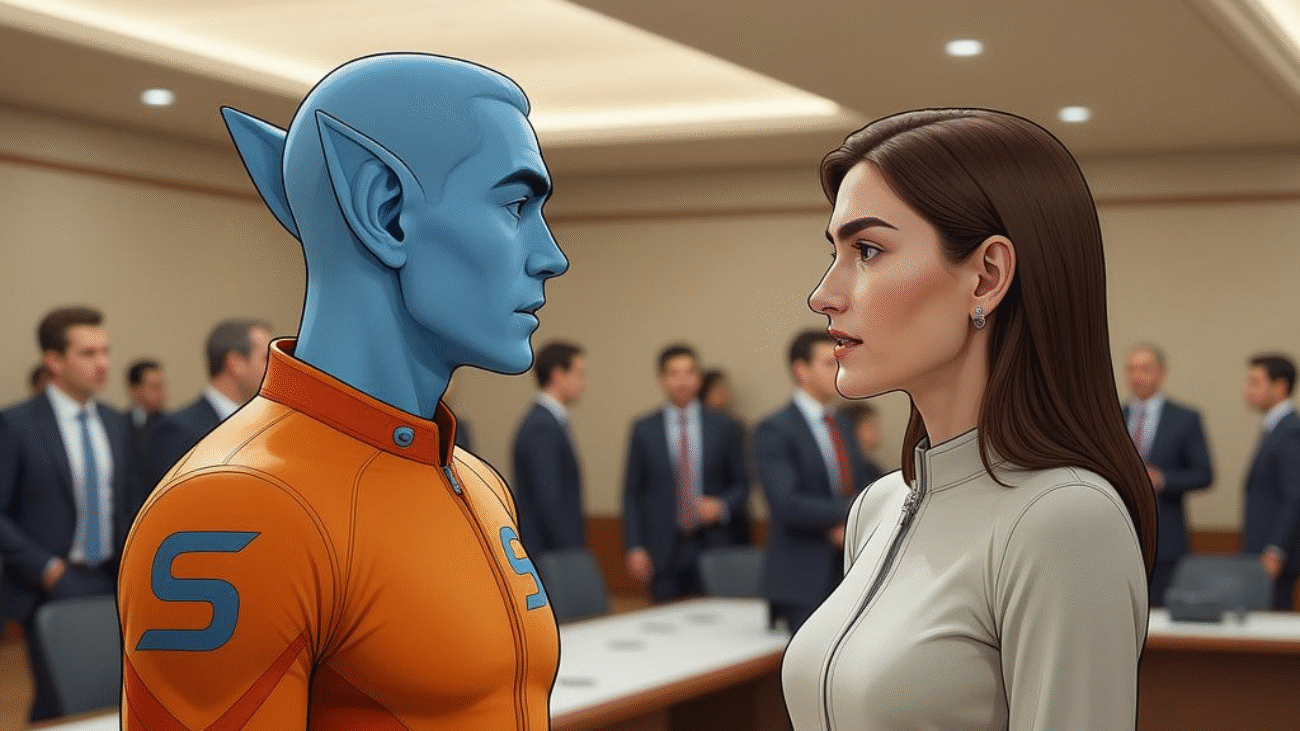
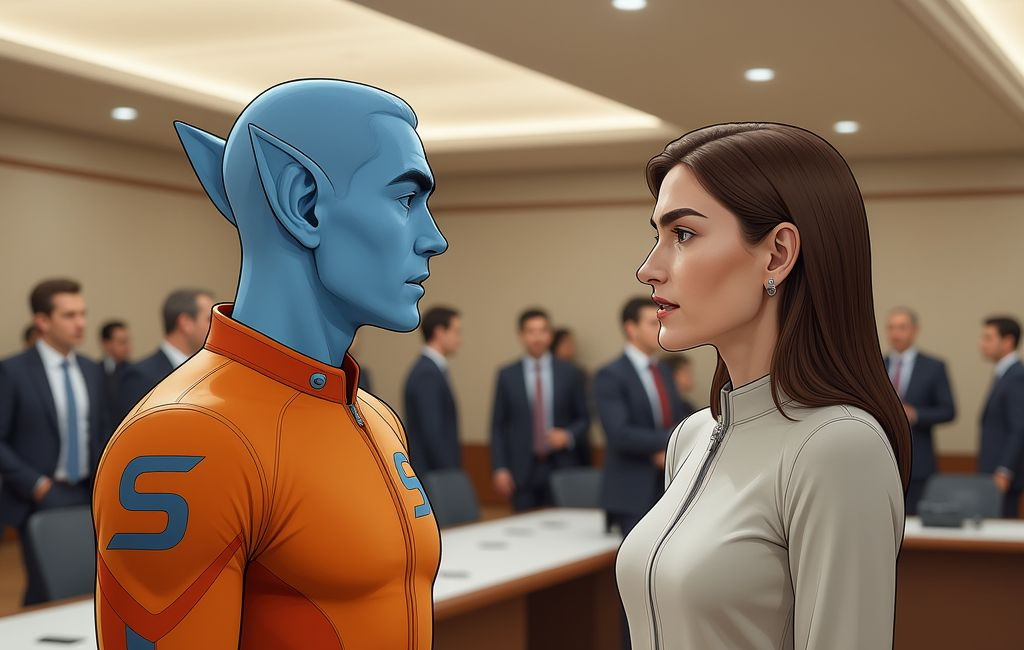
It was my first time at the ‘Palais de Nations’ in Geneva- after I used the East River to flood UN headquarters in New York I figured I’d be persona non grata at their headquarters in Europe so there was no use paying a visit. But as you know it’s a different me now, and with the help of a new suit I purchased from Aelia Duty Free, security let me in without trouble.

I spotted Claudia Mahler chatting with two men who had Japanese flag pins on the lapels of their jackets. Japan was one of the countries most opposed to beginning to draft her new treaty, so their delegates probably wanted to have a word.

“What a big smile,” I said to Claudia, stopping a few feet away. She turned, probably assuming I was a more friendly Human Rights Council delegate, looking pleased by the opportunity to get away from the Japanese.

“It’s been over a decade in the works,” she replied. She turned back to the Japanese men and bowed slightly, clasping her hands together in front of her chest. They did the same, and then headed away.

“Yup, just what we need, to spend the next few decades carefully drafting a new treaty for us all to ignore,” I told her.

She wrinkled her forehead, like she was trying to size up who I was. Probably because no UN delegate would ever be blunt like that. Even the Americans, who oppose nearly everything having to do with human rights, just say this new treaty may represent an inappropriate allocation of resources. “Have I met you before?” she asked.

I shrugged. “Not in person. But both of our reputations precede us.”

“Shalzed?” she exclaimed, taking a step back.

“Did you think I never wear a suit?” I unbuttoned my jacket so she could see the superhero ‘S’ underneath.

“What do you want? Are you going to trap me in a web or something?”

I laughed. Did she think I used to be Spiderman? “Don’t you know I don’t do stuff like that anymore? I just want to know where this all ends. I mean, how about people suffering midlife crisis? Does every age group need its own treaty?”

She sighed. “Older adults face unique human rights challenges. For example, age discrimination in the workplace. Mandatory retirement ages are a clear violation of human rights. This all needs to be codified as just as illegal as discrimination based on religion, gender, or anything else.”

“I’m sure you’d have no problem travelling in an airplane with a 95 year old pilot,” I said.

“The point is that it’s a human rights violation to set a mandatory retirement age for everyone. Each person’s fitness needs to be individually evaluated.”

“Can’t age discrimination just be included in existing laws?” I asked.

“Older people frequently have trouble accessing health care, and someone needs to define what their rights are,” she continued, picking up steam.

“Fine, but anyone can need health care. Questions about access, coverage of expensive procedures, or experimental drugs can come up at any age.”

“And abuse,” Claudia continued, ignoring me. “Abuse of the elderly may look quite different than abuse of younger people. Not letting older people make their own decisions about living arrangements or healthcare. Financial abuse as family members take away control of bank accounts. Caretakers forcing them to take sedatives so they are easier to look after . . .”

“Okay,” I interrupted. “But do you really think a new international treaty is going to help?”

“Obviously a treaty isn’t going to change things overnight. But governments need clear guidance on what they are required to do.”

I noticed Francisca Albanese, the Special Rapporteur on the Rights of Palestinians, walking by. When she saw Claudia she came right up to her without even noticing me. “Would you like me to draft a press release condemning Israel because there is no way the elderly in Gaza can possibly evacuate the way Israel is expecting them to?” She asked. “I’m trying to arrange for every UN Special Rapporteur to condemn Israel at least once a month.”

“How about when Hamas, Hezbollah, or the Houtis fire rockets indiscriminately at Israeli cities?” I asked her. “People often have less than a minute to reach shelters, and the elderly or those with disabilities can’t possibly do that.”

She glared at me. “Are you Shalzed?” she asked.

“That’s right,” I told her. “Unlike you, sticking up for the rights of both Israelis and Palestinians.”

“I don’t know why you even bother speaking to him,” she told Claudia, pointing a finger at me. She stormed off down the hall, calling over her shoulder that she’s send Claudia an email.

“You have so many friends,” Claudia said to me.

Well, human rights is a lonely business. “Here’s another question,” I told her. “Isn’t a lot of this cultural? Like in some countries older people are more likely to be cared for in the home by their children, whereas other countries are more likely to use senior centers. And how people are cared for is unique to every situation and family. So why are you trying to make a universal treaty?”

Claudia sighed. “The Japanese delegate was just telling me that. A treaty doesn’t commit anyone to anything specific, it will just help clarify what the elderly’s rights are.”

You’ve got to love twenty years negotiating a treaty that doesn’t commit anyone to anything specific. That’s the way the United Nations keeps earning its well deserved reputation for getting things done. “Remind me, how many core human rights treaties do we have already?”

Nine,” she said.

“Right. We already have treaties to end discrimination against women, against people with disabilities, racial discrimination, and more. How’s that going? And you really think making it ten is going to help?”

“I thought you promote human rights,” Claudia said.

“Of course I do,” I told her. And I’d have added that I think I accomplish more than most UN bodies or Special Rapporteurs if I wasn’t to humble to boast.

“Then why are you cynical? No one treaty can change the world, but the more we focus on fleshing out what human rights mean in different situations and to different groups of people the farther we’ve come. A new treaty will give activists a platform to campaign from.”

A woman wearing a press credential around her neck walked up to Claudia. “I’d love to interview you about the new treaty if you have a moment,” she said.

Claudia smiled. “It would be my pleasure,” she said. Then she turned to me. “Rights of the elderly doesn’t get as much coverage as what most of the other rapporteurs work on,” she said. “I take whatever press exposure I can get.”

“Is this your husband?” the reporter asked, gesturing to me. A look of horror came across Claudia’s face. “Sorry, I didn’t mean to assume,” the woman said.

“He’s just someone who shouldn’t even have been allowed in this building,” Claudia said.

“I’m leaving now,” I told her

The reporter gave me a funny look, probably trying to decide if I was some sort of stalker. “It’s been nice to meet you,” she said. Then she turned her back to me as she pulled a voice recorder from her purse to use for her interview.

As I turned to go the reporter asked Claudia whether she thought it was fair to call the recent decision to begin work on the treaty momentous, and Claudia said absolutely. Then I passed by the security guards at the building’s grand entrance and headed out into Geneva’s chilly April air. I saw a man taking a selfie with his two little kids, both looking around middle school age, the sign for the UN Human Rights Council headquarters in the background.

“This is the building where they make sure the world is fair for everybody,” the man was telling his children “Here they do the most important work of all.”

I kept my mouth shut as I passed by. No sense telling the kids that even though what their dad said sounds great, it just ain’t so.

Subscribe to Receive Shalzed's adventures in your inbox

Questions:

1. Is it worthwhile to develop more international human rights treaties, while we see that the ones we already have are often ineffective?

2. Do mandatory retirement ages for professionals such as pilots violate human rights, since some people who are still physically able to do the job will be unjustly prevented from doing so? Or are mandatory retirement ages necessary to insure safety, and there is no practical way to determine each person’s exact level of fitness?

3. Is how an elderly person is treated something that should be decided on an international level, or are there such wide variations in cultural practice and family preference that global standards cannot be universally appropriate?

femicide milei

Femicide: Shalzed Sneaks in on Argentina’s Javier Milei

Femicide: Shalzed Sneaks in on Argentina's Javier Milei

Anti-personnel land mines are inherently indiscriminate, harming soldiers and civilians alike. They continue to kill and maim innocent people long after conflicts end. In 1997, the Ottawa treaty was drafted to prohibit their use, and so far approximately 165 countries have joined. But recently Estonia, Latvia, Lithuania, and Poland announced that they will leave the treaty, and now Finland is following suit.

Today, Shalzed catches up with Finnish Prime Minister Petteri Orpo to find out why he wants to weaken a successful arms treaty and bring back a type of weapon that kills at least 5000 innocent people a year. To read Shalzed’s biography, click here.

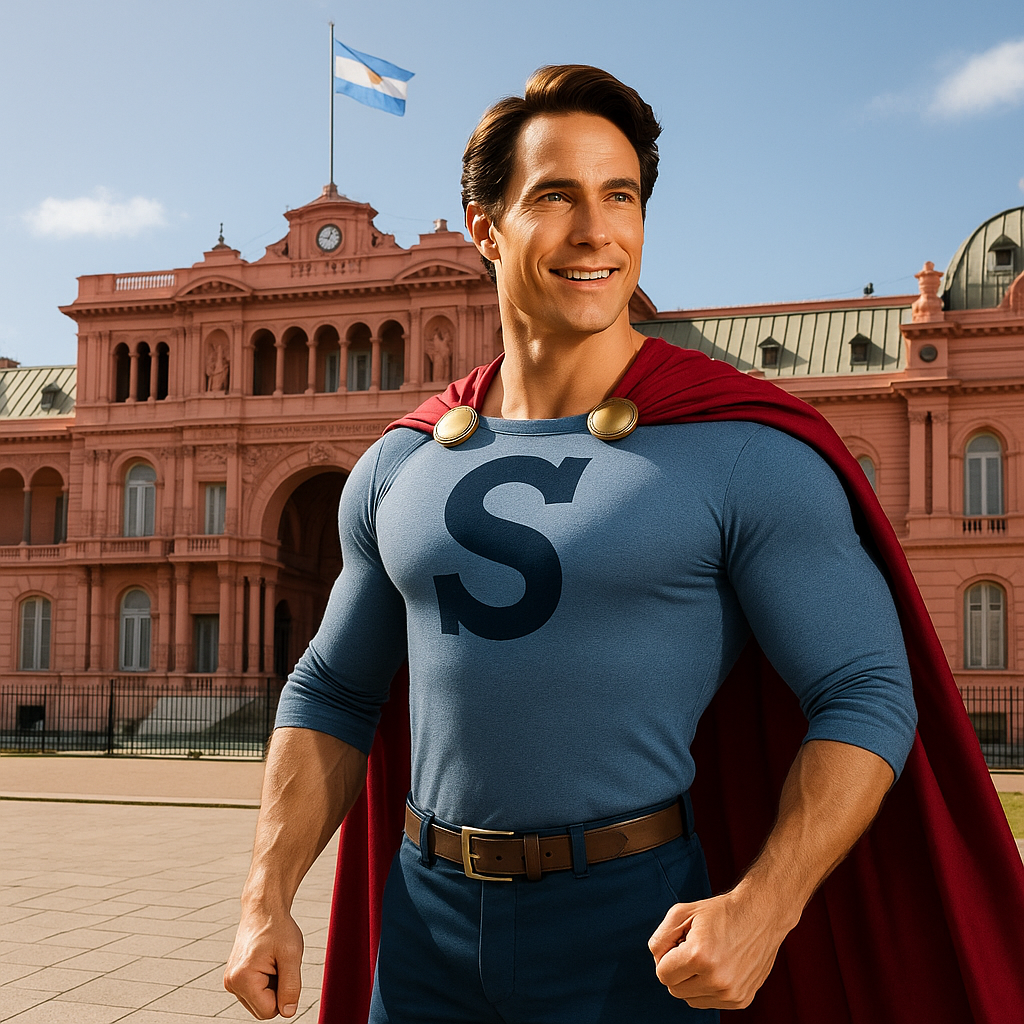
Yes, I gave up using superpowers. And yes, I do miss them, thanks for asking. But at least I had fun this morning sneaking into the Pink House. I joined a bunch of farmers protesting export taxes and kept shouting ‘sin el campo, no hay pais’ right at the guards so loud they had to arrest me. The funny thing is I just read it off one of the farmers’ signs and I’m not even sure what it means. Then once the guards brought me to one of their little holding cells on the inside I used my extra strength to bust the handcuffs and slip into Milei’s office. Good times.

When Milei’s helicopter finally arrived I was taking a nap. Listen, I was up early to get here and he has a comfortable couch. I went over and watched through the window as the rotors of his Sikorski S-76 slowed to a stop and wondered why the taxpayers of Argentina put up with paying for this every single workday. Why didn’t they demand El Presidente convert some Pink House office into a bedroom, or failing that he could spend at least some of his nights on his very nice office couch?

Milei came in a few moments later, carrying his stylish black briefcase. “What the hell are you doing here?” he exclaimed as soon as he saw me, dropping his briefcase on the floor in surprise.

“It’s been a while,” I said, even though just a few months ago I joined him on his airplane to find out why he called the United Nations a multi- tentacled leviathon for trying to stop hate speech against women.

Two men with communication devices in their ears and hands on their revolvers entered quickly. Probably they were alerted by Milei’s voice and the thud of his briefcase hitting the floor.

“Don’t shoot,” I said, raising my hands slowly. “I’m worried because I’m not a woman.”

“He’s the one that escaped this morning,” one of the guards said. “He was with the crazy farmers complaining about the export tax.”

Milei wrinkled his nose. “You’re here to complain the export taxes are still too high?” he asked.

“No, I’m here to ask why even though violence and murder of women and girls continues to rise, you’ve decided to eliminate the crime of feminicide.”

Milei clicked his tongue and picked up his briefcase, then sat down at his desk. That signaled the guards to relax. “Aren’t you still a human rights defender?” he asked.

What the hell? “No, I push old folks onto train tracks during the day then rob banks at night,” I said.

“Well then that explains it,” he replied. “You see, I’m in favor of equality. I believe the murder of a woman should be punished the same way as the murder of a man. But I guess when you gave up being a superhero you also decided sexism and discrimination would become your new calling.”

No one talks to me like that. “And I thought someone who cares about equality might want to do something about the fact that women suffer an overwhelmingly disproportionate amount of gender based violence,” I told him.

One of the guards said something to Milei in Spanish, and Milei raised a palm for him to wait. “Eres mas lento que una tortuga,” I said to the guard. It means you’re slower than a turtle and it was the only Spanish insult I knew. He said something back I couldn’t understand which started the other guard laughing.

“You know what I don’t understand about the human rights folks?” Milei asked me. “They’re clamoring for femicide laws even though it’s already been proven that they have no effect.”

I sighed. I knew Milei wasn’t stupid, so why was he pretending to be? It’s true no law adding a few more years of jail when a guy murders his wife or girlfriend over the punishment for a regular homicide can really succeed at deterring those crimes, but femicide laws still make plenty of difference. “Femicide laws do work,” I told him. “Without them, we wouldn’t even know how common it is for men to kill their intimate partners and so we’d be less able to take steps to prevent it. Only with femicide as a separate crime can we begin to compile accurate statistics, let alone have effective prosecution and conduct appropriate investigations.”

“That’s my point,” Milei said, smiling and raising his palms like he had been proven innocent. “I’m not anti-women and I don’t condone domestic violence. But what we need here is more awareness, more data, and better police work. Not laws that result in discrimination.”

I sat down on his comfortable couch. A woman dressed in a stylish beige skirt and matching sweater came in and announced that ‘El Ministro Mariano Cúneo Libarona’ had arrived for his appointment.

“I think it’s time for you to go,” Milei told me. Both the guards stepped in my direction, grinning and arms outstretched.

“Isn’t Mariano the minister of justice?” I asked, remaining seated. “If so I should stay, I think both of you might need my advice.”

“I’m pretty sure my guards would enjoy dragging you out the door and tossing you onto La Pirámide de Mayo. And I’d enjoy watching,” Milei said.

There’s no way I’d let those goons touch me, but there’s a Chinese proverb about not overstaying your welcome that I take seriously so I slowly stood up. “Fine. Just tell me one thing. Sixty percent of women who are murder victims turn out to have been killed by a member of their own family. It comes to around 140 women per day worldwide. So you really think removing femicide as a crime is a good idea?” I asked.

Ministro Mariano walked into the office, I recognized him easily due to his distinctive grey hair. “Did I hear people talking about our plan to reassert that no life is worth more than another by removing femicide from the penal code?” he asked.

I wanted to wipe the smug grin from his face. “If no life is worth more than another, maybe governments should take more action against a serious form of violence that usually goes unreported and unpunished simply because the victims are women,” I said.

“Femicide is just woke culture gone crazy,” he replied.

I had honestly been about to leave, but now I decided to sit back down. “Protecting women from being killed is woke culture?” I asked, folding my arms against my chest.

“Femicide started off meaning just the murder of a woman or girl by an intimate partner or member of her family,” Mariano said. “But did you see that your friends at the United Nations have now added eight more categories (p. 12)? One of them is even ‘women working in the sex industry’. Imagine that- killing a police officer, bank guard, or guy that got the promotion you’d been after at the office is one thing. But according to UN Women, killing a sex worker is a new, especially serious crime.”

“Maybe because men think that killing a sex worker won’t be taken seriously by the police and so is easy to get away with,” I said. “Don’t you two equality brothers believe sex workers have a right to life?” I asked.

“La Pirámide,” Milei said, gesturing to the guards.

I stood up and took a step towards the exit. “Did you know in the Jewish tradition each morning men say a special blessing to thank God for not creating them a woman?”

“Well that sounds rather sexist,” Milei remarked.

“Pure patriarchy,” Mariano added.

“It came from living in a world where men felt one hundred percent entitled to murder wives and daughters that defied them,” I said. “Sounds like that blessing might make a comeback here in Argentina. Would you like some copies?”

“Thanks for the religion lesson,” Mariano told me.

Milei made another gesture, and both guards stepped briskly towards me. I slipped between them and out the door so I wouldn’t wind up with more of their germs on my clothing. The woman in beige was standing there, hands on hips, and she pointed me towards the exit.

I went out into Plaza de Mayo and saw that the farmers had already dispersed. Maybe all they wanted was to wave their signs as Milei’s helicopter landed and then they had to get back to their crops.

I sized up the pyramid in the center of the plaza. Even if I had let the guards carry me out there’s now way those two could have lifted me over the high fence around it, let alone dragged me up. I strolled over and took a closer look. I noticed the statue on top is the figure of a woman, and according to the sign she’s supposed to represent liberty and freedom. Sorry to tell you, I think she’s got a long way to go.

Subscribe to Receive Shalzed's adventures in your inbox

Discussion questions:

1. Codifying femicide as a crime seeks to punish certain murders of women more harshly than the murder of men. Is this necessary to protect women from gender based violence, to which they are uniquely vulnerable? Or is it an affront to the principle of equality that is fundamental to all human rights?

2. Femicide is intended to cover situations in which a woman or girl is killed specifically due to her gender. But countries that have enacted these laws have used a wide variety of definitions. Some include the killing of a woman in the context of sex-work, human trafficking, denial of reproductive rights, domestic abuse, female genital mutilation, and more. Is it possible to establish a clear and effective definition for this crime?