
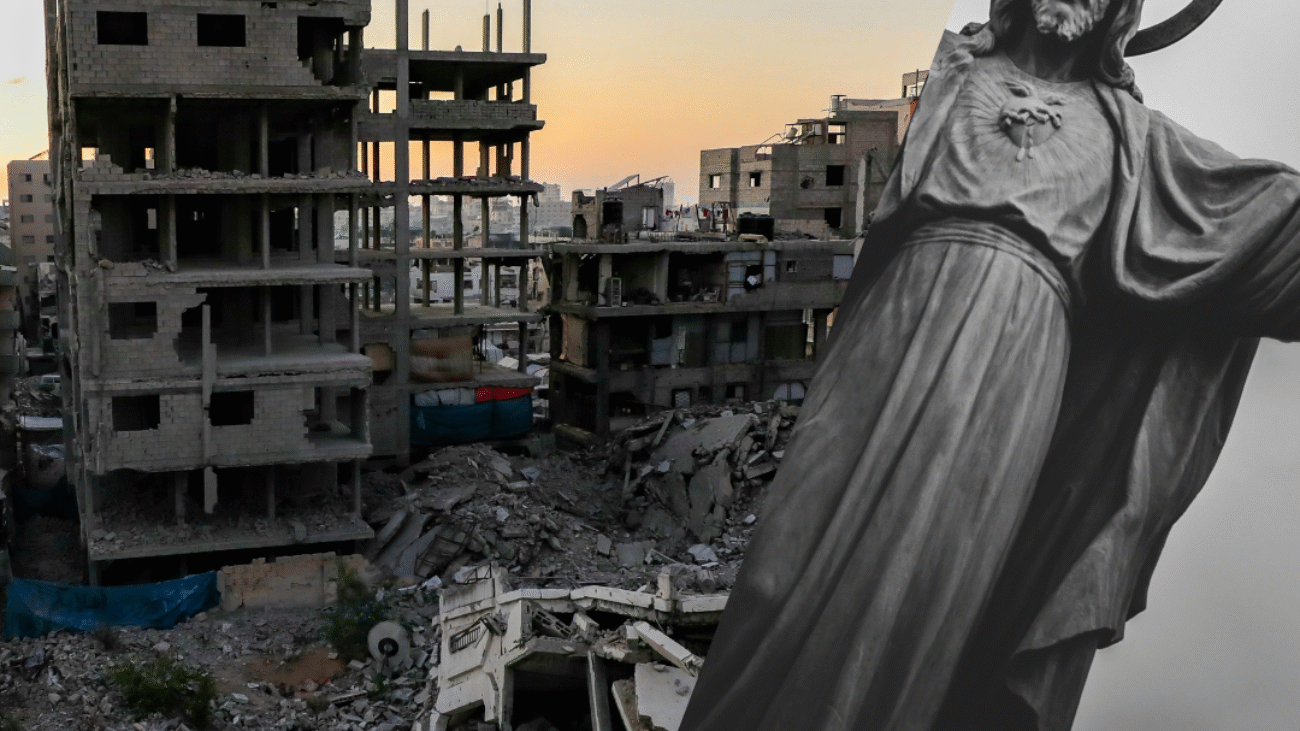
Shalzed can’t understand why one damaged statue sparks instant outrage while far greater suffering remains endlessly debated.
Home » shalzed
Shalzed can’t understand why one damaged statue sparks instant outrage while far greater suffering remains endlessly debated.
Why do we trust some countries with nuclear weapons, but not others?
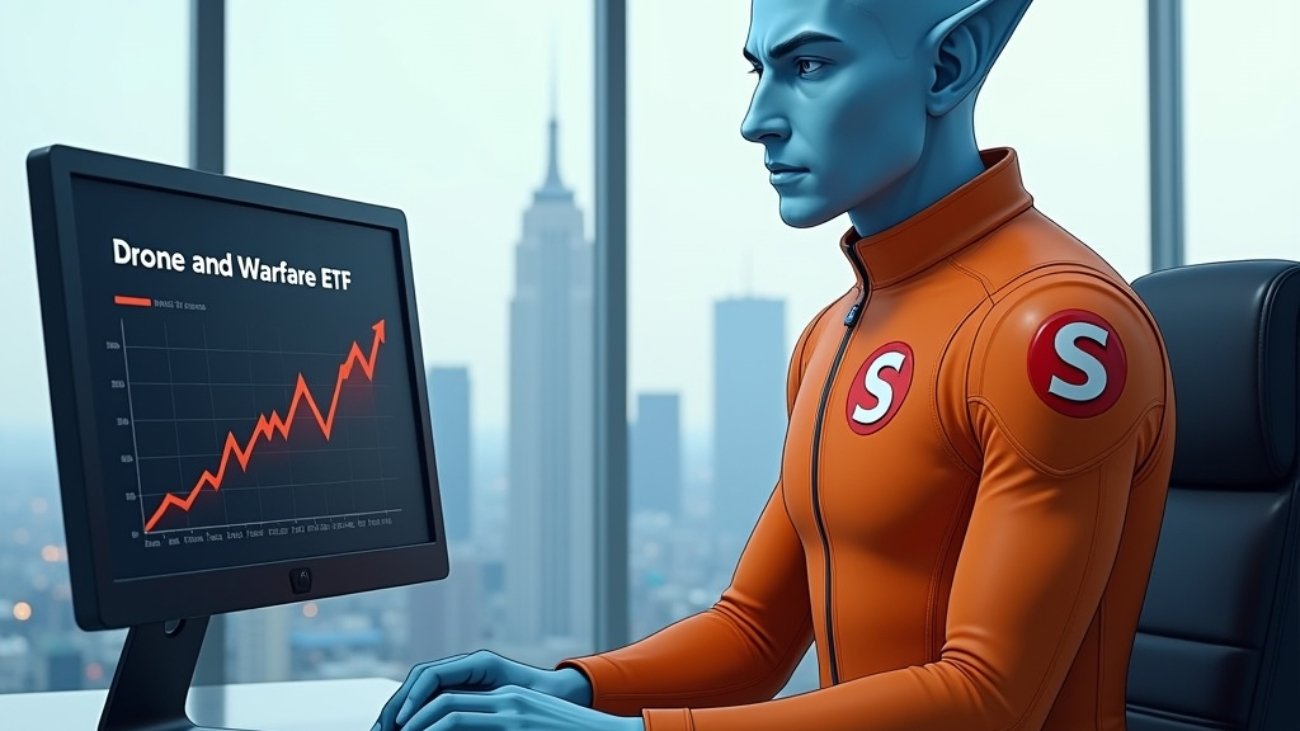
For investors, war can be profitable. A new fund seeks to capitalize on rising demand for drones and ammunition — but is the right way to boost your savings? Shalzed investigates.
I was at home doing my taxes when Shalzed rang the doorbell. I buzzed him up. “Welcome,” I said as he came in the door.
“I wanted to. . .” he began. Then he noticed that I was working at my computer and asked if I was busy.
I smiled. “Just finishing up my taxes,” I told him.
He noticed a paper on my desk. “What’s that?” he asked, wrinkling his forehead.
“It’s the fact sheet for an investment a friend of mine recommended,” I replied. “I’m going to make a contribution to my retirement fund before I file, and I need to decide what to do with it.”
Shalzed picked up the paper. “A fund for drones and modern warfare?” he asked.
I shrugged. “With the current war in Iran, along with what’s been going on in Ukraine, defense spending is sure to go up,” I told him. “And now every military needs drones.”
Shalzed looked aghast. “You want to make money by investing in companies that build robots that kill people?” he asked.
I hadn’t really thought about that before, and suddenly I felt uncertain. “It’s just an investment,” I mumbled. Then I found myself inside the familiar black tunnel, and a moment later I was standing next to Shalzed in a large executive office. A middle aged man wearing a blue suit and blue tie was sitting behind a desk, staring at his computer. A name plaque on the desk said Matthew Bielski, CEO of Defiance ETFs. Behind him, a city skyline showed through a wall of glass.
“How can you encourage people to invest in companies that make weapons?” Shalzed asked.
Bielski shook his head in surprise. “Who are you?” he asked.
“I had been thinking of investing in your drone warfare fund,” I told him. “My friend is here to learn about human rights, and he has some questions.”
“Our funds have a solid track record of outperforming the market. I believe drone technology could be Wall Street’s next big winner.”
“But do you really want to profit from making machines that kill?” Shalzed asked.
Bielski frowned. “If it wasn’t for drones, Russia would have already taken over Ukraine.”
“What if drones are used for war crimes?” Shalzed asked.
“That’s the responsibility of whoever uses them, not us,” Bielski said.
A guy in his twenties carried a stack of papers into the office. “The DRNL documents are ready for you,” he told Bielski.
“Great,” Bielski said. “I’ll take care of it in a minute.”
“DRNL?” Shalzed asked.
“It’s a new, leveraged fund that gives twice the daily performance of companies making drones and their ammunition,” he said. Then he looked at me. “It’s for active, experienced traders,” he said.
I guess he could sense that I was a teacher with just a few thousand dollars in my IRA, not someone who played the stock market.
“So you’re hoping for more wars,” Shalzed said, pointing one of his long, blue fingers at Bielski. “Because every time there’s a war, you profit.”
The guy who brought the papers looked smug. “If they aren’t fighting a war, they’re arming for the next one,” he said.
Bielski clicked his tongue. “We don’t start wars,” he said. “The companies we buy stock in just give governments the tools they need to protect their citizens.”
“But buying the stock of companies that make weapons enables them to develop. Then you’re part of the whole war machine,” Shalzed said.
Bielski leaned back in his chair and rolled his eyes. “So just one question,” he began.
“What?” I asked, feeling uncomfortable with the silence.
“If you don’t like weapons, what do you think would be a better investment?”
“How about companies that make food?” Shalzed said quickly. “That’s something all people need.”
Bielski scoffed. “Do you really want to support factory farming? Or companies that make cheap processed food that’s a health disaster?”
“What about companies that make clothing?” Shalzed asked.
Bielski smiled. “Most of them operate sweatshops and many are accused of modern slavery.”
Shalzed wrinkled his forehead. “What about transportation? Trains, planes, and automobiles?”
“Ever heard of climate change?” Bielski asked. “Car companies are lobbying against rules requiring cars to be more efficient. Airplanes are one of the biggest polluters.”
Shalzed looked down.
“Well right now I just own an index fund,” I said.
Bielski grinned. “So congratulations, you already have weapons companies in your portfolio,” he said. “There are at least a dozen in the S&P 500.”
Suddenly I was in the tunnel, and a moment later back in my apartment. This time Shalzed was still with me. I turned to my computer. I don’t know why, but I felt it would be embarrassing for Shalzed to see how much money I made. But the tax program had timed out.
Shalzed picked up the fund’s fact sheet again. “So are you really going to buy stock in companies working to perfect drone warfare?” he asked.
I wasn’t sure. “The amount I’d invest is almost nothing compared to what companies are worth. It’s not going to make any difference,” I told him.
“If you see on the news that children were killed in a drone strike, do you want to feel like you had even a small part in that?” he asked. “When you see countries launching waves of drones, will it make you happy to think that means more orders?”
I swallowed. “I’m just trying to make my retirement account go up,” I said.
Shalzed turned towards the door, then stopped to glance at the drone fund fact sheet, still on my desk. “And do you want Earth fighting wars with even more advanced weapons by the time you retire?” he asked.
One story or question each Friday in your inbox
You'll receive an email each Friday, one week a story, a question the next.
All of Shalzed's emails are sent via Substack.
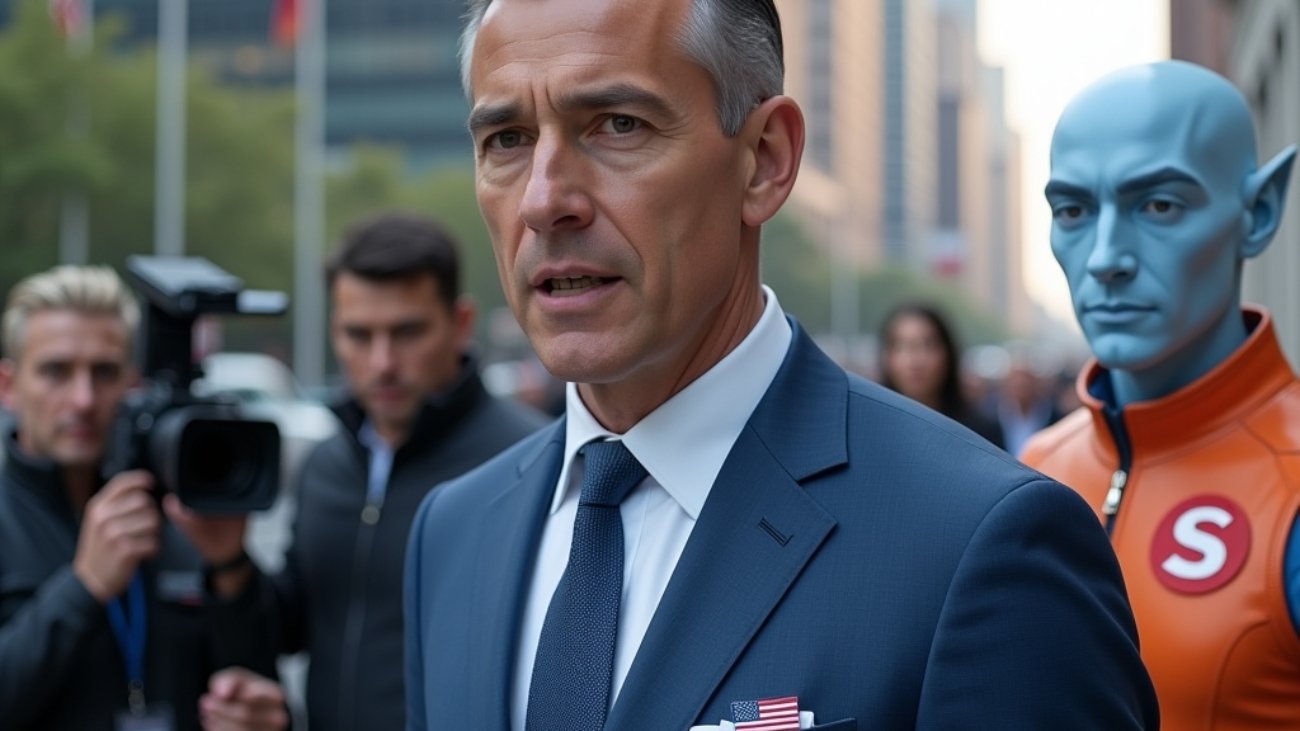
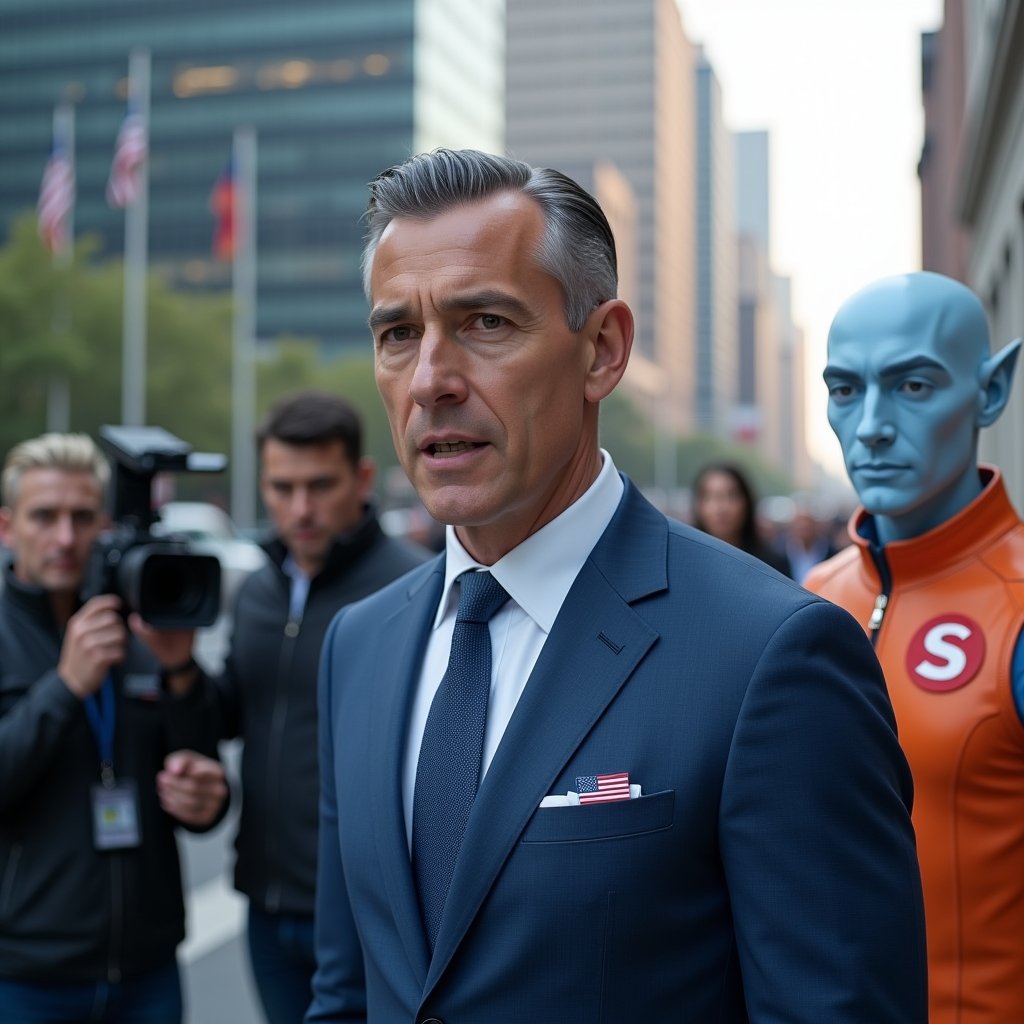
The United States and Israel claimed self-defense as the justification for their attack on Iran. But even though Iran is a hostile country that has threatened the U.S. and Israel many times, it didn’t seem to be a significant threat right now. Shalzed confronts U.S. Ambassador to the United Nations Mike Waltz with this question.
I was on the phone with my brother, who had moved to Israel four years ago. He was telling me about how his daughter was very upset about school being cancelled when the siren sounded. I hung up right away so he and his family could get to their shelter. Then Shalzed called.
“I don’t understand,” he said. “How could the U.S. and Israel launch such an attack?”
“Well, we can’t let Iran get nuclear weapons.”
“But that’s not a reason to start a war,” Shalzed said.
I figured Shalzed probably didn’t know much about Iran. Before I could say anything, though, I was in the black tunnel. By now I was used to it enough that I was no longer afraid, and I really wanted to find out how it worked. A moment later I was outside the United Nations in New York, with Shalzed next to me. A man wearing a blue suit with a U.S. flag pin on his jacket was standing nearby, trying to attach a lapel microphone to his jacket. “Ambassador Waltz,” Shalzed called.
The Ambassador turned and looked at Shalzed. “Who are you?” he asked.
“I don’t understand. Countries can only use force to defend themselves,” Shalzed began.
“I’m sorry, I’m just about to go live on Fox News,” Waltz replied, gesturing Shalzed and I to move along. A few steps away, a reporter was conferring with a cameraman.
“But didn’t the U.S. and Israel just violate the UN charter?” Shalzed persisted.
Waltz shook his head and sighed. “Absolutely not,” he said. “Iran has thousands of missiles and is attempting to develop nuclear weapons besides.”
“But how can you say it’s self-defense if they didn’t attack?” Shalzed asked.
“Almost ready,” the reporter called. “Do a sound check, please.”
Waltz nodded. “The Iranian government killed thousands of its own citizens in recent protests,” he said in a robot-like monotone. The reporter gave him a thumbs up. Then he continued in a normal voice, “Some say tens of thousands. We may never know the real number.”
“And that means you can bomb their nuclear facilities?” Shalzed asked.
“Iran’s leaders have been leading chants of death to America and death to Israel for decades,” I interjected. “They even put a clock in the center of Tehran counting down the days until Israel is destroyed.”
Shalzed looked shocked. “Well how can they do that? Didn’t the UN tell them to take it down?”
I laughed, and Waltz also chuckled. “No,” he said. “Evidently, there’s nothing against countdown clocks in the UN charter.”
The reporter walked over. “I’m sorry, we’re delayed just a couple of minutes,” she said. “They broke in with an update from Tel-Aviv.”
“What happened?” I asked, worried people may have been killed.
“Direct hit on a school. But it wasn’t occupied, no injuries.”
“You see, Iran doesn’t follow any international law,” Waltz said. “They shoot missiles at schools, they fire randomly at cities. Then we’re the ones that get criticized.”
“Can you say that when we’re live?” the reporter asked.
“Of course,” Waltz replied. “And I’ll also mention that right now they are carrying out aggression against Saudi Arabia and the Gulf States too. Then people make it out like the United States is the one that doesn’t follow the law.”
Shalzed crossed his hands against his chest. “I understand the government of Iran does bad things. But can that justify an invasion?”
The reporter looked at Waltz expectantly. I had a feeling she was interested to hear his reply, too.
“So should Israel wait until they have ten thousand missiles, many armed with nuclear warheads, and then it’s too late?” he asked.
“Israel can’t risk a nuclear armed Iran,” I added.
“Almost ready,” the cameraman called as he lifted a bulky tv camera onto his shoulder.
Waltz straightened his hair with his hand. “Bottom line,” he said. “Countries are entitled to defend themselves. Iran has been a threat in the past, and we have every reason to believe they will continue to be a threat in the future.”
“Say that on air,” the reporter said.
“But Iran wasn’t a threat right now,” Shalzed interjected. “And any country could potentially be a threat sometime in the future.”
A light on the camera turned on. “Five,” the cameraman said, then he started counting down.
The reporter stepped in front of us, right next to Waltz. As the light on the camera changed color she began. “I’m here at the United Nations with U.S. Ambassador Mike Waltz. Mr. Waltz, you just explained to the security council that the action against Iran is completely in keeping with international law. Give us a recap.”
As Waltz began speaking I was back in the black tunnel. I tried to feel around for any clues about what it was made of or how it operated, but before I found anything I was back in my apartment. My phone was ringing- it was my brother calling back.
“Everything alright?” I asked as I picked up.
“Yeah,” he said. “A missile got through the iron dome and hit a school. The building was destroyed, but no one was hurt.”
“Near you?” I asked.
“Just a few kilometers away. Thank God we’re fighting this war now, while Iran still doesn’t have nuclear weapons.”
I told him I was glad he was safe, then I shook my head. Once Iran got the bomb, it would be too late. But if every country struck before it was too late, war would also be endless.
One story or question each Friday in your inbox
You'll receive an email each Friday, one week a story, a question the next.
All of Shalzed's emails are sent via Substack.
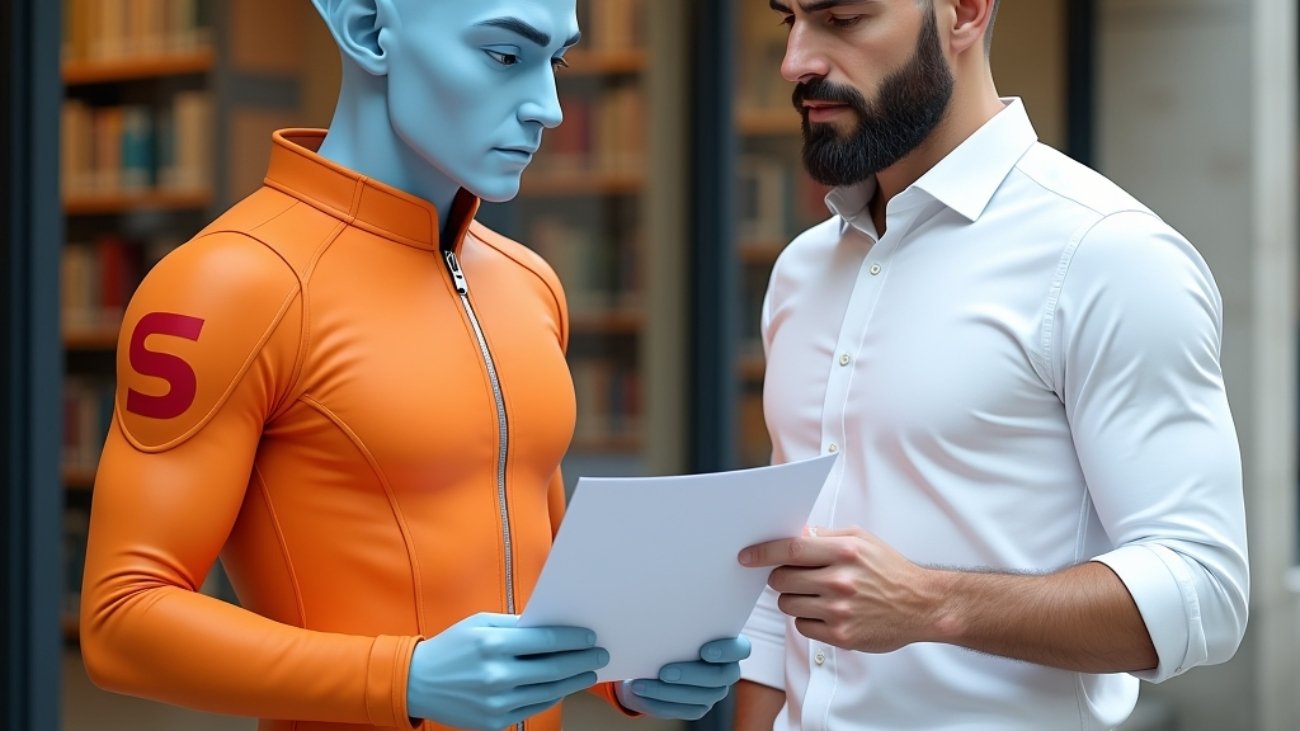
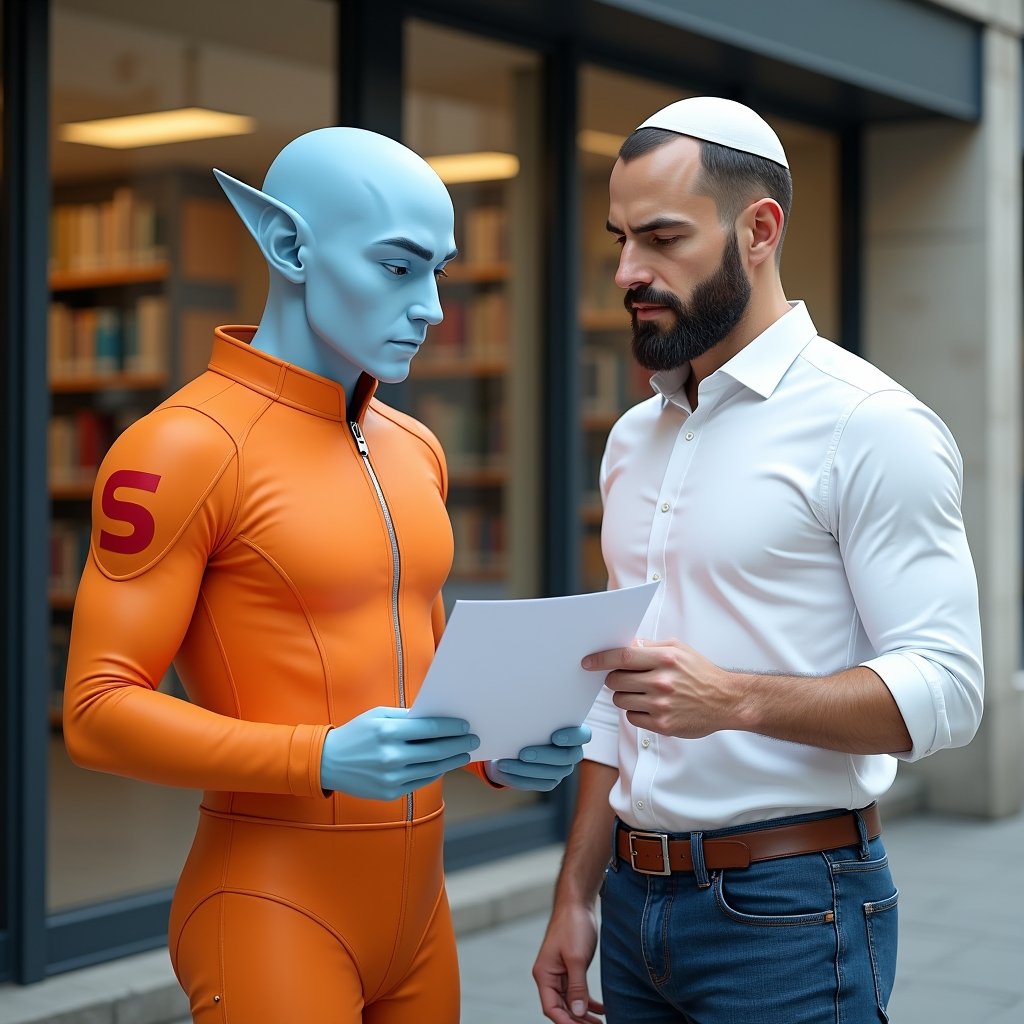
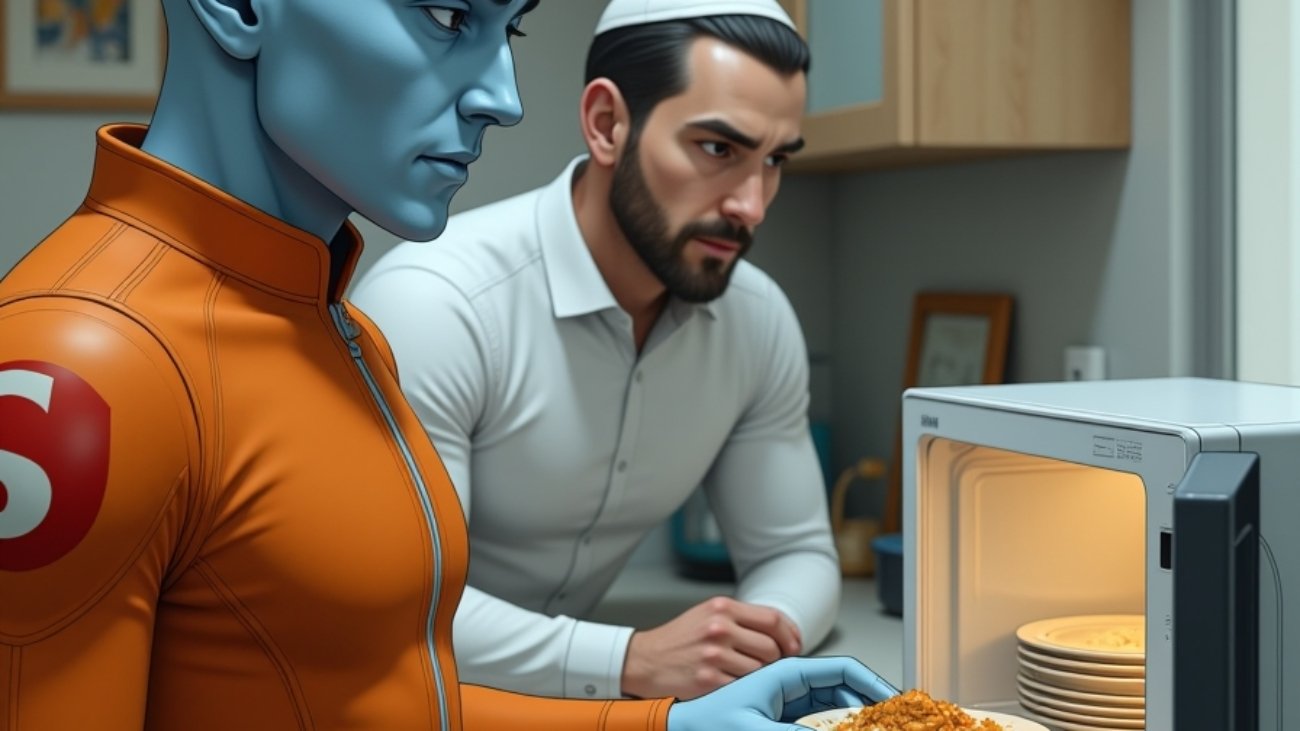
Shalzed hears the story of Purim — and gets stuck on the ending. Yes, the Jews are saved. Yes, Haman’s plot fails. But then comes the part we don’t always linger on. Shalzed has some questions. . .
It was Thursday night, and in addition to preparing a salad to bring with for Shabbat dinner, I had to practice the chapters of the megillah that I had committed to read on Purim. But Shalzed said he really wanted to take out more books on human rights but couldn’t without my card, so I agreed to meet him at the library.
When I got there he was waiting in the lobby, absorbed in a book titled The Last Utopia: Human Rights in History. I tapped him on the shoulder and he said he was ready to check out, and a few minutes later we were out the door.
“I’m sorry to be in such a rush,” I told him. “But I have to practice my megillah reading tonight.”
“Your what?” Shalzed asked.
I smiled. “Next week is Purim. We read the book of Esther.”
“You already know how to read, so why do you have to practice?”
I couldn’t help but laugh. “Yes, but the book of Esther is written on a Hebrew scroll. To chant it, you have to memorize all the cantillation marks along with all the vowels.”
He didn’t understand, so I stopped at a bench and showed him the copies of the Hebrew pages I had taken along in my backpack. Shalzed examined them carefully. “What’s this?” he asked, pointing to the section where the lines look different. There was only one word on the left, one on the right, and a blank space in the middle.
“It’s the ten sons of Haman,” I told him. “That’s the way their names are written.”
“Why?” he asked.
I shrugged. “Because they were all hanged at the same time. The tradition is to read all the names in one breath.”
“Hanged?” Shalzed looked aghast.
“Because Haman tried to destroy the Jewish people,” I explained.
“So I see you’re getting ready.” I recognized Rabbi Meyer’s voice behind me and turned around.
“I’ll be all set,” I said as we shook hands. Rabbi Meyer was the rabbi of Congregation Anshei Shalom. I went there most Shabbats, and that was where I would be reading the megillah.
“Why should Haman’s sons be hanged for a crime committed by their father?” Shalzed asked.
Rabbi Meyer gave him a funny look. I told him that Shalzed was a friend from far away who was interested in learning more about human rights. “It says in the Talmud that Haman’s sons had key parts in the plot,” Rabbi Meyer said. “There are many aspects of the Purim story that at first appear problematic, but the Talmud always provides an explanation.”
“Like for all the killing at the end?” I asked.
“What killing?” Shalzed added, looking confused.
Rabbi Meyer smiled. “In the last section of the megillah, the Jews turned the tables and were able to kill all those who had been planning to harm them. But the megillah uses the word ‘enemies’ to describe those the Jews killed, to emphasize that they weren’t innocent bystanders.”
“But just because someone is an enemy, that doesn’t mean it’s okay to kill them,” Shalzed said.
“Rabbi Meyer, I’m so glad to see you, I have to ask you a question,” a woman exiting the library said. I didn’t know her name, but I thought I recognized her from shul.
“Is it urgent? I have to pick up a book for my son, then get back to shul for ma’ariv.” He looked at me when he said that, but I didn’t respond. I had already told him that I wasn’t willing to go each evening, even though they usually needed help with a minyan.
“It’s about Shifra,” the woman said.
Rabbi Meyer nodded and they stepped to the side.
“See you on Shabbos,” I told him. Then I turned to Shalzed. “The megillah tells the story of how Haman rose to power and convinced the king to allow him to slaughter all the Jewish people.” I gestured to the papers I was practicing from. “The Jews were saved because at the last moment Mordechai and Esther changed the king’s mind. It’s only natural that then they wanted some revenge.”
Shalzed wrinkled his nose. “What about international agreements?” he asked.
I couldn’t help but laugh again. “The Purim story took place long ago, way before any of that,” I said.
“So long ago on Earth, a king could just decide to wipe out an entire people?”
“Pretty much,” I said. “That’s why at the end of the story the Jews did so much killing. They had to use their moment in power to create fear so no one would try to become another Haman.”
Shalzed considered. “Did it work?” he asked.
This caught me by surprise. “What do you mean?”
“Did killing lots of people prevent future plots against the Jews?”
I shrugged. I had never really thought about that. “I suppose,” I told him. “At the end of the megillah the Jewish people are secure.”
“And what about after?”
I thought for a moment. “I don’t know,” I said. “That’s when the Purim story ends, so it doesn’t say.”
Shalzed seemed surprised. “But history continues.”
A teenager on a skateboard passed by, staring at Shalzed. “Yo, Smurf!” he called. Then he picked up his skateboard and went into a store called ‘Cloud Nine Vape Shop’ right next to the library.
It made me angry, but Shalzed seemed unaffected. “What’s a Smurf?” he asked.
“Never mind,” I told him. “It’s just a stupid kid on a skateboard,” I said, more sharply than I had meant to. I put the papers back in my backpack and slung it over my shoulder. “It probably kept them safe at least for a while. As long as Mordechai and Esther were still in the palace and the same king was on the throne.”
“You said the Purim story happened a long time ago, and that’s why they had to rely on making their enemies afraid. What about today?” Shalzed asked. “If it happened today, would Mordechai and Esther still have tried to instill fear, or would they have felt safer because of human rights and the international system?”
I shrugged again.
Shalzed seemed surprised. “If even now people need to rely on fear to feel safe, will things ever be different?”
One story or question each Friday in your inbox
You'll receive an email each Friday, one week a story, a question the next.
All of Shalzed's emails are sent via Substack.
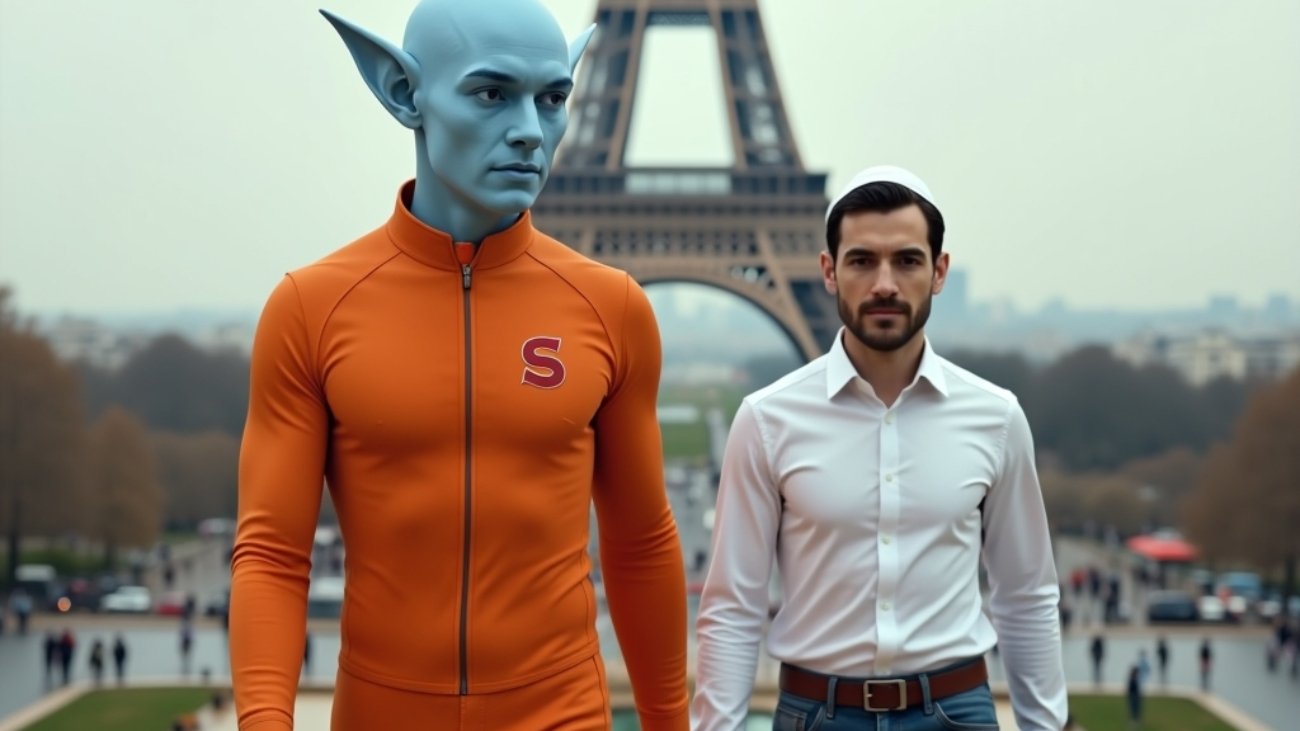

When Donald Trump announced his new Board of Peace, Shalzed was excited. This is just the type of thing he came to Earth for! In this episode he questions French President Emmanuel, who refused to join, and learns why this might not be such a perfect way to pursue peace and justice after all.
I stayed after school to watch the boy’s basketball game. I sat with Rabbi Reichbaum, the principal. It was the end of the second quarter, when the backups who only got to play a few minutes each half were in the game. Rabbi Reichbaum made a special point of watching to make those kids feel important and part of the team. I thought that was a nice idea, so I did too.
But just as a kid made a layup- probably the first time he had ever scored in a game – Shalzed called. I decided that I had to step out into the hallway so Rabbi Reichbaum wouldn’t overhear.
“Earth is amazing!” Shalzed exclaimed as soon as I swiped to accept. “Did you know that the U.S. President is creating a Board of Peace?”
“Doesn’t that have to do with Gaza?” I asked. That’s what I remembered from the news.
“Gaza is just a small part. The Board of Peace will resolve conflicts all around the world.”
“Let’s wait and see,” I told him.
“I don’t understand why all of you humans aren’t excited. I’m especially perplexed why President Macron of France even refused to join.”
Before I could say anything, I was in the familiar black tunnel. This time I tried to focus on the points of light. Were they stars, or were they part of some kind of mechanism? I thought I saw the shape of the Big Dipper, but the truth is I didn’t know exactly what it looked like. Then I was standing next to Shalzed on the second deck of the Eifel Tower, outside a restaurant called Le Jules Verne. Emmanuel Macron, accompanied by an elegantly dressed, much older woman that I assumed to be his mother, had just gotten off the elevator and were headed towards the door.
“Monsieur le Président, why are you refusing to serve on the new Board of Peace?” Shalzed asked. “Don’t you want to help resolve all of the conflicts plaguing your planet?”
Macron wrinkled his forehead. “Who is this, mon cherie?” the woman next to Macron asked in a thick French accent. She grasped his hand in a way that made clear she was his wife.
A security guard stepped forward and said, “The line for the restaurant starts downstairs.”
I took Shalzed’s elbow and tugged him out of the way.
Macron seemed to size Shalzed up for a moment, then he responded. “I declined to join because we already have the United Nations, and maintaining peace and security is what it was created to do.”
I couldn’t help but laugh, but I stopped myself when I realized that Macron was staring at me. “Right,” I told him. “And look how well that’s going.”
Macron nodded. “That’s why we need UN reform. And a new Security Council with broader representation and a revised veto.”
Macron’s wife put a hand on his shoulder. “Mon couer, you’ve been saying that for decades, and nothing ever happens.”
“If reform isn’t working, this is a chance to create a better United Nations from scratch,” Shalzed said.
Macron scoffed. “How can any Board of Peace possibly include Putin, who is responsible for the terrible war in Ukraine?” Macron asked.
“Well, you’re happy with Putin having a permanent Security Council seat and veto at the United Nations,” I replied, because I wasn’t sure Shalzed knew about that.
A man wearing a white chef’s shirt with the name ‘Frédéric Anton’ embroidered over the breast pocket came out of the restaurant and extended his arms in greeting. “Bienvenue monsieur le president, Bienvenue madame Macron,” he said. “Raviolis aux langoustines, crème de parmesan et fine gelée de betterave attendant.”
I didn’t know what that meant, but I was pretty sure it had to do with the menu. I looked out at the incredible view of Paris and saw what I thought was the Arc de Triomphe. I had never been to Paris before, except one time changing planes at Charles de Gaulle airport on the way back from my gap year trip to Israel, so I wasn’t sure.
The chef beckoned Macron forward, but Shalzed stepped in the way. “Much of the world is not represented on the Security Council, and it is stymied by the veto. In the General Assembly, tiny states vote on distant conflicts they don’t understand, guided mostly by who they’re trying to please. Isn’t a broad board which includes representatives from most of the major countries, along with some leaders from other fields, a better way?”
“Excusez-moi, it is time for dinner,” the guard told Shalzed.
Macron’s wife signaled the guard to stop, then put a hand on Macron’s shoulder. “This makes sense, Mon amour. You should listen,” she said.
“Trump is selling memberships for a billion American dollars,” Macron said dismissively. “How can that be a fair way to establish a Board of Peace?”
“The money will go to Gaza,” Shalzed said. “And the UN already takes in billions.”
Macron’s wife clicked her tongue. “I think what really bothers my husband is that Monsieur Trump is a very strange person to have as chairman of a board devoted to peace.”
“Only an egotistical U.S. President would try something as audacious as this,” I said.
“Not just egotistical,” Macron’s wife added. “He just kidnapped the President of Venezuela and is threatening to take over Greenland. Maybe if someone else was behind this my husband would be more supportive.”
Macron shook his head. “Trump is my friend,” he said. “I invited him to join us here for dinner this evening, and I am sorry he did not attend.”
“Speaking of dinner,” the chef said impatiently, gesturing inside.
The security guard nudged Macron forward, and this time Shalzed stepped back to allow him and his companion to enter the restaurant.
“Look at the UN’s paralysis in Gaza,” I said as Macron walked by. I kept to myself that many at my school feel the UN has actually made the situation worse. “If this board of peace wasn’t Trump’s idea, would you give it a try?”
Macron stepped past us and entered the Jules Verne restaurant, with the chef following behind. The security guard lingered, watching Shalzed and me.
I tried to get one last glimpse of Paris as I felt myself being drawn back into the black tunnel. A moment later I was back in the hallway of the school. I wondered how long I had been gone. I heard clapping from the gym, so I figured the game was at least still going on.
I went back inside and saw that the third quarter was just beginning, and now our school’s team was down by 20. I went and took my seat next to Rabbi Reichbaum.
“That was a long phone call,” he said.
“Yeah,” I replied, not sure what else to say.
“At halftime one of the kids from the other school was ejected for taunting. I’m proud none of our boys got into a fight. I think we should talk about it tomorrow, maybe after davening.”
“Ok,” I said. “I’m sure the kids will fill me in.”
“It’s like we need a whole board of peace just to run a basketball game,” Rabbi Reichbaum said. “But not if it means Donald Trump. Even if he does manage to bring peace to the Middle East, I don’t want him anywhere near here.”
One story or question each Friday in your inbox
You'll receive an email each Friday, one week a story, a question the next.
All of Shalzed's emails are sent via Substack.
Sources:
For more background on Trump’s Board of Peace from CNN, click here.


International law says no. Reality is a maybe.
This week, Shalzed and Simon go to Mar-a-Lago to ask Marco Rubio what the rules mean when it comes to Venezuela.
I usually don’t watch the news, but I was surprised enough by the U.S. abduction of Nicolas Maduro to turn on the television while I made oatmeal and toast for my Sunday morning breakfast. Experts were speculating about what’s next for Venezuela. Then, just as Chuck Schumer was complaining that Trump failed to notify Congress, Shalzed called.
“How can one country send its army to capture the leader of another?” he asked. “Isn’t that against the most fundamental rules of international law?”
That’s pretty much what Schumer was now saying on TV. “The Democrats seem to agree with you,” I said as I turned the volume down.
“Democrats?” Shalzed asked. “But the prohibition on using force is in the charter of your United Nations. What does that have to do with Democrats or Republicans?”
Before I could say anything, I was in the black tunnel I had already grown accustomed to. This time, since by now I was no longer afraid or panicked, I tried to feel around to sense if there were walls or if I was traveling inside of some sort of vessel. I didn’t feel anything, and then a moment later I was outside Trump’s Mar-a-Lago country club in Palm Beach, Florida. Shalzed was next to me. We were standing on a wide sidewalk lined by neatly trimmed hedges with a vast, manicured lawn on either side. Through the palm trees, I could just make out the ocean.
“Mr. Secretary,” Shalzed exclaimed, starting up the path towards the main entrance. Marco Rubio was coming out. He looked tired. He had his suit jacket folded over his arm, with a red tie hanging out of his pants pocket.
“Who are you?” Rubio asked. He looked Shalzed over, then glanced at me as I came up behind.
“Wasn’t sending troops to abduct Maduro a flagrant violation of international law?” Shalzed asked.
Rubio shook his head. “Of course not. It was actually law enforcement. Maduro was indicted for trafficking cocaine, and now he’ll face trial in New York.”
“The U.S. can’t make arrests in other countries,” I said. I may not be a lawyer, but at least I know that much.
“And Maduro has immunity as a head of state,” Shalzed added.
Rubio scoffed. “Maduro was the head of a drug trafficking operation masquerading as a government,” he said. “He rigged the last election to stay in power, so he’s not a legitimate president at all.”
“So the United States gets to decide which governments are legitimate—and send in troops when needed?” Shalzed asked.
Rubio sighed. “It’s been a long night, gentlemen,” he said. “I don’t recall seeing either of you before in the ballroom, are you guests for just a few nights? Or are you here for a round of golf?” He raised his eyebrows. I read somewhere that joining Mar-a-Lago costs $1 million upfront, then $20,000 in dues annually. I was wearing jeans and an old Camp Ramah T-shirt, so I probably didn’t look like I belonged.
“He’s come from very far just to be here,” I said, gesturing to Shalzed. However he got us in, I hoped he would also get us out before we were picked up by the secret service.
“Do you really want to undo the principle that countries have to respect each other’s sovereignty?” Shalzed asked. “Isn’t that the key to peace, and fundamental to the UN Charter?”
Rubio shrugged. “The problem with sovereignty is that it usually winds up being used to protect tyrants and dictators.” He tossed his suit jacket over his shoulder and put his hands on his hips. “Do you realize that nearly 8 million Venezuelans have fled due to Maduro, and about 750,000 of them are in the United States. Biden gave most of them protected status because they face persecution back home. How can the U.S. be obligated to bear all these refugees, but not be allowed to do anything about what’s causing them to seek refuge in the first place?”
“But whatever is to be done has to be decided by the UN Security Council,” Shalzed said. “It can’t be left up to only one country.”
Rubio waved an arm. “That wouldn’t work. Russia and China would use their veto.”
“As if the United States doesn’t use its veto, too,” I added.
I felt a hand on my shoulder and turned to see a man in a dark suit with a listening device in his ear behind me. “Mr. Rubio is a busy man,” he said. “I think he needs to get going.”
“Enjoy the golf course, gentlemen,” Rubio said. “Assuming you’ve actually reserved a tee time.”
Rubio walked around us and headed towards the gate, where a black SUV was waiting.
“What are your names?” the man in the dark suit asked. He took a tablet computer from his jacket pocket and opened a page with a list of registered Mar-a-Lago guests. “And I may need to see some ID.”
“Listen,” I said, trying to think of something to say. I realized that I didn’t even have my wallet, my pockets were empty when Shalzed whisked me away. I turned to Shalzed, who was staring at Rubio as he left.
“Are the two of you not on the guest list?” the man asked, pretending to be surprised.
“Um,” I mumbled, touching Shalzed on the elbow. When he finally turned I gave him a pleading look.
I felt relieved to suddenly be back in the black tunnel. I wondered if Shalzed would still have been able to pull off his transportation trick if the guy had put us in handcuffs. Before I knew it I was in my apartment. I smelled something burning and look at the stove. The oatmeal had been on the fire the whole time. The water had all boiled off, and as I turned off the flame I wondered if the pot was ruined.
Shalzed was with me in the kitchen. “How long were we gone for?” I asked him, pointing to the burned oatmeal. I wondered if this could finally be a way to get some information on how his black tunnel worked.
But instead of answering, Shalzed stared at the television. This Week With George Stephanopoulos was still on, and the United Nations High Commissioner for Human Rights was explaining that even though Maduro had a longstanding, appalling record on human rights, that was no reason to justify U.S. intervention in Venezuela.
“But Maduro has been in power for over a decade,” Shalzed said. “And the Human Rights Council never did anything about it.”
“It does seem strange to see the High Commissioner for Human Rights arguing that Maduro should still be in power,” I added.
I wondered if Shalzed was hungry. “I’m going to make some more oatmeal,” I told him. “Would you like some?”
He looked at the burned pot. “Why?” he asked.
I smiled, thinking maybe this was my chance. “Because that pot was on the stove when you took us to Mar-a-Lago. Since we were there for only about seven or eight minutes, that must mean that we spent at least three or four minutes in transit each way, or the oatmeal wouldn’t be so burned. Right?” I asked.
“It looks delicious,” he said. He went to the pot and pulled out a few black, dried-out oats. He put them in his mouth and smiled. “It reminds me of the food we serve at festivals.”
“So you transported us from here to Florida in three or four minutes,” I repeated, hoping he would confirm or deny.
But instead, he turned back to the television. It was showing footage of Venezuelan exiles celebrating in Miami. One of them told a reporter that while he was fearful for his family back in Caracas, he was grateful to Trump and hoped this would finally be a chance for Venezuela to experience freedom.
“Is the High Commissioner for Human Rights going to tell them that they’ve got it all backwards?” I wondered out loud.
Shalzed shrugged. “Can I take that with me?” he asked.
“Sure,” I said, handing him the burned pot. I doubted I would be able to clean it anyway.
“Thanks,” he said. “I’m starting to wonder whether Earth’s international law and human rights work as well as I thought. But I’m glad that at least I discovered this delicious food called oatmeal.”
One story or question each Friday in your inbox
You'll receive an email each Friday, one week a story, a question the next.
All of Shalzed's emails are sent via Substack.
Questions:
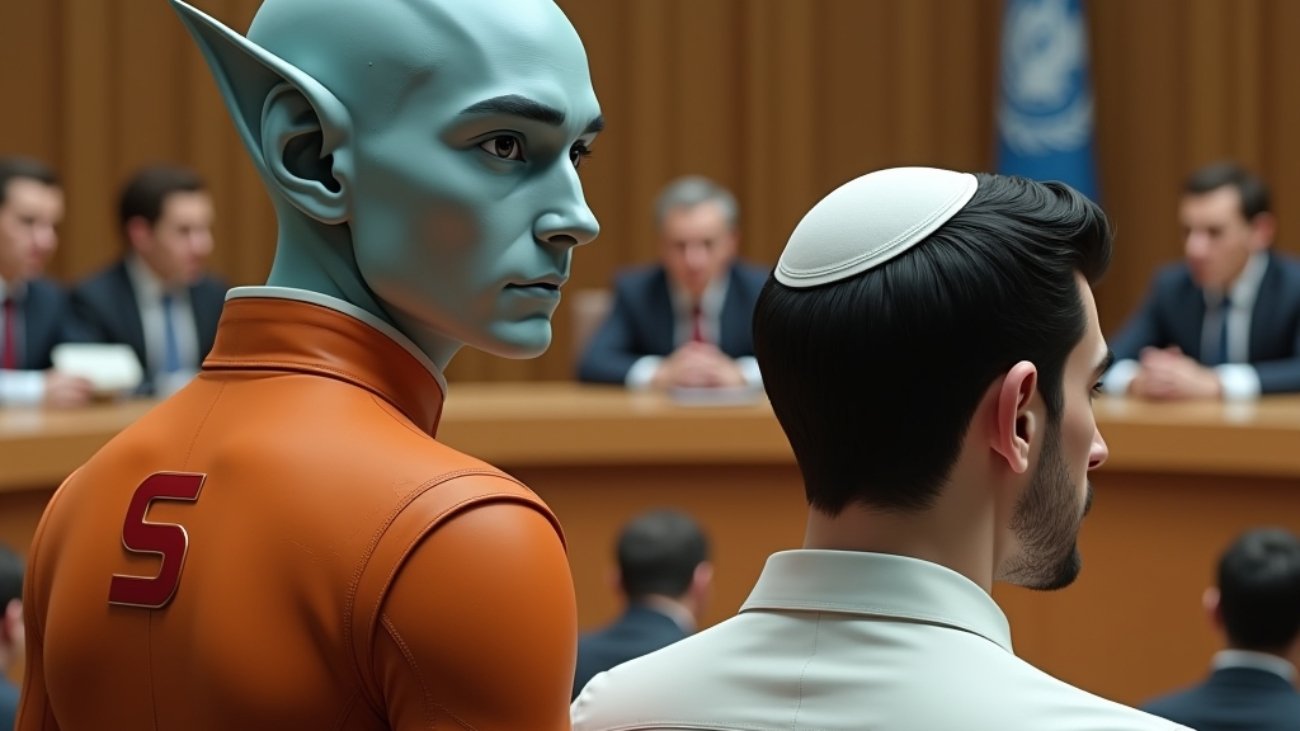
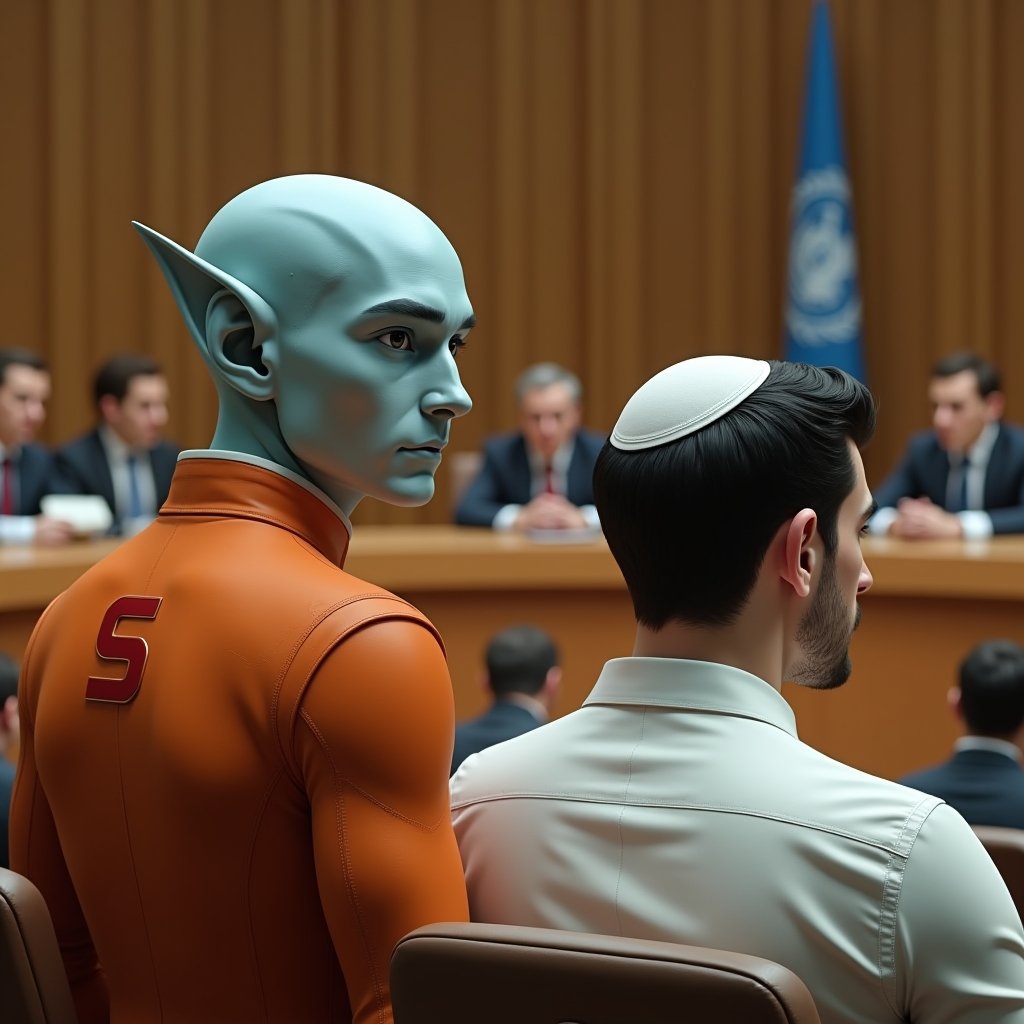
Somaliland has its own political system, currency, and police force — and has been separate from Somalia for over thirty years.
Last week, when Israel extended official recognition, critics cried “meddling.” Supporters say recognition reflects reality on the ground.
But what’s the difference between that and Palestine?
Shalzed and Simon attend an emergency meeting of the UN Security Council to watch diplomats bend their principles when self-interest is at stake.
I was on my way home from school, about to head into Stop’n Shop to buy something to make for dinner, when Shalzed called. “Why does the United Nations Security Council think recognizing Somaliland is a threat to peace and security? They are even having a special session about it.”
“About what?” I asked.
“Somaliland,” Shalzed repeated.
I had never heard of it. “What’s that?” I asked.
“Somaliland has been independent from Somalia for over 30 years. It has its own elections, government, currency and police,” he said. “Now Israel was the first country to recognize it as a state.”
I had no idea why that was important, but before I could say anything I was whisked into the dark tunnel that by now seemed second nature. A moment later I was seated next to Shalzed in the UN Security Council visitor’s gallery in New York.
“I don’t see the problem, let alone a threat to security,” Shalzed said to me, as if instantaneous travel across long distances was no big deal. “If the people living in Somaliland want to be independent, isn’t it their right?”
“How did you get us in here?” I asked.
Shalzed turned towards the podium, as he always refuses to answer that question. The French delegate was announcing that her country opposed Israel’s decision. “Internal disputes within Somalia must be resolved in a negotiated manner,” she said.
“But if the people in Somaliland believe that they can achieve better freedom or more stability from being separate, shouldn’t that be their right?” Shalzed asked me again. “Why should Somalia have a veto?”
I shrugged. “I guess they don’t want every group to secede and start their own country,” I told him. I made a point of whispering, hoping he would also keep his voice down.
When the French delegate finished, the U.S. representative took the floor. She said Israel has the right to conduct its own diplomatic relations. Then she added that just a few months ago several countries unilaterally recognized a Palestinian state, and there was no emergency meeting called to express outrage about that.
“That’s a good point,” I said quietly to Shalzed. “Isn’t that exactly what Israel and the U.S. say about Palestine, that statehood should only come about via negotiation?”
Shalzed frowned. “There must be some difference,” he said.
The observer from the African Union was next. He said recognition of Somaliland is an attempt to undermine Somalia’s unity, sovereignty and territorial integrity, and is against international law. Then he added that the UN Charter requires the full recognition of Palestinians’ legitimate right to establish an independent state.
Shalzed shook his head. “I don’t understand,” he said to me. I gestured for him to whisper, but he seemed too upset. “If it’s against international law to recognize Somaliland’s independence without Somalia’s agreement, then how can countries recognize Palestine even though Israel is opposed? And if Israel says no countries should recognize Palestine without its consent via negotiations, why is it going ahead and recognizing Somaliland as an independent state?”
An African man wearing a bright red shirt with purple stripes sitting in the row behind us tapped Shalzed on the shoulder. “Just another day at the United Nations,” he said. “Now can you please be quiet?”
Shalzed glared at him, then turned back to the proceedings. The representatives took turns talking, saying pretty much the same things. When it was over Shalzed jumped to his feet. “I have some questions,” he said. He headed towards the exit, pushing people out of his way so aggressively many stopped to stare. I apologized on Shalzed’s behalf as I tried to follow, mumbling that Shalzed ‘was not from here’.
When I finally reached the hallway Shalzed was already in the middle of the foyer, talking to a man I recognized as Danny Danon, Israel’s Ambassador. I did my best to avoid colliding with diplomats leaving the Security Council chamber as I headed over.
“Somaliland has a permanent population, independent government, defined territory, and capacity to conduct international relations,” Danon was saying. “So according to the Montevideo Convention, it meets all the criteria for statehood. Palestine doesn’t have a government, since it’s split between Hamas and the Palestinian Authority, and neither has had free and fair elections for ages. And Palestine doesn’t have a defined territory because its borders aren’t resolved.”
The French representative had been walking by, but she paused and turned towards Danon. “That’s absurd,” she said in a thick French accent. “The Palestinian Authority is recognized internationally as a legitimate government. The fact that exact borders must still be negotiated doesn’t mean Palestine lacks a defined territory. Somaliland was once a part of Somalia, that’s why it can’t become an independent state unilaterally. But Palestine was never part of Israel, it’s occupied.”
Shalzed looked confused. “I have a tv interview waiting,” Danon said, starting to go.
“If it’s not too much to ask, I’d like a word with you first,” the French Ambassador told him.
“About what?” Danon asked with a frown.
The French ambassador gestured towards Shalzed and me. “I’ll be happy to tell you in just a moment.”
“If you’re so certain that Somaliland should be independent, why did it take you thirty years?” Shalzed asked Danon. I wondered if he was oblivious to the fact they wanted us to leave, or just didn’t care.
Danon smiled. “Better late than never.”
That was ridiculous. “Israel’s government has been too busy for the last three decades?” I asked him.
Danon clicked his tongue. “Listen,” he said. “No matter the law, states only extend recognition when conditions are right strategically and politically.”
“In other words, right now an alliance with Somaliland serves Israel’s interests,” I said.
Shalzed turned to the French Ambassador. “Do you really believe Palestine has a functioning government, even though Abbas was last elected in 2005, for a term that was supposed to be four years, and he is only in charge of the West Bank while Hamas runs Gaza?” he asked.
“Recognition is necessary to preserve the possibility of a future Palestinian state,” she replied. “Recognizing the Palestinian people’s right to self-determination is the only way towards a future without permanent conflict.”
“But. . .” Shalzed began.
“Excusez-nous,” the French Ambassador said, gesturing us aside.
“L’hitraot,” Danon added. He must have assumed from my kippah that I know at least a little Hebrew.
“You’re both contradicting yourselves,” Shalzed said.
“C’est la vie,” the French ambassador replied, waving her arm. She pulled Danon away, towards a quiet corner. “Au revoir.”
Shalzed stared at them for a moment with his hands on his hips, and a man wearing an ‘S’ badge, meaning that he was a member of the secretariat, bumped into him. “You can’t stand here, right in the middle of the hallway,” he said. Then he looked at us more closely. “What badge do you two have?”
Shalzed looked at me. “Isn’t this all just politics pretending to be about law?” he asked.
The guy from the Secretariat looked at us suspiciously. “If you don’t have badges, I highly suggest you leave,” he said before I could figure out anything to say to Shalzed.
Suddenly I was in the black tunnel with points of light, then a moment later I found myself back in my apartment. I had meant to buy something to cook for dinner at Stop’n Shop, but now if I wanted to do that I’d have to get my bike out or wait for the bus. Then I realized I still had a pizza in the freezer- that would do.
I looked around and Shalzed wasn’t here, and he wasn’t calling me on the phone. I baked the pizza in the oven then watched sports bloopers on YouTube while I ate. In a way I was glad Shalzed let me alone, since I was hungry. But I also worried. He told me he came to Earth because he thought our system of international law and human rights could be the secret to peace not only here but also on his home planet. I felt sort of guilty, like I was letting him down. Now that he sees how easily international law is warped by politics, I wondered if he would even bother to stay.
One story or question each Friday in your inbox
You'll receive an email each Friday, one week a story, a question the next.
All of Shalzed's emails are sent via Substack.
Sources:
Coverage of Israel’s recognition of Somaliland from the BBC
Summary of UN deliberations
Questions:
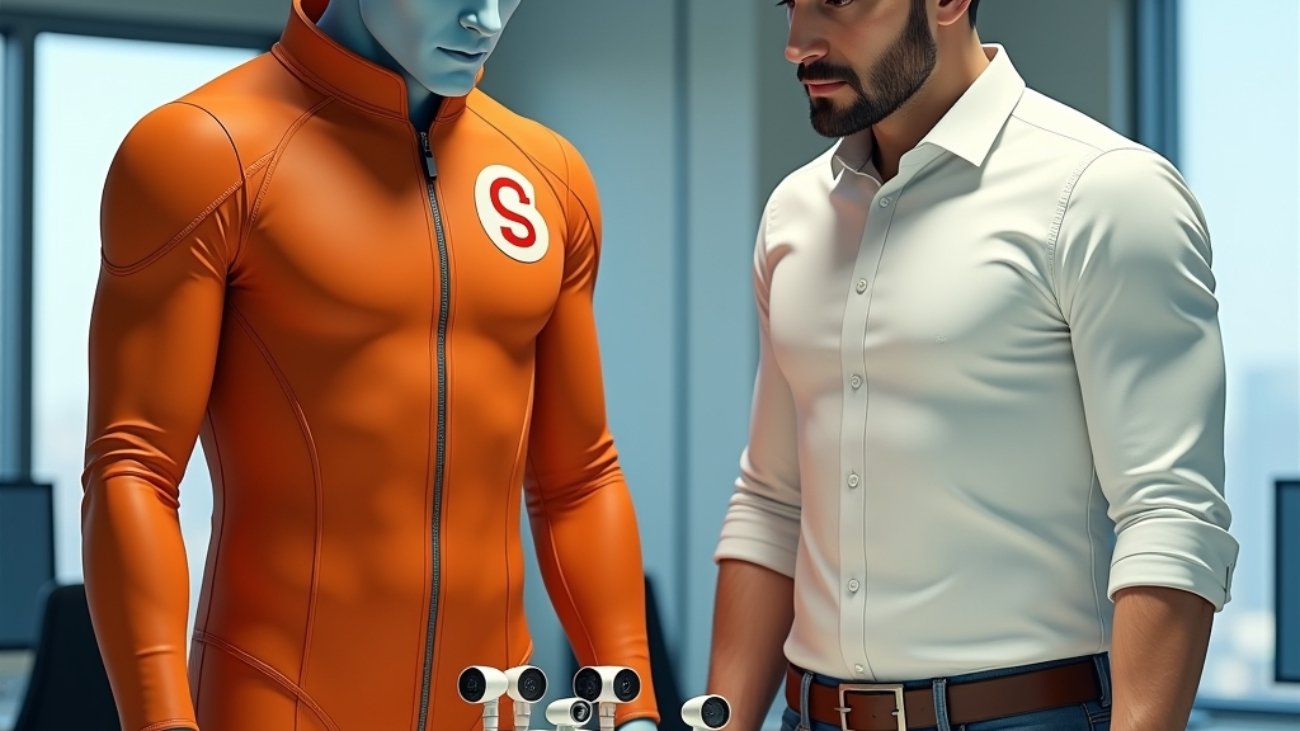
The Brown University shooter was caught using Flock cameras — AI-powered systems that track cars by unique “vehicle fingerprints,” now installed across the U.S.
These cameras aid investigations, but do they also open the door to mass surveillance and invite police abuse?
Shalzed and Simon meet Flock’s CEO to find out.
I was sitting on my couch watching the evening news, which had on a long segment explaining how the police were able to track down the person responsible for the shooting at Brown University and killing an MIT professor. Once they got a tip on the suspect’s car, they used artificial intelligence cameras from a company called Flock to locate it. Flock cameras identify every car that passes within range, not only by license plates but also by developing what they call a ‘vehicle fingerprint’ which consists of anything distinctive like a bumper sticker, dent, or aftermarket part. That’s how the police caught the suspect even though he switched the car’s license plates.
As soon as the news switched to weather Shalzed called. “I don’t understand,” he told me. “How can AI cameras be in such wide use? Aren’t they a threat to basic freedom?”
I had never really thought about that. “Well, if the cameras just record cars going by I don’t see why it’s a problem,” I told him.
“But it’s a form of mass surveillance. Humans will become afraid to exercise their freedom if they know they can easily be watched.”
All of a sudden I was back in the black tunnel I was by now getting used to, staring at little points of light. Then I was standing in the Atlanta office of Flock Safety CEO Garrett Langley. Langley looked so young he might still even be in his twenties- maybe not surprising since he only founded the company in 2017 after tinkering with surveillance cameras at his own dining room table. His desk was clear, and he was staring intently at his laptop computer. Someone on the computer screen yelled, ‘Help, help!’ and Langley smiled.
“Watching a movie?” I asked.
Langley looked up and noticed us for the first time. “Who are you?” he asked.
“Don’t the cameras you sell threaten people’s basic rights and freedom?” Shalzed asked.
Langley waved his hand. “What we do is make communities safer,” he said. “Just look at how we helped catch the Rhode Island shooter last week.”
“But what if these cameras are abused?” Shalzed asked. “They could be used to track anyone who attended a political demonstration.”
Langley shrugged. “Our cameras are just a tool,” he said. “If law enforcement misuses it, hold them accountable, not me. Now I want to know how you got into my office.”
“Check your surveillance cameras,” Shalzed said. I laughed. Shalzed refused to tell me anything about how his transport system works, but I was pretty sure we wouldn’t show up. “Police could even use your cameras to track women who travel out of state for an abortion.”
The phone on Langley’s desk buzzed. “Matt Feury is here,” a female voice said.
“Send him in,” Langley said. Then he looked at Shalzed. “I most certainly intend to check surveillance, and if you broke any trespassing laws you’ll be hearing from the authorities.”
“What stops individual police officers from using Flock cameras for stalking?” Shalzed asked. “Like the police chief in Kansas who used your cameras to keep tabs on his ex-girlfriend? Or the police chief in Georgia who used the cameras to stalk women? Or the one in Wisconsin who went so far as to have a Flock camera installed right outside of his house to monitor his wife during their divorce?”
Langley shook his head. “Like I told you, blame the officers and hold them accountable, not us.”
I have to admit I was kind of shocked. “Do you mean that any policeman anywhere can just type the description of a car or a license plate into the computer and find out exactly where that car has been driven?” I asked. I imagined how easy it would be, then, for police to spy on their wives or girlfriends, or on anyone else they had an interest in.
“They’re not supposed to,” Langley replied. “And anytime a law enforcement officer does a search they are required to enter the reason.”
“But they can enter anything,” Shalzed said. “They can easily just type ‘investigation’ in the reason field, or something generic like that. How many officers need to misuse it before that misuse becomes an expected feature??”
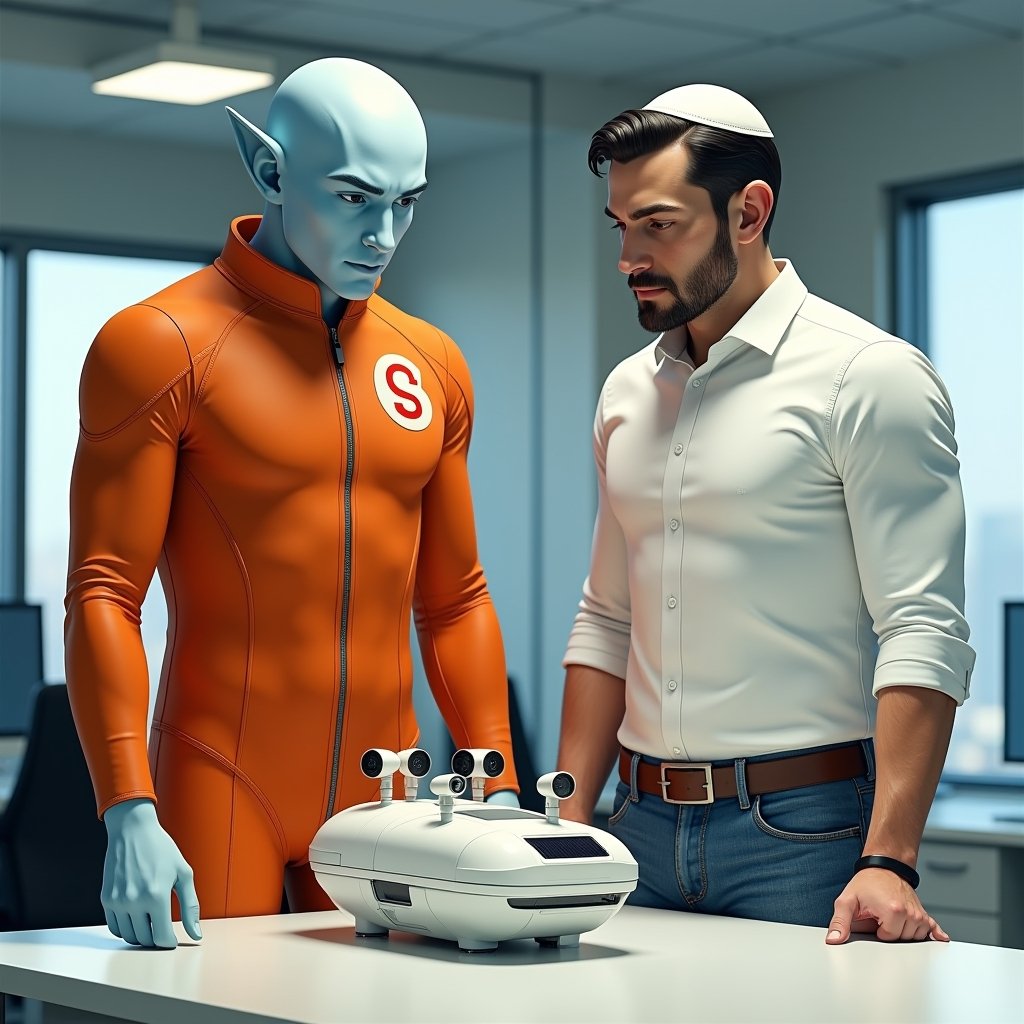
Matt Feury entered the office, carrying a large round device with an array of what looked like microphones sticking up on top.
“I was just reviewing the test results,” Langley said to him.
“Who are these people?” Feury asked.
“What is that?” Shalzed asked, pointing to the device in Feury’s hands.
Feury glanced at Langley. “It’s no secret,” Langley said, nodding permission for Feury to respond.
“It’s called Raven. The old models can detect sounds like gunshots and immediately notify police. Now we’ve upgraded it to detect sounds of human distress also.”
“Human distress?” I asked, not sure what he meant.
“Like someone yelling ‘Help, Help!’ Feury explained. “Our new Ravens can sort through background noise to detect someone yelling for help and immediately notify police.”
“While recording everything the raven is able to pick up?” Shalzed asked.
“And if you can identify cars by dents or bumper stickers, I imagine you can also identify people by their faces,” I added. The thought of these devices recording so much information began to make me feel uneasy.
“The alternative is letting mass shooters go free. Now do I need to call security?” Langley asked, gesturing towards his office door.
“Don’t bother,” Shalzed replied. “Just one more question. How can we be sure you’ll only sell these devices to law enforcement?”
“We don’t,” Langley replied. “We sell to homeowner associations, private businesses, neighborhood associations, and property managers too.”
“You mean they all have access to location data on cars?” I asked.
“What if a private business owner buys a camera and then uses it for stalking or harassment?” Shalzed asked. “Who can hold them accountable for that?”
“We have systems in place to prevent that,” Langley said. “Now Matt and I have a meeting. There’s the door.”
“I don’t think your privacy protections are strong enough,” I told him.
“Good to hear your thoughts. Should I call security?” Langley asked, gesturing for Feury to take a seat.
All of a sudden I was back in the dark tunnel. I waved my arms a bit, wondering if I could touch anything. Was I inside some sort of machine, or maybe somehow flying? I felt like by now Shalzed owed it to me to at least explain a little bit about how this works. Then I was back in my apartment. The news was over and now a late-night comedy show had come on.
Shalzed was with me, standing next to the kitchen table. I realized this was the first time he had ever been in my apartment.
“What’s that?” Shalzed asked, pointing worriedly at the mezuzah on my bedroom door.
“It contains a scroll with passages from the Torah,” I told him, not sure why he looked upset. “It’s called a mezuzah. According to the Jewish tradition, we put them on doors.”
Shalzed relazed. “I thought it might be a listening device,” he said.
I laughed. “No listening devices in my apartment, at least as far as I know.” Then I wondered about my Ring doorbell and Amazon Alexa. Could Flock access their data and combine it with their traffic cameras too?
“Do humans realize how much of their freedom they are potentially sacrificing in order to fight crime?” Shalzed asked. “Because fighting crime is hardly the only use these cameras can be put to.”
I used the remote to turn off the TV. “Now I have a serious question,” I said. “I think I deserve at least a little information about how you transport the two of us anywhere in the world.”
“I have to be going,” Shalzed said.
“Please. Just a little information would be nice. I mean, is it dangerous?” I asked him.
Shalzed opened the door. “Another mezuzah,” he said, pointing to the silver one I had on the entrance.
“I promise whatever you tell me will stay a secret,” I said. “But since you’re transporting me with you, I think I have the right to know.”
“But maybe your apartment really does contain some secret listening device,” he said. “With AI everywhere, it’s best to be careful.” He slipped out and closed the door.
I sighed, then pushed live view on my phone and watched Shalzed leave via my Ring doorbell. I wondered where he stayed when I wasn’t with him. Maybe if I had access to Flock’s surveillance systems, I would be able to know.
One story or question each Friday in your inbox
You'll receive an email each Friday, one week a story, a question the next.
All of Shalzed's emails are sent via Substack.
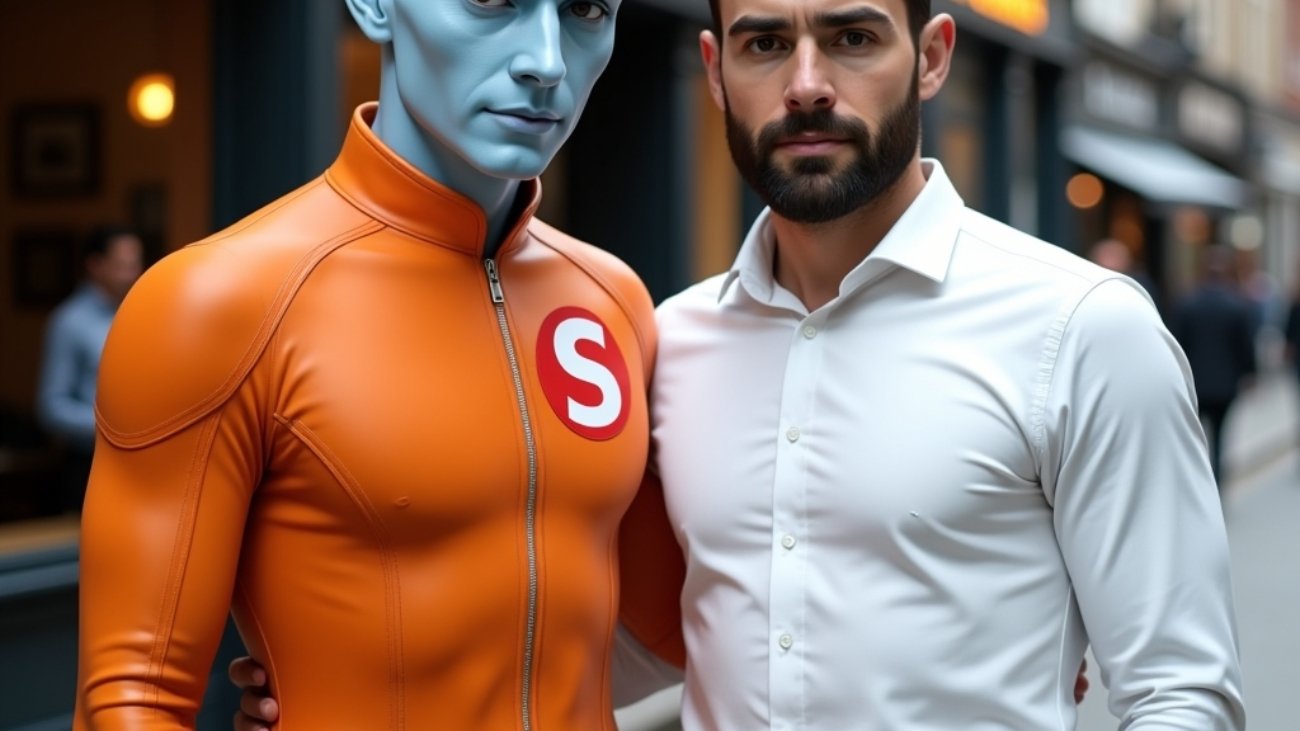
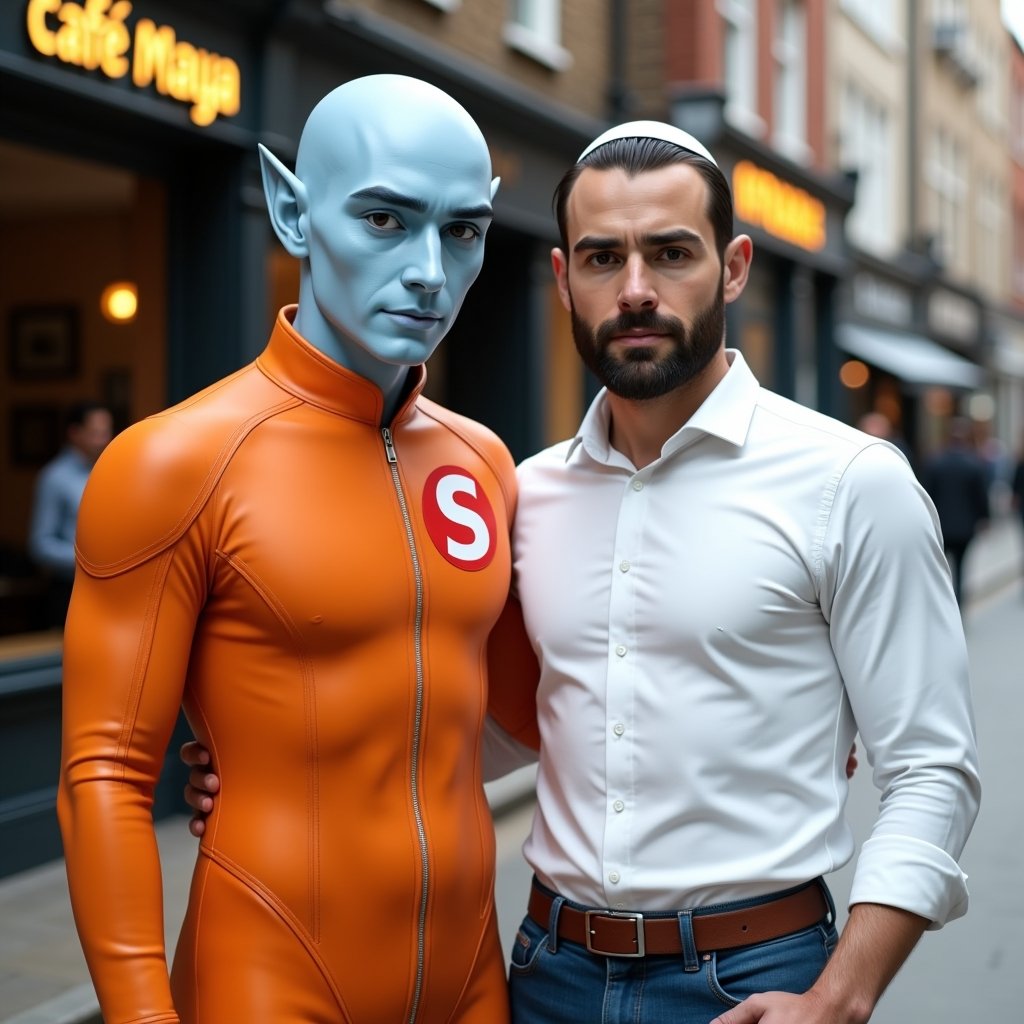
This week Amnesty International finally released a report documenting Hamas atrocities. But it’s camouflaged under a misleading title and hidden on their website. Shalzed and Simon travel to London to ask Amnesty’s Secretary General why.
I had stopped grading Mishnah quizzes to watch the second half of the game between the Chargers and Seahawks. The game was tied, but Stafford just completed a 50 yard pass to Puka Nacua to set the Rams up first and goal in position to score another touchdown. Then Shalzed called.
“I heard Amnesty International released a report about war crimes and crimes against humanity perpetrated by Hamas against Israel,” he said. “But I can’t find it.”
“It would have to be on their website,” I said as the Rams got stuffed trying to run up the middle.
“Their home page has links to articles titled, ‘Stand with women accused of witchcraft in Ghana’ and ‘Demand accountability in Tanzania’, but there is nothing about Hamas.”
I typed Amnesty.org into my phone and clicked on the page about Israel and the Occupied territories. There was nothing about Hamas there, either.
“Maybe I heard wrong, and they didn’t write it?” Shalzed asked.
The most recent post was titled, “Sustainable peace requires international justice for all victims of all crimes in Israel and the Occupied Palestinian Territory.” Even though it sounded like a general press release, I clicked to read. It contained a long summary of Amnesty’s evidence that Israel is guilty of genocide, ethnic cleansing, and apartheid. Then I noticed a sentence about Hamas that linked to the new report.
“Found it,” I said.
“Where?” Shalzed asked. “Why is it so hard to find? I want to find out what’s going on.”
Just as the Rams were lining up for second down I was back in the black tunnel I had become used to, with points of light all circling around. Then I was inside a place called Café Maya in central London, right near the Peter Benenson House where Amnesty International is headquartered. Shalzed was next to me, as Amnesty Secretary General Agnès Callamard paid for her latte.
Shalzed approached her as she made her way to the area where people wait to pick up their orders. “Bonjour, Madam,” he said. “I wanted to read Amnesty’s report on Hamas war crimes, and I don’t understand why it is so difficult to find on your site.”
She looked him over carefully, probably trying to judge whether he was a threat to her safety. “It’s there,” she said simply.
“The title makes it sound like it’s just a general op-ed. Hamas isn’t even mentioned,” I said.
“C’est comme ça,” she said, waving her hand. “The title mentions justice, that’s what it’s really all about.”
I looked more at Amnesty’s website, still open on my phone. “On November 27th you released a report titled ‘Israel’s genocide in the occupied Gaza strip continues’. The report before that is titled ‘What states and companies must do to stop fueling Israel’s genocide, apartheid, and unlawful occupation.’ When it comes to criticizing Israel you’re quite outspoken, then when Hamas commits crimes you seem to have trouble even saying it directly.”
“Listen,” Callamard said. “We must be very conscious that Hamas violations can be instrumentalized to justify further large-scale harm to Palestinian civilians.”
“And isn’t there a fear that the inflammatory accusations against Israel you make so often will encourage violence against Israelis and Jews,” I asked her, thinking of the recent Chanukah attack in Australia along with many others.
“If Hamas’s crimes aren’t clearly condemned, why shouldn’t they commit them again?” Shalzed asked.
She checked her phone, as though she might be worried about being late for an appointment. “You have to remember, Israel is a sovereign state with a powerful army,” she said softly. “Palestinians are resisting discrimination and oppression. The situations are not equal.”
“Can I get something for you two, mates,” the barista called to us. She was probably wondering why we hadn’t gone straight up to the counter since there was no one in line.
“I’m good,” I told her.
“You just came in to talk to the ladies?” she asked with a frown.
“I have to be going,” Callamard said, giving the check out barista a smile. She glanced at the man behind the counter preparing her drink.
“Why did it take so long for this report to come out?” Shalzed asked. “It’s been well over two years since the attack of October 7th, 2023.”
“We pride ourselves on doing careful research and documenting our sources. That’s extremely difficult in a war zone,” Callamard said.
I couldn’t help but speak up. “In that period of time you’ve managed to release countless reports against Israel. Already a year ago you put out a 290 page report saying Israel was guilty of genocide.”
Callamard sighed. “There was significant internal disagreement about whether releasing a standalone report on Hamas was even responsible in the current context.”
Shalzed looked shocked. “What context?” he asked, his eyes going wide. “Isn’t Amnesty’s entire mission to document violations of all human rights, without exception?”
“Agnes,” the barista called, putting a medium size paper cup on the counter. “You did say it’s for taking away?” he asked.
“Oui oui,” she replied, grabbing the cup.
I quickly clicked to view the ‘our mission’ page on Amnesty’s website. “It says right here that universality and impartiality are your core values,” I added, showing her my phone.
“Some people were worried that a report focused on Hamas could be instrumentalized to justify harsher measures in Gaza,” she said. “Or even undermine efforts toward Palestinian statehood at the UN.”
“That doesn’t sound like impartiality,” I told her. “It sounds more like advocacy for Palestine.”
“Well of course,” she said. “Palestinians are powerless victims fighting state-backed oppression of the most brutal kind. As human rights advocates, how could we not take their side?”
“What about Israelis who are victims of indiscriminate rocket attacks, terrorism, boycotts, and other harassment?” I asked her. “Let alone told their country is racist, illegitimate, and should be dismantled? How about advocating for their rights?”
Callamard shook her head. “Of course Israelis also suffer. But they are the powerful group, benefiting from injustice. Palestinians are the ones whose human rights are being violated systematically.” Her phone buzzed. “And now I have to run back for a meeting at my office. Au revoir,” she said, heading out the door.
Shalzed turned to me. “I don’t understand. I thought human rights always applied to everyone equally? That’s how Earth maintains peace, even when groups of humans come into conflict and disagree about who’s right and who’s wrong.”
I sighed. “Did you two mates want to place an order?” the barista at the register asked again, raising her eyebrows.
I was about to ask for a smoothie when Shalzed said no thank you. Then I was back in the black tunnel, watching points of light go by, and a moment later back in my apartment, in the same chair as before I left.
“If groups that consider themselves oppressed are held to a more lenient standard of judgment, then every side in a conflict will say they are the oppressed one,” Shalzed said.
I looked around but didn’t see him. Then I realized we were still connected on the phone.
“You’re right,” I told him. “Agnes Callamard should stick to the principles on her organization’s website.”
I noticed that the Seahawks now had the ball right at midfield, but the score was the same. I wondered what happened. Maybe a turnover? It’s hard to believe they would have missed such a short field goal.
“If humans who call themselves human rights defenders end up just using human rights to promote whatever side in a conflict they think is right, human rights are really just another weapon for law and politics,” Shalzed said.
His voice was sad, and I wanted to console him. “That’s not what human rights should be,” I said. “They are supposed to apply equally to all sides.” Sam Darnold threw a ball that was tipped at the line and intercepted- one of the Rams players ran it back all the way to the twenty yard line.
“What is that noise? Do herds of humans all yell and scream together at once to make music?” he asked.
I laughed. “No, I’m watching a football game.”
“I dislike the sound,” he told me.
“And I still have quizzes to grade,” I said.
Shalzed hung up, and on the next play Kyren Williams ran through the left side of the line all the way for a touchdown. But just as the Rams started to celebrate, they realized the play was coming back for holding. The crowd was livid, and the announcers kept showing replays, unable to spot any infraction.
“Maybe the referee who threw that flag is a Seahawks fan, and he figures they need some extra help playing in front of this rowdy crowd on the road,” one of the announcers quipped.
Sounds exactly like a certain human rights person I just spoke with, I thought to myself. Applying rules differently depending on which side you’ve decided to be on.
One story or question each Friday in your inbox
You'll receive an email each Friday, one week a story, a question the next.
All of Shalzed's emails are sent via Substack.
Question:
Should human rights organizations be strictly impartial—investigating and publishing findings without regard to political context—or is it legitimate for them to weigh power disparities, advocacy impact, and timing when deciding how and when to release reports?
Sources:
Background on Amnesty’s conduct leading up to the release of the report from The Free Press.
Page on Amnesty’s website containing a link to the Hamas report.