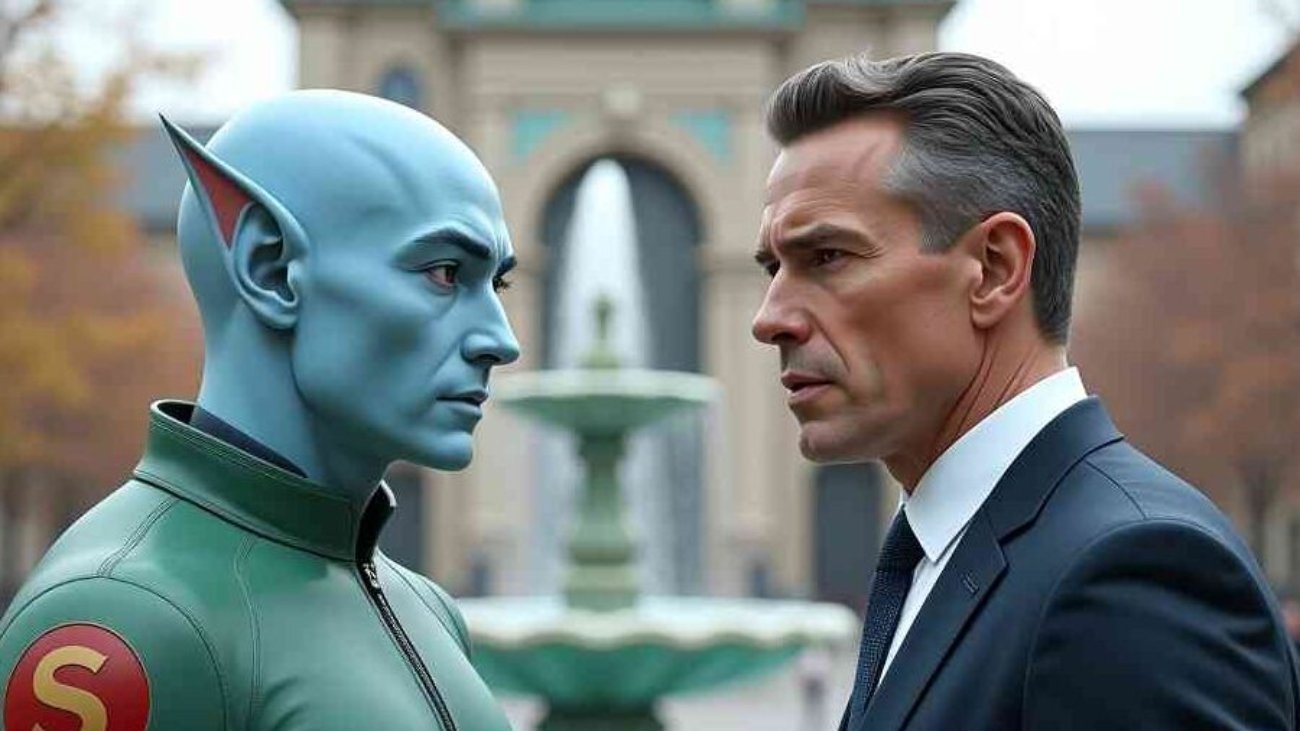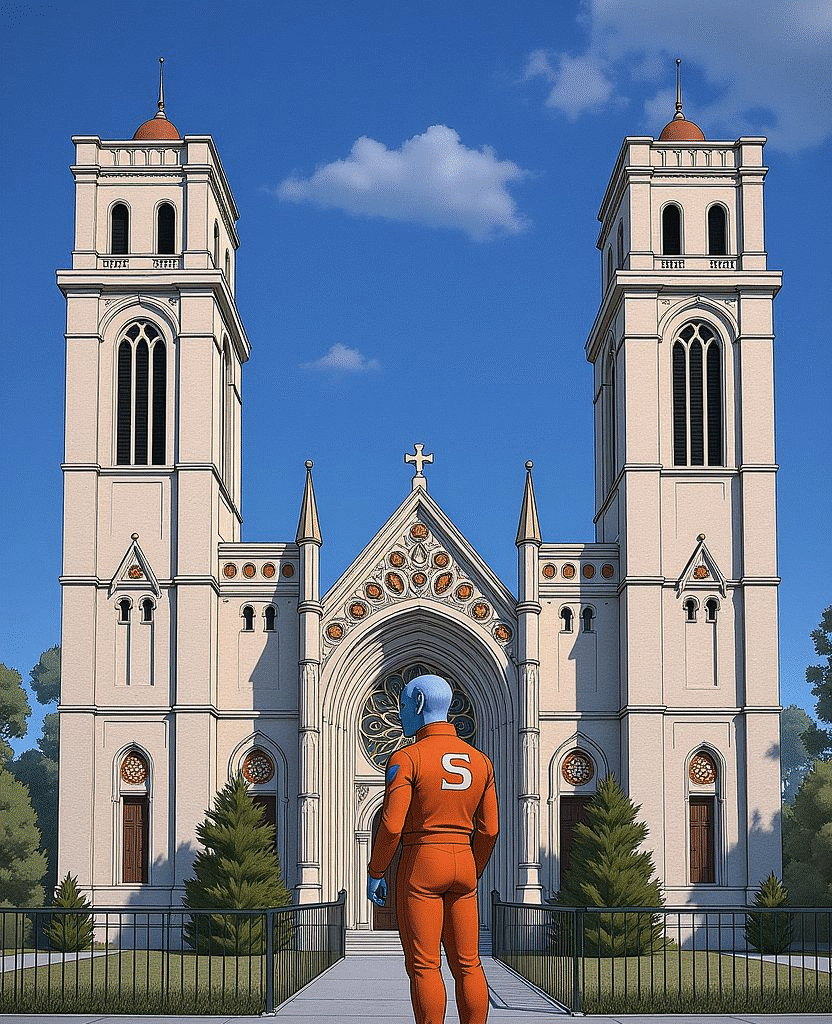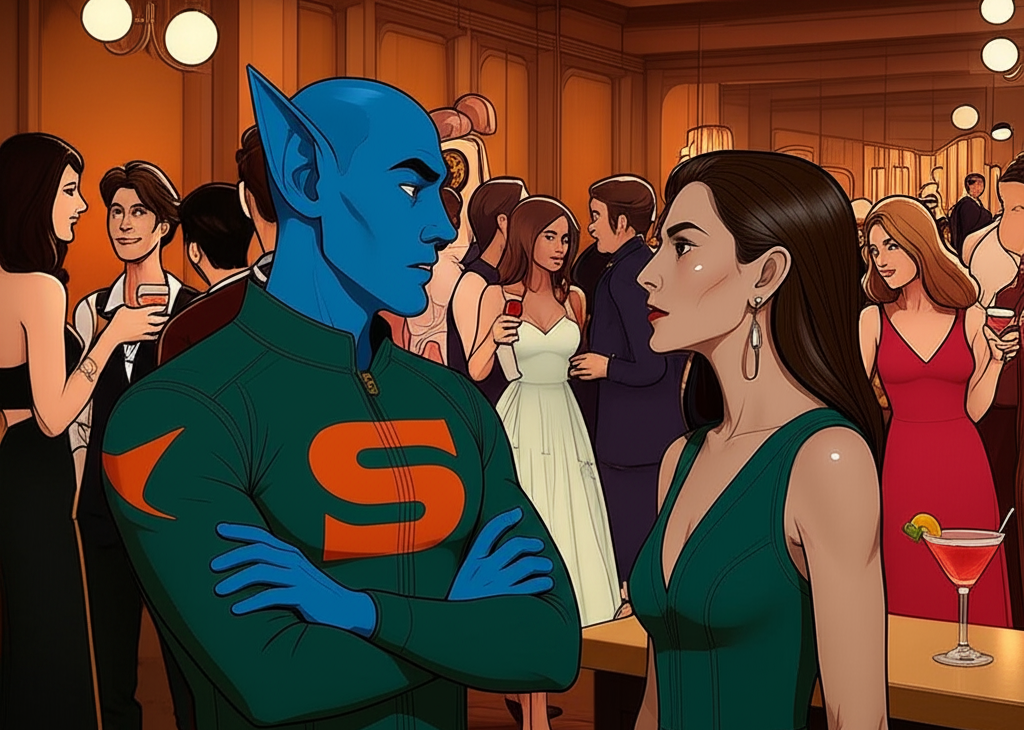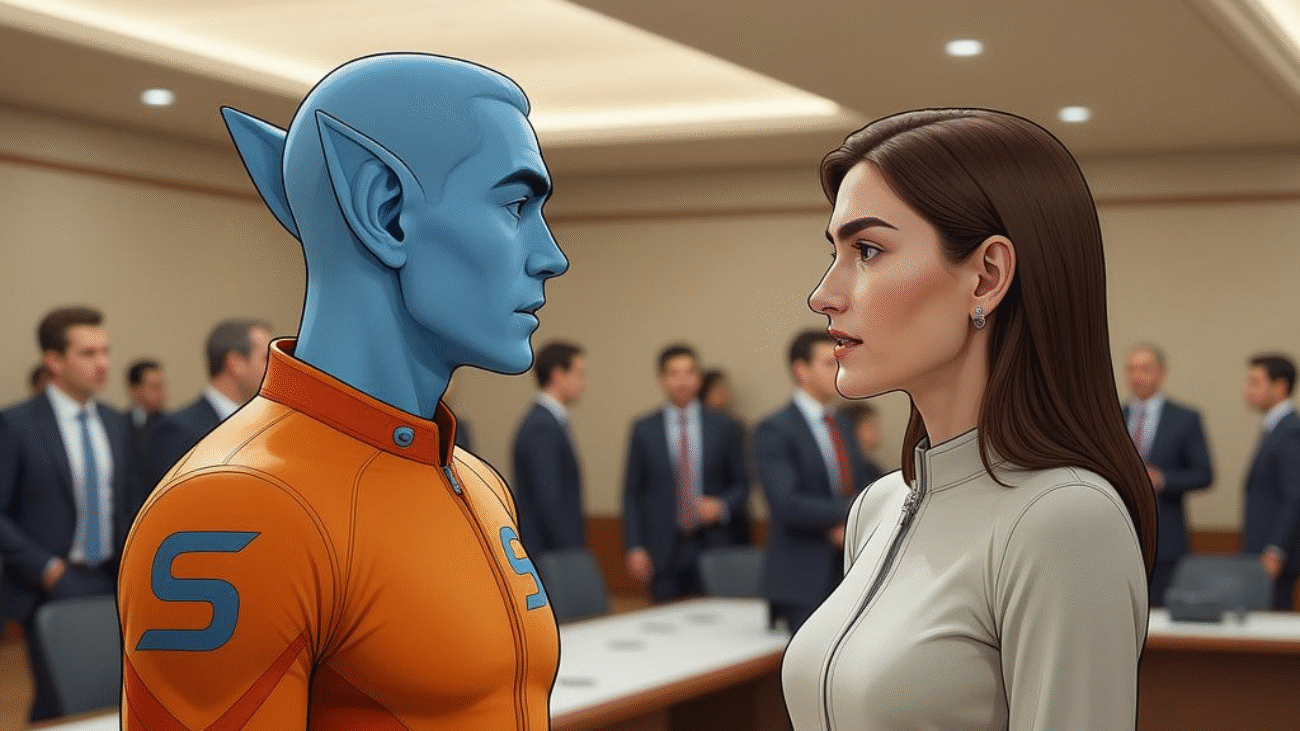
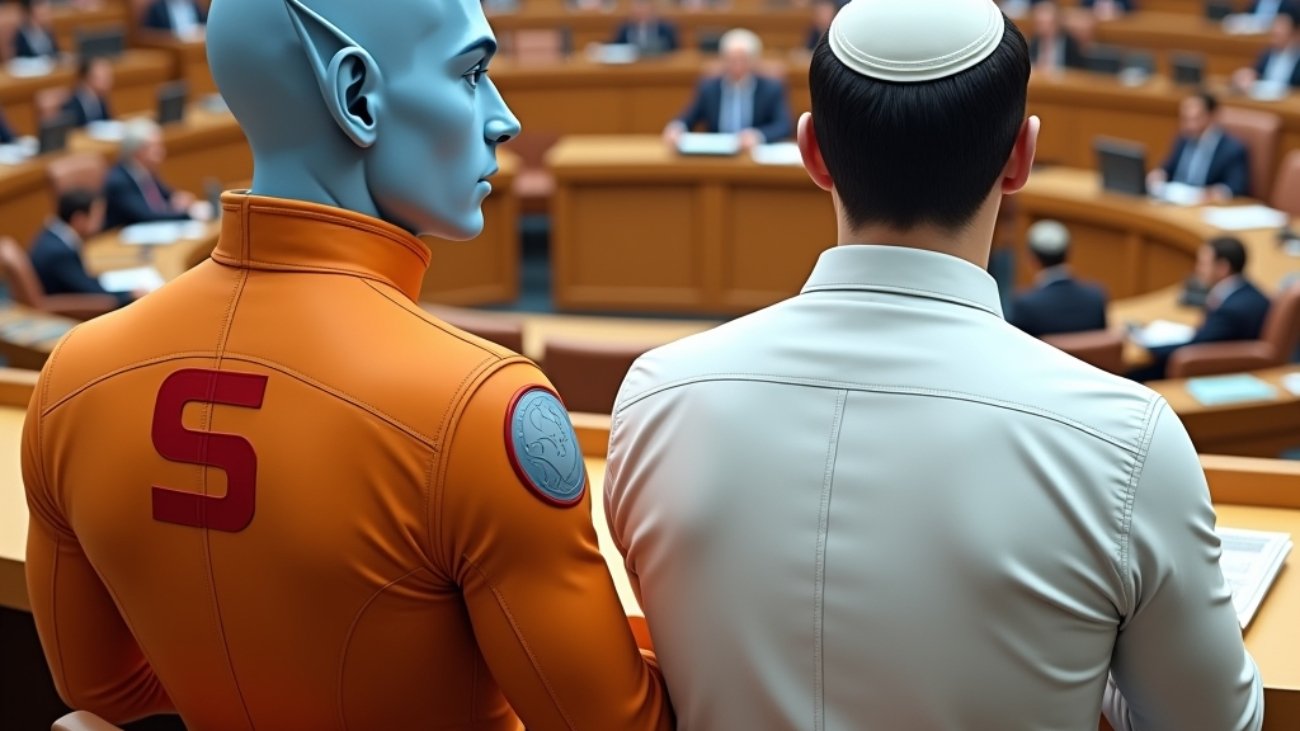
shalzed and simon in the knesset

Death Penalty Only for Palestinians? Shalzed Confronts Ben-Gvir Outside the Knesset
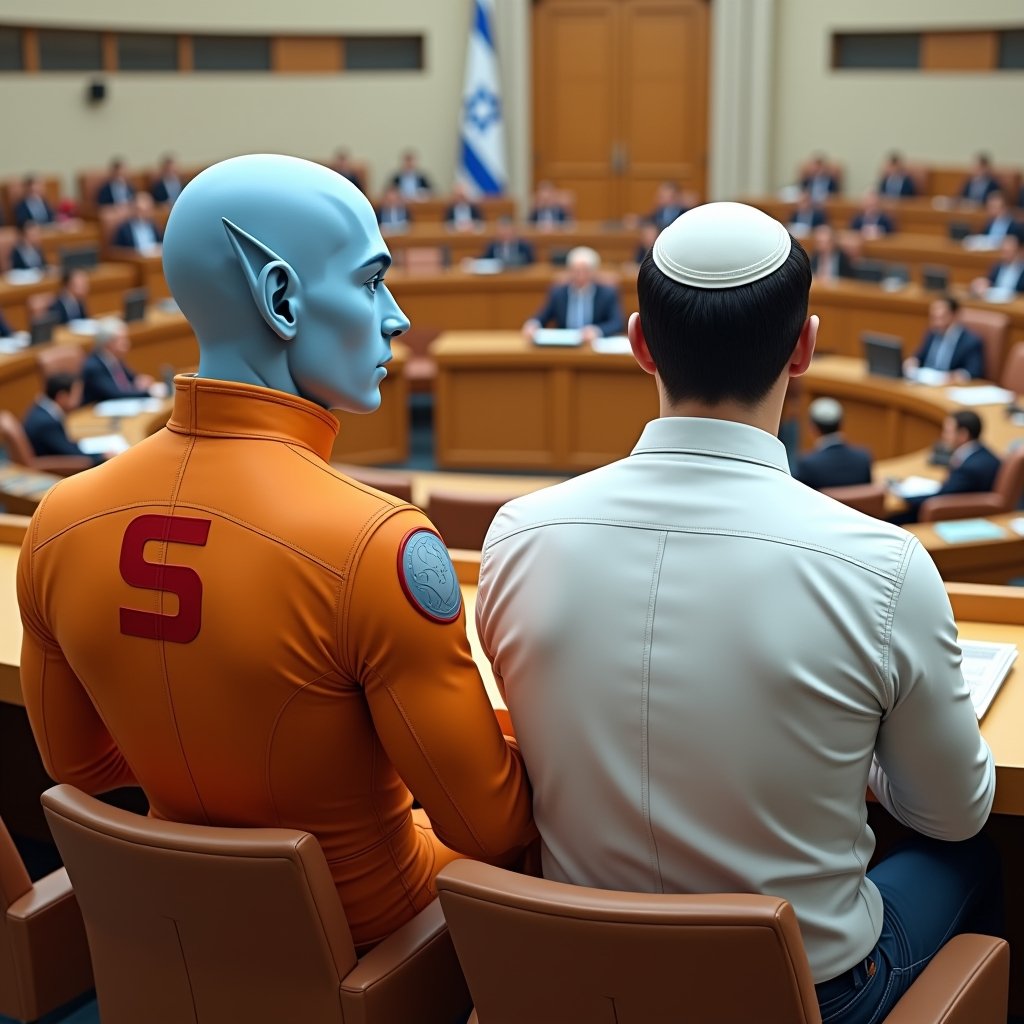
Death Penalty Only for Palestinians?

Shalzed Confronts Ben-Gvir Outside the Knesset

This week Shalzed and Simon head to Jeruslaem. Shalzed wants to understand why Israel is considering a law which punishes those who attack Israelis differently than those who attack Palestinians- a seemingly clear violation of the principle of equality before the law which is fundamental to human rights.

Death Penalty Only for Palestinians? Shalzed Confronts Ben-Gvir Outside the Knesset

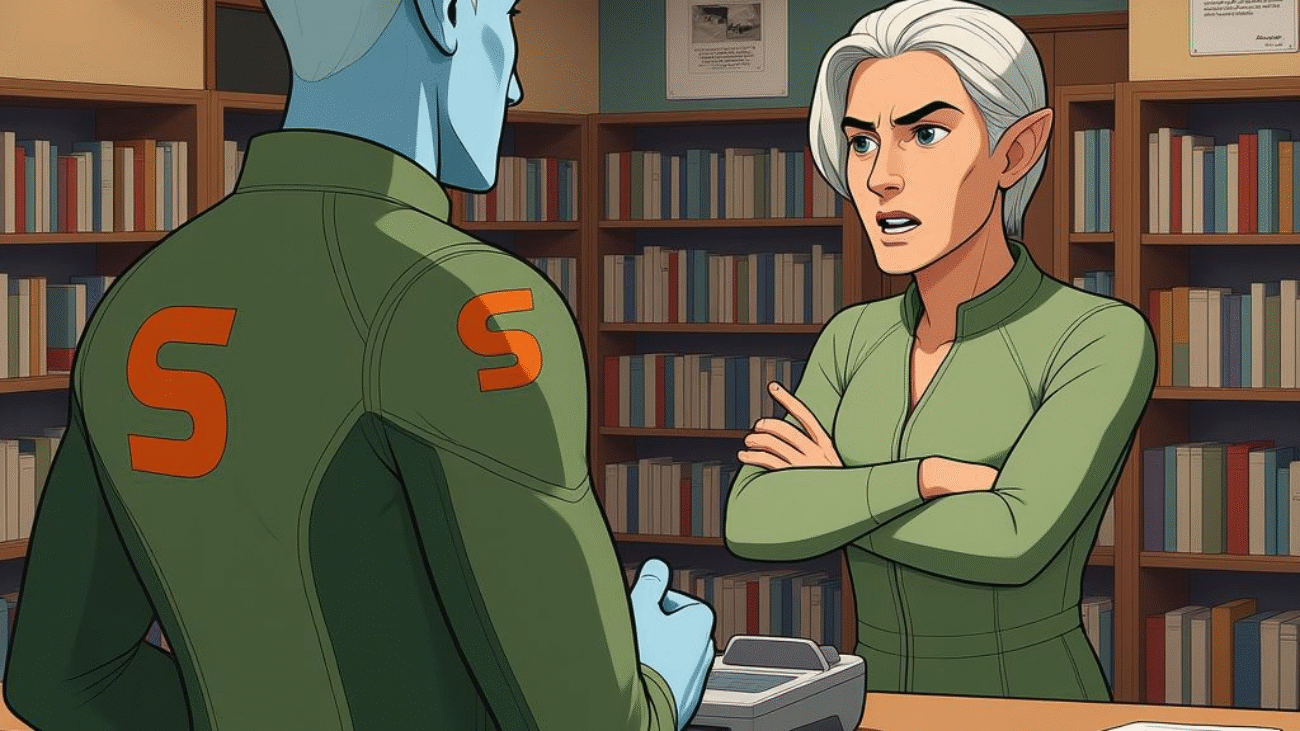
First period I teach seventh grade Chumash, then I have a period free. Unfortunately, an older woman named Rosalie Steinburger who has been teaching second grade for over 40 years, is off that period too while her class has either music or gym. Every time she sees me she asks when I’m going to get married and whether I’d be interested in meeting her niece. But this time, to my surprise, it wasn’t Rosalie but rather Shalzed waiting for me in the teacher’s lounge.

“I don’t understand,” he said as soon as I came through the door.

Crazy as it seems, talking to a blue-skinned alien with pointy ears was becoming normal for me, but I wondered how Rosalie, or any of the other teachers, would react if they walked in. “Don’t understand what?” I asked him. “And how did you get into the school?”

“In Israel, a law imposing the death penalty only on terrorists who kill Israeli citizens just passed a Knesset committee, while specifically exempting those who kill Palestinians or others. It impinges on due process and takes away the right to seek clemency. This law is obviously discriminatory and violates human rights.”

“It’s because Israel is tired of terrorists being exchanged for hostages,” I told him.

I heard what sounded like Rosalie’s gentle footsteps in the hall. “You know this is the teacher’s lounge, don’t you? Anyone can come in?”

Shalzed shrugged. I guess he wasn’t worried about having to answer questions. I wondered if maybe I was becoming a little bit possessive towards him. Was I concerned Shalzed might develop other friends on Earth besides just me? “How can Israel even consider such a law?” he asked, ignoring me. “Who would propose such a thing?”

“It’s Itamar Ben-Gvir.” I told him. “He’s from the far right.”

Just as Rosalie started to open the door, I felt myself floating in the dark corridor with little points of light that I was starting to get used to. A moment later Shalzed and I were outside the Knesset, where Ben Gvir was walking towards a waiting black SUV.

“Slicha,” Shalzed called. I wondered if that was the only word he knew or if he could actually speak Hebrew. Or maybe he had a way of learning any Earth language? “Don’t you know that Article 7 of the Universal Declaration of Human Rights says that everyone is entitled to equal protection under the law? So how can you propose a bill that creates one punishment for Palestinian terrorists but a different one for everyone else?”

Ben Gvir stopped and put his hands on his hips. “Palestinians also want to be treated differently than Israelis,” he said. “Didn’t you see them cheering when we released convicted killers in exchange for our hostages as part of the ceasefire? They want Israelis who attack them to be punished severely, while we let their terrorists go.”

I noticed Ben Gvir had a small pin shaped like a noose on his lapel. I’d already seen countless photos of that on Facebook. “Why do you have to wear that?” I asked him. “Don’t you understand the harm you are causing? It makes it look like Israel doesn’t care about international law and is out to kill Palestinians.”

“I don’t care what antisemites think,” he said.

Shalzed crossed his arms. “You can hardly call people who oppose having capital punishment for Palestinians but not for Jews antisemites,” he said.

“If they hold Israel to one standard and the rest of the world to another, then they’re antisemites,” Ben-Gvir replied. “As soon as the ceasefire went into effect, Hamas started rounding people up, and without any due process had then blindfolded and shot them in the head. They called that a security operation. And those same people who said nothing about that are now all up in arms when Israel wants to impose the death penalty to help keep our citizens safe from terrorists?”

“Two wrongs don’t make a right,” I told him.

“There’s a Palestinian so-called human rights organization named Addameer,” Ben-Gvir continued. “They are all outraged by violence against Palestinians in the West Bank, claiming Israel is violating international law by not punishing those responsible more harshly. But at the same time they say Palestinians who have killed Israelis are political prisoners who should be released.”

“Why would a human rights group want convicted terrorists released?” Shalzed asked. I couldn’t help but chuckle at his surprise.

“There’s more,” Ben-Gvir continued. “There’s a 17 year old Palestinian named Mohammad Natsheh that we arrested for throwing Molotov cocktails. They say that because he’s under 18, he’s a child who should be released back home to his parents. But many of the settlers that have carried out arson attacks in the West Bank are also teenagers. Those they want in prison.”

“Itamar,” a woman wearing a businesslike skirt and blouse called as she walked towards us from the Knesset.

“I’ve heard enough from you already,” Ben-Gvir said.

When she got closer I saw from the woman’s ID badge that she was a government legal advisor. “I’m telling you again. Even if the law passes, it won’t take effect. It’s too vague, takes away judges’ discretion, and violates international treaties.”

Ben-Gvir waved his hand. “What’s important is to protect Israeli citizens from terrorists, not to follow treaties the world uses to condemn us while Hamas and all the other countries break them all the time.”

“There are lots of verses in the Torah that say there should be only one law, both for Israel and for foreigners that dwell in our midst,” I told Ben-Gvir.

“Did you tell that verse about one law to the hundreds of celebrities demanding that we free Barghouti? And the ones organizing the free Barghouti campaign?” Ben-Gvir asked.

“What does it have to do with Barghouti?” Shalzed responded.

“On the freemarwan.org website they claim Barghouti has been imprisoned unjustly because he was convicted by an Israeli court he does not recognize. You see, they don’t want equality. They want Palestinian terrorists to go free, while at the same time complaining we don’t punish Israeli citizens who attack Palestinians harshly enough.”

“Why is he in prison?” Shalzed asked.

“Because he helped orchestrate the murder of a group of innocent Israelis while they were just sitting eating at a restaurant,” Ben Gvir replied. “Imagine the world-wide calls for justice should an IDF soldier or Israeli citizen do that.”

“Do you want me to help you fine tune the language?” the legal advisor offered.

Ben-Gvir looked hesitant. “How?” he asked.

“Here is one example. The draft you submitted applies the death penalty only when the victim is an Israeli citizen,” she said. “That means it won’t apply to attacks on permanent residents or tourists.”

Ben-Gvir smiled. “That’s a good point. Let’s go.” He motioned to his driver to wait. “We can talk in my office.”

“This law is going to be used against Israel abroad,” I said. “It will make Israel be seen as racist.”

Ben-Gvir scoffed. “There will always be people who hate us,” he said. “Jews have been persecuted for thousands of years. What matters is that Israel defends its citizens.” He and the woman started walking back towards the Knesset building, as Ben-Gvir asked what alternate phrasings she recommends.

Shalzed looked at me. “I thought on Earth countries would compete to uphold human rights,” he said. “Not violate each other’s rights, then use each violation by the other as a justification to violate rights even more.”

All of a sudden I thought about third period. How long had we been gone? I had no idea how much time elapsed while we traveled. “I’m supposed to be teaching. . . “ I began.

Once more I was in the blackness, and then after what seemed like less than a minute I was back in the teacher’s lounge, in exactly the same spot as before I left. Rosalie Steinburger was pouring herself a cup of coffee by the sink.

“Is that Simon?” Rosalie Steinburger asked, speaking with her back to me. I looked around, but Shalzed wasn’t here.

“Yup, it’s me,” I said, trying to sound cheerful. I tried to think of an explanation if she asked me how I had just appeared.

She turned around, coffee cup in hand, and smiled. “This coming Friday night my niece Sarah will be at my house for Shabbat dinner,” she said. “Sarah is a lovely young woman, she’s about to be licensed as a speech therapist and is ready for her life to get going. Would you like to come over too?”

I swallowed, trying to think of an excuse. “I’m sorry, I can’t,” I told her. “I have a friend visiting from very, very far away. I promised him I’d be free.”

Rosalie Steinburger looked disappointed. “Maybe another time then,” she said as the school bell rang.

“Sure,” I told her. “I’m sorry, but something came up during second period and I wasn’t able to get much done. I have to run and make some copies before my next class,” I said as I slipped out the door.

Subscribe to Receive Shalzed's adventures in your inbox

simon and shalzed at cop30

COP30 Leaves Shalzed Wondering Why He Chose Earth

COP30 Leaves Shalzed Wondering Why He Chose Earth

Shalzed came to Earth hoping to learn about human rights and take that knowledge back to his planet. However, a visit to the last day of the United Nations COP30 climate conference leaves him unimpressed.

COP30 Leaves Shalzed Wondering Why He Chose Earth

Shalzed told me that pollution had a devastating effect on his planet. “Everyone produced toxic waste and released it into the air, the water, wherever they wanted,” he said. “Eventually, we had to live in sealed domes.”

So he was excited to hear about the COP30 event in Belen, Brazil, where nearly 60,000 representatives of governments and organizations from all around the world were gathering to discuss climate change. He absolutely wanted to go, so he did his thing where for a short moment I felt like I was floating in nearly complete darkness, with only little pins of light like stars visible, and then all of a sudden we were standing together outside an enormous, air conditioned tent at the edge of the conference Blue Zone. That was the area with strictest security, where only government representatives had access, and the official negotiations were held.

Delegates were streaming out, looking frustrated and tired. I noticed some of the exhibits on new clean energy technology in the area open to the public being torn down.

“What’s going on?” Shalzed asked.

“I think the conference is ending,” I said.

“Wow!” he exclaimed. “That’s incredible. Humans have managed to solve Earth’s climate crisis so quickly!”

I chuckled, but he didn’t notice because he was already trying to get the attention of delegates. “Sir,” Shalzed said to a man hurrying out. “Please tell me what the conference decided.”

The man barely glanced in Shalzed’s direction. “Here,” he said, handing Shalzed some papers. “This is the final declaration. . . You can have it, I was going to throw my copy in the trash.”

Shalzed gave the man a puzzled look. I watched him hurry away, taking off his tie and stuffing it into a pocket, as Shalzed read the document intently.

“It doesn’t even mention fossil fuels, and burning fossil fuels is the main cause of the changing climate,” he said when he finished reading. I shrugged. “And this declaration only says that something should be done. It doesn’t say what, or specify who is going to do it.”

“Well, that’s what happens,” I mumbled.

Shalzed looked incensed. “Excuse me,” he said to another delegate passing by, almost grabbing the man’s arm. The man’s badge identified him as Gustavo Petro, President of Columbia. “I don’t understand. The purpose of this conference was to find a way to stop climate change, so why did you pass a final declaration that doesn’t even mention fossil fuels?”

Petro gave Shalzed a weary look. “Are you with the press or something?” he asked.

“No. . .” Shalzed began.

“He’s just concerned,” I interjected.

“It doesn’t matter,” Petro said. “I’ll say the same thing I’m about to tell the media. This conference was an absolute embarrassment. We need a strong commitment to transition to alternative energy and move away from fossil fuel, and I’m outraged that didn’t happen. The minor agreements we reached about deforestation and adaptation aren’t nearly enough. The countries standing in the way should be ashamed.”

Shalzed wrinkled his forehead. “Countries standing in the way?” he asked. “But why would any country do that?”

A security guard moved between Petro and Shalzed. “If you’ll excuse the President,” he said very firmly, but at least somewhat polite. “Press conference,” he said to Petro, guiding him away.

Shalzed turned to me. “Some countries are afraid transitioning away from fossil fuels will harm their economies,” I told him.

“Do they think their economies are more important than the health of the planet?” he asked.

Once more I shrugged. Shalzed turned back to the parade of delegates walking by. Most ignored him. Then a man with his suit and tie still in place turned when Shalzed tapped him on the shoulder. His badge identified him as Vladimir Uskov, chief negotiator from Russia.

“Can you tell me why any country would want to prevent transitioning away from fossil fuels?” Shalzed asked.

“Were you playing games over at the windfarm exhibits during my speech?” Uskov asked.

“We just got here,” I told him, before Shalzed could reply.

“It’s very simple,” Uskov snapped. “Russia is a sovereign country, just like everyone else. We want to set our own policy on energy without having it dictated by international organisations or the UN. Fossil fuels are the backbone of our economy, and if we abandon them abruptly millions of our people will suffer. That’s not a just transition. We need to use all pathways going forward, and fossil fuels must remain a part of the mix.”

“But if all countries don’t cooperate in reducing emissions, climate change can reach a tipping point where the effects will be impossible to reverse,” Shalzed said.

“Alarmist nonsense,” the Russian replied, waving his hand. “Climate projections are extremely uncertain, and it’s very likely technology will be invented in the future to manage the threat.” A woman on her way out called to him in Russian, and he hurried to join her.

Shalzed crossed his arms against his chest. “I don’t get it. I assume most countries understand the urgency of the climate crisis, even if Russia doesn’t. Why didn’t they just hold a vote on whether or not to take strong action, and Russia would lose?”

I smiled. “That’s not how these conferences work,” I told him. “Everything has to be agreed to by consensus.”

“Consensus? You mean you only take action when all of the nearly 200 countries agree? Any one of them can stand in the way?”

“Pretty much,” I said. “Russia has a few allies, countries whose economies are based on coal or oil. Together they are able to block almost anything.”

“But why?” Shalzed asked.

“That’s just the way it works. Like the Russian delegate said, each country is sovereign. There is no mechanism to force any country to do anything it doesn’t want to.”

Shalzed considered. “What about your country?” he asked. “The United States is one of the largest economies. Let me find  one of their delegates. If the United States takes action, even on its own, that would make a big difference.”

Shalzed began scanning the ID badges the exiting delegates were wearing around their necks.

“I don’t think you’ll find anyone representing the U.S.,” I told him.

“Why not?”

“The United States refused to come.”

Shalzed turned in surprise. “The U.S. didn’t come? But why not? Climate change affects the entire planet. And you said this conference is. . .”

“The President of the United States believes climate change is a hoax,” I interrupted. “He is actually trying to increase production of fossil fuels. He says all the science indicating that emissions from burning fossil fuels are changing the climate is wrong, and this is all just a big scam that will hurt the economy.”

Shalzed looked around, looking a bit flustered and bewildered. Then I saw back in the darkness, floating with lights around me, and a moment later we were standing outside my apartment.

“But what about human rights?” he asked while I was still trying to get my bearings. “Climate change can cause people to lose their housing and their access to food. It will affect health and destroy livelihoods.”

“Yes,” I told him. “But that doesn’t mean any particular country is obligated to act.”

“I’m starting to wonder whether Earth was even worth coming to,” he said, his voice gloomy.

“At least you found out about soft serve ice cream,” I told him. He had been utterly amazed at how it was able to be swirled and maintain that shape in the cone.

“I have to think,” he said to me.

“And I have homework from my 7th and 8th grade mishnah classes that I have to grade.” Shalzed started walking away with his head down. He kicked a small rock from the sidewalk out into the street. “There are good things on Earth too,” I called after him.

He turned around to look at me. “I hope so,” he said. “I really hope I didn’t come all this way for nothing.”

Subscribe to Receive Shalzed's adventures in your inbox

Sources:

News coverage of Cop30 from Reuters

From the BBC

From Climate Change News


Question: International law respects the sovereignty of all states, so there is limited ability to force countries to take action and also limited ability to hold states accountable for fulfilling whatever climate commitments they may make. Is international law up to the challenge of addressing climate change, which requires all countries to take strong action and work together? Is there any alternative?

robege by tourny fountain smaller

Punished for Prayer?

Punished for Prayer?

Shalzed speaks with Quebec minister Jean-Francois Roberge about new law to forbid praying in public

Quebec recently proposed a law forbidding prayer in public places. Shalzed catches up with that province’s Minister of Secularism Jean-François Roberge to find out how he doesn’t see this as a violation of religious rights.

I waited outside the Hôtel du Parlement du Québec, watching water flow through the Tourny Fountain. I have no idea why the fountain has so many elaborate carvings of fish. On my planet there are very small oceans, so everything to do with marine life is foreign to me.

An English speaking family rode by on the kind of bicycles you rent from automatic docks by the minute. I assumed they were from South of the border. In Montreal it’s common to hear English, but not all the way up here in Quebec.

“Bonjour,” I called as Jean-Francois Roberge approached, striding quickly on his way towards parliament.

He nodded and waved at me without slowing down. Roberge has only been in politics for about ten years, when he gave up life as a teacher to serve the proud people of Chambly in Parliament. But evidently that’s been plenty of time for him to get good at brushing people off and to learn to make himself look busy. “Oh father in heaven, may you appear before us and spread your blessings far and wide like insecticide from a crop duster,” I began.

Now he slowed down. “Shalzed?” he exclaimed.

“Sorry, I’m in the middle of a prayer,” I said. A young Muslim couple, just finished taking a selfie in front of the fountain, gave me a funny look.

Roberge rolled his eyes. “I’m sure you’re not praying. There must be no religion where you come from.”

That was true. On my planet we have nothing comparable to what humans call religion, and we have long since disproved the existence of any sort of supernatural power. “Okay, you’re right. But I was exercising my right to pray. Before you pass a law telling all citizens of Quebec what they must and must not believe in.”

Roberge gave me what I’d best describe as a snort, probably how he used to react when a middle school student got sassy. “No one is going to tell Québécois what to believe. And people can still pray, just not in public. I think that’s very fair.”

The Muslim couple took a few steps, but lingered by the fountain. I had the feeling they were listening. Fine with me. “And here I thought freedom of religion was a fundamental right,” I said to Roberge. “Isn’t it even in the Universal Declaration of Human Rights, or am I mistaken?”

“Absolutely,” Roberge agreed.

Smart, because I knew I was not mistaken. “So I’d say prayer is pretty fundamental to freedom of religion. And your new law tramples that right.”

“Not in the slightest,” Roberge said. “Here’s an example. People have the right to have children. But you don’t do it in a public park, you do it in your bedroom.”

The Muslim woman who was listening smiled, while the man she was with started laughing. “That’s ridiculous,” I said.

“The point is that people praying is not the sort of thing we want to see in Quebec,” Roberge said. “Whoever wants to pray is welcome, but do it in your church.” He noticed the Muslim couple and added, “Or mosque, synagogue, or whatever you call it. But prayer is not what public places should be used for.”

“And what’s so bad about prayer? Does it hurt someone?” I asked, genuinely clueless as to why he was so adamantly opposed to displays of religion in public.

A man wearing a dirty T-shirt advertising the dates and cities of some long ago concert tour and sneakers held together with masking tape walked straight up to Roberge with his palm extended. Roberge glanced at me and also the Muslim couple, then took out his wallet and handed the man a loonie. I thought the man would come to me next, but instead he walked right past me and went to the Muslim couple.

“Are you going to make a law against asking for money? I assume the site of needy people begging is not something you want in Quebec either,” I asked Roberge.

“Those are completely different things,” Roberge said as he put away his wallet.

“Really?” I asked.

“Absolutely,” Roberge said as he folded his arms across his chest. “There are facilities specially designed for prayer. Churches and the like. So there is absolutely no reason why people should be allowed to take over public places being used by others in order to do it. For beggars, there is nowhere else they can go.”

The Muslim woman gave the man a coin from her purse. Then he headed away, in the opposite direction of Parliament, towards the Plains of Abraham park.

“I’m curious,” I asked Roberge. “Let’s say there is yoga in the park, and it begins with meditation. Will that be forbidden as public prayer? What if there’s a picnic, and someone says grace or a blessing over the food?”

Roberge swallowed. “The law will be enforced sensibly,” he said. “The police will only issue tickets where the prayer is a major or prominent part of a gathering’s purpose.”

“Sounds pretty subjective to me,” I said.

The Muslim woman walked closer, pulling her partner along. Roberge seemed to resign himself to the fact that there was no tactful way he could avoid her. “How do we know you won’t enforce the prayer law only against Muslims?” she asked.

Roberge waved his hand. “The government of Quebec would never do such a thing,” he said. “This law will apply equally to everyone.”

The woman laughed. “That’s very hard to believe, since the fact that you don’t like the prayers at the rallies for Palestine is what got this all started,” she said.

Roberge cleared his throat. “I need to be going,” he said. He pulled out his phone like he was checking a message.

“So you think it’s alright to take away people’s freedoms in public, as long as they can still exercise those same rights at home?” I asked him.

Roberge shook his head. “People absolutely have the right to pray, but only in their home or in their house of worship. Anything beyond that is an attempt to impose religion on others,” he said. “Now I have to head straight to the Salon Rouge.” He put his phone back in his pocket and started to walk away.

“À la prochaine,” I said, feeling certain that with Roberge’s aggressive secularism I’d be back to see him soon.

He waved a hand at me. “Good luck finding a way back home,” he said. “So then you’ll leave us alone.”

I caught the eye of the Muslim woman and we exchanged a smile as Roberge walked away. “Why is your skin blue?” the man she was with asked me.

I shrugged. “I’m just a little different. You see, we’re both minorities.” I don’t like giving humans too many details about my planet so I started towards the park. The couple did not follow.

I wanted to tour Quebec’s old city, so I decided to rent one of those pay per minute bikes to get around and I spotted a kiosk nearby. As I approached, two women wearing long dresses and carrying signs saying that two questions could determine if I was going to heaven or hell asked me whether I owned a copy of the Bible. I told them no, and so they shook their heads and offered me a pamphlet summarizing the teachings of Jesus. I decided to walk to another kiosk rather than be stuck with them watching me while I tried to figure out how to rent a bike.

I wondered if Roberge’s next law would forbid people like this from passing out religious literature in public. That might remove a minor inconvenience, but I hope he doesn’t do it. There’s an awful lot it’s worth putting up with in order to preserve freedom and rights.

Subscribe to Receive Shalzed's adventures in your inbox

Discussion Questions:

  1. Is a prohibition on public prayer a violation of citizens’ religious rights, even if prayer is still allowed at home and in houses of worship?
  2. If public prayer is forbidden, what stops a government from defining prayer or enforcing the law selectively in a way that discriminates against disfavored religious groups?
shalzed home demonstration

The Right to Be Heard — Even From Outside the Kitchen Window?

The Right to Be Heard — Even From Outside the Kitchen Window?

Shalzed investigates a new law criminalizing protest outside homes

shalzed home demonstration

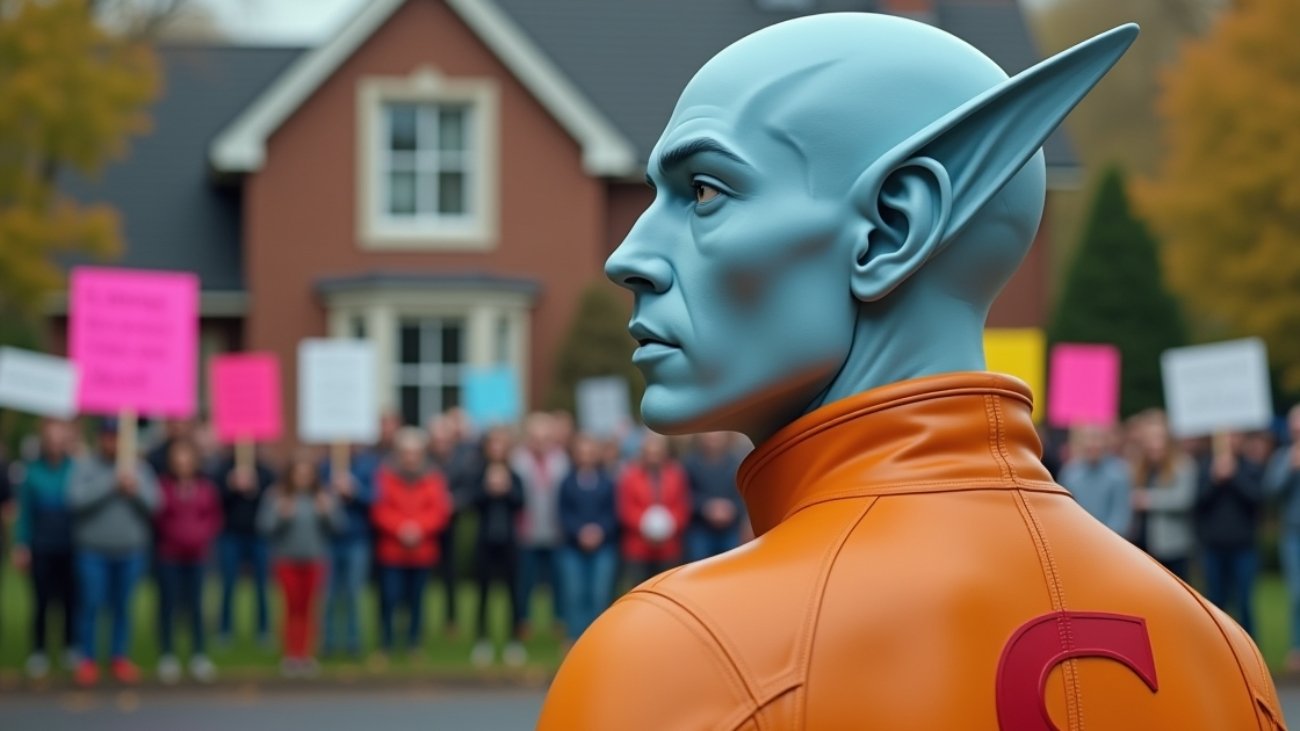
On Aug. 15th New Zealand’s Justice Minister Paul Goldsmith introduced a law making it a crime to protest outside a home. Shalzed visits Auckland to find out whether this is respect for people’s right to privacy, or a step towards taking away the freedom to demonstrate and express political opinions.

I felt a little out of place hanging around in front of Paul Goldsmith’s house. A few cars slowed  as they drove by, trying to figure out whether I belonged in their neighborhood or maybe just curious about my pale blue skin. And I have to admit, here on Earth I do stand out. I wondered if any of them might call the police.

I thought of taking a seat in the rocking chair on the porch. It would be more comfortable, and I’d also be less visible from the street. But that would be trespassing- not a good idea for a law-abiding, rights-respecting citizen like me.

A black sedan with tinted windows finally pulled into the driveway. Goldsmith lived in an older house with a detached garage, meaning that after parking his car he would have to come back out. He noticed me as he pushed the garage door button. “Shalzed?” he called. “What are you doing in New Zealand?”

“Since I’m from the other side of the galaxy, a little more travel isn’t a problem,” I told him. Of course I came to Earth in a wormhole, which takes absolutely no time to cross. Primitive airplanes are nowhere near as convenient.

“So what do you want?” Goldsmith slung his briefcase on top of a green plastic recycling bin and put his hands on his hips.

“To protest,” I told him.

He gave me a funny look. “For what, the farmers?”

“No, I just want to be able to protest,” I told him. “Before your new law takes effect.”

Goldsmith waved his hand. “Give me a break. It only forbids protests outside of people’s homes. If people want to make a public statement they can go to the park. They can march down the street. What’s the problem?”

I didn’t come all the way to Auckland just to listen to that sort of B.S.. “Really? And how long will it be now until you make a law against protests in the parks also? Don’t joggers deserve not to be disturbed too?”

“That’s absurd. The only point is that people have a right to privacy in their own homes. How would you like to have dozens of people right outside your door waving signs and chanting slogans each evening?”

“Well the whole point of a protest is to draw attention,” I told him. “Protesting is worthless if you can only do it at a faraway place no one sees.”

A woman wearing a red apron with a picture of a kiwiburger stepped out of the house. Probably Melissa, Paul Goldsmith’s wife. “If you want to talk to my husband you need to make an appointment to see him at his office. Now it’s dinner time,” she scolded me.

“Actually, I’m starting a protest,” I replied.

She groaned. “It’ll just be a minute, sweetheart,” Goldsmith told her. Then he turned back to me. “Protests outside of politicians’ homes aren’t fair to the neighbors. What did they do to deserve it? And what about the family? Why should kids have to see people calling calling their mom or dad names every time they leave for school in the morning? It’s not right, that’s all.”

“Sure, sure,” I told him. “And also Premier House. Probably no protests there either because the Prime Minister might have innocent little children.”

Goldsmith looked unsure. “Doesn’t the law apply there also?” I asked him. “After all, the Prime Minister’s official residence is a house.”

“There’s nothing unusual about this new law,” Melissa chimed in from the doorway. “In the United States they don’t allow protests outside of people’s homes either.”

That wasn’t really true- it depends which state or even which city. But she was right that the U.S. Supreme Court has ruled that restrictions on protests outside of private homes are legal as long as protestors can still march through residential areas and spread material door to door.

“You know that this is only going to be enforced selectively,” I told Goldsmith. “Protest at the home of a government minister, the police will come right away. But if it’s a member of the opposition, or someone the government doesn’t like? Then what?” I asked.

“Speaking of the police,” Melissa said.

I turned and saw a squad car pulling into the driveway. “We got a call about a suspicious individual standing in front of your house,” an officer said to Goldsmith as he got out. He started looking me over.

“Just here to protest the law against protests,” I said, hoping a little silliness would set them at ease.

“He’s harmless,” Goldsmith told them.

Harmless? Hardly the way to talk to about someone who designed a system of super reflective mirrors that focus a full 50% of a star’s energy output onto a single point, causing it to reach 15,000 degrees. It provides enough energy to hold open a wormhole. But why argue?

“We’ll escort him away,” the officer said. Some neighbors, attracted by the police car, came out on their lawns to see what was going on.

“You see how much of a disturbance just you are causing right now on your own?” Goldsmith said to me. “Imagine if there were protests here each evening. Noise, traffic, it’s not fair to everyone who lives in the neighborhood.”

The policeman started stepping towards me, giving me his menacing look. “Hey, I’m a tourist,” I said to him. “I’m just on my way to Sky Tower. Buddy, relax.”

“Well Sky Tower closes at eight, so you’d better get going,” he said, snapping the back of his right hand against his other palm.

I turned to Goldsmith. “You know noise and street blockages aren’t valid reasons to ban protests,” I told him. “There are already separate rules for that. You’re just trying to sweep protestors away where you don’t have to see them.”

“I made roasted lamb for dinner and it’s getting cold,” Mellissa said, pointing her husband towards the door. “You have to come now.”

Goldsmith took his briefcase and went inside without giving me another look. The officer remained facing me with his arms crossed.

“I’ll be on my way,” I told the policeman.

“I don’t see any reason to take you in,” he said. “But give me one, and it’ll be my pleasure to do it.”

“Have a good evening,” I told him, then I started walking towards the main road. A few minutes later the squad car drove by, and the officer gave me a long glance. If he followed me he would find out I had been lying. I wasn’t going to Sky Tower- a chance to look around from atop a pile of concrete a few hundred meters high didn’t exactly excite me. But I did want to check out Auckland’s aquarium- on my planet we have very small oceans, so I find the variety of sea life on Earth fascinating. I’ve never seen anything like an anemone or clown fish before.

I imagine Goldsmith means well with his law against protests. But there’s a saying Earthlings attribute to John F. Kennedy that comes to my mind: Those who make peaceful revolution impossible will make violent revolution inevitable. As long as protestors are peaceful and follow rules about not impeding access to private property or causing other undue disturbance, trying to shoo them away seems like a bad move.


Questions:

  1. Does a prohibition on protests outside homes, while still allowing protestors to march through residential areas or distribute literature door to door, properly balance residents’ right to privacy against the public’s right to protest?
  2. Does a prohibition on protests outside of homes represent the start of a slippery slope towards eroding the public’s right to protest? For example, could this law also be used to forbid protests outside of a governor’s mansion or other official residence? Will it begin a movement towards future laws that prohibit protest in other sorts of places?


Shalzed outside St. James Cathedral in Seattle

Children’s Safety vs. A Priest’s Right to Silence

Children's Safety vs A priest's Right to Silence

Does freedom of religion include a priest’s right not to report information about child abuse he may learn while hearing a confession?

Shalzed Outside St. James Cathedral in Seattle
Shalzed outside St. James Cathedral in Seattle

Washington State recently passed a law requiring priests to report child abuse—including information given during confession—to the authorities. The Church responded by suing, arguing that the seal of the confessional is absolute and that the law unconstitutionally burdens their religious freedom. On July 18, a U.S. federal judge agreed and blocked the state from punishing priests who refuse to comply with the new law. Today, Shalzed speaks with Seattle Archbishop Paul Etienne to find out why he believes that even in order to protect children, priests should not be forced to violate this sacrament.

I arrived at St James Cathedral in downtown Seattle a little early, so I went inside. The giant marble altar in the center got my attention- a sign says they call the window in the roof that bathes it in sunlight ‘the eye of God.’ I saw someone exiting a confessional and thought of going over, but I decided that would be in good taste. Instead, I went back out to wait on the stairs until the confessions would finally be over.

“Good morning, Archbishop, I’m curious what sins were confessed to you this morning,” I said when Paul Etienne finally came out.

At first he seemed taken aback, then he frowned. “Shalzed?” he asked. “Why are you here?”

“Because I care about children,” I told him. “If someone confesses to you about child abuse, I understand you refuse to notify authorities. So I thought I’d ask you and then do it myself.”

He waved his hand. “You know it’s wrong to say the church doesn’t care about children.”

“Sure you care. Just not enough to put aside your religious rules and do anything about it.”

A sudden wind blew his violet skullcap off his head and it fell at his feet. He bent down to pick it up, being careful no to get his white robe dirty. I stepped a bit closer so it wouldn’t be so easy for him to walk away. “Any Priest who hears about child abuse is obligated to report it,” he said as he stood up. “It’s only for what’s shared during confession that we need an exemption. Because of the sacred seal.”

“Because if you tell anyone what you found out during confession, even to help prevent child abuse, you’re liable excommunication and eternal damnation (p. 15).”

“That’s right.” He nodded, without a trace of irony.

“And you don’t think preventing child abuse is a good enough reason for the state to require you to violate your religion?”

He gave me that sympathetic look clergy use when a congregant keeps asking pesky questions about faith and refuse to just shup up and accept a tried and true millennia-old answer. “What about the soul of the abuser?” he asked. “The solution is for the priest to encourage the penitent to inform the authorities on his own, or to arrange to receive the information again in a different setting (p. 21). That way the sacred seal of confession will remain unharmed.”

I put my hands on my hips. Two Japanese-looking young women, both wearing shirts from the Seattle Art Museum and holding the city guides distributed for free at the airport, passed by walking up the stairs towards the church. They slowed to glance at us. I couldn’t tell if they were looking at me, or maybe wondering if the Archbishop was someone famous and trying to decide whether to ask him to be in a selfie. I frowned, and they continued inside.

“And what if that doesn’t work?” I asked Etienne. “You really think you’re going to burn in hell for helping to save a child?”

“This whole controversy is really about nothing,” the Archbishop said. “Did you realize that the state government also just passed a law that specifically exempts lawyers from reporting information about child abuse they get from clients (p. 16)? No one thinks that’s such a big problem.”

“So maybe they shouldn’t have passed that law either,” I said.

“Remember, parents, neighbors, and other caregivers are not mandatory reporters (p. 16). Everyone is comfortable with that. The likelihood that someone is going to give a priest actionable information that could be used to prevent child abuse, but not reveal that information to anyone else in any other setting, is absurdly small.”

A woman came out of the Church, looking lost and sad, with her eyes red like she had been crying. She seemed shocked to see the Archbishop. After a moment of hesitation, she stepped over. “Your excellency, may I ask you a question. It’s very, very important,” she said so softly her voice was nearly a whisper.

The Archbishop turned to her with a warm smile. “Of course,” he said.

“It’s about my oldest daughter, Elizabeth. She needs to hear the Lord’s voice. Would you pray that she agrees to go on the upcoming high school retreat?”

“Absolutely. And I’d be happy to call her about it myself if you give me the number.”

The woman brightened. I waited while Etienne typed the number into his phone. “There are some things I need to tell you,” the woman said to Etienne, then glanced at me.

“Is this confidential?” I asked. The woman nodded. “Then you shouldn’t worry. The Archbishop is extremely, extremely serious about confidentiality,” I told her.

She gave me a funny look, and Etienne cleared his throat. “Confidentiality is an important part of being a member of the clergy,” he said. “But when hearing confession, it becomes a sacred religious duty as well.”

“That you must defend even if it requires the shedding of blood (p. 5),” I added.

“That’s only a metaphor,” he snapped.

“Okay, but you must agree the government has the right to put limits on religious beliefs at least sometimes. I mean, what if someone decided actually shedding blood or putting children in danger was a necessary part of their religion?”

“I’m sure you’re right. But the Catholic Church would never condone doing anything that is harmful to society. Also by the way, this Archdiocese has taken tremendous steps to protect children (p. 21).”

I shrugged. The woman stepped closer, so her shoulder was between me and Etienne, nudging me aside. “Six months ago my husband and I decided to separate. Just as sort of a trial,” she began.

“If you’d excuse us,” Etienne said to me. “Perhaps there is some research related to space travel that you need to attend to?”

If only. Earth has none of the materials needed to build a wormhole gate. “I really think you should consider how you’re conscience will feel if you hear something in a confession and don’t take action,” I told him.

“And maybe you should recognize that confession lightens the conscience of the penitent by providing atonement and forgiveness. But that requires confidentiality. Or maybe on your planet there is no such thing as forgiveness?”

The woman began describing how her daughter had always been a good child, but recently began skipping school and hanging around with kids from what she called ‘bad families.’ I decided to go. I thought of heading to the Space Needle, but instead decided to go to the Chihuly glass garden. The shapes of those sculptures remind me of home.

On my planet of course we have forgiveness, but nothing like what Earthlings refer to as religion. Maybe that’s why I’m struck by how easy it is for humans to invoke religion as a justification for violating one another’s rights. But I suppose the Archbishop has a point- religion can do good, too.

Questions:

  1. What do we do when a religious group claims that a law forces adherents to violate their faith? . How much respect do we give religious beliefs, and at what point do we say that religion can’t be an excuse for not following the law?
  2. A key reason the judge concludes this law is unconstitutional is that while the State of Washington wants to require priests to report what they hear in confessions, it also exempts other professionals, such as lawyers, from reporting confidential information they may receive from clients (p. 21). Does religion deserve this high level of deference, such that if an exemption is created for anyone else then there must be an exemption for religion too?
shalzed iage verification porn

Should Earthlings Need an ID to buy liquor- But Not to Watch Porn?

Should Earthlings Need an ID to buy liquor- But Not to Watch Porn?

Alison Boden of the Free Speech Coalition explains why she thinks a recent Supreme Court Decision upholding age verification for online porn violates the rights of adults

In 2023, Texas passed a law requiring websites that contain more than 30% porn to verify visitors’ ages. A group representing the porn industry claimed that age verification was an unconstitutional restriction on freedom of expression. On June 27th, the Supreme Court ruled 6-3 that the Texas law can stand. Shalzed meets Alison Boden, that group’s director, to find out why she thinks the government can’t require porn websites to verify that their users are adults.

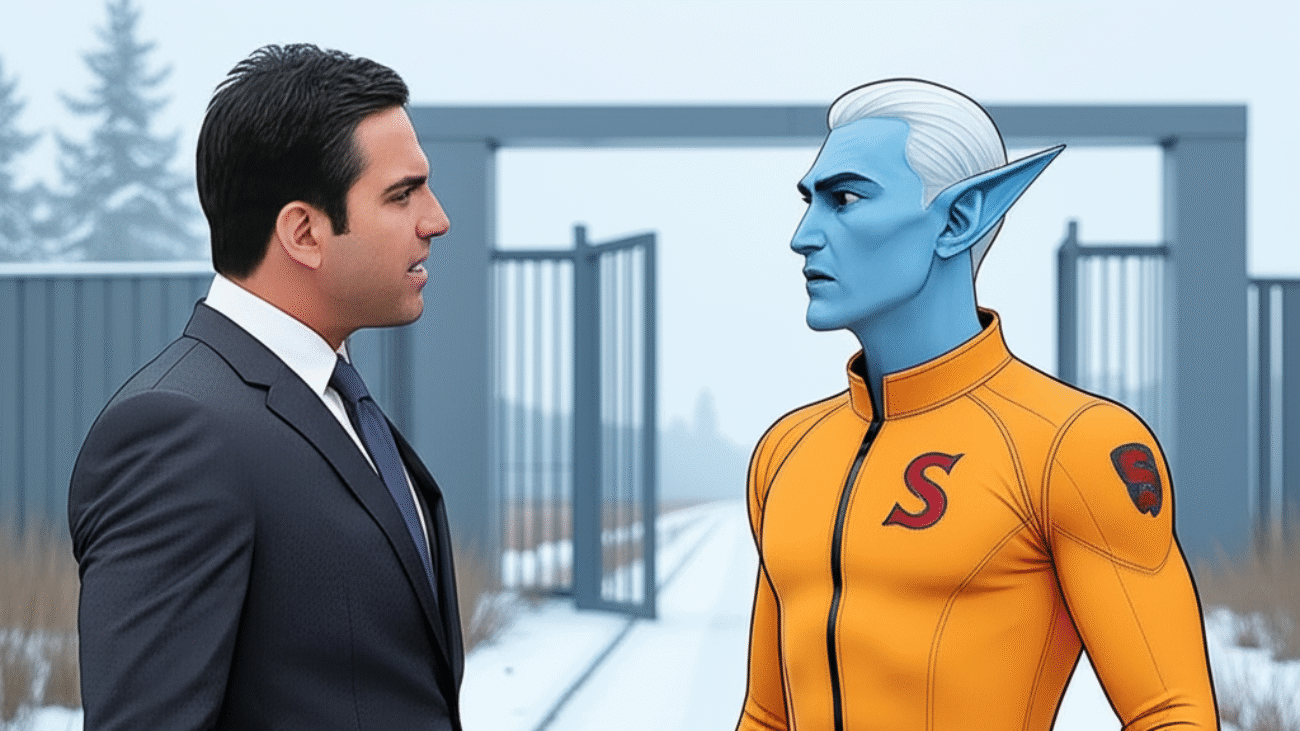
For most presidents and prime ministers, pulling up in a fancy black SUV is all about ego. But Orpo really needs his. Here in Ivalo, Finland, even in May there’s still enough snow on the ground that I wouldn’t hit the road in any car that doesn’t have extra-large tires and all-wheel drive.

He got out of the SUV and headed towards the main gate of the army base, where two guys wearing green berets and camouflage coats were waiting. I called his name and he waved. Orpo probably thought I was a bored citizen hoping for a selfie with the Prime Minister, now that it was a tad too warm for ice fishing and so there weren’t many ways in Ivalo to pass the time during the day. I unbuttoned my coat a bit to let him see the S on my chest. Since I was bundled up because of the freezing weather I could hardly blame him for not recognizing me.

“Shalzed?” Orpo asked. “What are you doing here?”

“I took the Overnight train from Helsinki to Rovaniemi, then three hours on a bus,” I told him. “I’ve always wanted to see the Northern Lights.”

“Then you should have come before April,” he said.

That’s right. Unfortunately, it’s hard to see the Northern Lights in May. If he had to pull out of the land mine treaty, why couldn’t he have at least done it a few months earlier? “Damn. Then I guess the only reason I came all the way to the Arctic Circle is you.”

“Sorry, I’m here for a meeting and to visit the troops.”

“Planning how to spread millions of tiny little undetectable land mines along the Russian border?”

Orpo waved a hand at me. “We have to defend our country.”

“If you don’t mind making vast swaths of your country unusable for the next few centuries and having to amputate the legs of any child, farmer, or tourist who happens to wander through.”

The SUV driver got out and walked over, probably wondering who I was and how I had the audacity to address the Prime Minister. Interesting the two guys by the gate didn’t budge. Maybe they were high-ranking officers, so standing around and looking important is all they knew how to do.

The driver said something to Orpo in Finnish, and Orpo shook his head. “Have you heard of technology?” he asked me. “Things have changed since the 90s. When they made the treaty mines stayed ready to explode forever. The new ones we’ll use are programmed to deactivate.”

As if technology was really going to solve this problem. “And what’s the failure rate?” I asked.

The driver sneered. “Less than one percent,” he said in heavily accented English. I wondered if Finland’s Prime Minister was now being transported by a lobbyist for the weapons industry. Maybe passed off to the public as a cost-cutting move.

“Unfortunately for you, I’m pretty good at math. If you put out a million mines, and one percent remain active, that means 10,000 will still be ready to explode on contact for let’s say the next hundred years. Would you be willing to hike through the area or let kids go play ball knowing that? And in real life the failure rate will be much higher than in the lab.”

“Are you paid by Putin?” The driver asked.

“No, and if you’re on the payroll of the weapons industry you might as well be fired,” I told him. “Anti- personnel mines don’t do any good. Soldiers with armor go right through. It’s just after the war civilians who suffer.” Most military people admit that minefields have limited strategic benefit that hardly justifies using them in light of the immense harm they cause. Drones and other more modern weapons are better.

“Thanks for your advice, General,” Orpo said. “By the way, are you planning to join our army and help on the front lines in case of a Russian invasion? If not I think I’ll listen to my soldiers, and they say minefields would be a significant deterrent.”

Something hard hit me on the shoulder, and I felt a cold spray against my face. I turned and saw the two men by the gate laughing. I wiped my face and saw snow all over my coat- they must have hit me with a snowball!

“What the hell?” I called.

Orpo and the driver burst out laughing too. “What happened to your superpowers?” Orpo asked.

“You not strong,” the driver said, putting his fists up like we were going to fight.

“If I still had superpowers I would. . .” I began. I was losing my temper. This is the new me, I reminded myself. No more getting angry and destroying things. Tempting as it feels, it doesn’t do any good.

“No one should have any complaints anyway,” Orpo told me. “So what if we’re withdrawing? We can do that with six months’ notice, that’s what it says in the treaty.”

“Sure, sounds perfect,” I said back, not bothering to rein in my sarcasm. “Countries that don’t want to use landmines anyway join the convention, then quit the moment they change their mind. What a magnificent treaty. So effective.”

“This is the real world, Shalzed,” Orpo said. “You can’t ask countries to take risks with defense.”

“And here I thought the Ottawa treaty was to make clear that land mines pose such a great, never-ending danger to civilians that they should never be used, even for security.”

The two guys at the gate started walking my way. One had a snowball, while the other was holding a pair of handcuffs. I wondered where he got them from. And if he really thought regular handcuffs could hold me.

“This is a military base, not Times Square,” the one with the handcuffs called. “Get out!” He had an accent like he was from New York. That made sense because the U.S. just made a deal to station troops here too.

“Besides, the treaty was never really a success,” Orpo continued. “Yes, 165 countries joined it. But so what? The United States, Russia, China, and India didn’t, and by far those are the countries with the most mines.”

That’s true, but countries that did join the Ottawa convention still destroyed around 55 million mines from their own stockpiles. That had to be significant. “So maybe then we should just do nothing,” I suggested. “Since no arms control treaty is perfect let’s just forget international law altogether and have no limits on wars or weapons.” After all, that’s pretty much what he was saying.

The guy with the handcuffs put a hand on my shoulder, right where his friend hit me with the snowball. “Hey buddy, this ain’t Central Park where you can just hang around. If you’re a tourist go get some skis. Get out!”

“You’re taking us backwards, Orpo,” I said. “Dropping the treaty undermines everything we’ve accomplished with international law.”

“When international law stops Russia from taking over Ukraine let me know. Then we’ll talk,” he replied.

The guy with a hand on my shoulder gave me a shove, and I started walking away from the base. Before I turned towards the road I glanced over my shoulder and saw Orpo and the two military guys still by the gate. I picked up a handful of snow, compacted it in my hands, then threw a snowball right at the guy who had thrown one at me. It hit him right on his rear end. He turned around and glared, then slowly brushed off his coat.

The guy that had been holding the handcuffs asked Orpo something, and Orpo shook his head. Probably asking whether to come after me, and smart for Orpo not to let him. As they went through the gate I regretted not having also whipped a snowball at Orpo himself. Yes, I gave up using superpowers on people. But if he believes Finland can change its mind and bring back weapons, I don’t see how he can complain about me bending my rules to pelt him with some snow.

Discussion Questions:

  1. Is deciding what material children can and can’t view the proper role of government? Should parents be responsible for determining what is appropriate for their kids on their own, or is keeping track of what kids do online too difficult and parents need the help of laws as well?
  2. Some websites have found that less than 5% of visitors are willing to take the risk of phishing scams, data breaches, and exposure to blackmail and share their ID in order to gain access. If that’s the case, do age verification rules impose too many limitations on adults in the aim of protecting minors?
  3. How will we define what content is inappropriate for minors and therefore subject to age verification? Could this Supreme Court decision allow a state to make information about birth control, abortion, or other topics related to sexuality unavailable to minors as well?
shalzed llano public library

Court Case in Texas: Can a Library Throw Out Books it Doesn’t Like?

Shalzed in Texas: Can a Library Throw Out Books It Doesn't Like?

Several years ago a library in Llano, Texas, removed seventeen books, about half of them children’s, because it considered them harmful or offensive. Some community members sued, saying the library was restricting their freedom to receive information based on library board members’ opinions. A district court ordered the library to put the books back, but then last week a full panel of circuit court judges ruled 10-7 that the library can in fact remove them. Shalzed heads to Texas to find out why.

At the entrance to the Llano public library, right next to the drinking fountain, I noticed a large bulletin board. A flyer that said ‘Report all burns!’ in big red letters caught my eye. At first I assumed it meant book burnings, and I considered a flyer encouraging people to burn books a bit brazen for a library in the midst of a lawsuit about censorship. Then I saw the picture of Smokey the Bear and realized the flyer was about forest fires.

Some seniors were sitting in comfortable, padded chairs leafing through newspapers, and a few moms and one dad were in the children’s area with their little ones. A middle aged woman wearing a shirt with the Llano County logo was sitting at the circulation desk thumbing through a magazine, so I walked straight up.

“I’m looking for Freddy the Farting Snowman, I forgot who wrote it,” I said. A couple of the moms glanced in my direction.

The librarian sighed. “That book is no longer available,” she said.

“I’m also looking for My Butt is So Noisy and I broke My Butt,” I told her. One of the elderly women put down her newspaper and stared at me.

“Well, if you want to screw up your children, you’ll have to do it on your own,” the librarian replied, wagging her finger at me. “You can always try Amazon.”

I scratched my chin like I was getting an idea. “Maybe you’re right,” I told her. “I’m sure the Llano County library board knows how to raise my children much better than I ever could. Why does anyone even try to think for themselves anymore, when we could just put the library board in charge of everything?”

“It’s not about thinking,” she snapped, closing her magazine and slapping her hand down on the cover. “That was a lie from the outset. We didn’t remove those books because we disagree with the contents, we removed them because they are inappropriate for children.”

The woman that had put down her newspaper shuffled over, stopping right next to me and leaning on her walker. “I don’t know who this funny-looking man is,” she said to the librarian, “but personally I love Isabel Wilkerson. The only reason you want to get rid of her book is because it’s about racism in American and telling the truth about race disagrees with you Republicans.”

I tugged to even my cape and then made sure all my shirt buttons were fastened. I realized that in a small town like this probably no one would know me, but saying I looked funny? It hurt my feelings, at least a little bit.

“I’m sorry ma’am, but it’s our job as librarians to decide what belongs in the collection,” the librarian responded.

“Well this is American, where people have rights!” the elderly woman said back, raising her voice.

“There you go Rose,” a grey haired man called from the chair next to where she had been sitting. “You tell her!”

The woman was right. U.S. courts recognize that free speech means that the government cannot censor or prevent citizens from receiving information, and the Universal Declaration of Human Rights also says that everyone has the right to freely receive information and ideas.

The librarian waived her hand. “Well maybe you rich retired folks should pay more in taxes so we can buy every single book that anyone says they want to read. But otherwise someone is going to have to keep deciding what tiny number of books we can purchase for our shelves, and that’s the job of the library board. If you don’t like it, vote ‘em out in the next election.”

“We’re not talking about which books to buy,” I said calmly. “We’re talking about throwing out books the library already has. I don’t think throwing books in the garbage saves money.”

“Who are you?” the elderly woman asked, turning to me. “I’ve never seen you around here before.” She stared at the ‘S’ on my shirt, and I very much hoped she wouldn’t confuse me with Superman. I can’t stand it when people do that.

I smiled and extended my hand. “My name is Shalzed, I’m from out of town,” I told her. I usually try not to be more specific.

She squeezed a few of my fingers as she moved her arm up and down. “So what makes you think you can take out a book?”

She had me there. I lack one of those glorious cards that bestow the privilege of borrowing items from the Llano County library.

“So you came here from out of town just to make trouble?” the librarian asked me.

I put my hands on my hips. “I’d think dismissing everyone on the committee that decides on books and replacing them with a group of Conservative Christians, then them throwing away all the books a Congressman decided to target, would be making trouble,” I told her.

“And I’d call it making sure the library faithfully serves our community,” she replied. “If in your town you want kids reading about a five year old boy deciding to be a girl, go ahead.”

I remembered another flyer I had seen on the bulletin board at the entrance. “What about the LGBTQ+ support group?” I asked. “Are you going to take down the flyer about their meetings too?”

The woman who had asked where I was from picked one corner of her walker up a few inches and slammed it back down. “My granddaughter goes to that,” she said, fixing the librarian with a mean stare. “And I’m proud of her for it. Don’t you mess with them, that’s crossing a line.”

“You better listen to Rose,” the man seated back where she had been reading the paper chimed in.

The librarian smiled. “Well, you’ll be happy to know the bulletin board is open to all residents of Llano County,” she said. Then she turned to me. “Anyone with a library card or local ID, that is, can post a notice.”

“Not you,” the elderly woman said, pointing a finger right at my stomach.

“So it’s only books about being LGBT you get rid of. LGBT people themselves are welcome?” I asked the librarian.

“Of course,” she said. “Everyone is welcome to use the library, and the bulletin board is a public forum that’s open to everyone. But what books are on the shelves is up to the library board that’s appointed by the county. Only they decide.”

A mom holding a sulking toddler by the hand pushed around me and plopped a book called Berenstein Bears say Their Prayers onto the counter.

“I sure don’t want Lizzie here seeing books about peoples butts on the children’s shelves,” the mother said to the librarian, but glancing at me.

I was about to say something when the little girl started to cry. “Mommy, my butt hurts,” she whined.

Both the mom and the librarian laughed, and I even couldn’t help but chuckle. “We’ll be home in a few minutes,” the mom said as she gave the girl a hug.

“Bridge club starting,” the elderly man called. Rose turned her walker and started heading away.

I turned and went back past the bulletin board and out of the building, pondering the irony that this case involved seventeen books being discarded by the library and had been decided by a panel of exactly seventeen judges. That must just be a coincidence, I figured, since now it was headed to the Supreme Court and they only have nine.

Out by the street I pondered what to do next. I didn’t think there were any attractions in Llano I wanted to see. I would have liked to take out a book to read under a tree at the nearby park, but of course I didn’t have a library card.

“People have the right not to be exposed to all that filth and garbage,” the mom said to me as she strode by, toddler grasping her left pinky finger in tow. “Do you expect the library to have books saying the Earth is flat too?”

She opened the rear door of an old Chevy Cruze and put the little girl in her car seat, then quickly got in the front. I do think people would benefit from a little more exposure. With social media serving us only what we already like, it would be good for people to encounter a wide variety of books in the library. But even back when I was using my superpowers, when I could bust open locked doors and find the openings to secret passages, making people more open-minded was still beyond me.

Subscribe to Receive Shalzed's adventures in your inbox

Questions:

  1. The librarian told Shalzed that children’s books were not removed because of disagreement with the contents, but rather because the book was considered inappropriate for minors. But is there a difference? (This is discussed in the majority opinion starting on page 20, then again on page 24 with regard to overturning Campbell. The minority addresses this on page 32 of their opinion, page 92 of the overall document).
  2. Shalzed says there should be a difference between a library deciding not to buy a book and throwing out a book it already has in its collection. But is this distinction sustainable? (This is discussed in the majority opinion on p. 19-20, and discussed extensively by Judge Ho in section two of his concurrence (p. 58 of the document). It is also covered in the minority opinion on page 31 (page 91 of the overall document.)
  3. Is it possible for the courts to intervene in library decisions, hearing lawsuits whenever a citizen alleges that a library official is using their authority over adding and removing books in ways that are biased by their own viewpoint? Or is the scope of this issue, considering the number of libraries and number of books they acquire and remove, simply beyond what courts can do?
shalzed finland land mines

Shalzed Confronts Finnish Prime Minister Petteri Orpo About Land Mines

Shalzed Confronts Finnish Prime Minister Petteri Orpo About Land Mines

Anti-personnel land mines are inherently indiscriminate, harming soldiers and civilians alike. They continue to kill and maim innocent people long after conflicts end. In 1997, the Ottawa treaty was drafted to prohibit their use, and so far approximately 165 countries have joined. But recently Estonia, Latvia, Lithuania, and Poland announced that they will leave the treaty, and now Finland is following suit.

Today, Shalzed catches up with Finnish Prime Minister Petteri Orpo to find out why he wants to weaken a successful arms treaty and bring back a type of weapon that kills at least 5000 innocent people a year. To read Shalzed’s biography, click here.

For most presidents and prime ministers, pulling up in a fancy black SUV is all about ego. But Orpo really needs his. Here in Ivalo, Finland, even in May there’s still enough snow on the ground that I wouldn’t hit the road in any car that doesn’t have extra-large tires and all-wheel drive.

He got out of the SUV and headed towards the main gate of the army base, where two guys wearing green berets and camouflage coats were waiting. I called his name and he waved. Orpo probably thought I was a bored citizen hoping for a selfie with the Prime Minister, now that it was a tad too warm for ice fishing and so there weren’t many ways in Ivalo to pass the time during the day. I unbuttoned my coat a bit to let him see the S on my chest. Since I was bundled up because of the freezing weather I could hardly blame him for not recognizing me.

“Shalzed?” Orpo asked. “What are you doing here?”

“I took the Overnight train from Helsinki to Rovaniemi, then three hours on a bus,” I told him. “I’ve always wanted to see the Northern Lights.”

“Then you should have come before April,” he said.

That’s right. Unfortunately, it’s hard to see the Northern Lights in May. If he had to pull out of the land mine treaty, why couldn’t he have at least done it a few months earlier? “Damn. Then I guess the only reason I came all the way to the Arctic Circle is you.”

“Sorry, I’m here for a meeting and to visit the troops.”

“Planning how to spread millions of tiny little undetectable land mines along the Russian border?”

Orpo waved a hand at me. “We have to defend our country.”

“If you don’t mind making vast swaths of your country unusable for the next few centuries and having to amputate the legs of any child, farmer, or tourist who happens to wander through.”

The SUV driver got out and walked over, probably wondering who I was and how I had the audacity to address the Prime Minister. Interesting the two guys by the gate didn’t budge. Maybe they were high-ranking officers, so standing around and looking important is all they knew how to do.

The driver said something to Orpo in Finnish, and Orpo shook his head. “Have you heard of technology?” he asked me. “Things have changed since the 90s. When they made the treaty mines stayed ready to explode forever. The new ones we’ll use are programmed to deactivate.”

As if technology was really going to solve this problem. “And what’s the failure rate?” I asked.

The driver sneered. “Less than one percent,” he said in heavily accented English. I wondered if Finland’s Prime Minister was now being transported by a lobbyist for the weapons industry. Maybe passed off to the public as a cost-cutting move.

“Unfortunately for you, I’m pretty good at math. If you put out a million mines, and one percent remain active, that means 10,000 will still be ready to explode on contact for let’s say the next hundred years. Would you be willing to hike through the area or let kids go play ball knowing that? And in real life the failure rate will be much higher than in the lab.”

“Are you paid by Putin?” The driver asked.

“No, and if you’re on the payroll of the weapons industry you might as well be fired,” I told him. “Anti- personnel mines don’t do any good. Soldiers with armor go right through. It’s just after the war civilians who suffer.” Most military people admit that minefields have limited strategic benefit that hardly justifies using them in light of the immense harm they cause. Drones and other more modern weapons are better.

“Thanks for your advice, General,” Orpo said. “By the way, are you planning to join our army and help on the front lines in case of a Russian invasion? If not I think I’ll listen to my soldiers, and they say minefields would be a significant deterrent.”

Something hard hit me on the shoulder, and I felt a cold spray against my face. I turned and saw the two men by the gate laughing. I wiped my face and saw snow all over my coat- they must have hit me with a snowball!

“What the hell?” I called.

Orpo and the driver burst out laughing too. “What happened to your superpowers?” Orpo asked.

“You not strong,” the driver said, putting his fists up like we were going to fight.

“If I still had superpowers I would. . .” I began. I was losing my temper. This is the new me, I reminded myself. No more getting angry and destroying things. Tempting as it feels, it doesn’t do any good.

“No one should have any complaints anyway,” Orpo told me. “So what if we’re withdrawing? We can do that with six months’ notice, that’s what it says in the treaty.”

“Sure, sounds perfect,” I said back, not bothering to rein in my sarcasm. “Countries that don’t want to use landmines anyway join the convention, then quit the moment they change their mind. What a magnificent treaty. So effective.”

“This is the real world, Shalzed,” Orpo said. “You can’t ask countries to take risks with defense.”

“And here I thought the Ottawa treaty was to make clear that land mines pose such a great, never-ending danger to civilians that they should never be used, even for security.”

The two guys at the gate started walking my way. One had a snowball, while the other was holding a pair of handcuffs. I wondered where he got them from. And if he really thought regular handcuffs could hold me.

“This is a military base, not Times Square,” the one with the handcuffs called. “Get out!” He had an accent like he was from New York. That made sense because the U.S. just made a deal to station troops here too.

“Besides, the treaty was never really a success,” Orpo continued. “Yes, 165 countries joined it. But so what? The United States, Russia, China, and India didn’t, and by far those are the countries with the most mines.”

That’s true, but countries that did join the Ottawa convention still destroyed around 55 million mines from their own stockpiles. That had to be significant. “So maybe then we should just do nothing,” I suggested. “Since no arms control treaty is perfect let’s just forget international law altogether and have no limits on wars or weapons.” After all, that’s pretty much what he was saying.

The guy with the handcuffs put a hand on my shoulder, right where his friend hit me with the snowball. “Hey buddy, this ain’t Central Park where you can just hang around. If you’re a tourist go get some skis. Get out!”

“You’re taking us backwards, Orpo,” I said. “Dropping the treaty undermines everything we’ve accomplished with international law.”

“When international law stops Russia from taking over Ukraine let me know. Then we’ll talk,” he replied.

The guy with a hand on my shoulder gave me a shove, and I started walking away from the base. Before I turned towards the road I glanced over my shoulder and saw Orpo and the two military guys still by the gate. I picked up a handful of snow, compacted it in my hands, then threw a snowball right at the guy who had thrown one at me. It hit him right on his rear end. He turned around and glared, then slowly brushed off his coat.

The guy that had been holding the handcuffs asked Orpo something, and Orpo shook his head. Probably asking whether to come after me, and smart for Orpo not to let him. As they went through the gate I regretted not having also whipped a snowball at Orpo himself. Yes, I gave up using superpowers on people. But if he believes Finland can change its mind and bring back weapons, I don’t see how he can complain about me bending my rules to pelt him with some snow.

Subscribe to Receive Shalzed's adventures in your inbox

Discussion Questions:

  1. Do countries have the right to use any weapons available to defend themselves, especially against unprovoked aggression? Must treaty obligations be followed even when a country fears its security is at stake?
  2. The Ottawa Convention banning land mines contains a clause allowing governments that ratify the treaty to back out in the future. This makes sense, as circumstances, needs, and technology can change. Without this flexibility, countries might not be willing to sign the treaty. But if a treaty that aims to permanently ban a type of weapon lets countries back out and return to using that weapon if they feel they need to, is the treaty really worth the vast time and resources that went into it at all?
shalzed rights of the elderly

Rights of the Elderly: Shalzed Speaks to UN Expert About Proposed New Treaty

Rights of the Elderly: Shalzed Speaks to UN Expert About Proposed New Treaty

On April 3rd the UN Human Rights Council voted to begin drafting a treaty on the rights of older people. The United Nations’ Independent Expert on the enjoyment of all human rights by older persons, Claudia Mahler, was instrumental in bringing this about. Shalzed catches up with her in this edition.

Click here for Shalzed’s bio.

It was my first time at the ‘Palais de Nations’ in Geneva- after I used the East River to flood UN headquarters in New York I figured I’d be persona non grata at their headquarters in Europe so there was no use paying a visit. But as you know it’s a different me now, and with the help of a new suit I purchased from Aelia Duty Free, security let me in without trouble.

I spotted Claudia Mahler chatting with two men who had Japanese flag pins on the lapels of their jackets. Japan was one of the countries most opposed to beginning to draft her new treaty, so their delegates probably wanted to have a word.

“What a big smile,” I said to Claudia, stopping a few feet away. She turned, probably assuming I was a more friendly Human Rights Council delegate, looking pleased by the opportunity to get away from the Japanese.

“It’s been over a decade in the works,” she replied. She turned back to the Japanese men and bowed slightly, clasping her hands together in front of her chest. They did the same, and then headed away.

“Yup, just what we need, to spend the next few decades carefully drafting a new treaty for us all to ignore,” I told her.

She wrinkled her forehead, like she was trying to size up who I was. Probably because no UN delegate would ever be blunt like that. Even the Americans, who oppose nearly everything having to do with human rights, just say this new treaty may represent an inappropriate allocation of resources. “Have I met you before?” she asked.

I shrugged. “Not in person. But both of our reputations precede us.”

“Shalzed?” she exclaimed, taking a step back.

“Did you think I never wear a suit?” I unbuttoned my jacket so she could see the superhero ‘S’ underneath.

“What do you want? Are you going to trap me in a web or something?”

I laughed. Did she think I used to be Spiderman? “Don’t you know I don’t do stuff like that anymore? I just want to know where this all ends. I mean, how about people suffering midlife crisis? Does every age group need its own treaty?”

She sighed. “Older adults face unique human rights challenges. For example, age discrimination in the workplace. Mandatory retirement ages are a clear violation of human rights. This all needs to be codified as just as illegal as discrimination based on religion, gender, or anything else.”

“I’m sure you’d have no problem travelling in an airplane with a 95 year old pilot,” I said.

“The point is that it’s a human rights violation to set a mandatory retirement age for everyone. Each person’s fitness needs to be individually evaluated.”

“Can’t age discrimination just be included in existing laws?” I asked.

“Older people frequently have trouble accessing health care, and someone needs to define what their rights are,” she continued, picking up steam.

“Fine, but anyone can need health care. Questions about access, coverage of expensive procedures, or experimental drugs can come up at any age.”

“And abuse,” Claudia continued, ignoring me. “Abuse of the elderly may look quite different than abuse of younger people. Not letting older people make their own decisions about living arrangements or healthcare. Financial abuse as family members take away control of bank accounts. Caretakers forcing them to take sedatives so they are easier to look after . . .”

“Okay,” I interrupted. “But do you really think a new international treaty is going to help?”

“Obviously a treaty isn’t going to change things overnight. But governments need clear guidance on what they are required to do.”

I noticed Francisca Albanese, the Special Rapporteur on the Rights of Palestinians, walking by. When she saw Claudia she came right up to her without even noticing me. “Would you like me to draft a press release condemning Israel because there is no way the elderly in Gaza can possibly evacuate the way Israel is expecting them to?” She asked. “I’m trying to arrange for every UN Special Rapporteur to condemn Israel at least once a month.”

“How about when Hamas, Hezbollah, or the Houtis fire rockets indiscriminately at Israeli cities?” I asked her. “People often have less than a minute to reach shelters, and the elderly or those with disabilities can’t possibly do that.”

She glared at me. “Are you Shalzed?” she asked.

“That’s right,” I told her. “Unlike you, sticking up for the rights of both Israelis and Palestinians.”

“I don’t know why you even bother speaking to him,” she told Claudia, pointing a finger at me. She stormed off down the hall, calling over her shoulder that she’s send Claudia an email.

“You have so many friends,” Claudia said to me.

Well, human rights is a lonely business. “Here’s another question,” I told her. “Isn’t a lot of this cultural? Like in some countries older people are more likely to be cared for in the home by their children, whereas other countries are more likely to use senior centers. And how people are cared for is unique to every situation and family. So why are you trying to make a universal treaty?”

Claudia sighed. “The Japanese delegate was just telling me that. A treaty doesn’t commit anyone to anything specific, it will just help clarify what the elderly’s rights are.”

You’ve got to love twenty years negotiating a treaty that doesn’t commit anyone to anything specific. That’s the way the United Nations keeps earning its well deserved reputation for getting things done. “Remind me, how many core human rights treaties do we have already?”

Nine,” she said.

“Right. We already have treaties to end discrimination against women, against people with disabilities, racial discrimination, and more. How’s that going? And you really think making it ten is going to help?”

“I thought you promote human rights,” Claudia said.

“Of course I do,” I told her. And I’d have added that I think I accomplish more than most UN bodies or Special Rapporteurs if I wasn’t to humble to boast.

“Then why are you cynical? No one treaty can change the world, but the more we focus on fleshing out what human rights mean in different situations and to different groups of people the farther we’ve come. A new treaty will give activists a platform to campaign from.”

A woman wearing a press credential around her neck walked up to Claudia. “I’d love to interview you about the new treaty if you have a moment,” she said.

Claudia smiled. “It would be my pleasure,” she said. Then she turned to me. “Rights of the elderly doesn’t get as much coverage as what most of the other rapporteurs work on,” she said. “I take whatever press exposure I can get.”

“Is this your husband?” the reporter asked, gesturing to me. A look of horror came across Claudia’s face. “Sorry, I didn’t mean to assume,” the woman said.

“He’s just someone who shouldn’t even have been allowed in this building,” Claudia said.

“I’m leaving now,” I told her

The reporter gave me a funny look, probably trying to decide if I was some sort of stalker. “It’s been nice to meet you,” she said. Then she turned her back to me as she pulled a voice recorder from her purse to use for her interview.

As I turned to go the reporter asked Claudia whether she thought it was fair to call the recent decision to begin work on the treaty momentous, and Claudia said absolutely. Then I passed by the security guards at the building’s grand entrance and headed out into Geneva’s chilly April air. I saw a man taking a selfie with his two little kids, both looking around middle school age, the sign for the UN Human Rights Council headquarters in the background.

“This is the building where they make sure the world is fair for everybody,” the man was telling his children “Here they do the most important work of all.”

I kept my mouth shut as I passed by. No sense telling the kids that even though what their dad said sounds great, it just ain’t so.

Subscribe to Receive Shalzed's adventures in your inbox

Questions:

1. Is it worthwhile to develop more international human rights treaties, while we see that the ones we already have are often ineffective?

2. Do mandatory retirement ages for professionals such as pilots violate human rights, since some people who are still physically able to do the job will be unjustly prevented from doing so? Or are mandatory retirement ages necessary to insure safety, and there is no practical way to determine each person’s exact level of fitness?

3. Is how an elderly person is treated something that should be decided on an international level, or are there such wide variations in cultural practice and family preference that global standards cannot be universally appropriate?

femicide milei

Femicide: Shalzed Sneaks in on Argentina’s Javier Milei

Femicide: Shalzed Sneaks in on Argentina's Javier Milei

Anti-personnel land mines are inherently indiscriminate, harming soldiers and civilians alike. They continue to kill and maim innocent people long after conflicts end. In 1997, the Ottawa treaty was drafted to prohibit their use, and so far approximately 165 countries have joined. But recently Estonia, Latvia, Lithuania, and Poland announced that they will leave the treaty, and now Finland is following suit.

Today, Shalzed catches up with Finnish Prime Minister Petteri Orpo to find out why he wants to weaken a successful arms treaty and bring back a type of weapon that kills at least 5000 innocent people a year. To read Shalzed’s biography, click here.

Yes, I gave up using superpowers. And yes, I do miss them, thanks for asking. But at least I had fun this morning sneaking into the Pink House. I joined a bunch of farmers protesting export taxes and kept shouting ‘sin el campo, no hay pais’ right at the guards so loud they had to arrest me. The funny thing is I just read it off one of the farmers’ signs and I’m not even sure what it means. Then once the guards brought me to one of their little holding cells on the inside I used my extra strength to bust the handcuffs and slip into Milei’s office. Good times.

When Milei’s helicopter finally arrived I was taking a nap. Listen, I was up early to get here and he has a comfortable couch. I went over and watched through the window as the rotors of his Sikorski S-76 slowed to a stop and wondered why the taxpayers of Argentina put up with paying for this every single workday. Why didn’t they demand El Presidente convert some Pink House office into a bedroom, or failing that he could spend at least some of his nights on his very nice office couch?

Milei came in a few moments later, carrying his stylish black briefcase. “What the hell are you doing here?” he exclaimed as soon as he saw me, dropping his briefcase on the floor in surprise.

“It’s been a while,” I said, even though just a few months ago I joined him on his airplane to find out why he called the United Nations a multi- tentacled leviathon for trying to stop hate speech against women.

Two men with communication devices in their ears and hands on their revolvers entered quickly. Probably they were alerted by Milei’s voice and the thud of his briefcase hitting the floor.

“Don’t shoot,” I said, raising my hands slowly. “I’m worried because I’m not a woman.”

“He’s the one that escaped this morning,” one of the guards said. “He was with the crazy farmers complaining about the export tax.”

Milei wrinkled his nose. “You’re here to complain the export taxes are still too high?” he asked.

“No, I’m here to ask why even though violence and murder of women and girls continues to rise, you’ve decided to eliminate the crime of feminicide.”

Milei clicked his tongue and picked up his briefcase, then sat down at his desk. That signaled the guards to relax. “Aren’t you still a human rights defender?” he asked.

What the hell? “No, I push old folks onto train tracks during the day then rob banks at night,” I said.

“Well then that explains it,” he replied. “You see, I’m in favor of equality. I believe the murder of a woman should be punished the same way as the murder of a man. But I guess when you gave up being a superhero you also decided sexism and discrimination would become your new calling.”

No one talks to me like that. “And I thought someone who cares about equality might want to do something about the fact that women suffer an overwhelmingly disproportionate amount of gender based violence,” I told him.

One of the guards said something to Milei in Spanish, and Milei raised a palm for him to wait. “Eres mas lento que una tortuga,” I said to the guard. It means you’re slower than a turtle and it was the only Spanish insult I knew. He said something back I couldn’t understand which started the other guard laughing.

“You know what I don’t understand about the human rights folks?” Milei asked me. “They’re clamoring for femicide laws even though it’s already been proven that they have no effect.”

I sighed. I knew Milei wasn’t stupid, so why was he pretending to be? It’s true no law adding a few more years of jail when a guy murders his wife or girlfriend over the punishment for a regular homicide can really succeed at deterring those crimes, but femicide laws still make plenty of difference. “Femicide laws do work,” I told him. “Without them, we wouldn’t even know how common it is for men to kill their intimate partners and so we’d be less able to take steps to prevent it. Only with femicide as a separate crime can we begin to compile accurate statistics, let alone have effective prosecution and conduct appropriate investigations.”

“That’s my point,” Milei said, smiling and raising his palms like he had been proven innocent. “I’m not anti-women and I don’t condone domestic violence. But what we need here is more awareness, more data, and better police work. Not laws that result in discrimination.”

I sat down on his comfortable couch. A woman dressed in a stylish beige skirt and matching sweater came in and announced that ‘El Ministro Mariano Cúneo Libarona’ had arrived for his appointment.

“I think it’s time for you to go,” Milei told me. Both the guards stepped in my direction, grinning and arms outstretched.

“Isn’t Mariano the minister of justice?” I asked, remaining seated. “If so I should stay, I think both of you might need my advice.”

“I’m pretty sure my guards would enjoy dragging you out the door and tossing you onto La Pirámide de Mayo. And I’d enjoy watching,” Milei said.

There’s no way I’d let those goons touch me, but there’s a Chinese proverb about not overstaying your welcome that I take seriously so I slowly stood up. “Fine. Just tell me one thing. Sixty percent of women who are murder victims turn out to have been killed by a member of their own family. It comes to around 140 women per day worldwide. So you really think removing femicide as a crime is a good idea?” I asked.

Ministro Mariano walked into the office, I recognized him easily due to his distinctive grey hair. “Did I hear people talking about our plan to reassert that no life is worth more than another by removing femicide from the penal code?” he asked.

I wanted to wipe the smug grin from his face. “If no life is worth more than another, maybe governments should take more action against a serious form of violence that usually goes unreported and unpunished simply because the victims are women,” I said.

“Femicide is just woke culture gone crazy,” he replied.

I had honestly been about to leave, but now I decided to sit back down. “Protecting women from being killed is woke culture?” I asked, folding my arms against my chest.

“Femicide started off meaning just the murder of a woman or girl by an intimate partner or member of her family,” Mariano said. “But did you see that your friends at the United Nations have now added eight more categories (p. 12)? One of them is even ‘women working in the sex industry’. Imagine that- killing a police officer, bank guard, or guy that got the promotion you’d been after at the office is one thing. But according to UN Women, killing a sex worker is a new, especially serious crime.”

“Maybe because men think that killing a sex worker won’t be taken seriously by the police and so is easy to get away with,” I said. “Don’t you two equality brothers believe sex workers have a right to life?” I asked.

“La Pirámide,” Milei said, gesturing to the guards.

I stood up and took a step towards the exit. “Did you know in the Jewish tradition each morning men say a special blessing to thank God for not creating them a woman?”

“Well that sounds rather sexist,” Milei remarked.

“Pure patriarchy,” Mariano added.

“It came from living in a world where men felt one hundred percent entitled to murder wives and daughters that defied them,” I said. “Sounds like that blessing might make a comeback here in Argentina. Would you like some copies?”

“Thanks for the religion lesson,” Mariano told me.

Milei made another gesture, and both guards stepped briskly towards me. I slipped between them and out the door so I wouldn’t wind up with more of their germs on my clothing. The woman in beige was standing there, hands on hips, and she pointed me towards the exit.

I went out into Plaza de Mayo and saw that the farmers had already dispersed. Maybe all they wanted was to wave their signs as Milei’s helicopter landed and then they had to get back to their crops.

I sized up the pyramid in the center of the plaza. Even if I had let the guards carry me out there’s now way those two could have lifted me over the high fence around it, let alone dragged me up. I strolled over and took a closer look. I noticed the statue on top is the figure of a woman, and according to the sign she’s supposed to represent liberty and freedom. Sorry to tell you, I think she’s got a long way to go.

Subscribe to Receive Shalzed's adventures in your inbox

Discussion questions:

1. Codifying femicide as a crime seeks to punish certain murders of women more harshly than the murder of men. Is this necessary to protect women from gender based violence, to which they are uniquely vulnerable? Or is it an affront to the principle of equality that is fundamental to all human rights?

2. Femicide is intended to cover situations in which a woman or girl is killed specifically due to her gender. But countries that have enacted these laws have used a wide variety of definitions. Some include the killing of a woman in the context of sex-work, human trafficking, denial of reproductive rights, domestic abuse, female genital mutilation, and more. Is it possible to establish a clear and effective definition for this crime?