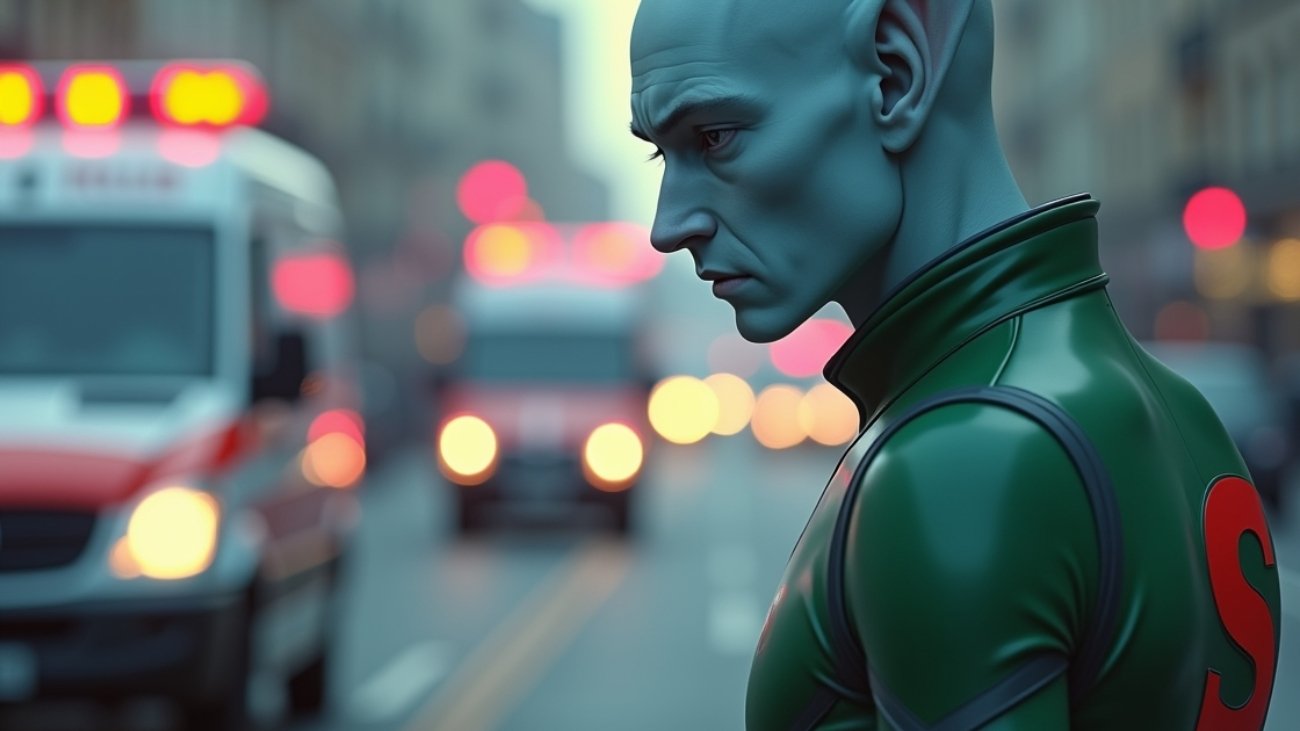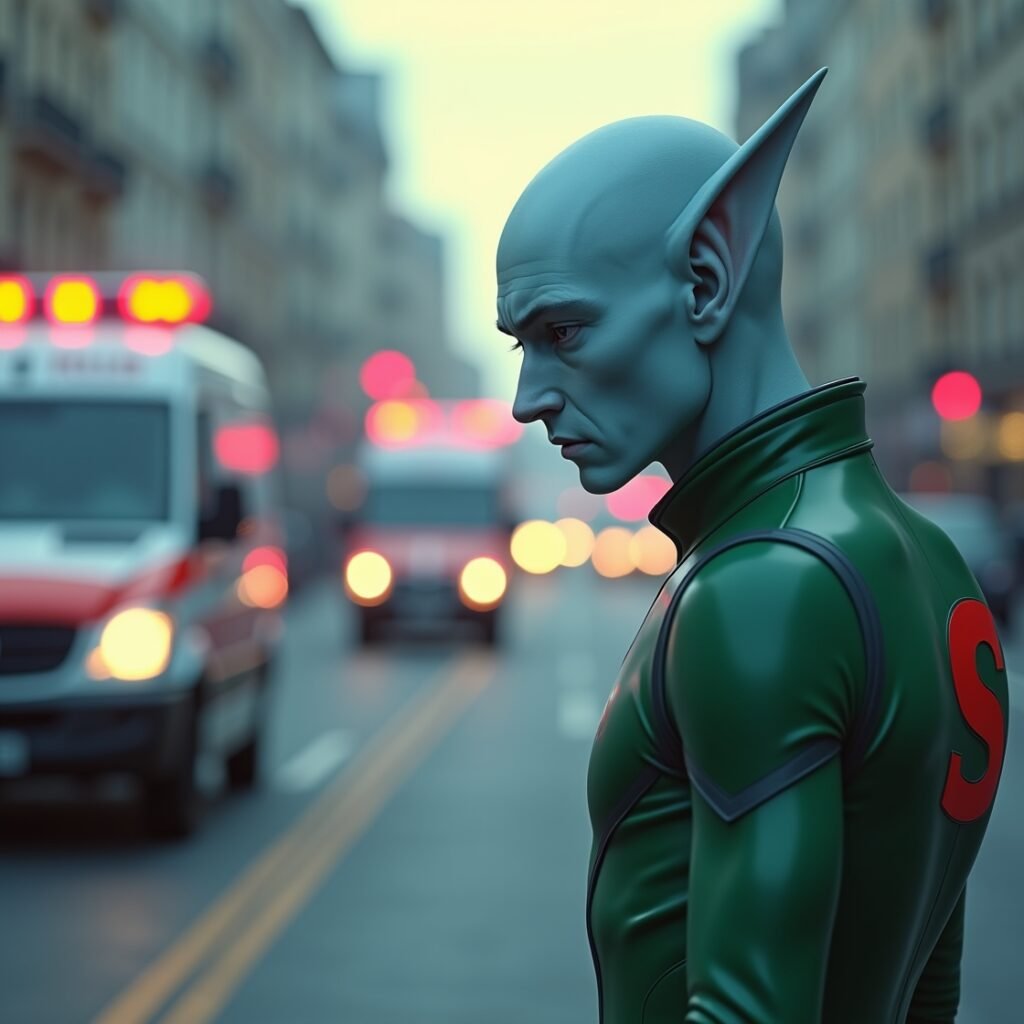
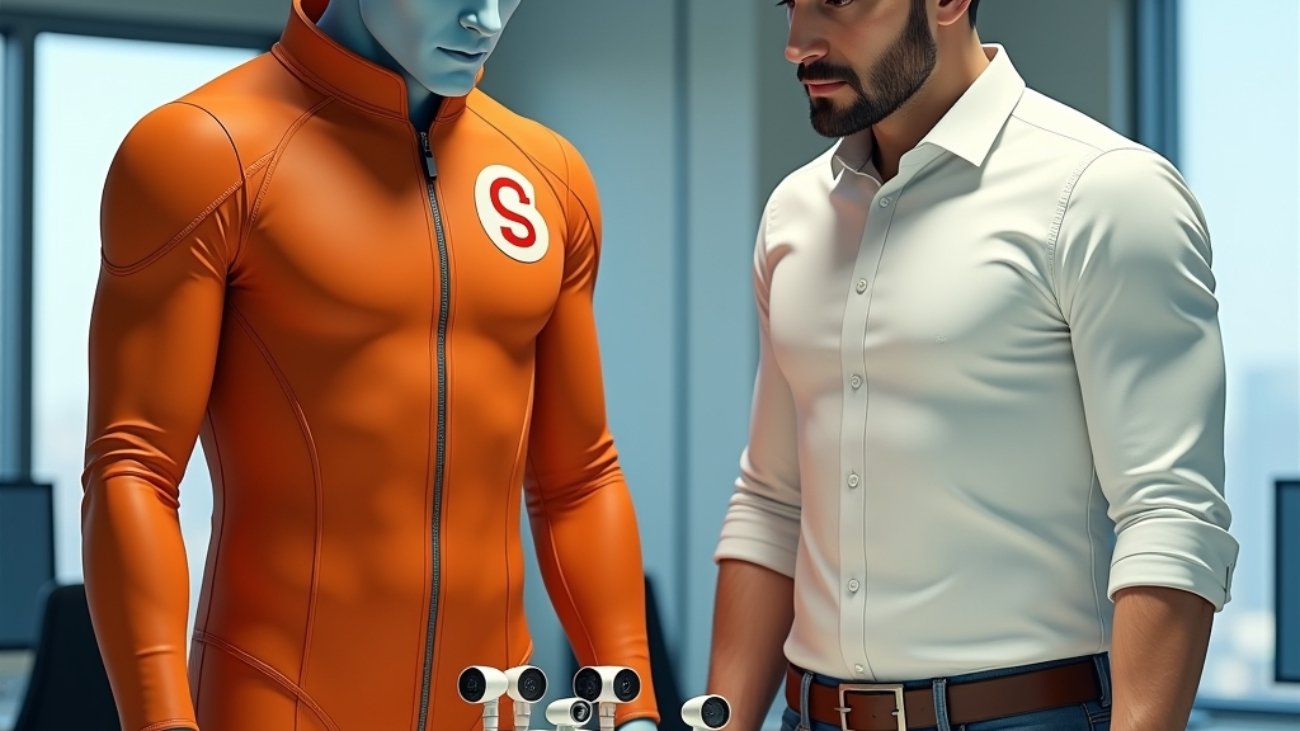
shalzed and simon examine surveillance device

The Camera That Solved a Shooting — and Tracks You, Too

The Camera That Solved a Shooting — and Tracks You, Too

When security wins, Does Freedom Lose?
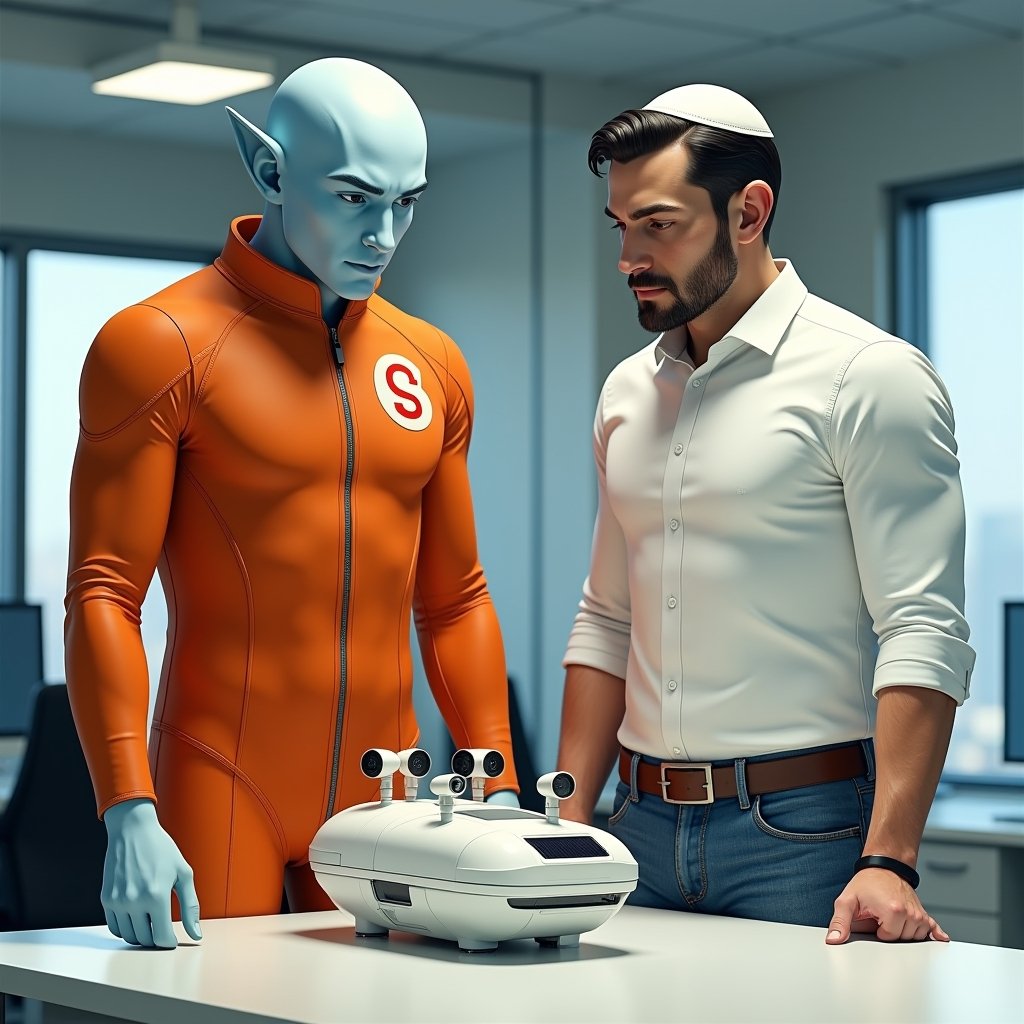
Shalzed and Simon examine a surveillance device

The Brown University shooter was caught using Flock cameras — AI-powered systems that track cars by unique “vehicle fingerprints,” now installed across the U.S.

These cameras aid investigations, but do they also open the door to mass surveillance and invite police abuse?
Shalzed and Simon meet Flock’s CEO to find out.

The Camera That Solved a Shooting — and Tracks You, Too

I was sitting on my couch watching the evening news, which had on a long segment explaining how the police were able to track down the person responsible for the shooting at Brown University and killing an MIT professor. Once they got a tip on the suspect’s car, they used artificial intelligence cameras from a company called Flock to locate it. Flock cameras identify every car that passes within range, not only by license plates but also by developing what they call a ‘vehicle fingerprint’ which consists of anything distinctive like a bumper sticker, dent, or aftermarket part. That’s how the police caught the suspect even though he switched the car’s license plates.

As soon as the news switched to weather Shalzed called. “I don’t understand,” he told me. “How can AI cameras be in such wide use? Aren’t they a threat to basic freedom?”

I had never really thought about that. “Well, if the cameras just record cars going by I don’t see why it’s a problem,” I told him.

“But it’s a form of mass surveillance. Humans will become afraid to exercise their freedom if they know they can easily be watched.”

All of a sudden I was back in the black tunnel I was by now getting used to, staring at little points of light. Then I was standing in the Atlanta office of Flock Safety CEO Garrett Langley. Langley looked so young he might still even be in his twenties- maybe not surprising since he only founded the company in 2017 after tinkering with surveillance cameras at his own dining room table. His desk was clear, and he was staring intently at his laptop computer. Someone on the computer screen yelled, ‘Help, help!’ and Langley smiled.

“Watching a movie?” I asked.

Langley looked up and noticed us for the first time. “Who are you?” he asked.

“Don’t the cameras you sell threaten people’s basic rights and freedom?” Shalzed asked.

Langley waved his hand. “What we do is make communities safer,” he said. “Just look at how we helped catch the Rhode Island shooter last week.”

“But what if these cameras are abused?” Shalzed asked. “They could be used to track anyone who attended a political demonstration.”

Langley shrugged. “Our cameras are just a tool,” he said. “If law enforcement misuses it, hold them accountable, not me. Now I want to know how you got into my office.”

“Check your surveillance cameras,” Shalzed said. I laughed. Shalzed refused to tell me anything about how his transport system works, but I was pretty sure we wouldn’t show up. “Police could even use your cameras to track women who travel out of state for an abortion.”

The phone on Langley’s desk buzzed. “Matt Feury is here,” a female voice said.

“Send him in,” Langley said. Then he looked at Shalzed. “I most certainly intend to check surveillance, and if you broke any trespassing laws you’ll be hearing from the authorities.”

“What stops individual police officers from using Flock cameras for stalking?” Shalzed asked. “Like the police chief in Kansas who used your cameras to keep tabs on his ex-girlfriend? Or the police chief in Georgia who used the cameras to stalk women? Or the one in Wisconsin who went so far as to have a Flock camera installed right outside of his house to monitor his wife during their divorce?”

Langley shook his head. “Like I told you, blame the officers and hold them accountable, not us.”

I have to admit I was kind of shocked. “Do you mean that any policeman anywhere can just type the description of a car or a license plate into the computer and find out exactly where that car has been driven?” I asked. I imagined how easy it would be, then, for police to spy on their wives or girlfriends, or on anyone else they had an interest in.

“They’re not supposed to,” Langley replied. “And anytime a law enforcement officer does a search they are required to enter the reason.”

“But they can enter anything,” Shalzed said. “They can easily just type ‘investigation’ in the reason field, or something generic like that. How many officers need to misuse it before that misuse becomes an expected feature??”

Matt Feury entered the office, carrying a large round device with an array of what looked like microphones sticking up on top.

“I was just reviewing the test results,” Langley said to him.

“Who are these people?” Feury asked.

“What is that?” Shalzed asked, pointing to the device in Feury’s hands.

Feury glanced at Langley. “It’s no secret,” Langley said, nodding permission for Feury to respond.

“It’s called Raven. The old models can detect sounds like gunshots and immediately notify police. Now we’ve upgraded it to detect sounds of human distress also.”

“Human distress?” I asked, not sure what he meant.

“Like someone yelling ‘Help, Help!’ Feury explained. “Our new Ravens can sort through background noise to detect someone yelling for help and immediately notify police.”

“While recording everything the raven is able to pick up?” Shalzed asked.

“And if you can identify cars by dents or bumper stickers, I imagine you can also identify people by their faces,” I added. The thought of these devices recording so much information began to make me feel uneasy.

“The alternative is letting mass shooters go free. Now do I need to call security?” Langley asked, gesturing towards his office door.

“Don’t bother,” Shalzed replied. “Just one more question. How can we be sure you’ll only sell these devices to law enforcement?”

“We don’t,” Langley replied. “We sell to homeowner associations, private businesses, neighborhood associations, and property managers too.”

“You mean they all have access to location data on cars?” I asked.

“What if a private business owner buys a camera and then uses it for stalking or harassment?” Shalzed asked. “Who can hold them accountable for that?”

“We have systems in place to prevent that,” Langley said. “Now Matt and I have a meeting. There’s the door.”

“I don’t think your privacy protections are strong enough,” I told him.

“Good to hear your thoughts. Should I call security?” Langley asked, gesturing for Feury to take a seat.

All of a sudden I was back in the dark tunnel. I waved my arms a bit, wondering if I could touch anything. Was I inside some sort of machine, or maybe somehow flying? I felt like by now Shalzed owed it to me to at least explain a little bit about how this works. Then I was back in my apartment. The news was over and now a late-night comedy show had come on.

Shalzed was with me, standing next to the kitchen table. I realized this was the first time he had ever been in my apartment.

“What’s that?” Shalzed asked, pointing worriedly at the mezuzah on my bedroom door.

“It contains a scroll with passages from the Torah,” I told him, not sure why he looked upset. “It’s called a mezuzah. According to the Jewish tradition, we put them on doors.”

Shalzed relazed. “I thought it might be a listening device,” he said.

I laughed. “No listening devices in my apartment, at least as far as I know.” Then I wondered about my Ring doorbell and Amazon Alexa. Could Flock access their data and combine it with their traffic cameras too?

“Do humans realize how much of their freedom they are potentially sacrificing in order to fight crime?” Shalzed asked. “Because fighting crime is hardly the only use these cameras can be put to.”

I used the remote to turn off the TV. “Now I have a serious question,” I said. “I think I deserve at least a little information about how you transport the two of us anywhere in the world.”

“I have to be going,” Shalzed said.

“Please. Just a little information would be nice. I mean, is it dangerous?” I asked him.

Shalzed opened the door. “Another mezuzah,” he said, pointing to the silver one I had on the entrance.

“I promise whatever you tell me will stay a secret,” I said. “But since you’re transporting me with you, I think I have the right to know.”

“But maybe your apartment really does contain some secret listening device,” he said. “With AI everywhere, it’s best to be careful.” He slipped out and closed the door.

I sighed, then pushed live view on my phone and watched Shalzed leave via my Ring doorbell. I wondered where he stayed when I wasn’t with him. Maybe if I had access to Flock’s surveillance systems, I would be able to know.

Subscribe to Receive Shalzed's adventures in your inbox

shalzed watching ambulance

Would Restricting a Right Save a Life?

Would Restricting a Right Save a Life?

Rethinking freedom of information in an era of copycat shootings

The public naturally wants to know more about the shooter who killed 2 and wounded 17 others Aug. 27th at a Minneapolis Church. And according to the Universal Declaration of Human Rights, the freedom to seek and receive that information is their right. However, media coverage of the shooter’s life, beliefs, manifesto, and guns may have the perverse effect of encouraging copycat shooters. This week Shalzed asks, as mass shootings continue does Earth need to restrict freedom of expression some more?

shalzed watching ambulance

On Wednesday, Aug. 27th a gunman killed 2 and wounded 17 others at a school church in Minneapolis. As with previous mass shootings, an outraged public immediately wanted to know who would do something like that and how someone with a mind to commit such a crime had access to the necessary guns.

The shooter was quickly identified as Robin Westman, a former student at the school. It turns out Westman had left behind what the media quickly labelled a manifesto. It contained numerous grievances and racist slogans (a video is here, a written description here .) The manifesto also revealed a dark obsession with previous school shooters, in particular Adam Lanza, the perpetrator of the Sandy Hook Massacre.

This raises a chilling reality: The widespread publicity surrounding a school shooter may help encourage the next one. When an individual such as Westman or Lanza, who was otherwise unknown, is instantly transformed into a focus of public attention, such that their motivations and personal struggles are broadcast to the world, along with the methods they use to carry out their crime, it creates a perverse incentive for other similarly positioned individuals to do the same.

For many years there has in fact already been a movement asking the media to voluntarily refrain from giving undue attention to shooters and to focus on their victims instead (see here and here for coverage.) But based on a simple Google search yesterday for ‘Robin Westman’, it seems this has not achieved much success. Also, the rise of blogs and online news sites means that setting consistent media standards is becoming impossible. Some government imposed censorship would seem to be the only way to bring this about.

However, any legal attempt to limit information about the shooter runs into an immediate problem. Article 19 of the International Covenant on Civil and Political Rights states:

Everyone shall have the right to freedom of expression; this right shall include freedom to seek, receive and impart information and ideas of all kinds, regardless of frontiers, either orally, in writing or in print, in the form of art, or through any other media of his choice.

This means that if the public wants to know the name, appearance, mindset, upbringing, political, and racial views of the shooter, access to this information is their right. In the U.S., this is protected as a constitutional right as well.

And of course there are valid reasons why the public might want this. To evaluate police performance, push for changes to legislation, or to be better on guard in the future all come to mind.

But shouldn’t there at least be a discussion about whether the danger of encouraging copycat shooters outweighs the benefits of making details about the shooter public? Would a restriction on publishing flattering, happy, or childhood photos of the shooter really be too much of a violation of the public’s right to information if it could help stop mass shootings? Would a ban on long profiles of a shooter’s mental health struggles and political grievances be too much to ask, if this can help increase safety for the future?

It should be noted that while there are already several exceptions to the right of freedom of information, none of them seem to be at all relevant here. But is that a mistake? Do further limits on the right to freedom of information need to be considered? I’m anxious to hear your thoughts.

shalzed home demonstration

The Right to Be Heard — Even From Outside the Kitchen Window?

The Right to Be Heard — Even From Outside the Kitchen Window?

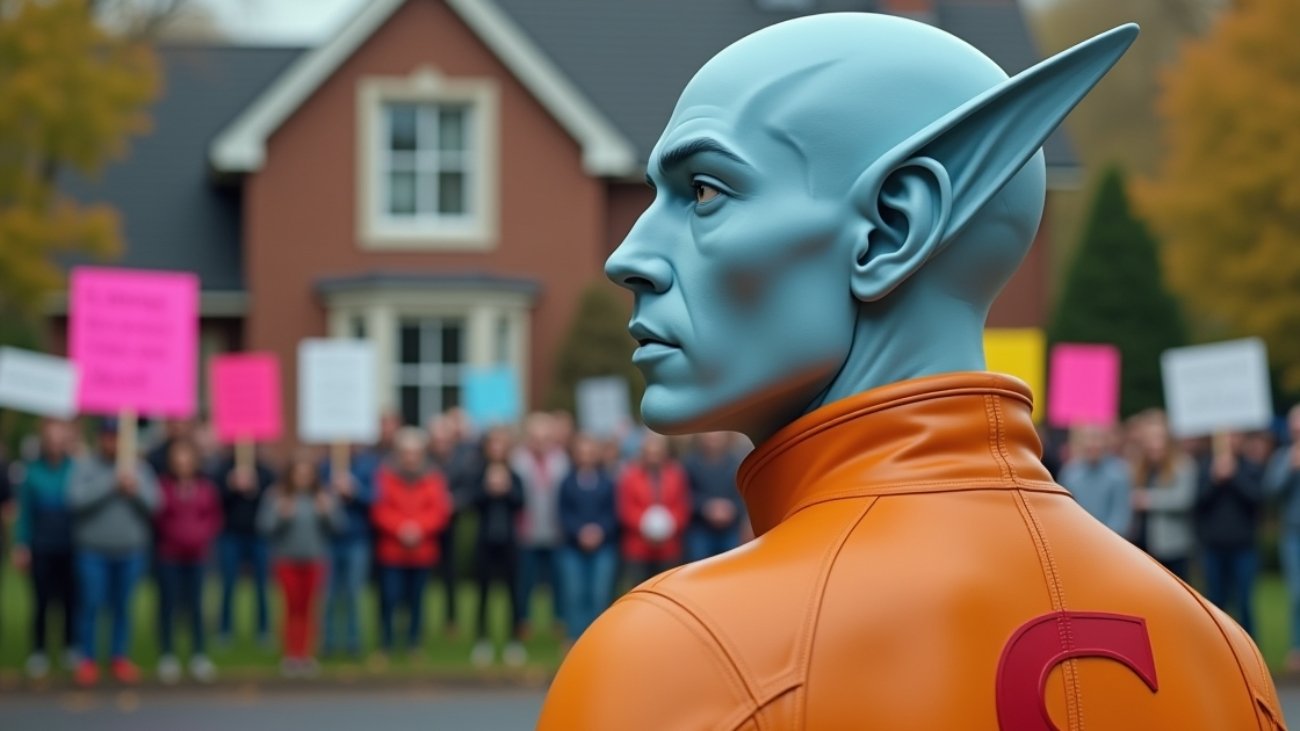
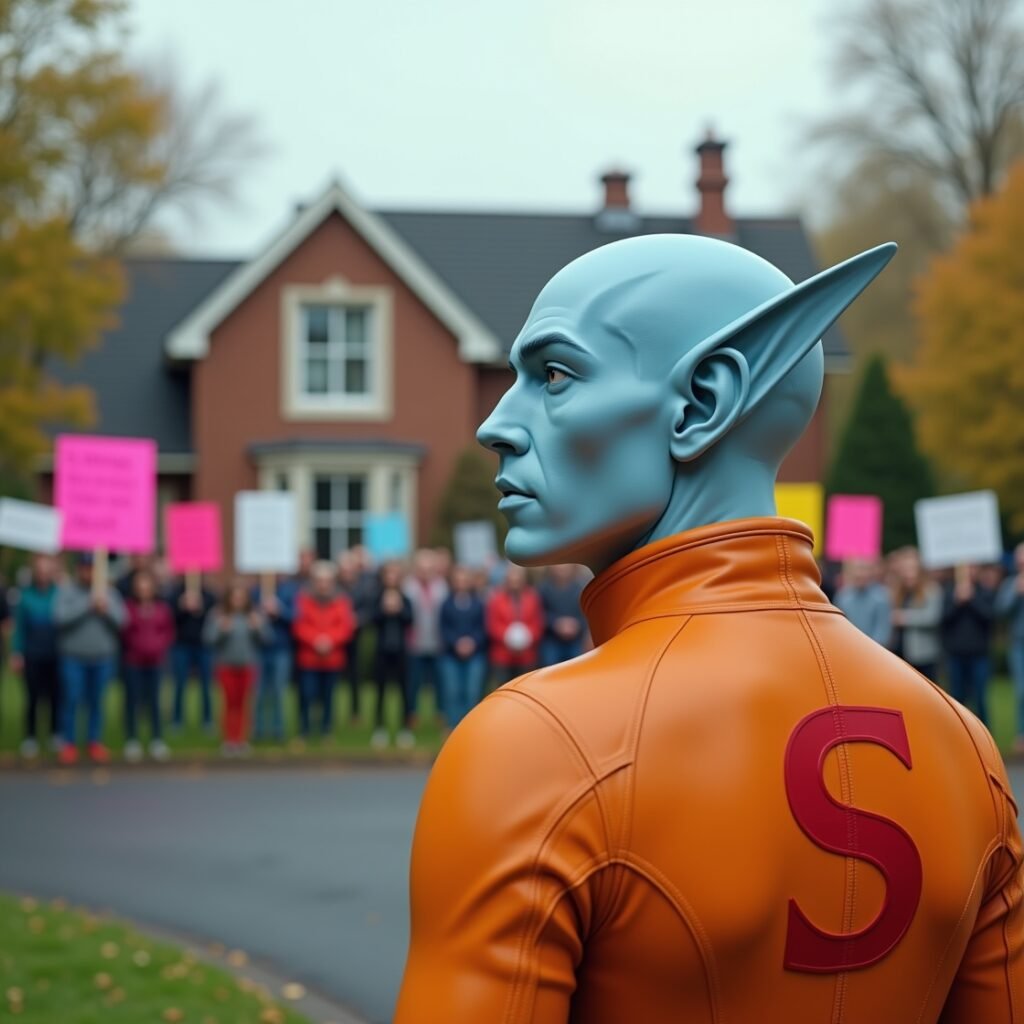
Shalzed investigates a new law criminalizing protest outside homes

shalzed home demonstration

On Aug. 15th New Zealand’s Justice Minister Paul Goldsmith introduced a law making it a crime to protest outside a home. Shalzed visits Auckland to find out whether this is respect for people’s right to privacy, or a step towards taking away the freedom to demonstrate and express political opinions.

I felt a little out of place hanging around in front of Paul Goldsmith’s house. A few cars slowed  as they drove by, trying to figure out whether I belonged in their neighborhood or maybe just curious about my pale blue skin. And I have to admit, here on Earth I do stand out. I wondered if any of them might call the police.

I thought of taking a seat in the rocking chair on the porch. It would be more comfortable, and I’d also be less visible from the street. But that would be trespassing- not a good idea for a law-abiding, rights-respecting citizen like me.

A black sedan with tinted windows finally pulled into the driveway. Goldsmith lived in an older house with a detached garage, meaning that after parking his car he would have to come back out. He noticed me as he pushed the garage door button. “Shalzed?” he called. “What are you doing in New Zealand?”

“Since I’m from the other side of the galaxy, a little more travel isn’t a problem,” I told him. Of course I came to Earth in a wormhole, which takes absolutely no time to cross. Primitive airplanes are nowhere near as convenient.

“So what do you want?” Goldsmith slung his briefcase on top of a green plastic recycling bin and put his hands on his hips.

“To protest,” I told him.

He gave me a funny look. “For what, the farmers?”

“No, I just want to be able to protest,” I told him. “Before your new law takes effect.”

Goldsmith waved his hand. “Give me a break. It only forbids protests outside of people’s homes. If people want to make a public statement they can go to the park. They can march down the street. What’s the problem?”

I didn’t come all the way to Auckland just to listen to that sort of B.S.. “Really? And how long will it be now until you make a law against protests in the parks also? Don’t joggers deserve not to be disturbed too?”

“That’s absurd. The only point is that people have a right to privacy in their own homes. How would you like to have dozens of people right outside your door waving signs and chanting slogans each evening?”

“Well the whole point of a protest is to draw attention,” I told him. “Protesting is worthless if you can only do it at a faraway place no one sees.”

A woman wearing a red apron with a picture of a kiwiburger stepped out of the house. Probably Melissa, Paul Goldsmith’s wife. “If you want to talk to my husband you need to make an appointment to see him at his office. Now it’s dinner time,” she scolded me.

“Actually, I’m starting a protest,” I replied.

She groaned. “It’ll just be a minute, sweetheart,” Goldsmith told her. Then he turned back to me. “Protests outside of politicians’ homes aren’t fair to the neighbors. What did they do to deserve it? And what about the family? Why should kids have to see people calling calling their mom or dad names every time they leave for school in the morning? It’s not right, that’s all.”

“Sure, sure,” I told him. “And also Premier House. Probably no protests there either because the Prime Minister might have innocent little children.”

Goldsmith looked unsure. “Doesn’t the law apply there also?” I asked him. “After all, the Prime Minister’s official residence is a house.”

“There’s nothing unusual about this new law,” Melissa chimed in from the doorway. “In the United States they don’t allow protests outside of people’s homes either.”

That wasn’t really true- it depends which state or even which city. But she was right that the U.S. Supreme Court has ruled that restrictions on protests outside of private homes are legal as long as protestors can still march through residential areas and spread material door to door.

“You know that this is only going to be enforced selectively,” I told Goldsmith. “Protest at the home of a government minister, the police will come right away. But if it’s a member of the opposition, or someone the government doesn’t like? Then what?” I asked.

“Speaking of the police,” Melissa said.

I turned and saw a squad car pulling into the driveway. “We got a call about a suspicious individual standing in front of your house,” an officer said to Goldsmith as he got out. He started looking me over.

“Just here to protest the law against protests,” I said, hoping a little silliness would set them at ease.

“He’s harmless,” Goldsmith told them.

Harmless? Hardly the way to talk to about someone who designed a system of super reflective mirrors that focus a full 50% of a star’s energy output onto a single point, causing it to reach 15,000 degrees. It provides enough energy to hold open a wormhole. But why argue?

“We’ll escort him away,” the officer said. Some neighbors, attracted by the police car, came out on their lawns to see what was going on.

“You see how much of a disturbance just you are causing right now on your own?” Goldsmith said to me. “Imagine if there were protests here each evening. Noise, traffic, it’s not fair to everyone who lives in the neighborhood.”

The policeman started stepping towards me, giving me his menacing look. “Hey, I’m a tourist,” I said to him. “I’m just on my way to Sky Tower. Buddy, relax.”

“Well Sky Tower closes at eight, so you’d better get going,” he said, snapping the back of his right hand against his other palm.

I turned to Goldsmith. “You know noise and street blockages aren’t valid reasons to ban protests,” I told him. “There are already separate rules for that. You’re just trying to sweep protestors away where you don’t have to see them.”

“I made roasted lamb for dinner and it’s getting cold,” Mellissa said, pointing her husband towards the door. “You have to come now.”

Goldsmith took his briefcase and went inside without giving me another look. The officer remained facing me with his arms crossed.

“I’ll be on my way,” I told the policeman.

“I don’t see any reason to take you in,” he said. “But give me one, and it’ll be my pleasure to do it.”

“Have a good evening,” I told him, then I started walking towards the main road. A few minutes later the squad car drove by, and the officer gave me a long glance. If he followed me he would find out I had been lying. I wasn’t going to Sky Tower- a chance to look around from atop a pile of concrete a few hundred meters high didn’t exactly excite me. But I did want to check out Auckland’s aquarium- on my planet we have very small oceans, so I find the variety of sea life on Earth fascinating. I’ve never seen anything like an anemone or clown fish before.

I imagine Goldsmith means well with his law against protests. But there’s a saying Earthlings attribute to John F. Kennedy that comes to my mind: Those who make peaceful revolution impossible will make violent revolution inevitable. As long as protestors are peaceful and follow rules about not impeding access to private property or causing other undue disturbance, trying to shoo them away seems like a bad move.


Questions:

  1. Does a prohibition on protests outside homes, while still allowing protestors to march through residential areas or distribute literature door to door, properly balance residents’ right to privacy against the public’s right to protest?
  2. Does a prohibition on protests outside of homes represent the start of a slippery slope towards eroding the public’s right to protest? For example, could this law also be used to forbid protests outside of a governor’s mansion or other official residence? Will it begin a movement towards future laws that prohibit protest in other sorts of places?