
shalzed watching ambulance

Would Restricting a Right Save a Life?

Would Restricting a Right Save a Life?

Rethinking freedom of information in an era of copycat shootings

The public naturally wants to know more about the shooter who killed 2 and wounded 17 others Aug. 27th at a Minneapolis Church. And according to the Universal Declaration of Human Rights, the freedom to seek and receive that information is their right. However, media coverage of the shooter’s life, beliefs, manifesto, and guns may have the perverse effect of encouraging copycat shooters. This week Shalzed asks, as mass shootings continue does Earth need to restrict freedom of expression some more?

shalzed watching ambulance

On Wednesday, Aug. 27th a gunman killed 2 and wounded 17 others at a school church in Minneapolis. As with previous mass shootings, an outraged public immediately wanted to know who would do something like that and how someone with a mind to commit such a crime had access to the necessary guns.

The shooter was quickly identified as Robin Westman, a former student at the school. It turns out Westman had left behind what the media quickly labelled a manifesto. It contained numerous grievances and racist slogans (a video is here, a written description here .) The manifesto also revealed a dark obsession with previous school shooters, in particular Adam Lanza, the perpetrator of the Sandy Hook Massacre.

This raises a chilling reality: The widespread publicity surrounding a school shooter may help encourage the next one. When an individual such as Westman or Lanza, who was otherwise unknown, is instantly transformed into a focus of public attention, such that their motivations and personal struggles are broadcast to the world, along with the methods they use to carry out their crime, it creates a perverse incentive for other similarly positioned individuals to do the same.

For many years there has in fact already been a movement asking the media to voluntarily refrain from giving undue attention to shooters and to focus on their victims instead (see here and here for coverage.) But based on a simple Google search yesterday for ‘Robin Westman’, it seems this has not achieved much success. Also, the rise of blogs and online news sites means that setting consistent media standards is becoming impossible. Some government imposed censorship would seem to be the only way to bring this about.

However, any legal attempt to limit information about the shooter runs into an immediate problem. Article 19 of the International Covenant on Civil and Political Rights states:

Everyone shall have the right to freedom of expression; this right shall include freedom to seek, receive and impart information and ideas of all kinds, regardless of frontiers, either orally, in writing or in print, in the form of art, or through any other media of his choice.

This means that if the public wants to know the name, appearance, mindset, upbringing, political, and racial views of the shooter, access to this information is their right. In the U.S., this is protected as a constitutional right as well.

And of course there are valid reasons why the public might want this. To evaluate police performance, push for changes to legislation, or to be better on guard in the future all come to mind.

But shouldn’t there at least be a discussion about whether the danger of encouraging copycat shooters outweighs the benefits of making details about the shooter public? Would a restriction on publishing flattering, happy, or childhood photos of the shooter really be too much of a violation of the public’s right to information if it could help stop mass shootings? Would a ban on long profiles of a shooter’s mental health struggles and political grievances be too much to ask, if this can help increase safety for the future?

It should be noted that while there are already several exceptions to the right of freedom of information, none of them seem to be at all relevant here. But is that a mistake? Do further limits on the right to freedom of information need to be considered? I’m anxious to hear your thoughts.

shalzed finland land mines

Shalzed Confronts Finnish Prime Minister Petteri Orpo About Land Mines

Shalzed Confronts Finnish Prime Minister Petteri Orpo About Land Mines

Anti-personnel land mines are inherently indiscriminate, harming soldiers and civilians alike. They continue to kill and maim innocent people long after conflicts end. In 1997, the Ottawa treaty was drafted to prohibit their use, and so far approximately 165 countries have joined. But recently Estonia, Latvia, Lithuania, and Poland announced that they will leave the treaty, and now Finland is following suit.

Today, Shalzed catches up with Finnish Prime Minister Petteri Orpo to find out why he wants to weaken a successful arms treaty and bring back a type of weapon that kills at least 5000 innocent people a year. To read Shalzed’s biography, click here.

For most presidents and prime ministers, pulling up in a fancy black SUV is all about ego. But Orpo really needs his. Here in Ivalo, Finland, even in May there’s still enough snow on the ground that I wouldn’t hit the road in any car that doesn’t have extra-large tires and all-wheel drive.

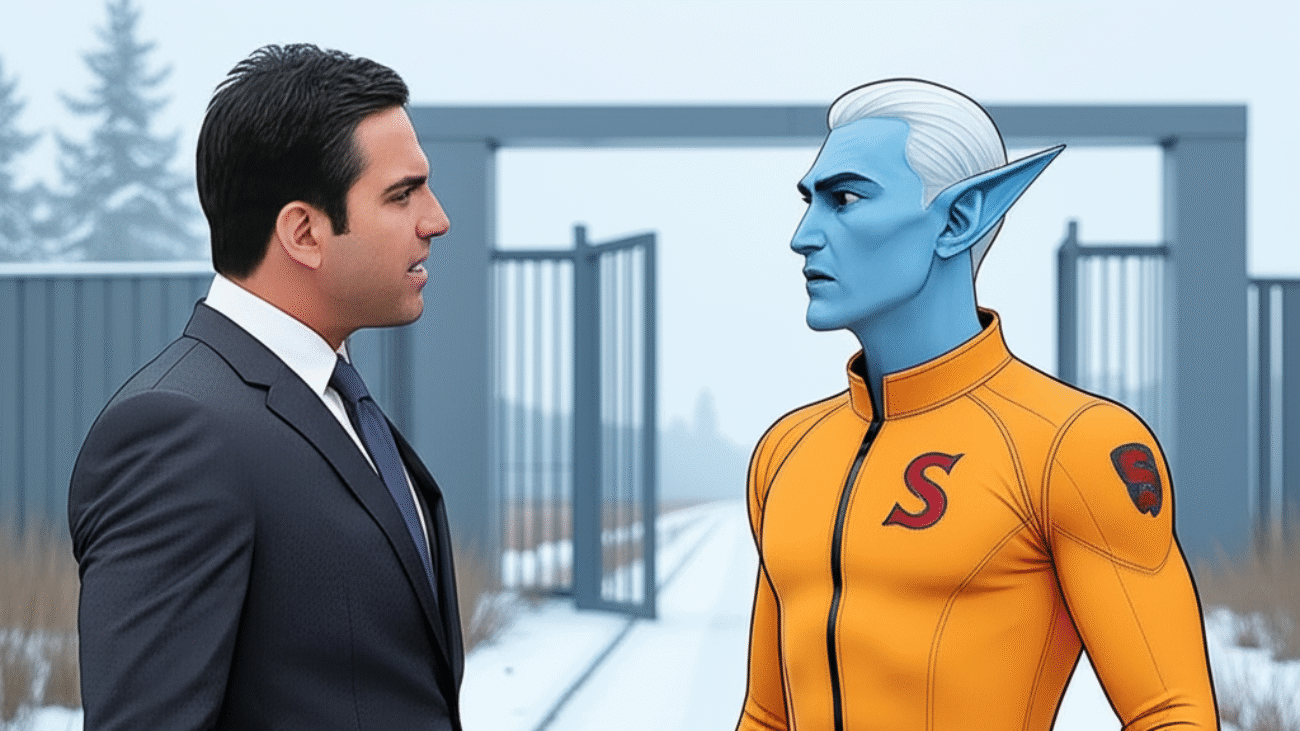
He got out of the SUV and headed towards the main gate of the army base, where two guys wearing green berets and camouflage coats were waiting. I called his name and he waved. Orpo probably thought I was a bored citizen hoping for a selfie with the Prime Minister, now that it was a tad too warm for ice fishing and so there weren’t many ways in Ivalo to pass the time during the day. I unbuttoned my coat a bit to let him see the S on my chest. Since I was bundled up because of the freezing weather I could hardly blame him for not recognizing me.

“Shalzed?” Orpo asked. “What are you doing here?”

“I took the Overnight train from Helsinki to Rovaniemi, then three hours on a bus,” I told him. “I’ve always wanted to see the Northern Lights.”

“Then you should have come before April,” he said.

That’s right. Unfortunately, it’s hard to see the Northern Lights in May. If he had to pull out of the land mine treaty, why couldn’t he have at least done it a few months earlier? “Damn. Then I guess the only reason I came all the way to the Arctic Circle is you.”

“Sorry, I’m here for a meeting and to visit the troops.”

“Planning how to spread millions of tiny little undetectable land mines along the Russian border?”

Orpo waved a hand at me. “We have to defend our country.”

“If you don’t mind making vast swaths of your country unusable for the next few centuries and having to amputate the legs of any child, farmer, or tourist who happens to wander through.”

The SUV driver got out and walked over, probably wondering who I was and how I had the audacity to address the Prime Minister. Interesting the two guys by the gate didn’t budge. Maybe they were high-ranking officers, so standing around and looking important is all they knew how to do.

The driver said something to Orpo in Finnish, and Orpo shook his head. “Have you heard of technology?” he asked me. “Things have changed since the 90s. When they made the treaty mines stayed ready to explode forever. The new ones we’ll use are programmed to deactivate.”

As if technology was really going to solve this problem. “And what’s the failure rate?” I asked.

The driver sneered. “Less than one percent,” he said in heavily accented English. I wondered if Finland’s Prime Minister was now being transported by a lobbyist for the weapons industry. Maybe passed off to the public as a cost-cutting move.

“Unfortunately for you, I’m pretty good at math. If you put out a million mines, and one percent remain active, that means 10,000 will still be ready to explode on contact for let’s say the next hundred years. Would you be willing to hike through the area or let kids go play ball knowing that? And in real life the failure rate will be much higher than in the lab.”

“Are you paid by Putin?” The driver asked.

“No, and if you’re on the payroll of the weapons industry you might as well be fired,” I told him. “Anti- personnel mines don’t do any good. Soldiers with armor go right through. It’s just after the war civilians who suffer.” Most military people admit that minefields have limited strategic benefit that hardly justifies using them in light of the immense harm they cause. Drones and other more modern weapons are better.

“Thanks for your advice, General,” Orpo said. “By the way, are you planning to join our army and help on the front lines in case of a Russian invasion? If not I think I’ll listen to my soldiers, and they say minefields would be a significant deterrent.”

Something hard hit me on the shoulder, and I felt a cold spray against my face. I turned and saw the two men by the gate laughing. I wiped my face and saw snow all over my coat- they must have hit me with a snowball!

“What the hell?” I called.

Orpo and the driver burst out laughing too. “What happened to your superpowers?” Orpo asked.

“You not strong,” the driver said, putting his fists up like we were going to fight.

“If I still had superpowers I would. . .” I began. I was losing my temper. This is the new me, I reminded myself. No more getting angry and destroying things. Tempting as it feels, it doesn’t do any good.

“No one should have any complaints anyway,” Orpo told me. “So what if we’re withdrawing? We can do that with six months’ notice, that’s what it says in the treaty.”

“Sure, sounds perfect,” I said back, not bothering to rein in my sarcasm. “Countries that don’t want to use landmines anyway join the convention, then quit the moment they change their mind. What a magnificent treaty. So effective.”

“This is the real world, Shalzed,” Orpo said. “You can’t ask countries to take risks with defense.”

“And here I thought the Ottawa treaty was to make clear that land mines pose such a great, never-ending danger to civilians that they should never be used, even for security.”

The two guys at the gate started walking my way. One had a snowball, while the other was holding a pair of handcuffs. I wondered where he got them from. And if he really thought regular handcuffs could hold me.

“This is a military base, not Times Square,” the one with the handcuffs called. “Get out!” He had an accent like he was from New York. That made sense because the U.S. just made a deal to station troops here too.

“Besides, the treaty was never really a success,” Orpo continued. “Yes, 165 countries joined it. But so what? The United States, Russia, China, and India didn’t, and by far those are the countries with the most mines.”

That’s true, but countries that did join the Ottawa convention still destroyed around 55 million mines from their own stockpiles. That had to be significant. “So maybe then we should just do nothing,” I suggested. “Since no arms control treaty is perfect let’s just forget international law altogether and have no limits on wars or weapons.” After all, that’s pretty much what he was saying.

The guy with the handcuffs put a hand on my shoulder, right where his friend hit me with the snowball. “Hey buddy, this ain’t Central Park where you can just hang around. If you’re a tourist go get some skis. Get out!”

“You’re taking us backwards, Orpo,” I said. “Dropping the treaty undermines everything we’ve accomplished with international law.”

“When international law stops Russia from taking over Ukraine let me know. Then we’ll talk,” he replied.

The guy with a hand on my shoulder gave me a shove, and I started walking away from the base. Before I turned towards the road I glanced over my shoulder and saw Orpo and the two military guys still by the gate. I picked up a handful of snow, compacted it in my hands, then threw a snowball right at the guy who had thrown one at me. It hit him right on his rear end. He turned around and glared, then slowly brushed off his coat.

The guy that had been holding the handcuffs asked Orpo something, and Orpo shook his head. Probably asking whether to come after me, and smart for Orpo not to let him. As they went through the gate I regretted not having also whipped a snowball at Orpo himself. Yes, I gave up using superpowers on people. But if he believes Finland can change its mind and bring back weapons, I don’t see how he can complain about me bending my rules to pelt him with some snow.

Subscribe to Receive Shalzed's adventures in your inbox

Discussion Questions:

  1. Do countries have the right to use any weapons available to defend themselves, especially against unprovoked aggression? Must treaty obligations be followed even when a country fears its security is at stake?
  2. The Ottawa Convention banning land mines contains a clause allowing governments that ratify the treaty to back out in the future. This makes sense, as circumstances, needs, and technology can change. Without this flexibility, countries might not be willing to sign the treaty. But if a treaty that aims to permanently ban a type of weapon lets countries back out and return to using that weapon if they feel they need to, is the treaty really worth the vast time and resources that went into it at all?
shalzed rights of the elderly

Rights of the Elderly: Shalzed Speaks to UN Expert About Proposed New Treaty

Rights of the Elderly: Shalzed Speaks to UN Expert About Proposed New Treaty

On April 3rd the UN Human Rights Council voted to begin drafting a treaty on the rights of older people. The United Nations’ Independent Expert on the enjoyment of all human rights by older persons, Claudia Mahler, was instrumental in bringing this about. Shalzed catches up with her in this edition.

Click here for Shalzed’s bio.

It was my first time at the ‘Palais de Nations’ in Geneva- after I used the East River to flood UN headquarters in New York I figured I’d be persona non grata at their headquarters in Europe so there was no use paying a visit. But as you know it’s a different me now, and with the help of a new suit I purchased from Aelia Duty Free, security let me in without trouble.

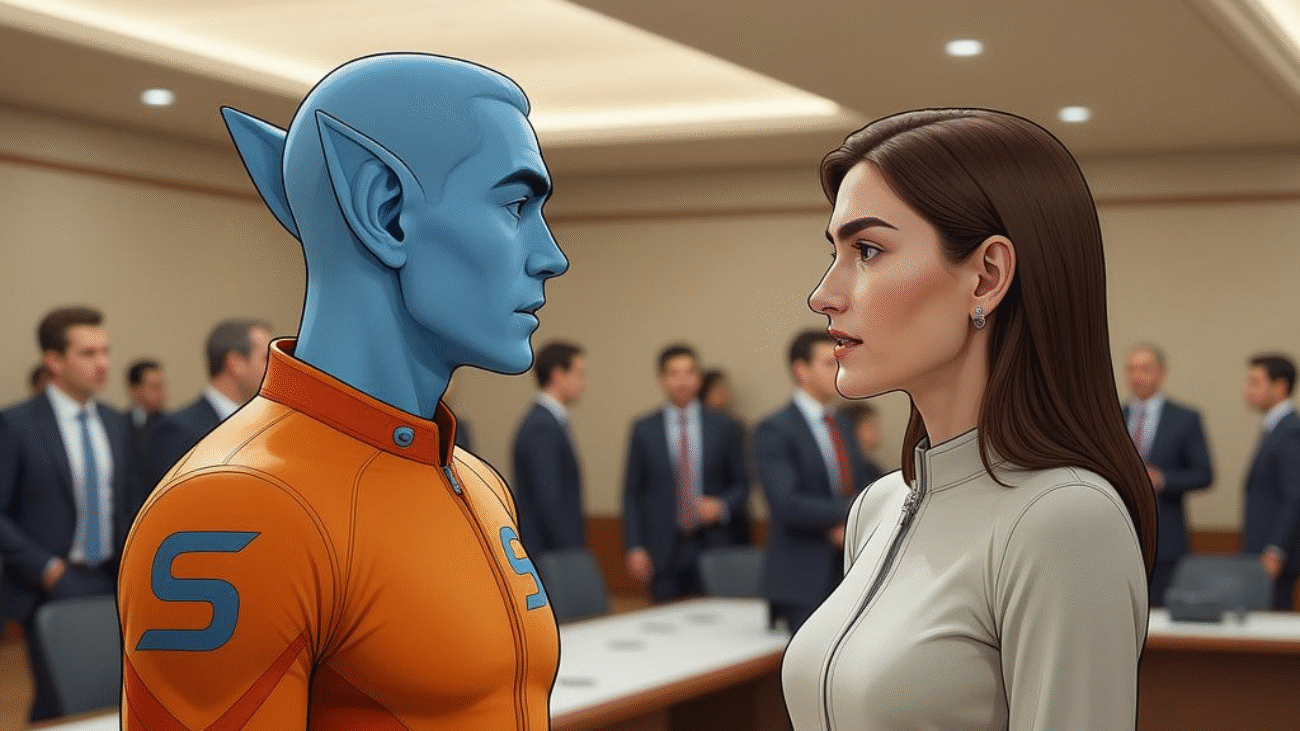
I spotted Claudia Mahler chatting with two men who had Japanese flag pins on the lapels of their jackets. Japan was one of the countries most opposed to beginning to draft her new treaty, so their delegates probably wanted to have a word.

“What a big smile,” I said to Claudia, stopping a few feet away. She turned, probably assuming I was a more friendly Human Rights Council delegate, looking pleased by the opportunity to get away from the Japanese.

“It’s been over a decade in the works,” she replied. She turned back to the Japanese men and bowed slightly, clasping her hands together in front of her chest. They did the same, and then headed away.

“Yup, just what we need, to spend the next few decades carefully drafting a new treaty for us all to ignore,” I told her.

She wrinkled her forehead, like she was trying to size up who I was. Probably because no UN delegate would ever be blunt like that. Even the Americans, who oppose nearly everything having to do with human rights, just say this new treaty may represent an inappropriate allocation of resources. “Have I met you before?” she asked.

I shrugged. “Not in person. But both of our reputations precede us.”

“Shalzed?” she exclaimed, taking a step back.

“Did you think I never wear a suit?” I unbuttoned my jacket so she could see the superhero ‘S’ underneath.

“What do you want? Are you going to trap me in a web or something?”

I laughed. Did she think I used to be Spiderman? “Don’t you know I don’t do stuff like that anymore? I just want to know where this all ends. I mean, how about people suffering midlife crisis? Does every age group need its own treaty?”

She sighed. “Older adults face unique human rights challenges. For example, age discrimination in the workplace. Mandatory retirement ages are a clear violation of human rights. This all needs to be codified as just as illegal as discrimination based on religion, gender, or anything else.”

“I’m sure you’d have no problem travelling in an airplane with a 95 year old pilot,” I said.

“The point is that it’s a human rights violation to set a mandatory retirement age for everyone. Each person’s fitness needs to be individually evaluated.”

“Can’t age discrimination just be included in existing laws?” I asked.

“Older people frequently have trouble accessing health care, and someone needs to define what their rights are,” she continued, picking up steam.

“Fine, but anyone can need health care. Questions about access, coverage of expensive procedures, or experimental drugs can come up at any age.”

“And abuse,” Claudia continued, ignoring me. “Abuse of the elderly may look quite different than abuse of younger people. Not letting older people make their own decisions about living arrangements or healthcare. Financial abuse as family members take away control of bank accounts. Caretakers forcing them to take sedatives so they are easier to look after . . .”

“Okay,” I interrupted. “But do you really think a new international treaty is going to help?”

“Obviously a treaty isn’t going to change things overnight. But governments need clear guidance on what they are required to do.”

I noticed Francisca Albanese, the Special Rapporteur on the Rights of Palestinians, walking by. When she saw Claudia she came right up to her without even noticing me. “Would you like me to draft a press release condemning Israel because there is no way the elderly in Gaza can possibly evacuate the way Israel is expecting them to?” She asked. “I’m trying to arrange for every UN Special Rapporteur to condemn Israel at least once a month.”

“How about when Hamas, Hezbollah, or the Houtis fire rockets indiscriminately at Israeli cities?” I asked her. “People often have less than a minute to reach shelters, and the elderly or those with disabilities can’t possibly do that.”

She glared at me. “Are you Shalzed?” she asked.

“That’s right,” I told her. “Unlike you, sticking up for the rights of both Israelis and Palestinians.”

“I don’t know why you even bother speaking to him,” she told Claudia, pointing a finger at me. She stormed off down the hall, calling over her shoulder that she’s send Claudia an email.

“You have so many friends,” Claudia said to me.

Well, human rights is a lonely business. “Here’s another question,” I told her. “Isn’t a lot of this cultural? Like in some countries older people are more likely to be cared for in the home by their children, whereas other countries are more likely to use senior centers. And how people are cared for is unique to every situation and family. So why are you trying to make a universal treaty?”

Claudia sighed. “The Japanese delegate was just telling me that. A treaty doesn’t commit anyone to anything specific, it will just help clarify what the elderly’s rights are.”

You’ve got to love twenty years negotiating a treaty that doesn’t commit anyone to anything specific. That’s the way the United Nations keeps earning its well deserved reputation for getting things done. “Remind me, how many core human rights treaties do we have already?”

Nine,” she said.

“Right. We already have treaties to end discrimination against women, against people with disabilities, racial discrimination, and more. How’s that going? And you really think making it ten is going to help?”

“I thought you promote human rights,” Claudia said.

“Of course I do,” I told her. And I’d have added that I think I accomplish more than most UN bodies or Special Rapporteurs if I wasn’t to humble to boast.

“Then why are you cynical? No one treaty can change the world, but the more we focus on fleshing out what human rights mean in different situations and to different groups of people the farther we’ve come. A new treaty will give activists a platform to campaign from.”

A woman wearing a press credential around her neck walked up to Claudia. “I’d love to interview you about the new treaty if you have a moment,” she said.

Claudia smiled. “It would be my pleasure,” she said. Then she turned to me. “Rights of the elderly doesn’t get as much coverage as what most of the other rapporteurs work on,” she said. “I take whatever press exposure I can get.”

“Is this your husband?” the reporter asked, gesturing to me. A look of horror came across Claudia’s face. “Sorry, I didn’t mean to assume,” the woman said.

“He’s just someone who shouldn’t even have been allowed in this building,” Claudia said.

“I’m leaving now,” I told her

The reporter gave me a funny look, probably trying to decide if I was some sort of stalker. “It’s been nice to meet you,” she said. Then she turned her back to me as she pulled a voice recorder from her purse to use for her interview.

As I turned to go the reporter asked Claudia whether she thought it was fair to call the recent decision to begin work on the treaty momentous, and Claudia said absolutely. Then I passed by the security guards at the building’s grand entrance and headed out into Geneva’s chilly April air. I saw a man taking a selfie with his two little kids, both looking around middle school age, the sign for the UN Human Rights Council headquarters in the background.

“This is the building where they make sure the world is fair for everybody,” the man was telling his children “Here they do the most important work of all.”

I kept my mouth shut as I passed by. No sense telling the kids that even though what their dad said sounds great, it just ain’t so.

Subscribe to Receive Shalzed's adventures in your inbox

Questions:

1. Is it worthwhile to develop more international human rights treaties, while we see that the ones we already have are often ineffective?

2. Do mandatory retirement ages for professionals such as pilots violate human rights, since some people who are still physically able to do the job will be unjustly prevented from doing so? Or are mandatory retirement ages necessary to insure safety, and there is no practical way to determine each person’s exact level of fitness?

3. Is how an elderly person is treated something that should be decided on an international level, or are there such wide variations in cultural practice and family preference that global standards cannot be universally appropriate?