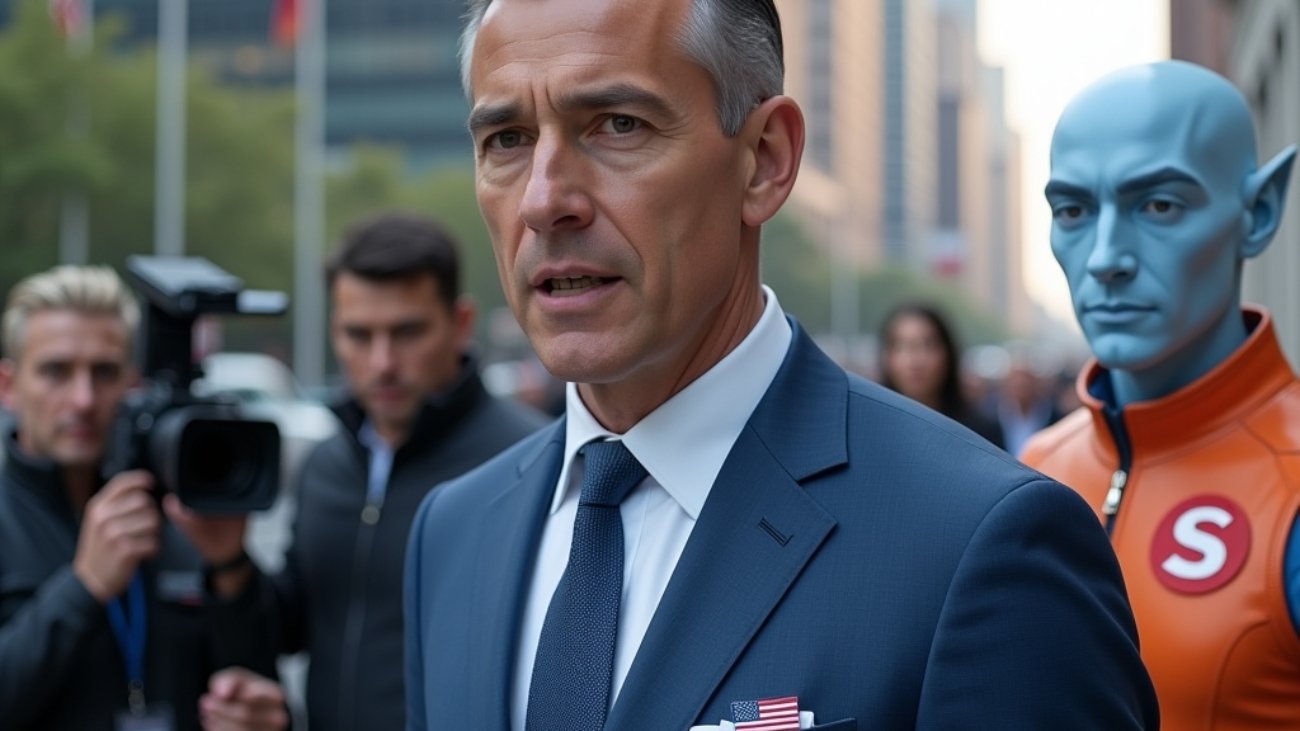
Shalzed with Mike Waltz outside the UN

Before It’s Too Late

Before It’s Too Late

Shalzed asks UN Ambassador Mike Waltz if a country is likely to become a threat someday, can you bomb it now?
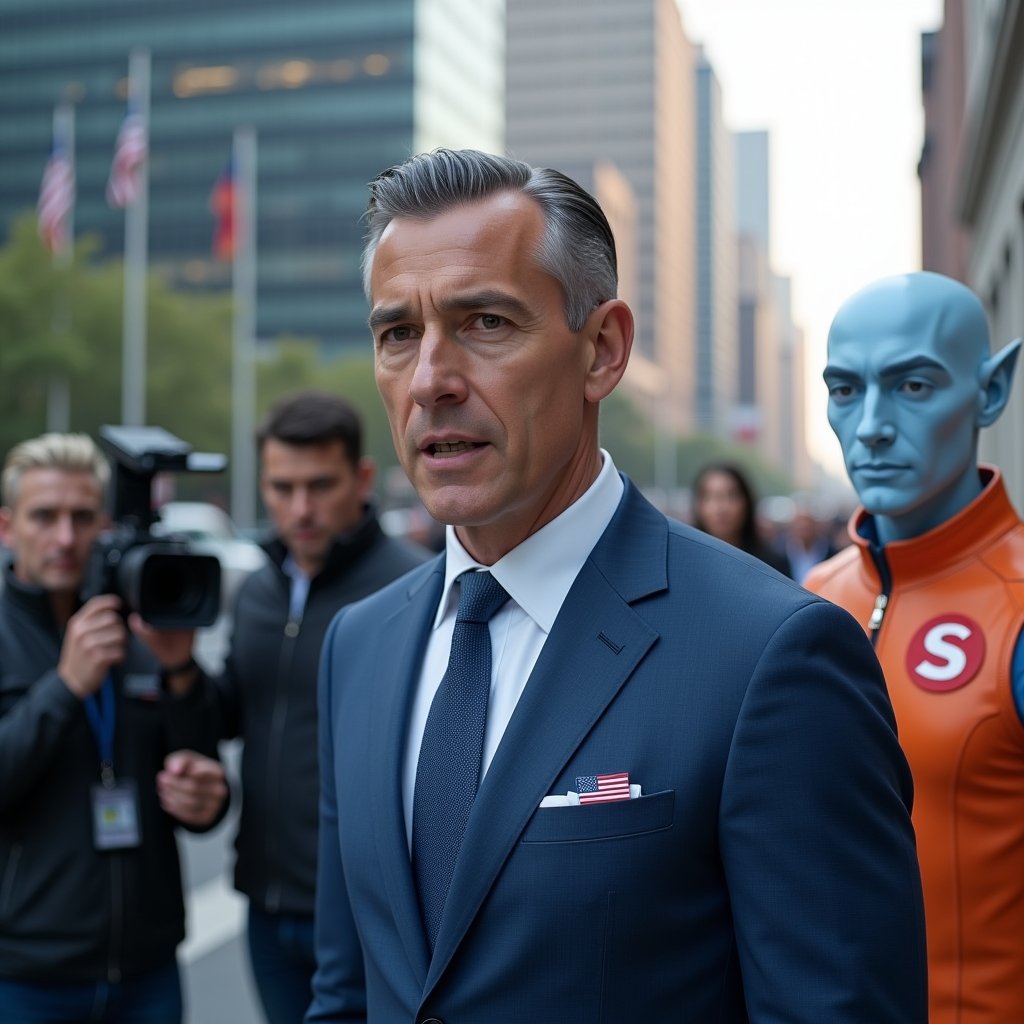
Shalzed wtih UN Ambassador Mike Waltz outside the United Nations

The United States and Israel claimed self-defense as the justification for their attack on Iran. But even though Iran is a hostile country that has threatened the U.S. and Israel many times, it didn’t seem to be a significant threat right now. Shalzed confronts U.S. Ambassador to the United Nations Mike Waltz with this question.

Before It’s Too Late

I was on the phone with my brother, who had moved to Israel four years ago. He was telling me about how his daughter was very upset about school being cancelled when the siren sounded. I hung up right away so he and his family could get to their shelter. Then Shalzed called.

“I don’t understand,” he said. “How could the U.S. and Israel launch such an attack?”

“Well, we can’t let Iran get nuclear weapons.”

“But that’s not a reason to start a war,” Shalzed said.

I figured Shalzed probably didn’t know much about Iran. Before I could say anything, though, I was in the black tunnel. By now I was used to it enough that I was no longer afraid, and I really wanted to find out how it worked. A moment later I was outside the United Nations in New York, with Shalzed next to me. A man wearing a blue suit with a U.S. flag pin on his jacket was standing nearby, trying to attach a lapel microphone to his jacket. “Ambassador Waltz,” Shalzed called.

The Ambassador turned and looked at Shalzed. “Who are you?” he asked.

“I don’t understand. Countries can only use force to defend themselves,” Shalzed began.

“I’m sorry, I’m just about to go live on Fox News,” Waltz replied, gesturing Shalzed and I to move along. A few steps away, a reporter was conferring with a cameraman.

“But didn’t the U.S. and Israel just violate the UN charter?” Shalzed persisted.

Waltz shook his head and sighed. “Absolutely not,” he said. “Iran has thousands of missiles and is attempting to develop nuclear weapons besides.”

“But how can you say it’s self-defense if they didn’t attack?” Shalzed asked.

“Almost ready,” the reporter called. “Do a sound check, please.”

Waltz nodded. “The Iranian government killed thousands of its own citizens in recent protests,” he said in a robot-like monotone. The reporter gave him a thumbs up. Then he continued in a normal voice, “Some say tens of thousands. We may never know the real number.”

“And that means you can bomb their nuclear facilities?” Shalzed asked.

“Iran’s leaders have been leading chants of death to America and death to Israel for decades,” I interjected. “They even put a clock in the center of Tehran counting down the days until Israel is destroyed.”

Shalzed looked shocked. “Well how can they do that? Didn’t the UN tell them to take it down?”

I laughed, and Waltz also chuckled. “No,” he said. “Evidently, there’s nothing against countdown clocks in the UN charter.”

The reporter walked over. “I’m sorry, we’re delayed just a couple of minutes,” she said. “They broke in with an update from Tel-Aviv.”

“What happened?” I asked, worried people may have been killed.

“Direct hit on a school. But it wasn’t occupied, no injuries.”

“You see, Iran doesn’t follow any international law,” Waltz said. “They shoot missiles at schools, they fire randomly at cities. Then we’re the ones that get criticized.”

“Can you say that when we’re live?” the reporter asked.

“Of course,” Waltz replied. “And I’ll also mention that right now they are carrying out aggression against Saudi Arabia and the Gulf States too. Then people make it out like the United States is the one that doesn’t follow the law.”

Shalzed crossed his hands against his chest. “I understand the government of Iran does bad things. But can that justify an invasion?”

The reporter looked at Waltz expectantly. I had a feeling she was interested to hear his reply, too.

“So should Israel wait until they have ten thousand missiles, many armed with nuclear warheads, and then it’s too late?” he asked.

“Israel can’t risk a nuclear armed Iran,” I added.

“Almost ready,” the cameraman called as he lifted a bulky tv camera onto his shoulder.

Waltz straightened his hair with his hand. “Bottom line,” he said. “Countries are entitled to defend themselves. Iran has been a threat in the past, and we have every reason to believe they will continue to be a threat in the future.”

“Say that on air,” the reporter said.

“But Iran wasn’t a threat right now,” Shalzed interjected. “And any country could potentially be a threat sometime in the future.”

A light on the camera turned on. “Five,” the cameraman said, then he started counting down.

The reporter stepped in front of us, right next to Waltz. As the light on the camera changed color she began. “I’m here at the United Nations with U.S. Ambassador Mike Waltz. Mr. Waltz, you just explained to the security council that the action against Iran is completely in keeping with international law. Give us a recap.”

As Waltz began speaking I was back in the black tunnel. I tried to feel around for any clues about what it was made of or how it operated, but before I found anything I was back in my apartment. My phone was ringing- it was my brother calling back.

“Everything alright?” I asked as I picked up.

“Yeah,” he said. “A missile got through the iron dome and hit a school. The building was destroyed, but no one was hurt.”

“Near you?” I asked.

“Just a few kilometers away. Thank God we’re fighting this war now, while Iran still doesn’t have nuclear weapons.”

I told him I was glad he was safe, then I shook my head. Once Iran got the bomb, it would be too late. But if every country struck before it was too late, war would also be endless.  

Subscribe to Receive Shalzed's adventures in your inbox

Sources:

To read a transcript of Mike Waltz’s explanation given to the Security Council, click here and here

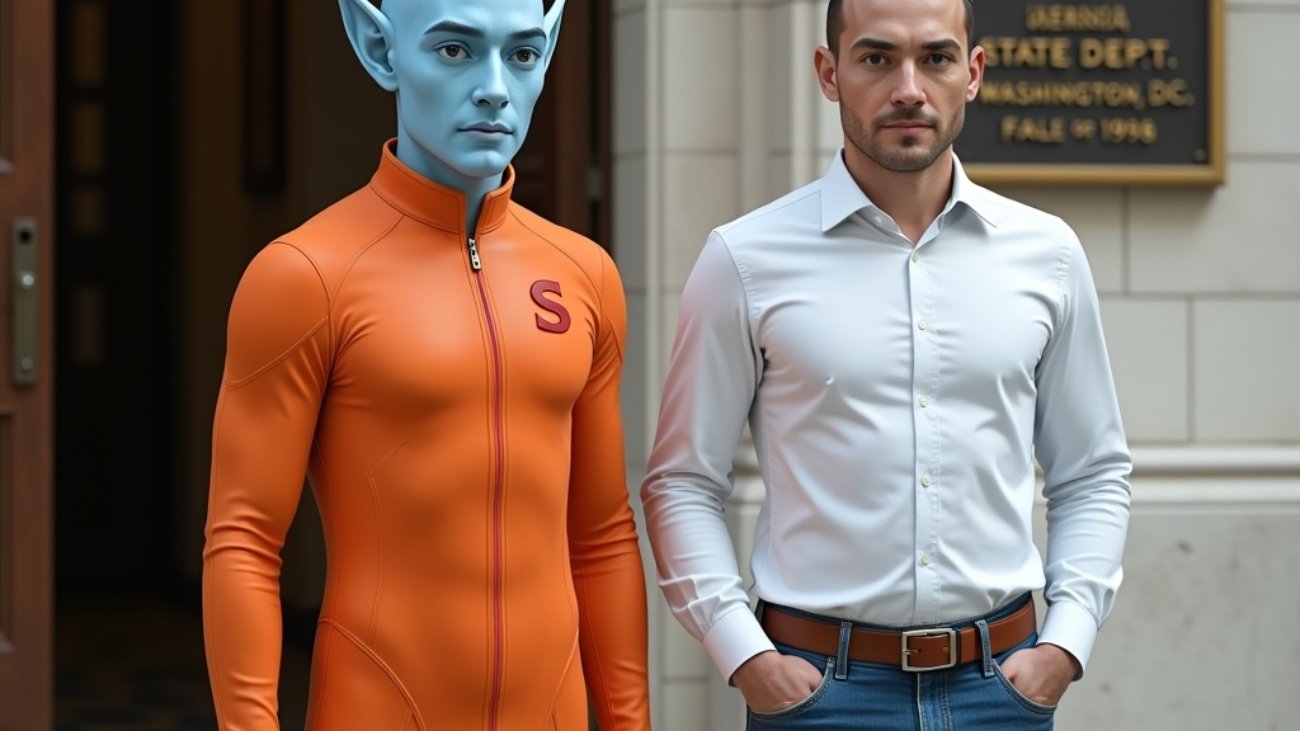
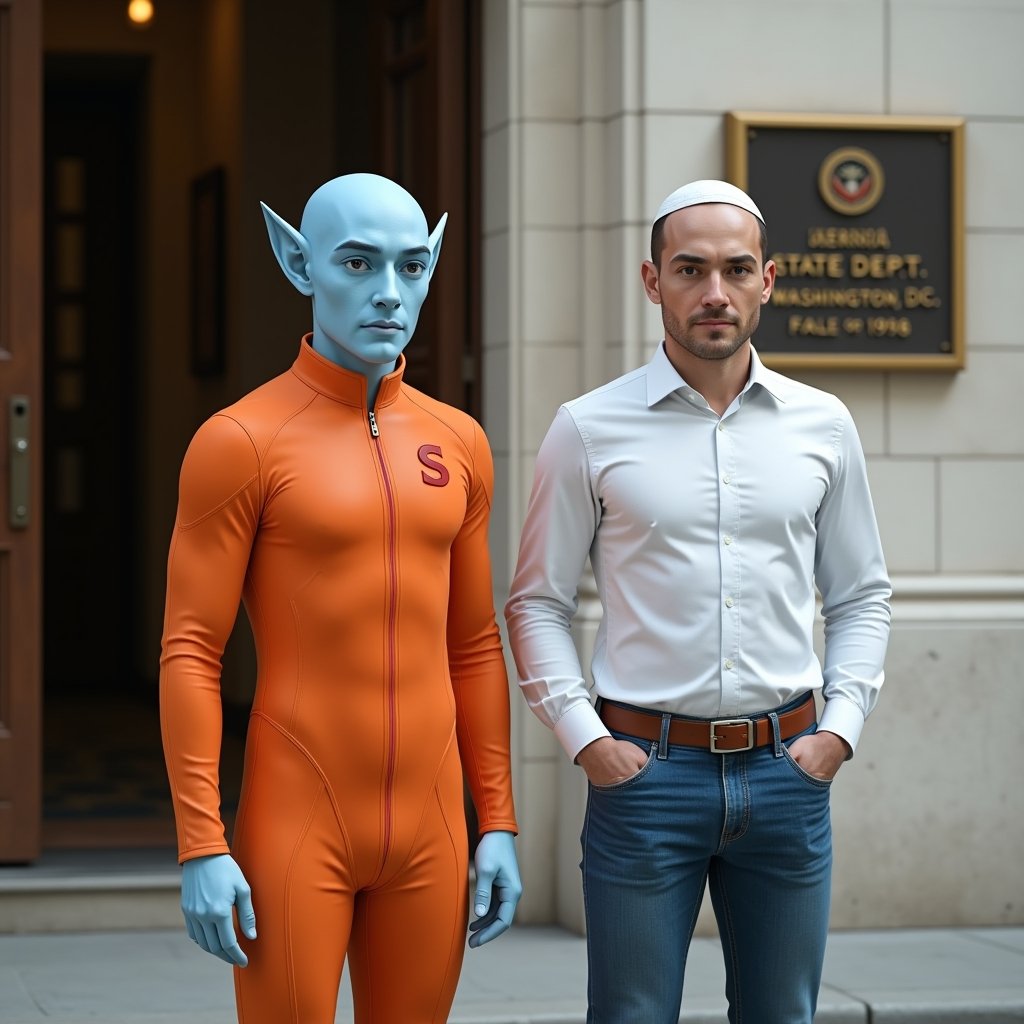
shalzed and simon at the state dept

From Green Onions to the United Nations

From Green Onions to the United Nations

Shalzed wants to know why the U.S. is pulling out of international organizations

Shalzed and Simon outside the State Dept. in Washington D.V.

Shalzed came to Earth believing international law — and the web of institutions built around it — offered a model for peace, not just here but across the galaxy.

But last week the U.S. withdrew from 66 international organizations. In this episode, Shalzed confronts U.S. Secretary of State Marco Rubio to find out whether this vision is falling apart.

From Green Onions to the United Nations

I hurried into shul with a bag full of groceries. Rabbi Shayerman trusted me, but the policy was very strict that he had to check everything in. I wanted to be able to start working on the kiddush before he got caught up with his ‘pizza and parsha’ class for youth.

It only took the rabbi a minute to find all the hechshers. He grabbed a stack of napkins and paper plates and headed to the social hall, and I started chopping green onions for the tuna salad. Then Shalzed called.

“Why is President Trump withdrawing the United States from international organizations?” he asked. “They are all places for countries to resolve disputes and work together.”

I hadn’t heard anything about this, but it did sound like something Trump would do. “What organizations?” I asked.

“About half are connected to the United Nations,” he said. “And the United Nations is the primary body you use to keep peace and security on your planet.”

Before I could say anything else, I was in the dark tunnel with points of light that by now had become familiar. This time I tried to listen as best I could for any sounds that would give information about how it worked. I didn’t hear anything like motion or machinery, though, and a moment later I was standing next to Shalzed in the office of Marco Rubio at Foggy Bottom.

Rubio was sitting behind an enormous, wood desk, looking at his computer. “Mr. Secretary,” Shalzed began. “Why are you trying to undermine the United Nations?”

Rubio looked up and wrinkled his forehead. “Where have I seen you two before?” he asked.

Just a week ago Shalzed had taken me to Mar-a-Lago to confront Rubio about the U.S. nabbing Maduro out of Venezuela. “We travel a lot,” I told him.

“I don’t know how you got in here, and I have a meeting in just a moment,” Rubio said. “But no, the United States is absolutely not trying to undermine the United Nations.”

Shalzed put his hands on his hips. “You just announced that you’re withdrawing from 31 UN organizations, and a bunch of other non-UN organizations too.” he said.

Rubio shook his head. “The United States strongly believes in the United Nations. But only as a forum for diplomacy. Why does the UN have dozens of little agencies, most of which are redundant, wasteful, and counter to our interests?”

“Does that mean you’re upset other countries don’t always go along and give the United States everything it wants?” I asked.

Rubio closed his laptop and crossed his arms against this chest. “Absolutely not. Take for example the UN Democracy Fund. It just gave money for a program that it claims helps youth in Argentina strengthen their critical thinking. And they sponsored a program to increase women’s political participation in Baluchistan.”

“Baluchistan?” I interjected.

“It’s a region in Pakistan,” Rubio said quickly. “The point is that these are things that if wanted, countries should do them on their own. The UN was never meant to have billions of dollars to spend on do-gooder projects wherever they please.”

“But maybe these projects are valuable?” Shalzed suggested.

Rubio shrugged. “Maybe. But the UN should be only the General Assembly and Security Council. It shouldn’t try to do the job of its member states, and when it does it’s an affront to states’ sovereignty besides.”

A man I didn’t recognize wearing a beige suit and striped tie entered the office. He had a senate pin on his suit jacket and was wearing a VIP badge around his neck. “Thanks for taking the time,” he said, striding over to Rubio’s desk. “Great work on cutting us out of 66 agencies, but I wish you had pulled out of a few more.”

Rubio stood up to shake his hand. The man turned to us. “Nice to meet you,” he said. “Rand Paul from Kentucky.”

“I am Shalzed,” Shalzed said. Paul stared at him expectantly. After an awkward silence Paul said, “You must both be awfully important if they let you in without ID badges.”

“We arrived a different way, not through downstairs,” I said, trying to laugh.

“I doubt you were able to parachute in through the window,” Paul said with a chuckle. He turned to Rubio. “Maybe some of the money we saved by withdrawing from those organizations ought to go towards State Department security.”

“It’s a form of tzedakah,” I said, as I had no idea how Shalzed could explain our arrival without getting us into all sorts of trouble. Rubio, Rand Paul, and Shalzed all gave me blank looks, and I realized I had used a Hebrew term. “Charity,” I told them. “A lot of the countries that benefit from these programs probably don’t have enough money to do these things themselves.”

Rand Paul waved a dismissive hand. “The U.S. is still a part of UNICEF and the World Food Programme,” he replied. “I never advocated against that. It’s just small bureaucracies that are ideologically driven and wasteful that we want to get out.”

“It’s only a miniscule part of the U.S. government’s budget,” Shalzed said.

“Let me tell you something,” Rand Paul said, turning towards us. “Imagine standing outside a gas station somewhere in Kentucky and asking folks as they walk by if they want their tax dollars going to the International Cotton Advisory Committee. Or the Venice Commission of the Council of Europe. Or the UN Permanent Forum on People of African Descent. Not one of them will say yes. Finally we have an administration that actually listens to the people.”

“It’s a lot more cost effective to resolve disputes in these forums than to risk them deteriorating into violence,” shalzed said.

“Exactly,” Rubio responded. “That’s what the United Nations General Assembly and Security Council are for. But no more unelected, unaccountable international bureaucracies pursuing their own agendas while the United States foots the bill.”

“I’m just curious,” Paul interrupted. “If you parachuted in, are you going to leave by parachute too? Because I think the fine gentlemen downstairs at the exit will be awfully concerned about your badges.”

“I have no worry,” Shalzed said simply.

Paul laughed. “If you have badges in your pocket you should take them out,” he said.

“And I think you should be going,” Rubio added.

I tugged Shalzed’s arm. “Time to leave,” I told him.

“Fine,” he said, not sounding happy. He turned to Rubio and Paul. “But most problems cannot be resolved by any one country. Aren’t international organizations the only way?”

“For that there are bilateral agreements,” Rubio said. “And I think I’ll call security, they’d like to see your badge.”

Just as he picked up his desk phone I was back in the black tunnel. I tried to concentrate on Marco Rubio’s face, to see if he had any reaction, but the transition was too fast. I wondered what he saw? A moment later I was in the synagogue kitchen, right in front of the cutting board with green onions waiting to be chopped.

I took a moment to get my bearings, then picked up the knife. Rabbi Shayerman came in and looked around. “I thought you were in a hurry,” he said to me.

“Right,” I said. He glanced at the onions waiting on the table, only half of the first one chopped. “I got a call on the phone,” I told him. That was at least partially true- Shalzed had called before he took me to Washington. But there was no way I could explain that.

Subscribe to Receive Shalzed's adventures in your inbox

Questions:

  1. The United Nations has grown far beyond a forum for diplomacy, taking on work in areas like development, democracy, environmental protection, and human rights.
    Do you see this expansion as necessary for solving global problems—or as an example of unaccountable bureaucracies encroaching on state sovereignty?

  2. Withdrawing from 66 international organizations saved the U.S. only a negligible amount of money. Even if some of these organizations are inefficient, was withdrawal worth the cost in lost influence—or does influence matter less than principle here?