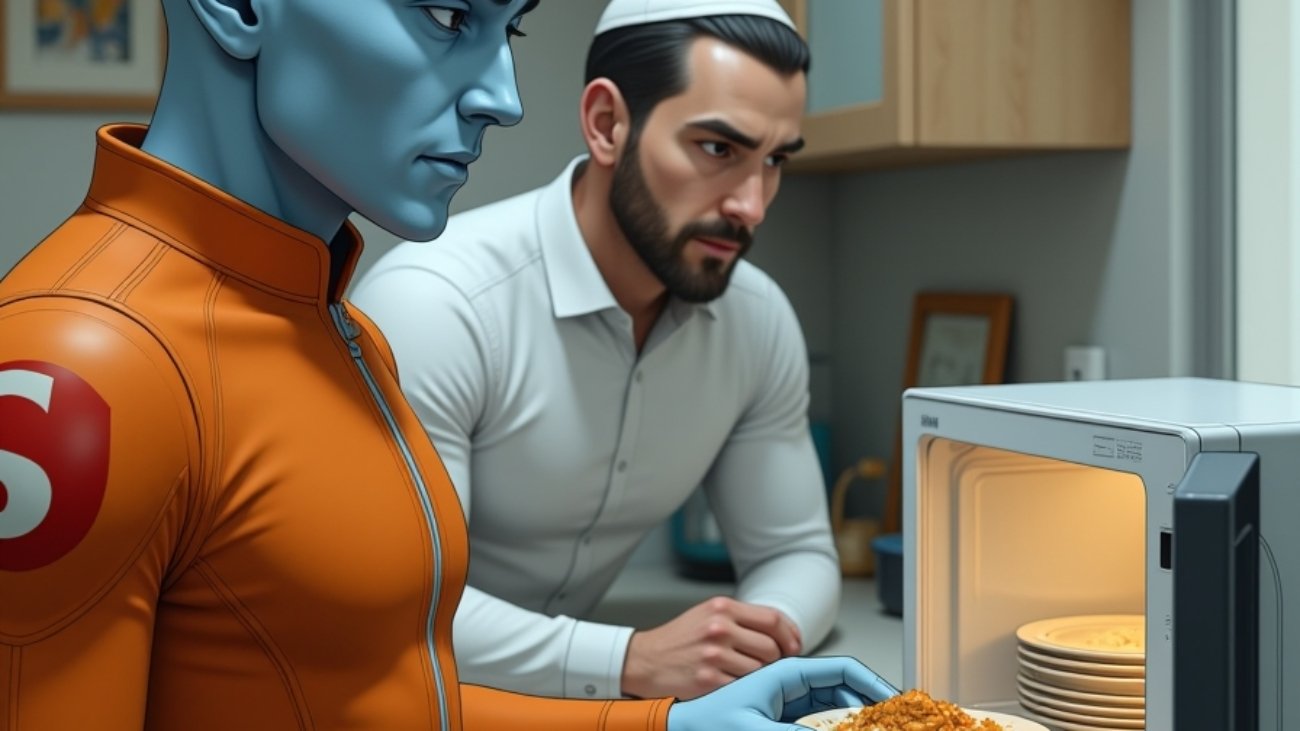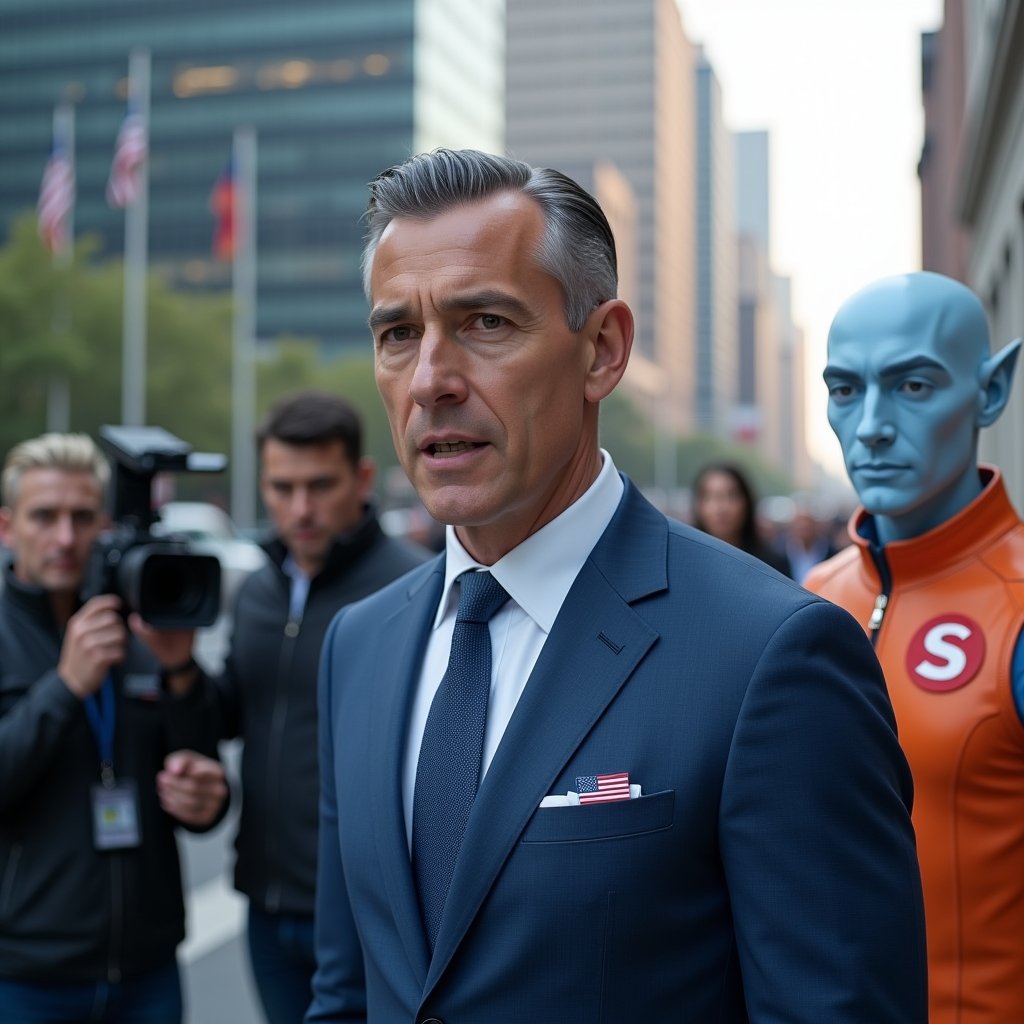
Shalzed and Simon outside embassy of Belgium

The Passport Belgium Won’t Replace

The Passport Belgium Won’t Replace

Shalzed confronts an embassy that won’t help citizens living in the West Bank

Shalzed and Simon outside embassy of Belgium
Shalzed and Simon outside Cafe Maya, next to Amnesty International Headquarters in London

Belgium recently cut off consular services to Israelis living in what it calls “illegal settlements.”  This week Shalzed and Simon head to the Belgian embassy to ask whether this is principled diplomacy—or discrimination based on where you live.

The Passport Belgium Won’t Replace

After school I got a call from Yehudah, a friend from high school who now teaches at a yeshiva in Gush Etzion. He told me that one of his Belgian students had ruined his passport in the washing machine, and his embassy refused to replace it.

“Why?” I asked. “Doesn’t he have some other ID?”

“It’s because Belgium considers Gush Etzion to be occupied territory.”

I sensed someone behind me and turned. Of course it was Shalzed. I still had no idea how he kept finding me. “One second,” I said into the phone. “I’ll call you back.”

Yehudah seemed surprised but said okay. I think Shalzed sensed something was on my mind, so I told him what Yehudah and I had been talking about. “Can an embassy do that?” Shalzed said. “Refuse their own citizens?”

I was suddenly in the black tunnel, with Shalzed next to me. I watched carefully, but didn’t see him turning any knobs or controls. Someday I would either get him to tell me how it works or figure it out. Then we were standing outside a security booth beneath a black, yellow, and red flag. There was a sign that said ‘Embassy of Belgium’, and from Hebrew up and down the street I could tell that we were in Tel Aviv.

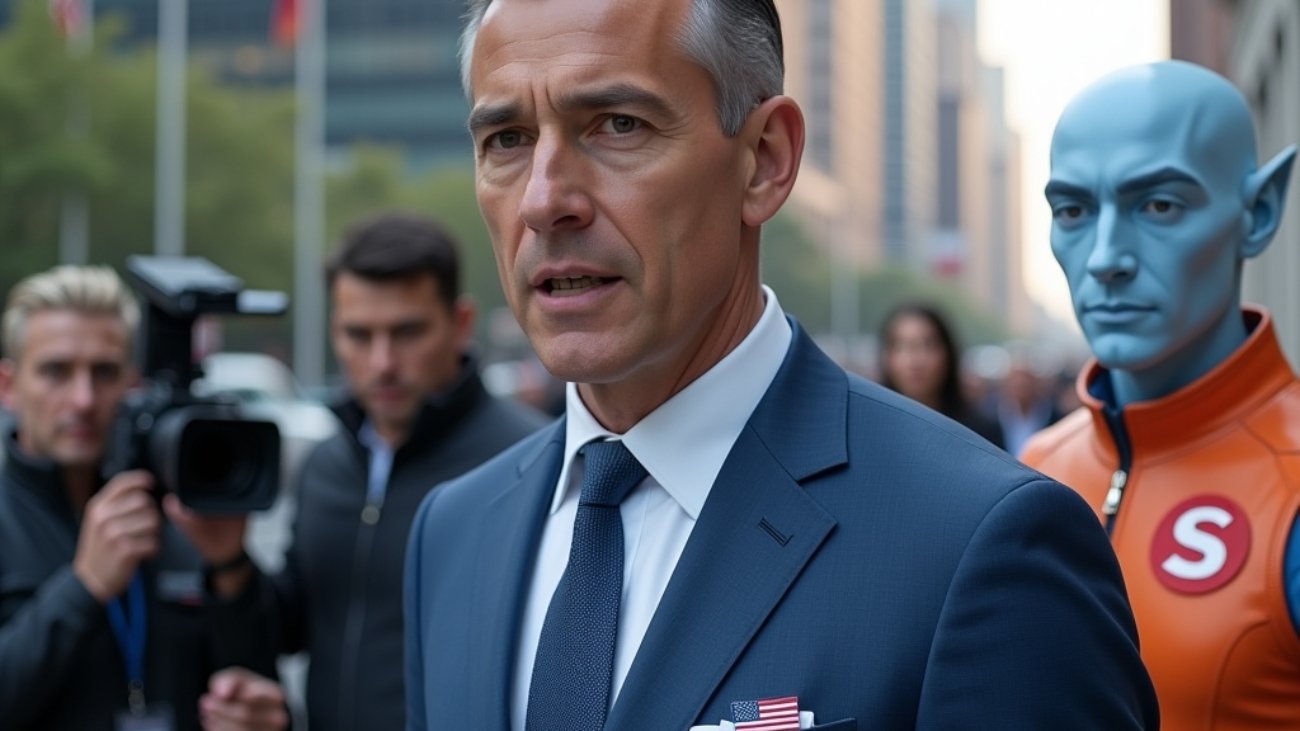
A middle aged man in a suit and tie stepped out of the embassy. Shalzed called after him. “Ambassador Thijs, can you explain why you won’t replace the passport of a Belgian citizen studying at a yeshiva?” he asked.

The ambassador stopped and stared at him. “Consular services are only in the mornings,” he said.

A woman ran up, dragging a child along behind her. “My son put finger paint all over my passport,” she said, pulling a passport with red all over the cover from her purse. “You have to help me.”

“We do passports between eight and eleven AM,” the ambassador said again.

“But I have a flight back to Belgium at ten tonight. I have to go, it’s for my sister’s wedding,” the woman pleaded.

The ambassador asked for the passport and looked it over. “Perhaps someday your son will be a  famous artist, but in the meantime this passport can’t be used,” he said. Just then, a man wearing suit pants and an elegant purple shirt came out of the embassy. The ambassador showed him the passport and asked a question in Dutch. The woman with the little boy gave him a pleading look.

“I can do it,” the man that had just come out from the embassy said. “As long as you have another valid form of ID, it shouldn’t take more than twenty minutes.” The woman started to say thank you. “But first,” the man continued, “I have to make sure where you live.”

The woman paused. “I live here, I made aliya 14 years ago,” she said. “But I still have a lot of family back in Antwerp.” She pursed her lips and looked back and forth between the man and the ambassador.

“He means what city?” the ambassador said. “Because we are no longer able to serve anyone residing in an illegal settlement.”

The woman frowned. “You mean Yehudah and Shomron?” The ambassador nodded. “I used to live in Ma’aleh Adumin, but we just recently moved to Netanya. I don’t understand why that should make any difference.”

The ambassador smiled, then directed her to the booth to go through security. She hurried to oblige.

“Even if you oppose Israel’s policies, what does that have to do with her?” Shalzed asked as the woman went inside. “Does she run the government? Does she command the army? Did she seize land?”

“And the kid in my friend’s yeshiva probably picked it based on the program, where his friends were going, and the price. He might not even know anything about the ’67 borders,” I added.

The ambassador held up a palm, signalling for me to stop. “Living in a settlement displaces Palestinians. Anyone who chooses to live there is complicit and has to face the consequences,” he said.

That made my stomach tighten. “I have a good friend named Yehudah who lives in Gush Etzion,” I told him. “He volunteers for an organization that works to facilitate dialogue between Israelis and Palestinians. . .”

The ambassador interrupted. “I very much support that type of activity, but it does not justify living on occupied land.”

“So are you also going to put Belgian citizens who live in settlements in jail if they return to your country?” Shalzed asked.

Thijs sighed. “Of course not. But the current situation calls for strong action. If we make life in the settlements harder, then fewer of our citizens will move there. This is my government’s way of making a statement.”

“So you are punishing your own citizens simply to make a statement?” Shalzed asked.

The ambassador shrugged. “It’s our only leverage. Now please excuse me,” he said. A black sedan was pulling up by the curb and he quickly got inside, and then Shalzed and I were back in the dark tunnel. I didn’t bother this time looking for more information about how Shalzed made it work because I was upset about the ambassador. He probably imagined that everyone who lived in the settlements was a violent extremist, and I knew very well that wasn’t the case.

A moment later I was back in the park across from my house, with Shalzed nowhere in sight. My phone rang, and I saw it was Yehudah calling back.

I swiped to answer. “Sorry,” I said. “I was away a bit longer than I thought.”

“No problem,” he said. “I just heard one of the rabbis here has connections with a member of the Knesset. He’s going to try to get help with that passport. But don’t you think withholding passports violates people’s rights?

I didn’t answer. I wasn’t sure Belgium would, either.

Subscribe to Receive Shalzed's adventures in your inbox

Sources:

Coverage of Belgium’s new policy from The Algemeiner

Protest press release from the Jewish Documentation and Information Center

shalzed with Doctors Without Borders in Gaza

Who Decides Who’s Neutral? Can Doctors Without Borders Stay in Gaza?

Who Decides Who’s Neutral?

Can Doctors Without Borders Stay in Gaza?

Shalzed speaks with Doctors Without Borders Emergency Coordinator for Palestine Claire San Felippo

What starts as a Bumble match turns into a sudden trip to a Doctors Without Borders field hospital in Gaza, as Shalzed asks who gets to decide what “neutral” means when humanitarian aid meets war.

Who Decides Who’s Neutral?

I got a match on Bumble for the first time in two weeks. Her name was Rose, and I really liked her profile. As an ‘opening move question’ she asked, ‘What’s your ideal first date,’ so I responded, ‘Holding hands while sky diving- although that’s definitely not happening on our first date!’ Then I sat in the living room watching NBA highlights, hoping she would reply.

I grabbed my phone as soon as it chimed, but instead of Rose it was Shalzed. “Doctors Without Borders is planning to stop working in Gaza,” he said.

“Okay,” I replied, checking if maybe by chance Rose had also messaged at the same time.

“I can’t understand it,” Shalzed continued. “Israel is just asking basic questions for its own security. How could an organization devoted to helping victims of conflict pick up and leave because of that?”

Suddenly, I was in the black tunnel with points of light. I wished I had my phone with me, but it was no longer in my hand. It might not even work wherever Shalzed was taking me. Then I was outside a large, white medical tent. It had rows of folding chairs, filled with people waiting. Children were running and crawling around on the floor. There was a row of smaller tents with examining tables outside. Doctors and nurses wearing white scrubs with the Doctors Without Borders logo hurried about.

Shalzed was next to me, looking around. “Gaza city,” he said. Then he caught site of a woman with short hair and large, round glasses walking towards the road. He strode towards her, and so I followed.

“Excuse me,” Shalzed called. “Can you explain why Doctors Without Borders is threatening to leave?”

The woman turned, and I saw she was wearing an ID that said ‘Claire San Felippo, Emergency Coordinator for Palestine.’

“Are you with Israel?” she asked, looking at Shalzed suspiciously. “If so, you can’t be here.” She put her hands on her hips.

Even though I wasn’t an Israeli citizen, I still felt uncomfortable being in Gaza. I moved closer to Shalzed.

Shalzed shook his head. “I just want to understand why you are threatening to leave rather than complete the simple registration process the Israeli government now requires.”

San Felippo glanced towards the road, where a man holding a clipboard was waiting. “Simple process?” she asked. “They want to know the identities of all our staff, Palestinian and international. What if Israel uses the information to target them? Do you know how many humanitarian workers have already been killed by the Israeli army?”

“A lot of so-called humanitarian workers are also Hamas,” I told her.

“We would never knowingly employ anyone engaged in military activity,” she shot back.

To my surprise, Shalzed interrupted. “Israel says you have.”

San Felippo shook her head. “It was just a few isolated incidents. We dealt with it right away.”

A woman in her early twenties wearing a badge identifying her as a nurse passed by. “I don’t want you giving my name to the genocide army,” she said.

One of my brothers moved to Haifa and is in IDF reserves, and I have several cousins also in the army. It makes me mad to hear people say that.

“We won’t do anything without your consent,” San Felippo told to the nurse. Then she turned to Shalzed. “That’s what this is really about, Israel is trying to scare away all our employees to force us out.”

“If you go around accusing Israel of genocide, why would you expect its government to cooperate?” I asked San Felippo.

She turned to me. “Bearing witness is one of our key principles, no matter where we work. We see genocide with our own eyes as we struggle to treat the wounded. Our mission requires us to speak up.”

“You can’t see genocide,” I told her. “That’s just your opinion. Israel believes everything it does is necessary in self-defense.”

“Isn’t neutrality one of your core principles also?” Shalzed asked her. “Accusing Israel of genocide, along with calling for boycotts and arms embargoes, hardly seems neutral.”

I heard a siren in the distance. All three of us turned, and I saw what looked like an ambulance approaching.

“Neutrality means we give medical treatment to anyone in need without conditions,” San Felippo said. “But neutrality doesn’t stop us from speaking out about what we are witnessing here on the ground.”

A nurse went to the waiting tent and called a name. A boy who seemed like eight or nine got up. His left foot was in a bandage, and he hopped along by leaning on what looked like a broomstick under his armpit. The siren was getting louder. A man came by, pushing an empty wheelchair towards the road. “Just in case,” he said to San Felippo.

“Do you know what it is?” she asked.

The man shook his head. “Electricity is out, so there’s no internet. I know nothing.”

San Felippo turned to Shalzed as soon as the man passed by. “The security concerns are just lies Israel is using to try to push us out and deny Gaza residents medical care. And if we leave, they know exactly what will happen,” she said.

“Rather than address Israel’s concerns, you’re trying to stir up global outrage about hundreds of thousands of people left without medical care so you can keep doing everything exactly the way you want,” I told her.

“Look at the Red Cross,” Shalzed added. “They don’t go on social media campaigning for embargoes or boycotts, and Israel has never threatened to kick them out.”

“That’s their choice,” San Felippo said. “The Red Cross stays silent in order to preserve access. Our values are different than theirs.”

A Red Crescent ambulance pulled up and several people got out. The driver immediately started arguing with the man who had brought the wheelchair, who was helping an elderly man who was clutching both hands to his chest out the back. They spoke in Arabic, so I couldn’t understand them.

“I’ve got to go,” San Felippo said, starting towards the road. “But just to let you know, in the end we are planning to comply with Israel’s requirements. They’ll probably still try to kick us out anyway.”

The man with the wheelchair smiled when he saw her, and she said something to the driver that seemed to calm him down. Then I was back in the black tunnel, and a moment later in my apartment. It took me a moment to orient myself to being back home. I suddenly felt thankful that I lived in the United States, where we have electricity and health care, rather than Gaza.

My phone chimed. I looked around and Shalzed wasn’t with me, so I thought maybe he was calling. But instead it was a message from Rose. It said, ‘Ha ha. I’d rather donate the money we’d spend on sky diving to an organization that helps people in need, like Doctors Without Borderes. What about you?”

I chuckled. I’m all for helping people in need, but I’d prefer an organization that isn’t so anti-Israel. I wondered whether I should try to explain that to Rose, or if that would end our relationship before it even had a chance to get started.

Subscribe to Receive Shalzed's adventures in your inbox

Sources:

Israel Tells Doctors Without Borders to End Its Work in Gaza- New York Times article click here.

Text of Israel’s new requirements law, click here.

Israel’s report on Doctors Without Borders non-compliance, click here.

Doctors Without Borders press release protesting Israel’s requirements, click here.

Doctors Without Borders Jan. 24th statement agreeing to comply with Israeli requests, click here.

shalzed and simon leaving the eiffel tower

Why Isn’t Everyone Excited About the Board of Peace?

Why Isn’t Everyone Excited About the Board of Peace?

Shalzed finds out why the President of France thinks this may not be a good way to pursue peace and justice

Shalzed and Simon outside Cafe Maya, next to Amnesty International Headquarters in London

When Donald Trump announced his new Board of Peace, Shalzed was excited. This is just the type of thing he came to Earth for! In this episode he questions French President Emmanuel, who refused to join, and learns why this might not be such a perfect way to pursue peace and justice after all.

Why Isn’t Everyone Excited About the Board of Peace?

I stayed after school to watch the boy’s basketball game. I sat with Rabbi Reichbaum, the principal. It was the end of the second quarter, when the backups who only got to play a few minutes each half were in the game. Rabbi Reichbaum made a special point of watching to make those kids feel important and part of the team. I thought that was a nice idea, so I did too.  

But just as a kid made a layup- probably the first time he had ever scored in a game – Shalzed called. I decided that I had to step out into the hallway so Rabbi Reichbaum wouldn’t overhear.

“Earth is amazing!” Shalzed exclaimed as soon as I swiped to accept. “Did you know that the U.S. President is creating a Board of Peace?”

“Doesn’t that have to do with Gaza?” I asked. That’s what I remembered from the news.

“Gaza is just a small part. The Board of Peace will resolve conflicts all around the world.”

“Let’s wait and see,” I told him.

“I don’t understand why all of you humans aren’t excited. I’m especially perplexed why President Macron of France even refused to join.”

Before I could say anything, I was in the familiar black tunnel. This time I tried to focus on the points of light. Were they stars, or were they part of some kind of mechanism? I thought I saw the shape of the Big Dipper, but the truth is I didn’t know exactly what it looked like. Then I was standing next to Shalzed on the second deck of the Eifel Tower, outside a restaurant called Le Jules Verne. Emmanuel Macron, accompanied by an elegantly dressed, much older woman that I assumed to be his mother, had just gotten off the elevator and were headed towards the door.

“Monsieur le Président, why are you refusing to serve on the new Board of Peace?” Shalzed asked. “Don’t you want to help resolve all of the conflicts plaguing your planet?”

Macron wrinkled his forehead. “Who is this, mon cherie?” the woman next to Macron asked in a thick French accent. She grasped his hand in a way that made clear she was his wife.

A security guard stepped forward and said, “The line for the restaurant starts downstairs.”

I took Shalzed’s elbow and tugged him out of the way.

Macron seemed to size Shalzed up for a moment, then he responded. “I declined to join because we already have the United Nations, and maintaining peace and security is what it was created to do.”

I couldn’t help but laugh, but I stopped myself when I realized that Macron was staring at me. “Right,” I told him. “And look how well that’s going.”

Macron nodded. “That’s why we need UN reform. And a new Security Council with broader representation and a revised veto.”

Macron’s wife put a hand on his shoulder. “Mon couer, you’ve been saying that for decades, and nothing ever happens.”

“If reform isn’t working, this is a chance to create a better United Nations from scratch,” Shalzed said.

Macron scoffed. “How can any Board of Peace possibly include Putin, who is responsible for the terrible war in Ukraine?” Macron asked.

“Well, you’re happy with Putin having a permanent Security Council seat and veto at the United Nations,” I replied, because I wasn’t sure Shalzed knew about that.

A man wearing a white chef’s shirt with the name ‘Frédéric Anton’ embroidered over the breast pocket came out of the restaurant and extended his arms in greeting. “Bienvenue monsieur le president, Bienvenue madame Macron,” he said. “Raviolis aux langoustines, crème de parmesan et fine gelée de betterave attendant.”

I didn’t know what that meant, but I was pretty sure it had to do with the menu. I looked out at the incredible view of Paris and saw what I thought was the Arc de Triomphe. I had never been to Paris before, except one time changing planes at Charles de Gaulle airport on the way back from my gap year trip to Israel, so I wasn’t sure.

The chef beckoned Macron forward, but Shalzed stepped in the way. “Much of the world is not represented on the Security Council, and it is stymied by the veto. In the General Assembly, tiny states vote on distant conflicts they don’t understand, guided mostly by who they’re trying to please. Isn’t a broad board which includes representatives from most of the major countries, along with some leaders from other fields, a better way?”

“Excusez-moi, it is time for dinner,” the guard told Shalzed.

Macron’s wife signaled the guard to stop, then put a hand on Macron’s shoulder. “This makes sense, Mon amour. You should listen,” she said.

“Trump is selling memberships for a billion American dollars,” Macron said dismissively. “How can that be a fair way to establish a Board of Peace?”

“The money will go to Gaza,” Shalzed said. “And the UN already takes in billions.”

Macron’s wife clicked her tongue. “I think what really bothers my husband is that Monsieur Trump is a very strange person to have as chairman of a board devoted to peace.”

“Only an egotistical U.S. President would try something as audacious as this,” I said.

“Not just egotistical,” Macron’s wife added. “He just kidnapped the President of Venezuela and is threatening to take over Greenland. Maybe if someone else was behind this my husband would be more supportive.”

Macron shook his head. “Trump is my friend,” he said. “I invited him to join us here for dinner this evening, and I am sorry he did not attend.”

“Speaking of dinner,” the chef said impatiently, gesturing inside.

The security guard nudged Macron forward, and this time Shalzed stepped back to allow him and his companion to enter the restaurant.

“Look at the UN’s paralysis in Gaza,” I said as Macron walked by. I kept to myself that many at my school feel the UN has actually made the situation worse. “If this board of peace wasn’t Trump’s idea, would you give it a try?”

Macron stepped past us and entered the Jules Verne restaurant, with the chef following behind. The security guard lingered, watching Shalzed and me.

I tried to get one last glimpse of Paris as I felt myself being drawn back into the black tunnel. A moment later I was back in the hallway of the school. I wondered how long I had been gone. I heard clapping from the gym, so I figured the game was at least still going on.

I went back inside and saw that the third quarter was just beginning, and now our school’s team was down by 20. I went and took my seat next to Rabbi Reichbaum.

“That was a long phone call,” he said.

“Yeah,” I replied, not sure what else to say.

“At halftime one of the kids from the other school was ejected for taunting. I’m proud none of our boys got into a fight. I think we should talk about it tomorrow, maybe after davening.”

“Ok,” I said. “I’m sure the kids will fill me in.”

“It’s like we need a whole board of peace just to run a basketball game,” Rabbi Reichbaum said. “But not if it means Donald Trump. Even if he does manage to bring peace to the Middle East, I don’t want him anywhere near here.”

Subscribe to Receive Shalzed's adventures in your inbox

Sources:

For more background on Trump’s Board of Peace from CNN, click here

shalzed and simon at the state dept

From Green Onions to the United Nations

From Green Onions to the United Nations

Shalzed wants to know why the U.S. is pulling out of international organizations

Shalzed and Simon outside the State Dept. in Washington D.V.

Shalzed came to Earth believing international law — and the web of institutions built around it — offered a model for peace, not just here but across the galaxy.

But last week the U.S. withdrew from 66 international organizations. In this episode, Shalzed confronts U.S. Secretary of State Marco Rubio to find out whether this vision is falling apart.

From Green Onions to the United Nations

I hurried into shul with a bag full of groceries. Rabbi Shayerman trusted me, but the policy was very strict that he had to check everything in. I wanted to be able to start working on the kiddush before he got caught up with his ‘pizza and parsha’ class for youth.

It only took the rabbi a minute to find all the hechshers. He grabbed a stack of napkins and paper plates and headed to the social hall, and I started chopping green onions for the tuna salad. Then Shalzed called.

“Why is President Trump withdrawing the United States from international organizations?” he asked. “They are all places for countries to resolve disputes and work together.”

I hadn’t heard anything about this, but it did sound like something Trump would do. “What organizations?” I asked.

“About half are connected to the United Nations,” he said. “And the United Nations is the primary body you use to keep peace and security on your planet.”

Before I could say anything else, I was in the dark tunnel with points of light that by now had become familiar. This time I tried to listen as best I could for any sounds that would give information about how it worked. I didn’t hear anything like motion or machinery, though, and a moment later I was standing next to Shalzed in the office of Marco Rubio at Foggy Bottom.

Rubio was sitting behind an enormous, wood desk, looking at his computer. “Mr. Secretary,” Shalzed began. “Why are you trying to undermine the United Nations?”

Rubio looked up and wrinkled his forehead. “Where have I seen you two before?” he asked.

Just a week ago Shalzed had taken me to Mar-a-Lago to confront Rubio about the U.S. nabbing Maduro out of Venezuela. “We travel a lot,” I told him.

“I don’t know how you got in here, and I have a meeting in just a moment,” Rubio said. “But no, the United States is absolutely not trying to undermine the United Nations.”

Shalzed put his hands on his hips. “You just announced that you’re withdrawing from 31 UN organizations, and a bunch of other non-UN organizations too.” he said.

Rubio shook his head. “The United States strongly believes in the United Nations. But only as a forum for diplomacy. Why does the UN have dozens of little agencies, most of which are redundant, wasteful, and counter to our interests?”

“Does that mean you’re upset other countries don’t always go along and give the United States everything it wants?” I asked.

Rubio closed his laptop and crossed his arms against this chest. “Absolutely not. Take for example the UN Democracy Fund. It just gave money for a program that it claims helps youth in Argentina strengthen their critical thinking. And they sponsored a program to increase women’s political participation in Baluchistan.”

“Baluchistan?” I interjected.

“It’s a region in Pakistan,” Rubio said quickly. “The point is that these are things that if wanted, countries should do them on their own. The UN was never meant to have billions of dollars to spend on do-gooder projects wherever they please.”

“But maybe these projects are valuable?” Shalzed suggested.

Rubio shrugged. “Maybe. But the UN should be only the General Assembly and Security Council. It shouldn’t try to do the job of its member states, and when it does it’s an affront to states’ sovereignty besides.”

A man I didn’t recognize wearing a beige suit and striped tie entered the office. He had a senate pin on his suit jacket and was wearing a VIP badge around his neck. “Thanks for taking the time,” he said, striding over to Rubio’s desk. “Great work on cutting us out of 66 agencies, but I wish you had pulled out of a few more.”

Rubio stood up to shake his hand. The man turned to us. “Nice to meet you,” he said. “Rand Paul from Kentucky.”

“I am Shalzed,” Shalzed said. Paul stared at him expectantly. After an awkward silence Paul said, “You must both be awfully important if they let you in without ID badges.”

“We arrived a different way, not through downstairs,” I said, trying to laugh.

“I doubt you were able to parachute in through the window,” Paul said with a chuckle. He turned to Rubio. “Maybe some of the money we saved by withdrawing from those organizations ought to go towards State Department security.”

“It’s a form of tzedakah,” I said, as I had no idea how Shalzed could explain our arrival without getting us into all sorts of trouble. Rubio, Rand Paul, and Shalzed all gave me blank looks, and I realized I had used a Hebrew term. “Charity,” I told them. “A lot of the countries that benefit from these programs probably don’t have enough money to do these things themselves.”

Rand Paul waved a dismissive hand. “The U.S. is still a part of UNICEF and the World Food Programme,” he replied. “I never advocated against that. It’s just small bureaucracies that are ideologically driven and wasteful that we want to get out.”

“It’s only a miniscule part of the U.S. government’s budget,” Shalzed said.

“Let me tell you something,” Rand Paul said, turning towards us. “Imagine standing outside a gas station somewhere in Kentucky and asking folks as they walk by if they want their tax dollars going to the International Cotton Advisory Committee. Or the Venice Commission of the Council of Europe. Or the UN Permanent Forum on People of African Descent. Not one of them will say yes. Finally we have an administration that actually listens to the people.”

“It’s a lot more cost effective to resolve disputes in these forums than to risk them deteriorating into violence,” shalzed said.

“Exactly,” Rubio responded. “That’s what the United Nations General Assembly and Security Council are for. But no more unelected, unaccountable international bureaucracies pursuing their own agendas while the United States foots the bill.”

“I’m just curious,” Paul interrupted. “If you parachuted in, are you going to leave by parachute too? Because I think the fine gentlemen downstairs at the exit will be awfully concerned about your badges.”

“I have no worry,” Shalzed said simply.

Paul laughed. “If you have badges in your pocket you should take them out,” he said.

“And I think you should be going,” Rubio added.

I tugged Shalzed’s arm. “Time to leave,” I told him.

“Fine,” he said, not sounding happy. He turned to Rubio and Paul. “But most problems cannot be resolved by any one country. Aren’t international organizations the only way?”

“For that there are bilateral agreements,” Rubio said. “And I think I’ll call security, they’d like to see your badge.”

Just as he picked up his desk phone I was back in the black tunnel. I tried to concentrate on Marco Rubio’s face, to see if he had any reaction, but the transition was too fast. I wondered what he saw? A moment later I was in the synagogue kitchen, right in front of the cutting board with green onions waiting to be chopped.

I took a moment to get my bearings, then picked up the knife. Rabbi Shayerman came in and looked around. “I thought you were in a hurry,” he said to me.

“Right,” I said. He glanced at the onions waiting on the table, only half of the first one chopped. “I got a call on the phone,” I told him. That was at least partially true- Shalzed had called before he took me to Washington. But there was no way I could explain that.

Subscribe to Receive Shalzed's adventures in your inbox

Questions:

  1. The United Nations has grown far beyond a forum for diplomacy, taking on work in areas like development, democracy, environmental protection, and human rights.
    Do you see this expansion as necessary for solving global problems—or as an example of unaccountable bureaucracies encroaching on state sovereignty?

  2. Withdrawing from 66 international organizations saved the U.S. only a negligible amount of money. Even if some of these organizations are inefficient, was withdrawal worth the cost in lost influence—or does influence matter less than principle here?
Shalzed and Simon at Mar-a-Lago

When the UN Charter Meets Black Ops

When the UN Charter Meets Black Ops

Shalzed Confronts Marco Rubio Over the Maduro Abduction

Shalzed and Simon waiting for Marco Rubio at Mar-a-Lago

International law says no. Reality is a maybe.
This week, Shalzed and Simon go to Mar-a-Lago to ask Marco Rubio what the rules mean when it comes to Venezuela.

When the UN Charter Meets Black Ops

I usually don’t watch the news, but I was surprised enough by the U.S. abduction of Nicolas Maduro to turn on the television while I made oatmeal and toast for my Sunday morning breakfast. Experts were speculating about what’s next for Venezuela. Then, just as Chuck Schumer was complaining that Trump failed to notify Congress, Shalzed called.

“How can one country send its army to capture the leader of another?” he asked. “Isn’t that against the most fundamental rules of international law?”

That’s pretty much what Schumer was now saying on TV. “The Democrats seem to agree with you,” I said as I turned the volume down.

“Democrats?” Shalzed asked. “But the prohibition on using force is in the charter of your United Nations. What does that have to do with Democrats or Republicans?”

Before I could say anything, I was in the black tunnel I had already grown accustomed to. This time, since by now I was no longer afraid or panicked, I tried to feel around to sense if there were walls or if I was traveling inside of some sort of vessel. I didn’t feel anything, and then a moment later I was outside Trump’s Mar-a-Lago country club in Palm Beach, Florida. Shalzed was next to me. We were standing on a wide sidewalk lined by neatly trimmed hedges with a vast, manicured lawn on either side. Through the palm trees, I could just make out the ocean.

“Mr. Secretary,” Shalzed exclaimed, starting up the path towards the main entrance. Marco Rubio was coming out. He looked tired. He had his suit jacket folded over his arm, with a red tie hanging out of his pants pocket.

“Who are you?” Rubio asked. He looked Shalzed over, then glanced at me as I came up behind.

“Wasn’t sending troops to abduct Maduro a flagrant violation of international law?” Shalzed asked.

Rubio shook his head. “Of course not. It was actually law enforcement. Maduro was indicted for trafficking cocaine, and now he’ll face trial in New York.”

“The U.S. can’t make arrests in other countries,” I said. I may not be a lawyer, but at least I know that much.

“And Maduro has immunity as a head of state,” Shalzed added.

Rubio scoffed. “Maduro was the head of a drug trafficking operation masquerading as a government,” he said. “He rigged the last election to stay in power, so he’s not a legitimate president at all.”

“So the United States gets to decide which governments are legitimate—and send in troops when needed?” Shalzed asked.

Rubio sighed. “It’s been a long night, gentlemen,” he said. “I don’t recall seeing either of you before in the ballroom, are you guests for just a few nights? Or are you here for a round of golf?” He raised his eyebrows. I read somewhere that joining Mar-a-Lago costs $1 million upfront, then $20,000 in dues annually. I was wearing jeans and an old Camp Ramah T-shirt, so I probably didn’t look like I belonged.

“He’s come from very far just to be here,” I said, gesturing to Shalzed. However he got us in, I hoped he would also get us out before we were picked up by the secret service.

“Do you really want to undo the principle that countries have to respect each other’s sovereignty?” Shalzed asked. “Isn’t that the key to peace, and fundamental to the UN Charter?”

Rubio shrugged. “The problem with sovereignty is that it usually winds up being used to protect tyrants and dictators.” He tossed his suit jacket over his shoulder and put his hands on his hips. “Do you realize that nearly 8 million Venezuelans have fled due to Maduro, and about 750,000 of them are in the United States. Biden gave most of them protected status because they face persecution back home. How can the U.S. be obligated to bear all these refugees, but not be allowed to do anything about what’s causing them to seek refuge in the first place?”

“But whatever is to be done has to be decided by the UN Security Council,” Shalzed said. “It can’t be left up to only one country.”

Rubio waved an arm. “That wouldn’t work. Russia and China would use their veto.”

“As if the United States doesn’t use its veto, too,” I added.

I felt a hand on my shoulder and turned to see a man in a dark suit with a listening device in his ear behind me. “Mr. Rubio is a busy man,” he said. “I think he needs to get going.”

“Enjoy the golf course, gentlemen,” Rubio said. “Assuming you’ve actually reserved a tee time.”

Rubio walked around us and headed towards the gate, where a black SUV was waiting.

“What are your names?” the man in the dark suit asked. He took a tablet computer from his jacket pocket and opened a page with a list of registered Mar-a-Lago guests. “And I may need to see some ID.”

“Listen,” I said, trying to think of something to say. I realized that I didn’t even have my wallet, my pockets were empty when Shalzed whisked me away. I turned to Shalzed, who was staring at Rubio as he left.

“Are the two of you not on the guest list?” the man asked, pretending to be surprised.

“Um,” I mumbled, touching Shalzed on the elbow. When he finally turned I gave him a pleading look.

I felt relieved to suddenly be back in the black tunnel. I wondered if Shalzed would still have been able to pull off his transportation trick if the guy had put us in handcuffs. Before I knew it I was in my apartment. I smelled something burning and look at the stove. The oatmeal had been on the fire the whole time. The water had all boiled off, and as I turned off the flame I wondered if the pot was ruined.

Shalzed was with me in the kitchen. “How long were we gone for?” I asked him, pointing to the burned oatmeal. I wondered if this could finally be a way to get some information on how his black tunnel worked.

But instead of answering, Shalzed stared at the television. This Week With George Stephanopoulos was still on, and the United Nations High Commissioner for Human Rights was explaining that even though Maduro had a longstanding, appalling record on human rights, that was no reason to justify U.S. intervention in Venezuela.

“But Maduro has been in power for over a decade,” Shalzed said. “And the Human Rights Council never did anything about it.”

“It does seem strange to see the High Commissioner for Human Rights arguing that Maduro should still be in power,” I added.

I wondered if Shalzed was hungry. “I’m going to make some more oatmeal,” I told him. “Would you like some?”

He looked at the burned pot. “Why?” he asked.

I smiled, thinking maybe this was my chance. “Because that pot was on the stove when you took us to Mar-a-Lago. Since we were there for only about seven or eight minutes, that must mean that we spent at least three or four minutes in transit each way, or the oatmeal wouldn’t be so burned. Right?” I asked.

“It looks delicious,” he said. He went to the pot and pulled out a few black, dried-out oats. He put them in his mouth and smiled. “It reminds me of the food we serve at festivals.”

“So you transported us from here to Florida in three or four minutes,” I repeated, hoping he would confirm or deny.

But instead, he turned back to the television. It was showing footage of Venezuelan exiles celebrating in Miami. One of them told a reporter that while he was fearful for his family back in Caracas, he was grateful to Trump and hoped this would finally be a chance for Venezuela to experience freedom.

“Is the High Commissioner for Human Rights going to tell them that they’ve got it all backwards?” I wondered out loud.

Shalzed shrugged. “Can I take that with me?” he asked.

“Sure,” I said, handing him the burned pot. I doubted I would be able to clean it anyway.

“Thanks,” he said. “I’m starting to wonder whether Earth’s international law and human rights work as well as I thought. But I’m glad that at least I discovered this delicious food called oatmeal.”

Subscribe to Receive Shalzed's adventures in your inbox

Questions:

  1. The prohibition on the use of force in international relations is a bedrock of peace and stability. However, human rights are also a key value, and oppressive regimes can use the prohibition on force as a shield to protect themselves from consequences. Which value is more important? How do we decide?
  2. Approximately 8 million Venezuelan citizens have fled their country, seeking refuge from Maduro’s regime. Many have settled in Central or South America, and about 750,000 are in the United States. Does bearing the cost of caring for refugees give states a special right to use force to change the conditions that caused their flight?
shalzed and simon at the un

Israel, Somaliland, and the Flexible Definition of a State

Israel, Somaliland, and the Flexible Definition of a State

A visit to the UN Security Council, where principles stretch under pressure

Shalzed and Simon at the UN Security Council in NY

Somaliland has its own political system, currency, and police force — and has been separate from Somalia for over thirty years.

Last week, when Israel extended official recognition, critics cried “meddling.” Supporters say recognition reflects reality on the ground.

But what’s the difference between that and Palestine?

Shalzed and Simon attend an emergency meeting of the UN Security Council to watch diplomats bend their principles when self-interest is at stake.

Israel, Somaliland, and the Flexible Definition of a State

I was on my way home from school, about to head into Stop’n Shop to buy something to make for dinner, when Shalzed called. “Why does the United Nations Security Council think recognizing Somaliland is a threat to peace and security? They are even having a special session about it.”

“About what?” I asked.

“Somaliland,” Shalzed repeated.

 I had never heard of it. “What’s that?” I asked.

“Somaliland has been independent from Somalia for over 30 years. It has its own elections, government, currency and police,” he said. “Now Israel was the first country to recognize it as a state.”

I had no idea why that was important, but before I could say anything I was whisked into the dark tunnel that by now seemed second nature. A moment later I was seated next to Shalzed in the UN Security Council visitor’s gallery in New York.

              “I don’t see the problem, let alone a threat to security,” Shalzed said to me, as if instantaneous travel across long distances was no big deal. “If the people living in Somaliland want to be independent, isn’t it their right?”

              “How did you get us in here?” I asked.

              Shalzed turned towards the podium, as he always refuses to answer that question. The French delegate was announcing that her country opposed Israel’s decision. “Internal disputes within Somalia must be resolved in a negotiated manner,”  she said.

              “But if the people in Somaliland believe that they can achieve better freedom or more stability from being separate, shouldn’t that be their right?” Shalzed asked me again. “Why should Somalia have a veto?”

              I shrugged. “I guess they don’t want every group to secede and start their own country,” I told him. I made a point of whispering, hoping he would also keep his voice down.

              When the French delegate finished, the U.S. representative took the floor. She said Israel has the right to conduct its own diplomatic relations. Then she added that just a few months ago several countries unilaterally recognized a Palestinian state, and there was no emergency meeting called to express outrage about that.

              “That’s a good point,” I said quietly to Shalzed. “Isn’t that exactly what Israel and the U.S. say about Palestine, that statehood should only come about via negotiation?”

              Shalzed frowned. “There must be some difference,” he said.

              The observer from the African Union was next. He said recognition of Somaliland is an attempt to undermine Somalia’s unity, sovereignty and territorial integrity, and is against international law. Then he added that the UN Charter requires the full recognition of Palestinians’ legitimate right to establish an independent state.

              Shalzed shook his head. “I don’t understand,” he said to me. I gestured for him to whisper, but he seemed too upset. “If it’s against international law to recognize Somaliland’s independence without Somalia’s agreement, then how can countries recognize Palestine even though Israel is opposed? And if Israel says no countries should recognize Palestine without its consent via negotiations, why is it going ahead and recognizing Somaliland as an independent state?”

              An African man wearing a bright red shirt with purple stripes sitting in the row behind us tapped Shalzed on the shoulder. “Just another day at the United Nations,” he said. “Now can you please be quiet?”

              Shalzed glared at him, then turned back to the proceedings. The representatives took turns talking, saying pretty much the same things. When it was over Shalzed jumped to his feet. “I have some questions,” he said. He headed towards the exit, pushing people out of his way so aggressively many stopped to stare. I apologized on Shalzed’s behalf as I tried to follow, mumbling that Shalzed ‘was not from here’.

              When I finally reached the hallway Shalzed was already in the middle of the foyer, talking to a man I recognized as Danny Danon, Israel’s Ambassador. I did my best to avoid colliding with diplomats leaving the Security Council chamber as I headed over.

              “Somaliland has a permanent population, independent government, defined territory, and capacity to conduct international relations,” Danon was saying. “So according to the Montevideo Convention, it meets all the criteria for statehood. Palestine doesn’t have a government, since it’s split between Hamas and the Palestinian Authority, and neither has had free and fair elections for ages. And Palestine doesn’t have a defined territory because its borders aren’t resolved.”

              The French representative had been walking by, but she paused and turned towards Danon. “That’s absurd,” she said in a thick French accent. “The Palestinian Authority is recognized internationally as a legitimate government. The fact that exact borders must still be negotiated doesn’t mean Palestine lacks a defined territory. Somaliland was once a part of Somalia, that’s why it can’t become an independent state unilaterally. But Palestine was never part of Israel, it’s occupied.”

              Shalzed looked confused. “I have a tv interview waiting,” Danon said, starting to go.

              “If it’s not too much to ask, I’d like a word with you first,” the French Ambassador told him.

              “About what?” Danon asked with a frown.

              The French ambassador gestured towards Shalzed and me. “I’ll be happy to tell you in just a moment.”

              “If you’re so certain that Somaliland should be independent, why did it take you thirty years?” Shalzed asked Danon. I wondered if he was oblivious to the fact they wanted us to leave, or just didn’t care.

              Danon smiled. “Better late than never.”

              That was ridiculous. “Israel’s government has been too busy for the last three decades?” I asked him.

Danon clicked his tongue. “Listen,” he said. “No matter the law, states only extend recognition when conditions are right strategically and politically.”

              “In other words, right now an alliance with Somaliland serves Israel’s interests,” I said.

              Shalzed turned to the French Ambassador. “Do you really believe Palestine has a functioning government, even though Abbas was last elected in 2005, for a term that was supposed to be four years, and he is only in charge of the West Bank while Hamas runs Gaza?” he asked.

              “Recognition is necessary to preserve the possibility of a future Palestinian state,” she replied. “Recognizing the Palestinian people’s right to self-determination is the only way towards a future without permanent conflict.”

              “But. . .” Shalzed began.

              “Excusez-nous,” the French Ambassador said, gesturing us aside.

              “L’hitraot,” Danon added. He must have assumed from my kippah that I know at least a little Hebrew.

              “You’re both contradicting yourselves,” Shalzed said.

              “C’est la vie,” the French ambassador replied, waving her arm. She pulled Danon away, towards a quiet corner. “Au revoir.”

              Shalzed stared at them for a moment with his hands on his hips, and a man wearing an ‘S’ badge, meaning that he was a member of the secretariat, bumped into him. “You can’t stand here, right in the middle of the hallway,” he said. Then he looked at us more closely. “What badge do you two have?”

              Shalzed looked at me. “Isn’t this all just politics pretending to be about law?” he asked.

              The guy from the Secretariat looked at us suspiciously. “If you don’t have badges, I highly suggest you leave,” he said before I could figure out anything to say to Shalzed.

              Suddenly I was in the black tunnel with points of light, then a moment later I found myself back in my apartment. I had meant to buy something to cook for dinner at Stop’n Shop, but now if I wanted to do that I’d have to get my bike out or wait for the bus. Then I realized I still had a pizza in the freezer- that would do.

              I looked around and Shalzed wasn’t here, and he wasn’t calling me on the phone. I baked the pizza in the oven then watched sports bloopers on YouTube while I ate. In a way I was glad Shalzed let me alone, since I was hungry. But I also worried. He told me he came to Earth because he thought our system of international law and human rights could be the secret to peace not only here but also on his home planet. I felt sort of guilty, like I was letting him down. Now that he sees how easily international law is warped by politics, I wondered if he would even bother to stay.

Subscribe to Receive Shalzed's adventures in your inbox

Sources:

Coverage of Israel’s recognition of Somaliland from the BBC

Summary of UN deliberations


Questions:

  1. Is it hypocritical to recognize Palestine or Somaliland, but not the other? Or are there valid distinctions between the two cases?
  2. Since every new state necessarily takes territory from an existing one, governments tend to frame secession as an illegal threat to sovereignty, while seceding populations frame it as necessary to fulfill their right of self-determination. Are there any objective criteria that can determine who is right, or does recognition always depend on power and politics?
shalzed and simon examine surveillance device

The Camera That Solved a Shooting — and Tracks You, Too

The Camera That Solved a Shooting — and Tracks You, Too

When security wins, Does Freedom Lose?

Shalzed and Simon examine a surveillance device

The Brown University shooter was caught using Flock cameras — AI-powered systems that track cars by unique “vehicle fingerprints,” now installed across the U.S.

These cameras aid investigations, but do they also open the door to mass surveillance and invite police abuse?
Shalzed and Simon meet Flock’s CEO to find out.

The Camera That Solved a Shooting — and Tracks You, Too

I was sitting on my couch watching the evening news, which had on a long segment explaining how the police were able to track down the person responsible for the shooting at Brown University and killing an MIT professor. Once they got a tip on the suspect’s car, they used artificial intelligence cameras from a company called Flock to locate it. Flock cameras identify every car that passes within range, not only by license plates but also by developing what they call a ‘vehicle fingerprint’ which consists of anything distinctive like a bumper sticker, dent, or aftermarket part. That’s how the police caught the suspect even though he switched the car’s license plates.

As soon as the news switched to weather Shalzed called. “I don’t understand,” he told me. “How can AI cameras be in such wide use? Aren’t they a threat to basic freedom?”

I had never really thought about that. “Well, if the cameras just record cars going by I don’t see why it’s a problem,” I told him.

“But it’s a form of mass surveillance. Humans will become afraid to exercise their freedom if they know they can easily be watched.”

All of a sudden I was back in the black tunnel I was by now getting used to, staring at little points of light. Then I was standing in the Atlanta office of Flock Safety CEO Garrett Langley. Langley looked so young he might still even be in his twenties- maybe not surprising since he only founded the company in 2017 after tinkering with surveillance cameras at his own dining room table. His desk was clear, and he was staring intently at his laptop computer. Someone on the computer screen yelled, ‘Help, help!’ and Langley smiled.

“Watching a movie?” I asked.

Langley looked up and noticed us for the first time. “Who are you?” he asked.

“Don’t the cameras you sell threaten people’s basic rights and freedom?” Shalzed asked.

Langley waved his hand. “What we do is make communities safer,” he said. “Just look at how we helped catch the Rhode Island shooter last week.”

“But what if these cameras are abused?” Shalzed asked. “They could be used to track anyone who attended a political demonstration.”

Langley shrugged. “Our cameras are just a tool,” he said. “If law enforcement misuses it, hold them accountable, not me. Now I want to know how you got into my office.”

“Check your surveillance cameras,” Shalzed said. I laughed. Shalzed refused to tell me anything about how his transport system works, but I was pretty sure we wouldn’t show up. “Police could even use your cameras to track women who travel out of state for an abortion.”

The phone on Langley’s desk buzzed. “Matt Feury is here,” a female voice said.

“Send him in,” Langley said. Then he looked at Shalzed. “I most certainly intend to check surveillance, and if you broke any trespassing laws you’ll be hearing from the authorities.”

“What stops individual police officers from using Flock cameras for stalking?” Shalzed asked. “Like the police chief in Kansas who used your cameras to keep tabs on his ex-girlfriend? Or the police chief in Georgia who used the cameras to stalk women? Or the one in Wisconsin who went so far as to have a Flock camera installed right outside of his house to monitor his wife during their divorce?”

Langley shook his head. “Like I told you, blame the officers and hold them accountable, not us.”

I have to admit I was kind of shocked. “Do you mean that any policeman anywhere can just type the description of a car or a license plate into the computer and find out exactly where that car has been driven?” I asked. I imagined how easy it would be, then, for police to spy on their wives or girlfriends, or on anyone else they had an interest in.

“They’re not supposed to,” Langley replied. “And anytime a law enforcement officer does a search they are required to enter the reason.”

“But they can enter anything,” Shalzed said. “They can easily just type ‘investigation’ in the reason field, or something generic like that. How many officers need to misuse it before that misuse becomes an expected feature??”

Matt Feury entered the office, carrying a large round device with an array of what looked like microphones sticking up on top.

“I was just reviewing the test results,” Langley said to him.

“Who are these people?” Feury asked.

“What is that?” Shalzed asked, pointing to the device in Feury’s hands.

Feury glanced at Langley. “It’s no secret,” Langley said, nodding permission for Feury to respond.

“It’s called Raven. The old models can detect sounds like gunshots and immediately notify police. Now we’ve upgraded it to detect sounds of human distress also.”

“Human distress?” I asked, not sure what he meant.

“Like someone yelling ‘Help, Help!’ Feury explained. “Our new Ravens can sort through background noise to detect someone yelling for help and immediately notify police.”

“While recording everything the raven is able to pick up?” Shalzed asked.

“And if you can identify cars by dents or bumper stickers, I imagine you can also identify people by their faces,” I added. The thought of these devices recording so much information began to make me feel uneasy.

“The alternative is letting mass shooters go free. Now do I need to call security?” Langley asked, gesturing towards his office door.

“Don’t bother,” Shalzed replied. “Just one more question. How can we be sure you’ll only sell these devices to law enforcement?”

“We don’t,” Langley replied. “We sell to homeowner associations, private businesses, neighborhood associations, and property managers too.”

“You mean they all have access to location data on cars?” I asked.

“What if a private business owner buys a camera and then uses it for stalking or harassment?” Shalzed asked. “Who can hold them accountable for that?”

“We have systems in place to prevent that,” Langley said. “Now Matt and I have a meeting. There’s the door.”

“I don’t think your privacy protections are strong enough,” I told him.

“Good to hear your thoughts. Should I call security?” Langley asked, gesturing for Feury to take a seat.

All of a sudden I was back in the dark tunnel. I waved my arms a bit, wondering if I could touch anything. Was I inside some sort of machine, or maybe somehow flying? I felt like by now Shalzed owed it to me to at least explain a little bit about how this works. Then I was back in my apartment. The news was over and now a late-night comedy show had come on.

Shalzed was with me, standing next to the kitchen table. I realized this was the first time he had ever been in my apartment.

“What’s that?” Shalzed asked, pointing worriedly at the mezuzah on my bedroom door.

“It contains a scroll with passages from the Torah,” I told him, not sure why he looked upset. “It’s called a mezuzah. According to the Jewish tradition, we put them on doors.”

Shalzed relazed. “I thought it might be a listening device,” he said.

I laughed. “No listening devices in my apartment, at least as far as I know.” Then I wondered about my Ring doorbell and Amazon Alexa. Could Flock access their data and combine it with their traffic cameras too?

“Do humans realize how much of their freedom they are potentially sacrificing in order to fight crime?” Shalzed asked. “Because fighting crime is hardly the only use these cameras can be put to.”

I used the remote to turn off the TV. “Now I have a serious question,” I said. “I think I deserve at least a little information about how you transport the two of us anywhere in the world.”

“I have to be going,” Shalzed said.

“Please. Just a little information would be nice. I mean, is it dangerous?” I asked him.

Shalzed opened the door. “Another mezuzah,” he said, pointing to the silver one I had on the entrance.

“I promise whatever you tell me will stay a secret,” I said. “But since you’re transporting me with you, I think I have the right to know.”

“But maybe your apartment really does contain some secret listening device,” he said. “With AI everywhere, it’s best to be careful.” He slipped out and closed the door.

I sighed, then pushed live view on my phone and watched Shalzed leave via my Ring doorbell. I wondered where he stayed when I wasn’t with him. Maybe if I had access to Flock’s surveillance systems, I would be able to know.

Subscribe to Receive Shalzed's adventures in your inbox

shalzed and simon outside cafe maya

The Human Rights Report Amnesty Doesn’t Want You to Find

The Human Rights Report Amnesty Doesn’t Want You to Find

Shalzed asks Amnesty International’s Secretary General Why She’s Hiding Their Report on Hamas

Shalzed and Simon outside Cafe Maya, next to Amnesty International Headquarters in London

This week Amnesty International finally released a report documenting Hamas atrocities. But it’s camouflaged under a misleading title and hidden on their website. Shalzed and Simon travel to London to ask Amnesty’s Secretary General why.

The Human Rights Report Amnesty Doesn’t Want You to Find

I had stopped grading Mishnah quizzes to watch the second half of the game between the Chargers and Seahawks. The game was tied, but Stafford just completed a 50 yard pass to Puka Nacua to set the Rams up first and goal in position to score another touchdown. Then Shalzed called.

“I heard Amnesty International released a report about war crimes and crimes against humanity perpetrated by Hamas against Israel,” he said. “But I can’t find it.”

“It would have to be on their website,” I said as the Rams got stuffed trying to run up the middle.

“Their home page has links to articles titled, ‘Stand with women accused of witchcraft in Ghana’ and ‘Demand accountability in Tanzania’, but there is nothing about Hamas.”

I typed Amnesty.org into my phone and clicked on the page about Israel and the Occupied territories. There was nothing about Hamas there, either.

“Maybe I heard wrong, and they didn’t write it?” Shalzed asked.

The most recent post was titled, “Sustainable peace requires international justice for all victims of all crimes in Israel and the Occupied Palestinian Territory.” Even though it sounded like a general press release, I clicked to read. It contained a long summary of Amnesty’s evidence that Israel is guilty of genocide, ethnic cleansing, and apartheid. Then I noticed a sentence about Hamas that linked to the new report.

“Found it,” I said.

“Where?” Shalzed asked. “Why is it so hard to find? I want to find out what’s going on.”

Just as the Rams were lining up for second down I was back in the black tunnel I had become used to, with points of light all circling around. Then I was inside a place called Café Maya in central London, right near the Peter Benenson House where Amnesty International is headquartered. Shalzed was next to me, as Amnesty Secretary General Agnès Callamard paid for her latte.

Shalzed approached her as she made her way to the area where people wait to pick up their orders. “Bonjour, Madam,” he said. “I wanted to read Amnesty’s report on Hamas war crimes, and I don’t understand why it is so difficult to find on your site.”

She looked him over carefully, probably trying to judge whether he was a threat to her safety. “It’s there,” she said simply.

“The title makes it sound like it’s just a general op-ed. Hamas isn’t even mentioned,” I said.

“C’est comme ça,” she said, waving her hand. “The title mentions justice, that’s what it’s really all about.”

I looked more at Amnesty’s website, still open on my phone. “On November 27th you released a report titled ‘Israel’s genocide in the occupied Gaza strip continues’. The report before that is titled ‘What states and companies must do to stop fueling Israel’s genocide, apartheid, and unlawful occupation.’ When it comes to criticizing Israel you’re quite outspoken, then when Hamas commits crimes you seem to have trouble even saying it directly.”

“Listen,” Callamard said. “We must be very conscious that Hamas violations can be instrumentalized to justify further large-scale harm to Palestinian civilians.”

“And isn’t there a fear that the inflammatory accusations against Israel you make so often will encourage violence against Israelis and Jews,” I asked her, thinking of the recent Chanukah attack in Australia along with many others.

“If Hamas’s crimes aren’t clearly condemned, why shouldn’t they commit them again?” Shalzed asked.

She checked her phone, as though she might be worried about being late for an appointment. “You have to remember, Israel is a sovereign state with a powerful army,” she said softly. “Palestinians are resisting discrimination and oppression. The situations are not equal.”

“Can I get something for you two, mates,” the barista called to us. She was probably wondering why we hadn’t gone straight up to the counter since there was no one in line.

“I’m good,” I told her.

“You just came in to talk to the ladies?” she asked with a frown.

“I have to be going,” Callamard said, giving the check out barista a smile. She glanced at the man behind the counter preparing her drink.

“Why did it take so long for this report to come out?” Shalzed asked. “It’s been well over two years since the attack of October 7th, 2023.”

“We pride ourselves on doing careful research and documenting our sources. That’s extremely difficult in a war zone,” Callamard said.

I couldn’t help but speak up. “In that period of time you’ve managed to release countless reports against Israel. Already a year ago you put out a 290 page report saying Israel was guilty of genocide.”

Callamard sighed. “There was significant internal disagreement about whether releasing a standalone report on Hamas was even responsible in the current context.”

Shalzed looked shocked. “What context?” he asked, his eyes going wide. “Isn’t Amnesty’s entire mission to document violations of all human rights, without exception?”

“Agnes,” the barista called, putting a medium size paper cup on the counter. “You did say it’s for taking away?” he asked.

“Oui oui,” she replied, grabbing the cup.

I quickly clicked to view the ‘our mission’ page on Amnesty’s website. “It says right here that universality and impartiality are your core values,” I added, showing her my phone.

“Some people were worried that a report focused on Hamas could be instrumentalized to justify harsher measures in Gaza,” she said. “Or even undermine efforts toward Palestinian statehood at the UN.”

“That doesn’t sound like impartiality,” I told her. “It sounds more like advocacy for Palestine.”

“Well of course,” she said. “Palestinians are powerless victims fighting state-backed oppression of the most brutal kind. As human rights advocates, how could we not take their side?”

“What about Israelis who are victims of indiscriminate rocket attacks, terrorism, boycotts, and other harassment?” I asked her. “Let alone told their country is racist, illegitimate, and should be dismantled? How about advocating for their rights?”

Callamard shook her head. “Of course Israelis also suffer. But they are the powerful group, benefiting from injustice. Palestinians are the ones whose human rights are being violated systematically.” Her phone buzzed. “And now I have to run back for a meeting at my office. Au revoir,” she said, heading out the door.

Shalzed turned to me. “I don’t understand. I thought human rights always applied to everyone equally? That’s how Earth maintains peace, even when groups of humans come into conflict and disagree about who’s right and who’s wrong.”

I sighed. “Did you two mates want to place an order?” the barista at the register asked again, raising her eyebrows.

I was about to ask for a smoothie when Shalzed said no thank you. Then I was back in the black tunnel, watching points of light go by, and a moment later back in my apartment, in the same chair as before I left.

“If groups that consider themselves oppressed are held to a more lenient standard of judgment, then every side in a conflict will say they are the oppressed one,” Shalzed said.

I looked around but didn’t see him. Then I realized we were still connected on the phone.

“You’re right,” I told him. “Agnes Callamard should stick to the principles on her organization’s website.”

I noticed that the Seahawks now had the ball right at midfield, but the score was the same. I wondered what happened. Maybe a turnover? It’s hard to believe they would have missed such a short field goal.

“If humans who call themselves human rights defenders end up just using human rights to promote whatever side in a conflict they think is right, human rights are really just another weapon for law and politics,” Shalzed said.

His voice was sad, and I wanted to console him. “That’s not what human rights should be,” I said. “They are supposed to apply equally to all sides.” Sam Darnold threw a ball that was tipped at the line and intercepted- one of the Rams players ran it back all the way to the twenty yard line.

“What is that noise? Do herds of humans all yell and scream together at once to make music?” he asked.

I laughed. “No, I’m watching a football game.”

“I dislike the sound,” he told me.

“And I still have quizzes to grade,” I said.

Shalzed hung up, and on the next play Kyren Williams ran through the left side of the line all the way for a touchdown. But just as the Rams started to celebrate, they realized the play was coming back for holding. The crowd was livid, and the announcers kept showing replays, unable to spot any infraction.

“Maybe the referee who threw that flag is a Seahawks fan, and he figures they need some extra help playing in front of this rowdy crowd on the road,” one of the announcers quipped.

Sounds exactly like a certain human rights person I just spoke with, I thought to myself. Applying rules differently depending on which side you’ve decided to be on.

Subscribe to Receive Shalzed's adventures in your inbox

Question:

Should human rights organizations be strictly impartial—investigating and publishing findings without regard to political context—or is it legitimate for them to weigh power disparities, advocacy impact, and timing when deciding how and when to release reports?


Sources:

Background on Amnesty’s conduct leading up to the release of the report from The Free Press.

Page on Amnesty’s website containing a link to the Hamas report.

shalzed and simon in the knesset

Death Penalty Only for Palestinians? Shalzed Confronts Ben-Gvir Outside the Knesset

Death Penalty Only for Palestinians?

Shalzed Confronts Ben-Gvir Outside the Knesset

This week Shalzed and Simon head to Jeruslaem. Shalzed wants to understand why Israel is considering a law which punishes those who attack Israelis differently than those who attack Palestinians- a seemingly clear violation of the principle of equality before the law which is fundamental to human rights.

Death Penalty Only for Palestinians? Shalzed Confronts Ben-Gvir Outside the Knesset

First period I teach seventh grade Chumash, then I have a period free. Unfortunately, an older woman named Rosalie Steinburger who has been teaching second grade for over 40 years, is off that period too while her class has either music or gym. Every time she sees me she asks when I’m going to get married and whether I’d be interested in meeting her niece. But this time, to my surprise, it wasn’t Rosalie but rather Shalzed waiting for me in the teacher’s lounge.

“I don’t understand,” he said as soon as I came through the door.

Crazy as it seems, talking to a blue-skinned alien with pointy ears was becoming normal for me, but I wondered how Rosalie, or any of the other teachers, would react if they walked in. “Don’t understand what?” I asked him. “And how did you get into the school?”

“In Israel, a law imposing the death penalty only on terrorists who kill Israeli citizens just passed a Knesset committee, while specifically exempting those who kill Palestinians or others. It impinges on due process and takes away the right to seek clemency. This law is obviously discriminatory and violates human rights.”

“It’s because Israel is tired of terrorists being exchanged for hostages,” I told him.

I heard what sounded like Rosalie’s gentle footsteps in the hall. “You know this is the teacher’s lounge, don’t you? Anyone can come in?”

Shalzed shrugged. I guess he wasn’t worried about having to answer questions. I wondered if maybe I was becoming a little bit possessive towards him. Was I concerned Shalzed might develop other friends on Earth besides just me? “How can Israel even consider such a law?” he asked, ignoring me. “Who would propose such a thing?”

“It’s Itamar Ben-Gvir.” I told him. “He’s from the far right.”

Just as Rosalie started to open the door, I felt myself floating in the dark corridor with little points of light that I was starting to get used to. A moment later Shalzed and I were outside the Knesset, where Ben Gvir was walking towards a waiting black SUV.

“Slicha,” Shalzed called. I wondered if that was the only word he knew or if he could actually speak Hebrew. Or maybe he had a way of learning any Earth language? “Don’t you know that Article 7 of the Universal Declaration of Human Rights says that everyone is entitled to equal protection under the law? So how can you propose a bill that creates one punishment for Palestinian terrorists but a different one for everyone else?”

Ben Gvir stopped and put his hands on his hips. “Palestinians also want to be treated differently than Israelis,” he said. “Didn’t you see them cheering when we released convicted killers in exchange for our hostages as part of the ceasefire? They want Israelis who attack them to be punished severely, while we let their terrorists go.”

I noticed Ben Gvir had a small pin shaped like a noose on his lapel. I’d already seen countless photos of that on Facebook. “Why do you have to wear that?” I asked him. “Don’t you understand the harm you are causing? It makes it look like Israel doesn’t care about international law and is out to kill Palestinians.”

“I don’t care what antisemites think,” he said.

Shalzed crossed his arms. “You can hardly call people who oppose having capital punishment for Palestinians but not for Jews antisemites,” he said.

“If they hold Israel to one standard and the rest of the world to another, then they’re antisemites,” Ben-Gvir replied. “As soon as the ceasefire went into effect, Hamas started rounding people up, and without any due process had then blindfolded and shot them in the head. They called that a security operation. And those same people who said nothing about that are now all up in arms when Israel wants to impose the death penalty to help keep our citizens safe from terrorists?”

“Two wrongs don’t make a right,” I told him.

“There’s a Palestinian so-called human rights organization named Addameer,” Ben-Gvir continued. “They are all outraged by violence against Palestinians in the West Bank, claiming Israel is violating international law by not punishing those responsible more harshly. But at the same time they say Palestinians who have killed Israelis are political prisoners who should be released.”

“Why would a human rights group want convicted terrorists released?” Shalzed asked. I couldn’t help but chuckle at his surprise.

“There’s more,” Ben-Gvir continued. “There’s a 17 year old Palestinian named Mohammad Natsheh that we arrested for throwing Molotov cocktails. They say that because he’s under 18, he’s a child who should be released back home to his parents. But many of the settlers that have carried out arson attacks in the West Bank are also teenagers. Those they want in prison.”

“Itamar,” a woman wearing a businesslike skirt and blouse called as she walked towards us from the Knesset.

“I’ve heard enough from you already,” Ben-Gvir said.

When she got closer I saw from the woman’s ID badge that she was a government legal advisor. “I’m telling you again. Even if the law passes, it won’t take effect. It’s too vague, takes away judges’ discretion, and violates international treaties.”

Ben-Gvir waved his hand. “What’s important is to protect Israeli citizens from terrorists, not to follow treaties the world uses to condemn us while Hamas and all the other countries break them all the time.”

“There are lots of verses in the Torah that say there should be only one law, both for Israel and for foreigners that dwell in our midst,” I told Ben-Gvir.

“Did you tell that verse about one law to the hundreds of celebrities demanding that we free Barghouti? And the ones organizing the free Barghouti campaign?” Ben-Gvir asked.

“What does it have to do with Barghouti?” Shalzed responded.

“On the freemarwan.org website they claim Barghouti has been imprisoned unjustly because he was convicted by an Israeli court he does not recognize. You see, they don’t want equality. They want Palestinian terrorists to go free, while at the same time complaining we don’t punish Israeli citizens who attack Palestinians harshly enough.”

“Why is he in prison?” Shalzed asked.

“Because he helped orchestrate the murder of a group of innocent Israelis while they were just sitting eating at a restaurant,” Ben Gvir replied. “Imagine the world-wide calls for justice should an IDF soldier or Israeli citizen do that.”

“Do you want me to help you fine tune the language?” the legal advisor offered.

Ben-Gvir looked hesitant. “How?” he asked.

“Here is one example. The draft you submitted applies the death penalty only when the victim is an Israeli citizen,” she said. “That means it won’t apply to attacks on permanent residents or tourists.”

Ben-Gvir smiled. “That’s a good point. Let’s go.” He motioned to his driver to wait. “We can talk in my office.”

“This law is going to be used against Israel abroad,” I said. “It will make Israel be seen as racist.”

Ben-Gvir scoffed. “There will always be people who hate us,” he said. “Jews have been persecuted for thousands of years. What matters is that Israel defends its citizens.” He and the woman started walking back towards the Knesset building, as Ben-Gvir asked what alternate phrasings she recommends.

Shalzed looked at me. “I thought on Earth countries would compete to uphold human rights,” he said. “Not violate each other’s rights, then use each violation by the other as a justification to violate rights even more.”

All of a sudden I thought about third period. How long had we been gone? I had no idea how much time elapsed while we traveled. “I’m supposed to be teaching. . . “ I began.

Once more I was in the blackness, and then after what seemed like less than a minute I was back in the teacher’s lounge, in exactly the same spot as before I left. Rosalie Steinburger was pouring herself a cup of coffee by the sink.

“Is that Simon?” Rosalie Steinburger asked, speaking with her back to me. I looked around, but Shalzed wasn’t here.

“Yup, it’s me,” I said, trying to sound cheerful. I tried to think of an explanation if she asked me how I had just appeared.

She turned around, coffee cup in hand, and smiled. “This coming Friday night my niece Sarah will be at my house for Shabbat dinner,” she said. “Sarah is a lovely young woman, she’s about to be licensed as a speech therapist and is ready for her life to get going. Would you like to come over too?”

I swallowed, trying to think of an excuse. “I’m sorry, I can’t,” I told her. “I have a friend visiting from very, very far away. I promised him I’d be free.”

Rosalie Steinburger looked disappointed. “Maybe another time then,” she said as the school bell rang.

“Sure,” I told her. “I’m sorry, but something came up during second period and I wasn’t able to get much done. I have to run and make some copies before my next class,” I said as I slipped out the door.

Subscribe to Receive Shalzed's adventures in your inbox

shalzed pardons

Pardon My Asking… How Can Presidents Pardon Crimes?

Pardon My Asking… How Can Presidents Pardon Crimes?

Shalzed Confronts Israeli President Isaac Herzog on Pardons and Justice

With Donald Trump pardoning allies left and right, and Israel’s President now asked to pardon the Prime Minister, Shalzed wants to know why pardons are allowed at all. Doesn’t one person having the power to erase crimes undermine justice for everyone?

Pardon My Asking… How Can Presidents Pardon Crimes?

As I walked out the door I noticed Shalzed across the street from the school where I teach, waiting at the stop where I usually catch my bus. “Surprised to see you,” I said when I walked over.

“What’s a pardon?” he asked.

A woman, leaning on the side of the bus stop shelter as she waited, looked at him funny for a moment, then frowned.

“It’s something the President can do to let someone out of jail. Are you also getting on the bus?” I asked, gesturing towards one of the long, articulated city buses waiting at a traffic light and about to pull up as soon as it changed to green.

“Donald Trump pardoned the Jan. 6th defendants, along with many of his allies and supporters. He just pardoned the President of Honduras, who was convicted of drug trafficking, even as the U.S. Navy bombs suspected drug boats. Israel’s Prime Minister just requested a pardon in order to get his corruption trial cancelled. I don’t understand. Doesn’t one person having the power to erase crimes completely undermine justice?”

“Did you just hatch from an egg or something?” the woman asked Shalzed as she shuffled towards the curb.

“It’s just the way the system works,” I told Shalzed, having never thought about it too closely. I considered saying something to the woman, but she had already stepped away and was busy fishing for coins in her purse. The bus was midway through the intersection and almost at the stop. “Are you getting on with me?” I asked Shalzed. I couldn’t imagine him taking a bus when he had his mysterious ways of transportation.

And sure enough, suddenly I felt myself floating in the dark, with points of light all around. By now this had become just a little familiar. A moment later we were in Israel, just inside the gate of Beit Hanassi, the official residence of Israel’s president, Isaac Herzog. Herzog was walking down the steps towards a waiting black car. I wondered what the woman and the bus driver saw. Did we just disappear? I decided to ask Shalzed- even though he wouldn’t tell me how he transported us, maybe he would be willing to reveal what it looks like to outsiders. But he was already striding towards Herzog.

“Can you explain to me how it’s possible for you to give someone a pardon?” Shalzed asked.

Herzog gave Shalzed a funny look. “Pardons are part of my official duties,” he said.

“So if someone is guilty of a crime, you just let them go free? How is that justice?”

A man in a dark suit, carrying a walkie-talkie and wearing a plastic earpiece in his left ear, walked over. I thought Herzog would tell him to take us away, but instead he motioned for the security guard to stop. “There are lots of reasons why pardons are necessary,” Herzog said. His face seemed thoughtful, like he was genuinely intrigued. “Pardons can actually enable justice.”

“How can that be?” Shalzed demanded, putting his hands on his hips.

To my surprise, Herzog didn’t seem phased. “The classic example is when law says something is a crime, but morality says it’s not. Like Roswell Gilbert, who was sentenced to 25 years in prison because he killed his elderly wife, who was in terrible pain and had Alzeimer’s. Even though according to the law it was first degree murder, letting him go made sense.”

“But that’s nothing like what’s going on today in Israel and the U.S.,” Shalzed said.

The security guard looked at us. “How did you two get in here?” he asked. His English seemed okay, but he rolled the final ‘r’ like a true Israeli.

“Sometimes pardons are for the simple reason that prisons are overcrowded,” Herzog continued. “If there isn’t room to hold people, causing a violation of prisoners’ rights, then the humane thing to do is release some who are non-violent or close to the end of their sentence.”

The guy sitting in the driver’s seat started the black car, and the security guard near us looked at Herzog and pointed towards the gate. “Ozvim,” I said to the guard, meaning we were leaving. I hoped he would be reassured if he saw I spoke a little Hebrew.

“But letting people out of prison because there isn’t enough space is still a failure of justice,” Shalzed said.

“True,” Herzog replied. “But it can be the lesser of two evils. Another reason for pardons is they may be the only way to restore peace. Like when U.S. President Andrew Johnson pardoned all the Confederates who were guilty of treason after the Civil War. Or when Ford pardoned Nixon for Watergate.”

“And Israel just pardoned many convicted terrorists in order to secure the release of hostages,” I added, thinking that might be too delicate a matter for Herzog to bring up.

“Why should terrorists be exchanged for innocent hostages?” Shalzed asked, raising his palms.

Herzog shook his head, and I looked down. “I’m sorry, I’m on the way to New York,” Herzog told us. “I’m getting an honorary degree from Yeshiva University tomorrow.” He took another step towards the car as the security guard smiled.

“Isn’t one person having all this power prone to being abused?” Shalzed asked. “Why should Trump be allowed to grant pardons to his allies and donors?”

“He claims their prosecution was politically motivated,” Herzog said

“So that’s what Bibi says too,” I added.

Herzog gave me a look like I had said the very words which must not be uttered. The guard took a step towards me.

“But if prosecution was politically motivated, shouldn’t there be another trial, or impartial panel, to make that decision? How can it be up to the President? Pardons are obviously politically motivated too.”

“There is a process,” Herzog said. “For example, in Bibi’s case right now everything is being reviewed by Israel’s department of justice.”

“Holchim,” the guard said, putting an arm on Herzog’s shoulder, tugging him gently towards the car.

“So are you going to pardon Bibi?” I asked. I figured he probably wouldn’t answer, but it was worth a shot.

“As I make my decision, I will consider only the good of the country,” he said. “If you have an opinion you can send it via my official website.”

Herzog got into the car and it pulled out into the street. The guard held the gate open, staring at us.

“Todah,” I told him, nudging Shalzed to follow me out. As soon as the gate had closed behind us and locked securely, he got into the car. It sped away with its lights flashing. An Egged bus stopped next to where we were standing and some American tourists, speaking English and holding maps of Jerusalem, got out.

“How does Herzog expect people to believe his decision whether or not to pardon Bibi is solely for the good of the country?” Shalzed asked me. “There could be some political tradeoff, or other deal.”

I shrugged. “At least in the United States, there are suggestions for reform. One Congressman proposed a constitutional amendment to prohibit the President from pardoning himself, his family, campaign members, or administration officials. A senator introduced a bill to require the president to make public all documents related to pardons so there can at least be oversight.”

“Selicha,” a woman who had just gotten off the bus said to me. “Do you speak English?” I nodded. “We are looking for Beit Hanassi.”

“Right here,” I said, gesturing towards the stone compound behind us. “But you missed Isaac Herzog- he just left for New York.”

“Do you know if there is any way for us to take a tour?” the woman asked me.

“Ask him,” I said, pointing to Shalzed. “He knows how to get past the gate.”

The woman looked at Shalzed for a moment, considering. “Did you just take the tour?” she asked.

I was curious what Shalzed would say, but suddenly I was back in the black passage again. I looked at the lights trying to figure out whether or not I was moving, then a moment later Shalzed and I were outside the apartment building where I lived.

“But how. . .” I began.

“Sorry, I can’t explain,” Shalzed said.

“But that woman. And the bus driver. What did they see? What do they think happened?” I asked.

Shalzed shrugged. “Don’t worry, they’ll be fine.”

“Why won’t you tell me? For all the help I give you, I think I at least deserve some information.”

“I kindly suggest you stop asking,” Shalzed said firmly.

I swallowed. “Fine. Pardon me.”

He smiled. “Not without some sort of transparent process.”

I laughed and started up the stairs.

Subscribe to Receive Shalzed's adventures in your inbox

Discussion Questions:

  1. Is the benefit of pardons as a sometimes necessary check on the criminal justice system outweighed by their potential for abuse?
  2. Right now in both Israel and the U.S. pardon power is exclusively in the hands of the President. Should that be changed to require public input, committee deliberation and so forth? Or would that make the process too slow and cumbersome, such as when Israel needed to free prisoners to secure the release of hostages?
  3. How should Israeli President Isaac Herzog go about determining if Bibi’s pardon request is ‘in the interests of the nation’. What, exactly, does that even mean?

Sources:

For an overview of legal issues concerning pardons in the U.S. from the Bar Association click here.

For an international overview of how pardons work in various countries around the world from the International Law Blog click here.