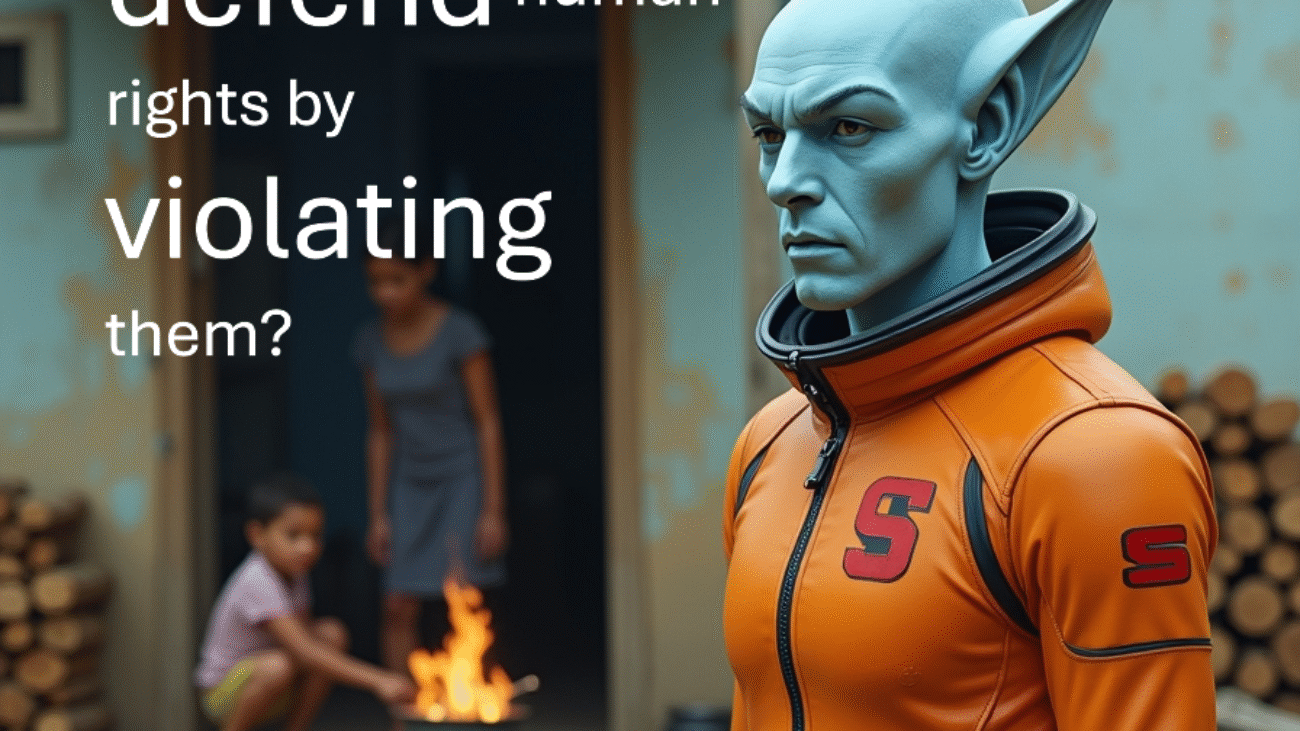
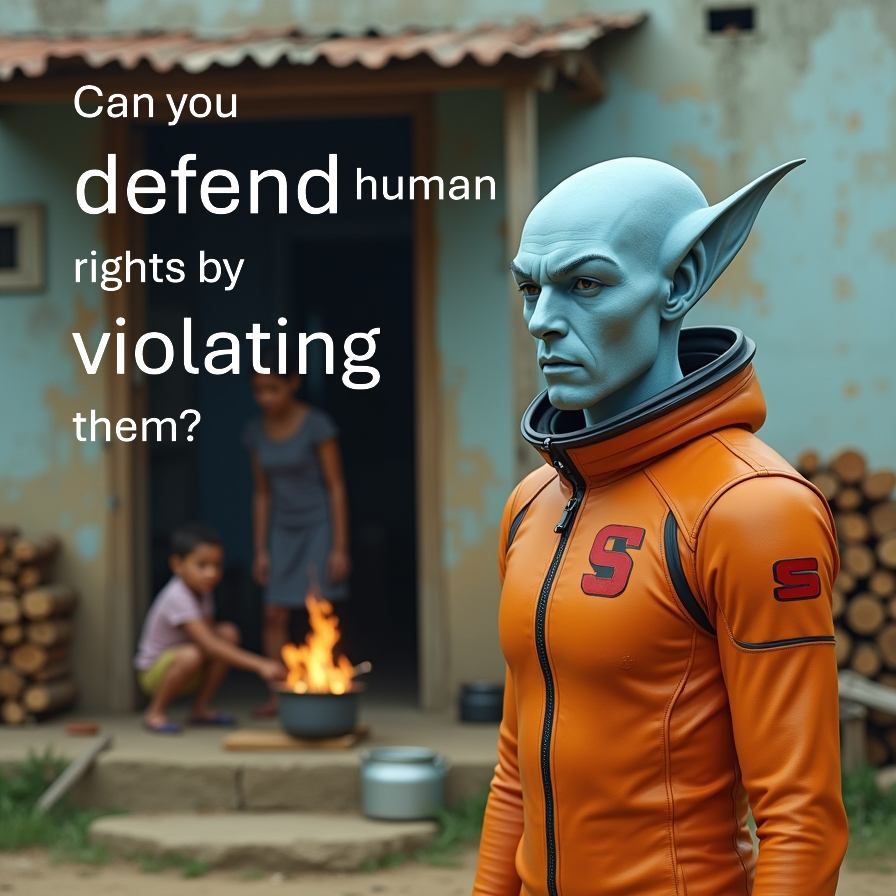
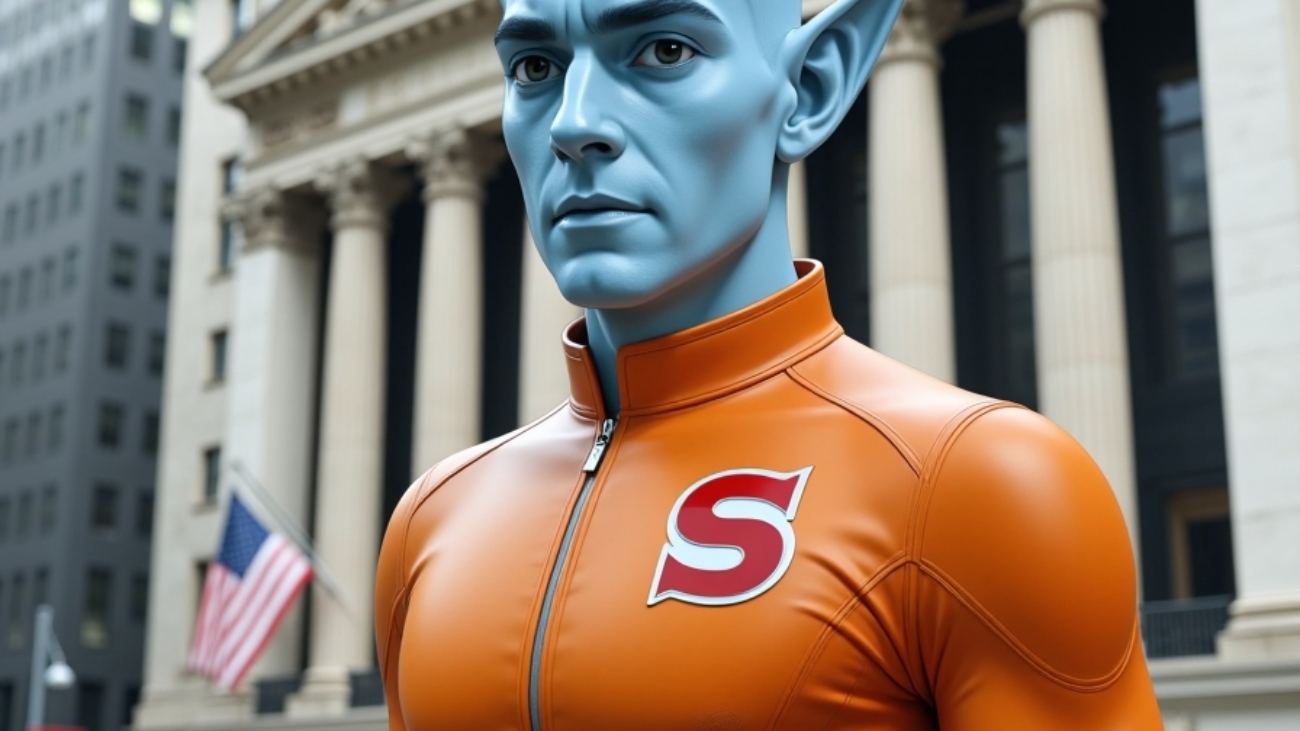
Shalzed and Simon at Mar-a-Lago

When the UN Charter Meets Black Ops

When the UN Charter Meets Black Ops

Shalzed Confronts Marco Rubio Over the Maduro Abduction

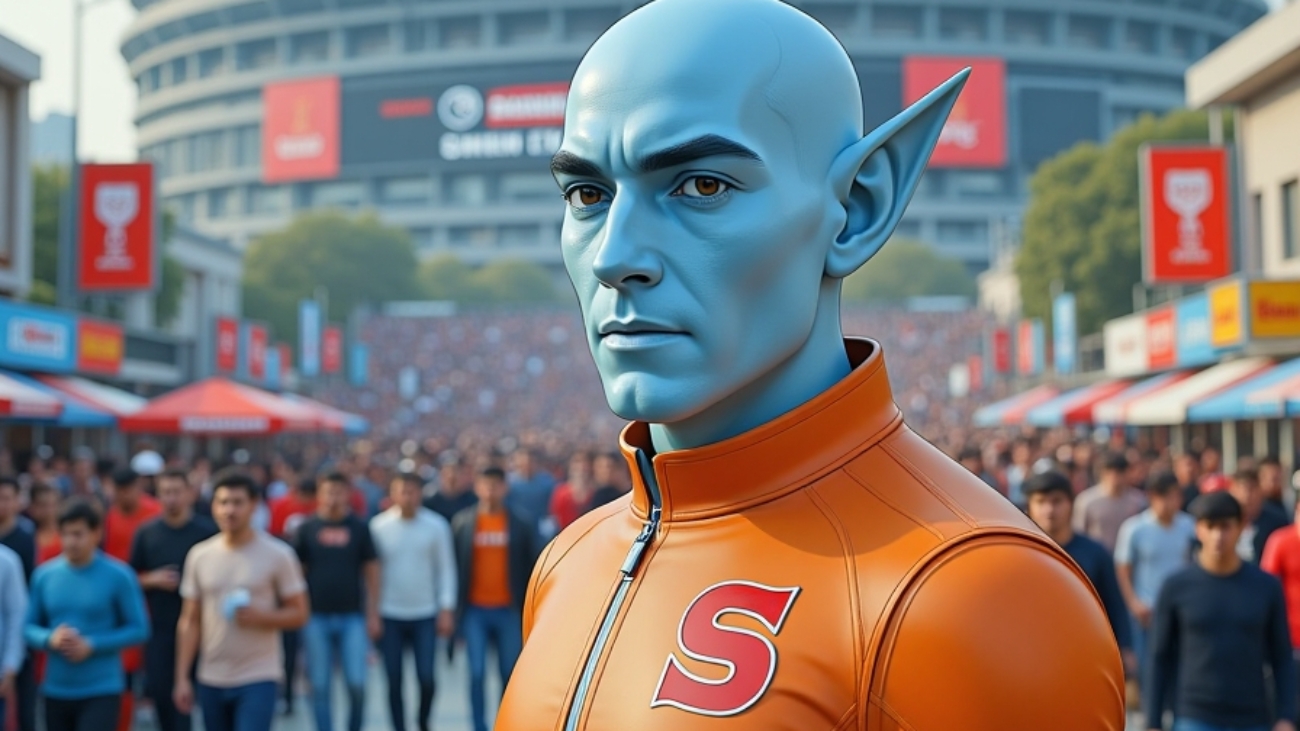
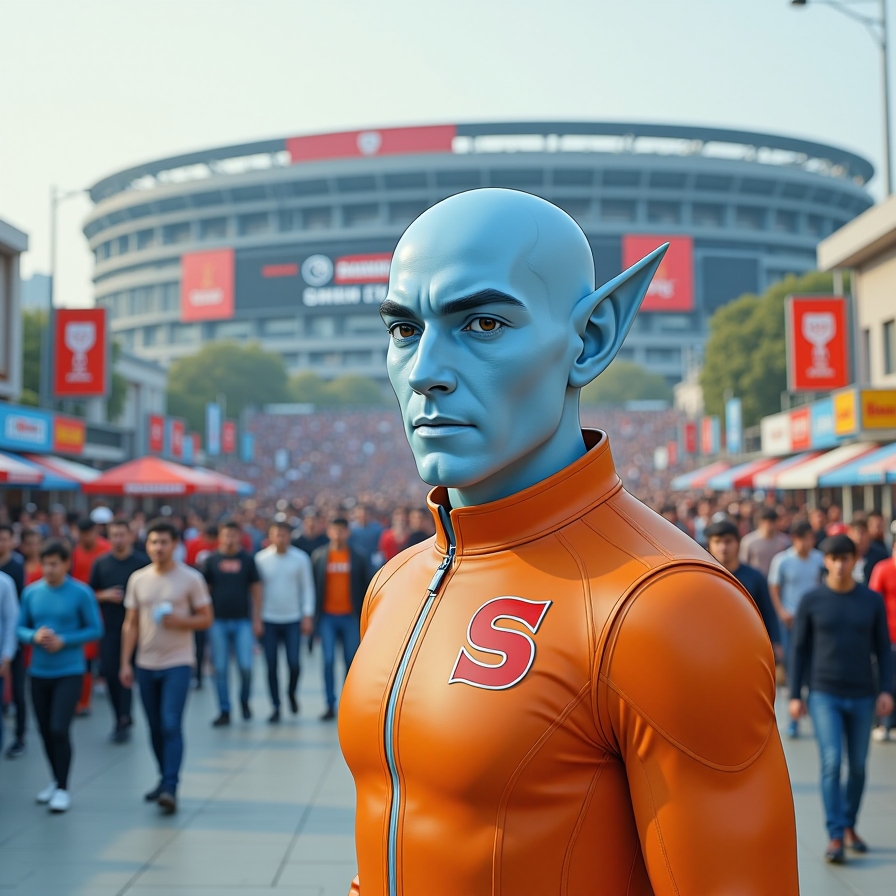
Shalzed and Simon waiting for Marco Rubio at Mar-a-Lago

International law says no. Reality is a maybe.
This week, Shalzed and Simon go to Mar-a-Lago to ask Marco Rubio what the rules mean when it comes to Venezuela.

When the UN Charter Meets Black Ops

I usually don’t watch the news, but I was surprised enough by the U.S. abduction of Nicolas Maduro to turn on the television while I made oatmeal and toast for my Sunday morning breakfast. Experts were speculating about what’s next for Venezuela. Then, just as Chuck Schumer was complaining that Trump failed to notify Congress, Shalzed called.

“How can one country send its army to capture the leader of another?” he asked. “Isn’t that against the most fundamental rules of international law?”

That’s pretty much what Schumer was now saying on TV. “The Democrats seem to agree with you,” I said as I turned the volume down.

“Democrats?” Shalzed asked. “But the prohibition on using force is in the charter of your United Nations. What does that have to do with Democrats or Republicans?”

Before I could say anything, I was in the black tunnel I had already grown accustomed to. This time, since by now I was no longer afraid or panicked, I tried to feel around to sense if there were walls or if I was traveling inside of some sort of vessel. I didn’t feel anything, and then a moment later I was outside Trump’s Mar-a-Lago country club in Palm Beach, Florida. Shalzed was next to me. We were standing on a wide sidewalk lined by neatly trimmed hedges with a vast, manicured lawn on either side. Through the palm trees, I could just make out the ocean.

“Mr. Secretary,” Shalzed exclaimed, starting up the path towards the main entrance. Marco Rubio was coming out. He looked tired. He had his suit jacket folded over his arm, with a red tie hanging out of his pants pocket.

“Who are you?” Rubio asked. He looked Shalzed over, then glanced at me as I came up behind.

“Wasn’t sending troops to abduct Maduro a flagrant violation of international law?” Shalzed asked.

Rubio shook his head. “Of course not. It was actually law enforcement. Maduro was indicted for trafficking cocaine, and now he’ll face trial in New York.”

“The U.S. can’t make arrests in other countries,” I said. I may not be a lawyer, but at least I know that much.

“And Maduro has immunity as a head of state,” Shalzed added.

Rubio scoffed. “Maduro was the head of a drug trafficking operation masquerading as a government,” he said. “He rigged the last election to stay in power, so he’s not a legitimate president at all.”

“So the United States gets to decide which governments are legitimate—and send in troops when needed?” Shalzed asked.

Rubio sighed. “It’s been a long night, gentlemen,” he said. “I don’t recall seeing either of you before in the ballroom, are you guests for just a few nights? Or are you here for a round of golf?” He raised his eyebrows. I read somewhere that joining Mar-a-Lago costs $1 million upfront, then $20,000 in dues annually. I was wearing jeans and an old Camp Ramah T-shirt, so I probably didn’t look like I belonged.

“He’s come from very far just to be here,” I said, gesturing to Shalzed. However he got us in, I hoped he would also get us out before we were picked up by the secret service.

“Do you really want to undo the principle that countries have to respect each other’s sovereignty?” Shalzed asked. “Isn’t that the key to peace, and fundamental to the UN Charter?”

Rubio shrugged. “The problem with sovereignty is that it usually winds up being used to protect tyrants and dictators.” He tossed his suit jacket over his shoulder and put his hands on his hips. “Do you realize that nearly 8 million Venezuelans have fled due to Maduro, and about 750,000 of them are in the United States. Biden gave most of them protected status because they face persecution back home. How can the U.S. be obligated to bear all these refugees, but not be allowed to do anything about what’s causing them to seek refuge in the first place?”

“But whatever is to be done has to be decided by the UN Security Council,” Shalzed said. “It can’t be left up to only one country.”

Rubio waved an arm. “That wouldn’t work. Russia and China would use their veto.”

“As if the United States doesn’t use its veto, too,” I added.

I felt a hand on my shoulder and turned to see a man in a dark suit with a listening device in his ear behind me. “Mr. Rubio is a busy man,” he said. “I think he needs to get going.”

“Enjoy the golf course, gentlemen,” Rubio said. “Assuming you’ve actually reserved a tee time.”

Rubio walked around us and headed towards the gate, where a black SUV was waiting.

“What are your names?” the man in the dark suit asked. He took a tablet computer from his jacket pocket and opened a page with a list of registered Mar-a-Lago guests. “And I may need to see some ID.”

“Listen,” I said, trying to think of something to say. I realized that I didn’t even have my wallet, my pockets were empty when Shalzed whisked me away. I turned to Shalzed, who was staring at Rubio as he left.

“Are the two of you not on the guest list?” the man asked, pretending to be surprised.

“Um,” I mumbled, touching Shalzed on the elbow. When he finally turned I gave him a pleading look.

I felt relieved to suddenly be back in the black tunnel. I wondered if Shalzed would still have been able to pull off his transportation trick if the guy had put us in handcuffs. Before I knew it I was in my apartment. I smelled something burning and look at the stove. The oatmeal had been on the fire the whole time. The water had all boiled off, and as I turned off the flame I wondered if the pot was ruined.

Shalzed was with me in the kitchen. “How long were we gone for?” I asked him, pointing to the burned oatmeal. I wondered if this could finally be a way to get some information on how his black tunnel worked.

But instead of answering, Shalzed stared at the television. This Week With George Stephanopoulos was still on, and the United Nations High Commissioner for Human Rights was explaining that even though Maduro had a longstanding, appalling record on human rights, that was no reason to justify U.S. intervention in Venezuela.

“But Maduro has been in power for over a decade,” Shalzed said. “And the Human Rights Council never did anything about it.”

“It does seem strange to see the High Commissioner for Human Rights arguing that Maduro should still be in power,” I added.

I wondered if Shalzed was hungry. “I’m going to make some more oatmeal,” I told him. “Would you like some?”

He looked at the burned pot. “Why?” he asked.

I smiled, thinking maybe this was my chance. “Because that pot was on the stove when you took us to Mar-a-Lago. Since we were there for only about seven or eight minutes, that must mean that we spent at least three or four minutes in transit each way, or the oatmeal wouldn’t be so burned. Right?” I asked.

“It looks delicious,” he said. He went to the pot and pulled out a few black, dried-out oats. He put them in his mouth and smiled. “It reminds me of the food we serve at festivals.”

“So you transported us from here to Florida in three or four minutes,” I repeated, hoping he would confirm or deny.

But instead, he turned back to the television. It was showing footage of Venezuelan exiles celebrating in Miami. One of them told a reporter that while he was fearful for his family back in Caracas, he was grateful to Trump and hoped this would finally be a chance for Venezuela to experience freedom.

“Is the High Commissioner for Human Rights going to tell them that they’ve got it all backwards?” I wondered out loud.

Shalzed shrugged. “Can I take that with me?” he asked.

“Sure,” I said, handing him the burned pot. I doubted I would be able to clean it anyway.

“Thanks,” he said. “I’m starting to wonder whether Earth’s international law and human rights work as well as I thought. But I’m glad that at least I discovered this delicious food called oatmeal.”

Subscribe to Receive Shalzed's adventures in your inbox

Questions:

  1. The prohibition on the use of force in international relations is a bedrock of peace and stability. However, human rights are also a key value, and oppressive regimes can use the prohibition on force as a shield to protect themselves from consequences. Which value is more important? How do we decide?
  2. Approximately 8 million Venezuelan citizens have fled their country, seeking refuge from Maduro’s regime. Many have settled in Central or South America, and about 750,000 are in the United States. Does bearing the cost of caring for refugees give states a special right to use force to change the conditions that caused their flight?
shalzed and simon at South African airport

Gaza Refugees on the Runway: Free Choice or Forced Out?

Gaza Refugees on the Runway: Free Choice or Forced Out?

Shalzed and Simon at the Johannesburg airport
shalzed and simon at South African airport

Why Did South Africa Hesitate?

Shalzed and Simon go to South Africa, where on Nov. 17th the government would not allow a plane filled with Gaza refugees to unload. South Africa says accepting refugees allows Israel to take over Palestinian lands. But don’t Gaza residents have the right to leave and attempt to rebuild their lives somewhere more secure? Shalzed investigates. For more background on Shalzed and Simon click here.

I was at home grading Mishnah tests when Shalzed contacted me. He said he saw on the news that a plane filled with Gaza refugees had landed in South Africa. Even though South Africa has been extremely critical of Israel and supportive of Palestine, its government wasn’t allowing them to enter. “What’s the problem?” he asked. “It says in your Universal Declaration of Human Rights that everyone can leave and return to their country whenever they wish.”

I decided to give a kid half credit for writing ‘The Torah’ as her answer to ‘What is the reason we fast on Yom Kippur?’ before replying. “It’s complicated,” I told Shalzed. “But I agree with you. South Africa should let them settle there if they want.”

“I need you to help me understand what’s happening,” he said. Then, before I could say anything else, there was light all around me and I felt like I was floating. Then I was standing next to Shalzed on an airport tarmac in Johannesburg, where an old yellow school bus was driving towards the stairs leading down from a plane.

“How did you. . .” I began.

Shalzed shook his head.

“But it’s not possible to get somewhere this quickly!”

He smiled like I was a little kid asking to be let in on some adult secret. “Eventually, humans will invent better means of transportation,” he said. Then he pointed at two people standing at the foot of the airplane stairs. “I recognize the man on the left- Ronald Lamola, South Africa’s foreign minister. Who’s the other one?” he asked.

Lamola was wearing a fancy suit and tie, while the guy next to him was dressed in jeans and a wrinkled shirt that looked like it had just been picked up from a second-hand store. “Not sure,” I said, still trying to think of a way to get Shalzed to tell me how he got us here.

The bus brakes squealed as it came to a stop, and the driver turned off the engine and opened the door. Lamola gestured up towards the aircraft, and a man in military uniform stepped aside from the exit. A man, holding the hands of two young children, started down the stairs. He looked relieved but also very tired.

“We wouldn’t need airplanes if you’d just tell us how you transport,” I said to Shalzed.

He ignored me and headed towards the stairs, so I followed. “Welcome,” the fellow in jeans said as the man got off the airplane. He was wearing a large ID saying he was with the charity ‘Gift of the Givers’. “The bus will take you to the place we’ve arranged for you to stay for the next week.”

The man from the airplane smiled. I had a feeling he didn’t speak much English. He went right to the bus.

“Why just a week?” Shalzed asked. “Aren’t they resettling?”

Both Lamola and the charity guy gave us funny looks, probably trying to figure out who we were. Lamola answered. “They should be returned to Gaza. South Africa will not help facilitate ethnic cleansing of Palestinian lands.”

The guy in jeans sighed. “He’s only letting them off the plane because Gift of the Givers agreed to take full responsibility for their care.”

“How can you say ethnic cleansing? These people are freely choosing to relocate. . .” Shalzed began.

The second man off the plane had just reached us. “I paid $2000 for this ticket,” he said with a thick Arabic accent. He raised his right hand and rubbed his fingers together, looking directly at Lamola. “Please, sir, please do not make me go back to Gaza. I have nothing left there, none of us do. Please, please let us stay.”

Lamola made a half-smile and nodded the way diplomats do when they want to appear to agree while remaining noncommittal. The man grabbed the hand of a boy who had come down the stairs behind him and went to the bus.

“After everything you know about living conditions in Gaza, how could you even consider not accepting them here?” the charity guy asked.

Lamola crossed his arms. “If countries agree to accept Gaza refugees, Israel will get away with stealing their land.”

“Did you forget already about Oct. 7th?” I chimed in. “The purpose of this war was for Israel to defend itself from Hamas, not to drive people away.”

A woman carrying an infant was next off the plane. The man from the charity welcomed her, but she rushed right past him, like she was afraid the bus might leave without her.

“They didn’t freely choose to leave,” Lamola said to Shalzed. “They are only coming because of Israel’s bombardment.”

“And Hamas oppresses them,” I added.

Shalzed wrinkled his forehead. “Sometimes humans are hard to comprehend,” he mumbled to me. Then he turned back to Lamola. “That is exactly what I just said. They have freely chosen to leave Gaza, because of the difficult conditions there caused by the war and perhaps to escape Hamas also.

“The problem is that while South Africa loves to issue statements supporting Palestine, it doesn’t want to have to pay to take in refugees,” the charity guy said.

“And why should South Africa foot the bill?” Lamola asked.

The guy from Gift of the Givers interrupted. “What does it matter who is at fault in a conflict thousands of miles away? These people are here now, and they are entitled to food, clothing, and shelter. That’s all that matters”

Next off the airplane were a man and a woman, with a little girl between them, her hand inside the back pocket of her father’s pants. The woman looked at all four of us. “Water?” She asked, also in a thick accent. She made a drinking gesture with her arm.

“There are water bottles on the bus,” the charity guy said, motioning her along. Then he turned to Shalzed and me. “They were stuck on the plane for ten hours while the government decided whether or not to let them off. I’m sure they need water and food.”

“We gave them some supplies to have on the airplane,” Lamola interjected. Then he put his hands on his hips. “And who are you two?”

Shalzed smiled. “I’m just trying to understand more about human rights,” he said.

“Well how did you get in here?” Lamola asked. “And I think maybe you’d better get going.” He glanced towards a police car waiting off to the side.

I started to worry. Could we be arrested? But just then I saw the same lights that were by now becoming familiar. I felt for a moment like I was in some sort of tunnel, or on a path, and then I was standing next to Shalzed right in front of my apartment building.

“But. . .” I began.

“Just tell me one thing,” Shalzed said, ignoring me. He scratched his chin, like he was thinking. “It seems like Palestinians as a people have the right to remain in Gaza, but any given Gaza resident should be able to leave if they so choose.”

“Right,” I said, wondering whether we had traveled in some kind of machine, or maybe he had a way of beaming, like in Star Trek?

“So what if most or all Gaza residents want to leave? Should they be able to do that, because seeking refuge elsewhere is their right? Or if everyone wants to leave, even if it’s voluntary, does that become some form of ethnic cleansing?”

I chuckled. “I don’t think anyone has to worry. Look how hard it was to get South Africa to accept even one airplane,” I told him. I checked the time. However we got to South Africa, it must have taken a while because it was already after midnight. “I have grading to finish for tomorrow,” I said.

Shalzed put his hands on his hips, and I sensed he was reluctant to let me go. “But this doesn’t make sense,” he said.

“The opposite of a correct statement is a false one. But the opposite of truth is usually just another truth,” I said. “It’s a quote from a physicist named Niels Bohr. It’s one of the only sayings I use at school that’s not from the Talmud.”

“I need you to help me understand,” Shalzed said.

I started up the stairs to my building. “Sure,” I told him. “And I wish you would help me understand how you transport us from one end of the world to the other, too.”


Sources:

AP coverage of the plane of Gazans landing in South Africa

Reuters coverage

BBC coverage


Questions:

  1. According to human rights law, Palestinians should have the right to leave Gaza if they freely choose and can find another country to accept them. They also have the right to remain in Gaza if they wish, and they cannot be forced to leave their land or homes. But how can we determine whether a decision to leave is free of compulsion in a situation with so much economic and military hardship, and also so politically charged?
  2. Is it inconsistent to condemn U.S. deportations—arguing that people shouldn’t be sent back to dangerous places—while also opposing efforts to let Gazans leave and rebuild their lives elsewhere?
shalzed watches drug boat two

War on Crime: Just Murder or Justice?

War on Crime: Just Murder or Justice?

Was Trump’s decision to declare war on cartels a resourceful tactic or a frightening switch?

shalzed watches drug boat two

War is a temporary legal situation in which the prohibitions of murder and destruction are lifted. Ordinarily it is against the law to kill people- but should war be declared, for the duration of the conflict soldiers may kill one another. As long as they do so in accordance with the laws of armed combat they’ll face no legal repercussions at all.

Declaring war is therefore an extraordinary power, so much so one might wonder how on Earth anyone can possibly be able to do it (on my planet such a thing can’t be done!). But simply as a matter of custom, we accept it as given that governments can in fact declare war and thereby permit murder, arson, and so forth for limited periods of time.

Bringing drugs to the U.S. for sale is a crime. According to Article 11 of the Universal Declaration of Human Rights, anyone suspected of a crime has the right to a presumption of innocence and a fair trial.  Therefore, common practice has always been that should a boat be suspected of smuggling drugs to the U.S., the Coast Guard intercepts it to search for evidence. If evidence is found, those on board are arrested and put on trial. The Coast Guard may only use force in self-defense or if the boat attempts to flee.

However, the U.S. military has recently begun bombing such boats with no warning and killing everyone on board. While this would at first appear to be a gross violation of human rights, President Trump justified this by determining that the U.S. is now at war. Therefore, with regard to these boats murder and destruction are allowed. He has not made clear exactly what gangs or cartels the U.S. is at war with, or how the U.S. military decides if a given boat is connected to those entities.

As a mater of domestic law, it is questionable whether the president can do this without the approval of Congress. But be that as it may, is this a proper use of war?

Trump may argue that drug smugglers abuse their rights in order to enable themselves to commit their crimes. They find ways to destroy contraband before being caught and know how hard it is to construct a legal case against them. And they exploit the vastness of the ocean and the limits on the Coast Guard’s use of force to evade detection, and should they be detected to escape. Illegal drugs cause countless harms, including numerous overdose deaths, and the government has to find a way to stop these drugs from entering the country. Declaring war to enable bombing the boats may be the only way.

But there are many reasons to worry. If the government can declare war other than when it is confronted with an organized enemy carrying out armed attacks, where will it end? Could this war be extended from drug smugglers on the high seas to drug dealers on U.S. soil? Could war be declared against other types of criminals as well? What about migrants illegally crossing the border? Could war on political opponents be next?

Is expanding the definition of war a good way to address problems that have no other, easier solution? Or do we need to constrain the right to declare war as much as possible, due to the immense harm, including harm to innocent people, a declaration of war may lead to? I’m curious to hear your thoughts.

shalzed small coin

Is a Nickel All The World Can Spare?

Is a Nickel All The World Can Spare?

Is $100,000 for Haiti fair or an insult?

shalzed small coin

Let’s say someone has no money for food, clothing, or shelter, and so for lack of other options is forced to turn to friends and family for support. And a cousin living close by, by no means rich but also definitely not poor, decides to help out by giving only one nickel. Should the recipient say thank you, because even though a nickel is hardly anything, the cousin was under no obligation to give at all? Or does the recipient have a right to be angry and indignant that their relative didn’t assist in a more substantial way?

Haiti is one of the gravest, ongoing human rights disasters currently taking place. It is plagued by gang violence and a lack of law and order. According to a UN report released last April, more than 1 million people have been displaced from their homes, often multiple times. Half of the population, approximately 5.5 million people, face acute food insecurity and two million are suffering emergency levels of hunger.

For the last year or so, a multinational security support team, led by Kenya, has deployed to help Haiti’s police. It faces many challenges, high among them a lack of funding. In general, both the United Nations and NGO’s have struggled to raise sufficient funds for both humanitarian and security assistance for Haiti, and there have been numerous pleas for more aid.

This week Mexico announced a donation to help fund the multinational security mission to Haiti. Mexico declined to state the sum, but news reports based on documents available from the United Nations placed the amount at $100,000 U.S. dollars.

It’s of course unfair to single out Mexico, as many other countries have either refused to contribute at all or made very limited contributions. But to put this sum into perspective, note that in 2024 Mexico’s defense spending was $16.7 billion U.S. dollars. The total expenditures of Mexico’s government were just over $200 billion U.S. dollars. This means the Haiti contribution was 0.0006% of Mexico’s defense spending, and 0.00005% of spending overall. In other words, a proverbial nickel. It’s fair to assume that if Mexico had been inclined to do so, it could have come up with a little more.

Of course, Mexico can say that it has its own problems, including the fact that in spite of recent reforms one third of its citizens still live in poverty. Why should any country devote its limited resources to helping solve problems abroad, while it has its own population to care for?

But there are valid reasons why countries should assist. Humanitarian catastrophes have a way of spreading, as desperate citizens attempt to escape and become refugees elsewhere. It may be cheaper, more politically palatable, and also achieve better outcomes for the affected population to invest in resolving a humanitarian crisis abroad rather than having to absorb a tidal wave of refugees later.

Second, there may be a straightforward human rights imperative. When millions of people are hungry and displaced from their homes, with no government to provide them security or any assistance at all, the whole world may be called upon to act. If governments do this, it necessarily means sacrificing spending on some domestic priorities. But is that what a commitment to universal human rights demands?

What do you think? Are countries obligated to help generously when foreign populations suffer a humanitarian crisis? Was Mexico’s small donation insufficient? Or are countries entitled, or perhaps even required, to prioritize their own needs first, and Haiti should consider itself lucky to get any foreign aid at all? I’m curious to hear your thoughts.

shalzed watches plane take off

Our Hands are Tied: When Countries Outsource Human Rights Violations To One Another

Our Hands Are Tied:

What Can We Do When Countries Outsource Human Rights Violations to One Another?

shalzed watches plane take off

Last week the United States government deported five citizens of Nigeria and the Gambia to Ghana. While at first glance this might not seem remarkable, it endangered their lives while at the same time triggering a frustrating court case that highlights the limits of both domestic and international law. (Here are links to news coverage from Politico, and the actual decision.)

Unlike other illegal immigrants, the U.S. could not legally deport the five men at the center of this case to their home countries. This is because they had won in U.S. courts what is called ‘fear-based relief.’ This means that a judge decided that ‘more likely than not’ they will face persecution, torture, or death should they be sent back home.

This does not grant them the right to stay in the U.S. indefinitely or mean that the U.S. cannot remove them, only that if the U.S. wants to remove them it has to be to a third country where they don’t face these fears. And usually that is very difficult to arrange, since countries are not keen to accept deportees who are not citizens.

But the Trump administration got Ghana to take them, and the U.S. also got Ghana to write what’s called a ‘diplomatic note’ stating that Ghana would not torture these individuals or send them to a place where they would be tortured. This made removal of these five men to Ghana, even though they have no connection to Ghana whatsoever, no friends or family there, and no access there to help, legally okay.

Then it turns out the conditions of this diplomatic note were not followed, or perhaps that Ghana’s supposed commitment not to send these people to a place they face torture was even a sham from the start. The five individuals allege that already while they were on the plane to Ghana, ICE officers told them they were going to be taken from there to their home countries. One of the five was in fact returned to his home country the day after his arrival in Ghana, and Ghana authorities have stated that the same will shortly be done to the remaining four as well.

These five men sued for relief in a U.S. District Court, claiming the U.S. government was violating the protection they had been granted by U.S. courts against being returned to their home country. The judge wrote she was ‘alarmed and dismayed’ by the government’s actions, but reluctantly denied their request. She said the reason is that judges cannot evaluate or second guess diplomatic agreements such as the one between the U.S. and Ghana, as that would be an intrusion into foreign policy. And now that the men are in Ghana, she has no jurisdiction to tell the government of Ghana what to do. In other words, she wrote in conclusion, her hands are tied.

The question therefore becomes, what is the solution? In a world divided into nearly 200 independent, sovereign countries, what can stop a government from using another country to easily get around whatever domestic legal restrictions it wants to evade? Since every country’s judicial system only has jurisdiction over its own territory, it seems quite simple for governments to get around their judiciaries by outsourcing whatever dirty deeds they want to commit to each other. This is particularly true for powerful countries such as the United States, which can offer money or other incentives for smaller countries to do its bidding.

The obvious answer would be to dream of some world body in charge of enforcing the law, but there does not seem to be any scenario by which that could be created. There is also plenty of reason to worry that some powerful new organization with jurisdiction over the whole world would end up being biased and corrupt, no matter how good the intentions behind it.

So is the only answer to hope that citizens don’t like their government circumventing the courts to violate human rights and vote out governments that do this? It may turn out that these sorts of things are a low priority for voters, and even at best that’s a long term process which offers no help to the five people whose rights are being violated now. Is there any other answer? I’m anxious to hear your thoughts.

shalzed watching ship fire gun

Low Standards on the High Seas

Low Standards on the High Seas

Was blowing up a boat of drug smugglers alright?

shalzed watching ship fire gun

Wednesday, Sept. 2nd, the U.S. military attacked a boat in international waters in the Caribbean. The U.S. claims the boat was smuggling drugs into the country, and as a result of the attack all eleven people on board were killed.

How does this U.S. attack fits into human rights and humanitarian law. Was this legal on the part of the U.S.? Was it wrong for the U.S. to do? Or does it show flaws in the international legal system? Explore below.

Image of the boat moments before the attack released by Donald Trump on Truth Social. Trump claims 'bags of drugs were all over the boat' but that does not seem to be clear from any of the photos.

Image of the boat moments before the attack released by Donald Trump on Truth Social. Trump claims ‘bags of drugs were all over the boat’ but that does not seem to be clear from any of the photos.

Criminal Law

The U.S. government certainly can make it a crime to import drugs and to punish anyone who tries to do so. However, Article 11 of the Universal Declaration of Human Rights begins:

Everyone charged with a penal offence has the right to be presumed innocent until proved guilty according to law in a public trial at which he has had all the guarantees necessary for his defence.


In other words, if this was a boatload of criminals they would have to be arrested and put on trial. A trial is particularly important because the government has not offered any evidence that these were drug smugglers, and the fact that 11 people were on a boat that could easily be crewed by just 2 or 3 points to this being some sort of human trafficking ring and not drug smugglers at all. So before punishing the people on the boat, a judge or jury would have to be convinced that they really were smuggling drugs.

If U.S. authorities had attempted to stop the boat and it had responded by trying to flee, or by firing on the U.S. ships, that would have been a legal rationale for use of force. But in this case it does not seem the U.S. even made an attempt to apprehend the boat. Instead, U.S. forces just destroyed it with no warning.

Any scenario in which a U.S. President unilaterally declares a group of people to be drug smugglers and orders them killed with no judicial oversight is a violation of human rights. The good news is that at least as of now I don’t believe that even the Trump administration is claiming the right to do this.

Self-Defense

The U.S. claims the boat did not contain just random individuals smuggling drugs for their own personal financial gain, who would have to be treated as criminals, but rather it was operated by the Tren de Agua gang. The administration has labelled Tren de Agua ‘narcoterrorists’ and claim the gang is a threat to the United States.

This leads a claim of self-defense. For example, U.S. Secretary of State Marco Rubio was quoted as saying, “These are organized, corporate, structured organizations who specialize in the trafficking of deadly drugs into the United States of America. They pose an immediate threat to the United States. Period.”

However, this assertion may not survive legal scrutiny. The internationally recognized right to self defense is codified in Article 51 of the UN Charter, which reads:

Nothing in the present Charter shall impair the inherent right of individual or collective self-defence if an armed attack occurs against a Member of the United Nations. . .

Is drug smuggling an armed attack? It’s hard to see how. In fact, it would seem like the phrase ‘armed attack’ was carefully selected to exclude criminal activity and make clear that states can invoke a right of self-defense only against military attacks, not criminals.

Of course illegal drug use causes tremendous suffering, economic loss, and deaths. But so do many other societal ills. The fact that something is harmful (or even criminal) doesn’t mean the government has a right to resort to extrajudicial killing to defend us from it.

Armed Conflict

The U.S. government, with its rhetoric about the ‘war on drugs’ and labelling Tren de Agua as terrorists, makes it seem as though it is engaged in what would be called a ‘non-international armed conflict’ with the gang. In armed conflict it is permitted to attack enemy combatants without warning and without judicial process, as happened here.

However, there are some major issues. First, it’s not clear that Tren de Agua is really a ‘non-state armed group’, or even if it is that the U.S. is currently at war with it. That would hinge on a lot of factual questions about Tren de Agua’s size, level of organization, armaments, and activities which are hard to answer.

But even so, it’s not clear that even in the context of an armed conflict it would be legal to blow up the boat. In armed conflict it is only permitted to target enemy combatants. Even if the boat was smuggling drugs, and the drug money was used to fund the war, drug smugglers would likely still be viewed as civilians. They would seem to be just like enemy citizens who even though they may play a role in enabling the military effort are still not part of the military themselves. The U.S. might allege that in this war, drugs are a weapon, but that’s very hard to justify. By similar logic countries could say that information is a weapon so journalists or bloggers are targets, or the like.

Questions

So I end with two questions. First, was the sinking of this ship somehow justified under international law, or was it an illegal act of violence?

Second, how important is it that military actions such as this comply with international law? Even if this sinking was illegal, there wouldn’t seem to be any consequences, and for many years the U.S. has struggled mightily to stop the flow of drugs. If sinking a few boats will help keep large quantities of deadly drugs off U.S. streets, is it worth it? If international law doesn’t provide an affective path to stop drug smugglers is the U.S. entitled to just do what it seems necessary? While perhaps in we all benefit from living in a world based on law and rules, since these international laws are seldom followed, never enforced, and exploited by criminals is it okay for countries to sometimes just not follow them?

Notes

  1. For more discussion of these issues in the media, see this analysis on ABC News and this article on the BBC. For a more scholarly treatment, see this piece on Just Security.
  2. A separate legal question was whether Trump was within his authority to carry out this attack without authorization from Congress. Since that is solely a U.S. domestic matter it is not addressed here.
shalzed watching ambulance

Would Restricting a Right Save a Life?

Would Restricting a Right Save a Life?

Rethinking freedom of information in an era of copycat shootings

The public naturally wants to know more about the shooter who killed 2 and wounded 17 others Aug. 27th at a Minneapolis Church. And according to the Universal Declaration of Human Rights, the freedom to seek and receive that information is their right. However, media coverage of the shooter’s life, beliefs, manifesto, and guns may have the perverse effect of encouraging copycat shooters. This week Shalzed asks, as mass shootings continue does Earth need to restrict freedom of expression some more?

shalzed watching ambulance

On Wednesday, Aug. 27th a gunman killed 2 and wounded 17 others at a school church in Minneapolis. As with previous mass shootings, an outraged public immediately wanted to know who would do something like that and how someone with a mind to commit such a crime had access to the necessary guns.

The shooter was quickly identified as Robin Westman, a former student at the school. It turns out Westman had left behind what the media quickly labelled a manifesto. It contained numerous grievances and racist slogans (a video is here, a written description here .) The manifesto also revealed a dark obsession with previous school shooters, in particular Adam Lanza, the perpetrator of the Sandy Hook Massacre.

This raises a chilling reality: The widespread publicity surrounding a school shooter may help encourage the next one. When an individual such as Westman or Lanza, who was otherwise unknown, is instantly transformed into a focus of public attention, such that their motivations and personal struggles are broadcast to the world, along with the methods they use to carry out their crime, it creates a perverse incentive for other similarly positioned individuals to do the same.

For many years there has in fact already been a movement asking the media to voluntarily refrain from giving undue attention to shooters and to focus on their victims instead (see here and here for coverage.) But based on a simple Google search yesterday for ‘Robin Westman’, it seems this has not achieved much success. Also, the rise of blogs and online news sites means that setting consistent media standards is becoming impossible. Some government imposed censorship would seem to be the only way to bring this about.

However, any legal attempt to limit information about the shooter runs into an immediate problem. Article 19 of the International Covenant on Civil and Political Rights states:

Everyone shall have the right to freedom of expression; this right shall include freedom to seek, receive and impart information and ideas of all kinds, regardless of frontiers, either orally, in writing or in print, in the form of art, or through any other media of his choice.

This means that if the public wants to know the name, appearance, mindset, upbringing, political, and racial views of the shooter, access to this information is their right. In the U.S., this is protected as a constitutional right as well.

And of course there are valid reasons why the public might want this. To evaluate police performance, push for changes to legislation, or to be better on guard in the future all come to mind.

But shouldn’t there at least be a discussion about whether the danger of encouraging copycat shooters outweighs the benefits of making details about the shooter public? Would a restriction on publishing flattering, happy, or childhood photos of the shooter really be too much of a violation of the public’s right to information if it could help stop mass shootings? Would a ban on long profiles of a shooter’s mental health struggles and political grievances be too much to ask, if this can help increase safety for the future?

It should be noted that while there are already several exceptions to the right of freedom of information, none of them seem to be at all relevant here. But is that a mistake? Do further limits on the right to freedom of information need to be considered? I’m anxious to hear your thoughts.

shalzed reading human rights report

Who Should Keep the World’s Human Rights Scorecard?

Who Should Keep the World’s Human Rights Scorecard?

Trump Stops the U.S. from Doing It- But Now Who Will?

shalzed reading human rights report

U.S. Human Rights Reports

Every year since 1977, the U.S. State department has compiled an enormous report tracking the human rights record of nearly every country in the world. These human rights reports have traditionally covered the entire gamut of internationally recognized human rights, along with workers’ rights such as collective bargaining, the prohibition of forced and child labor, and much more.

These reports are a massive undertaking, compiling information from governments, victims of alleged human rights abuses, media reports, academic studies, and non-governmental organizations. While their official purpose is to help Congress make decisions about foreign aid and security assistance, they are also relied upon for many other things. For example, information in the reports helps determine whether illegal immigrants face a credible fear of persecution if returned to their home country, and international advocacy organizations and human rights lawyers use the reports for their work as well.

Trump Scales Down

Now the Trump administration has decided to vastly scale this down. Last week the State Department released the reports for 2024, and entire sections were removed. The parts about LGBTQ rights, indigenous rights, and government corruption were eliminated. It no longer condemns governments for retaining political prisoners without due process or restrictions on free and fair elections. It also no longer highlights forcibly returning a refugee to a place where they may face torture or persecution, or governments denying freedom of movement or peaceful assembly. Even more important, the 2024 reports are much slimmer. They speak only in broad generalities, mostly giving just basic information that is already widely known.

Many human rights groups are up in arms about the change. They say it means the United States is abandoning its traditional role as human rights defender and advocate. They also fear that not only has much of the content they’re used to from the old reports been lost, but also what remains is now politicized and unreliable.

Two Reasons

While the administration has not provided a formal justification for the changes, two simple and straightforward ones come to mind. First, the U.S. government itself routinely violates many of the rights in the reports. It seems especially hypocritical, for example, for the U.S. government to criticize other countries for inhumane prison conditions while it is building ‘Allegator Alcatraz’ in Florida and subcontracting with El Salvador to house prisoners in its notorious 40,000 mega prison which has been widely accused of violating prisoners’ rights. So what entitles the U.S. to judge the rest of the world?

Second, the reports require immense time and resources to compile. Why should the United States be expected to investigate human rights abuses in all corners of the world at its own taxpayers’ expense? This slimming down is a version of Trump putting America first and letting foreigners deal with their own problems by themselves.

Who Can Take the U.S. Place?

But these reports are vital for human rights advocacy, and if the U.S. doesn’t compile them, who will? Non-governmental organizations such as Amnesty International, Freedom House, and Human Rights Watch play a role. But they lack the resources to do as thorough and comprehensive a job as the State Department, particularly in less prominent places and regarding issues that are less in the news. Also, these groups are funded via private donations and so are not accountable to the public. Their priorities and methodology may be skewed or unknown.

Intergovernmental organizations such as the United Nations might seem right for this role. The United Nations, and particularly its Human Rights Council, ought to have the resources to objectively examine human rights around the globe. But sadly, we see how biased and prone to political manipulation the U.N. can be. Do we really want a body with many countries that are among the worst human rights offenders as members to do this investigating? With the UN Human Rights Council in charge, the reports would certainly be subject to extreme political meddling and bias.

So if NGO’s don’t have the transparency or resources, the U.N. is too politicized, and it’s both hypocritical and too much of a burden to ask of the United States, where should authoritative, comprehensive human rights reporting come from? Or is the incomplete patchwork of reports non-governmental organizations decide to compile the best we can do? I’m curious to hear your thoughts.

shalzed rights of the elderly

Rights of the Elderly: Shalzed Speaks to UN Expert About Proposed New Treaty

Rights of the Elderly: Shalzed Speaks to UN Expert About Proposed New Treaty

On April 3rd the UN Human Rights Council voted to begin drafting a treaty on the rights of older people. The United Nations’ Independent Expert on the enjoyment of all human rights by older persons, Claudia Mahler, was instrumental in bringing this about. Shalzed catches up with her in this edition.

Click here for Shalzed’s bio.

It was my first time at the ‘Palais de Nations’ in Geneva- after I used the East River to flood UN headquarters in New York I figured I’d be persona non grata at their headquarters in Europe so there was no use paying a visit. But as you know it’s a different me now, and with the help of a new suit I purchased from Aelia Duty Free, security let me in without trouble.

I spotted Claudia Mahler chatting with two men who had Japanese flag pins on the lapels of their jackets. Japan was one of the countries most opposed to beginning to draft her new treaty, so their delegates probably wanted to have a word.

“What a big smile,” I said to Claudia, stopping a few feet away. She turned, probably assuming I was a more friendly Human Rights Council delegate, looking pleased by the opportunity to get away from the Japanese.

“It’s been over a decade in the works,” she replied. She turned back to the Japanese men and bowed slightly, clasping her hands together in front of her chest. They did the same, and then headed away.

“Yup, just what we need, to spend the next few decades carefully drafting a new treaty for us all to ignore,” I told her.

She wrinkled her forehead, like she was trying to size up who I was. Probably because no UN delegate would ever be blunt like that. Even the Americans, who oppose nearly everything having to do with human rights, just say this new treaty may represent an inappropriate allocation of resources. “Have I met you before?” she asked.

I shrugged. “Not in person. But both of our reputations precede us.”

“Shalzed?” she exclaimed, taking a step back.

“Did you think I never wear a suit?” I unbuttoned my jacket so she could see the superhero ‘S’ underneath.

“What do you want? Are you going to trap me in a web or something?”

I laughed. Did she think I used to be Spiderman? “Don’t you know I don’t do stuff like that anymore? I just want to know where this all ends. I mean, how about people suffering midlife crisis? Does every age group need its own treaty?”

She sighed. “Older adults face unique human rights challenges. For example, age discrimination in the workplace. Mandatory retirement ages are a clear violation of human rights. This all needs to be codified as just as illegal as discrimination based on religion, gender, or anything else.”

“I’m sure you’d have no problem travelling in an airplane with a 95 year old pilot,” I said.

“The point is that it’s a human rights violation to set a mandatory retirement age for everyone. Each person’s fitness needs to be individually evaluated.”

“Can’t age discrimination just be included in existing laws?” I asked.

“Older people frequently have trouble accessing health care, and someone needs to define what their rights are,” she continued, picking up steam.

“Fine, but anyone can need health care. Questions about access, coverage of expensive procedures, or experimental drugs can come up at any age.”

“And abuse,” Claudia continued, ignoring me. “Abuse of the elderly may look quite different than abuse of younger people. Not letting older people make their own decisions about living arrangements or healthcare. Financial abuse as family members take away control of bank accounts. Caretakers forcing them to take sedatives so they are easier to look after . . .”

“Okay,” I interrupted. “But do you really think a new international treaty is going to help?”

“Obviously a treaty isn’t going to change things overnight. But governments need clear guidance on what they are required to do.”

I noticed Francisca Albanese, the Special Rapporteur on the Rights of Palestinians, walking by. When she saw Claudia she came right up to her without even noticing me. “Would you like me to draft a press release condemning Israel because there is no way the elderly in Gaza can possibly evacuate the way Israel is expecting them to?” She asked. “I’m trying to arrange for every UN Special Rapporteur to condemn Israel at least once a month.”

“How about when Hamas, Hezbollah, or the Houtis fire rockets indiscriminately at Israeli cities?” I asked her. “People often have less than a minute to reach shelters, and the elderly or those with disabilities can’t possibly do that.”

She glared at me. “Are you Shalzed?” she asked.

“That’s right,” I told her. “Unlike you, sticking up for the rights of both Israelis and Palestinians.”

“I don’t know why you even bother speaking to him,” she told Claudia, pointing a finger at me. She stormed off down the hall, calling over her shoulder that she’s send Claudia an email.

“You have so many friends,” Claudia said to me.

Well, human rights is a lonely business. “Here’s another question,” I told her. “Isn’t a lot of this cultural? Like in some countries older people are more likely to be cared for in the home by their children, whereas other countries are more likely to use senior centers. And how people are cared for is unique to every situation and family. So why are you trying to make a universal treaty?”

Claudia sighed. “The Japanese delegate was just telling me that. A treaty doesn’t commit anyone to anything specific, it will just help clarify what the elderly’s rights are.”

You’ve got to love twenty years negotiating a treaty that doesn’t commit anyone to anything specific. That’s the way the United Nations keeps earning its well deserved reputation for getting things done. “Remind me, how many core human rights treaties do we have already?”

Nine,” she said.

“Right. We already have treaties to end discrimination against women, against people with disabilities, racial discrimination, and more. How’s that going? And you really think making it ten is going to help?”

“I thought you promote human rights,” Claudia said.

“Of course I do,” I told her. And I’d have added that I think I accomplish more than most UN bodies or Special Rapporteurs if I wasn’t to humble to boast.

“Then why are you cynical? No one treaty can change the world, but the more we focus on fleshing out what human rights mean in different situations and to different groups of people the farther we’ve come. A new treaty will give activists a platform to campaign from.”

A woman wearing a press credential around her neck walked up to Claudia. “I’d love to interview you about the new treaty if you have a moment,” she said.

Claudia smiled. “It would be my pleasure,” she said. Then she turned to me. “Rights of the elderly doesn’t get as much coverage as what most of the other rapporteurs work on,” she said. “I take whatever press exposure I can get.”

“Is this your husband?” the reporter asked, gesturing to me. A look of horror came across Claudia’s face. “Sorry, I didn’t mean to assume,” the woman said.

“He’s just someone who shouldn’t even have been allowed in this building,” Claudia said.

“I’m leaving now,” I told her

The reporter gave me a funny look, probably trying to decide if I was some sort of stalker. “It’s been nice to meet you,” she said. Then she turned her back to me as she pulled a voice recorder from her purse to use for her interview.

As I turned to go the reporter asked Claudia whether she thought it was fair to call the recent decision to begin work on the treaty momentous, and Claudia said absolutely. Then I passed by the security guards at the building’s grand entrance and headed out into Geneva’s chilly April air. I saw a man taking a selfie with his two little kids, both looking around middle school age, the sign for the UN Human Rights Council headquarters in the background.

“This is the building where they make sure the world is fair for everybody,” the man was telling his children “Here they do the most important work of all.”

I kept my mouth shut as I passed by. No sense telling the kids that even though what their dad said sounds great, it just ain’t so.

Subscribe to Receive Shalzed's adventures in your inbox

Questions:

1. Is it worthwhile to develop more international human rights treaties, while we see that the ones we already have are often ineffective?

2. Do mandatory retirement ages for professionals such as pilots violate human rights, since some people who are still physically able to do the job will be unjustly prevented from doing so? Or are mandatory retirement ages necessary to insure safety, and there is no practical way to determine each person’s exact level of fitness?

3. Is how an elderly person is treated something that should be decided on an international level, or are there such wide variations in cultural practice and family preference that global standards cannot be universally appropriate?