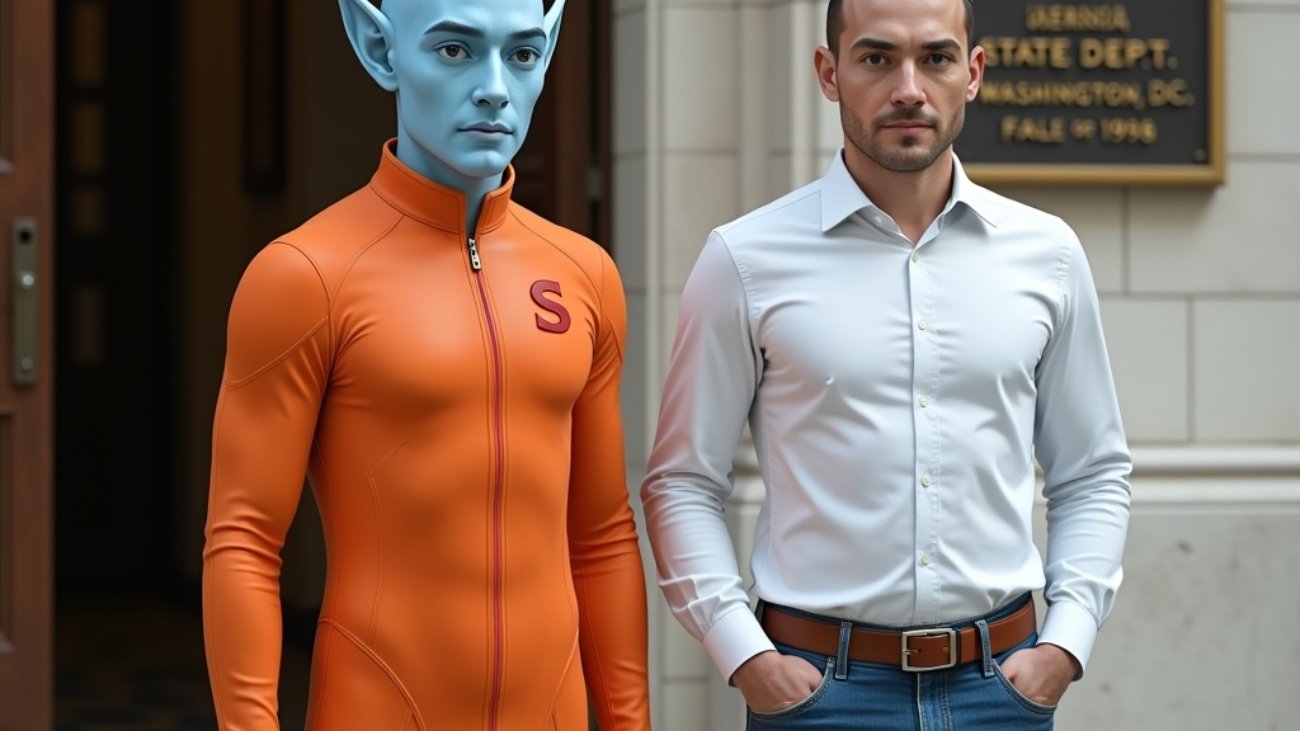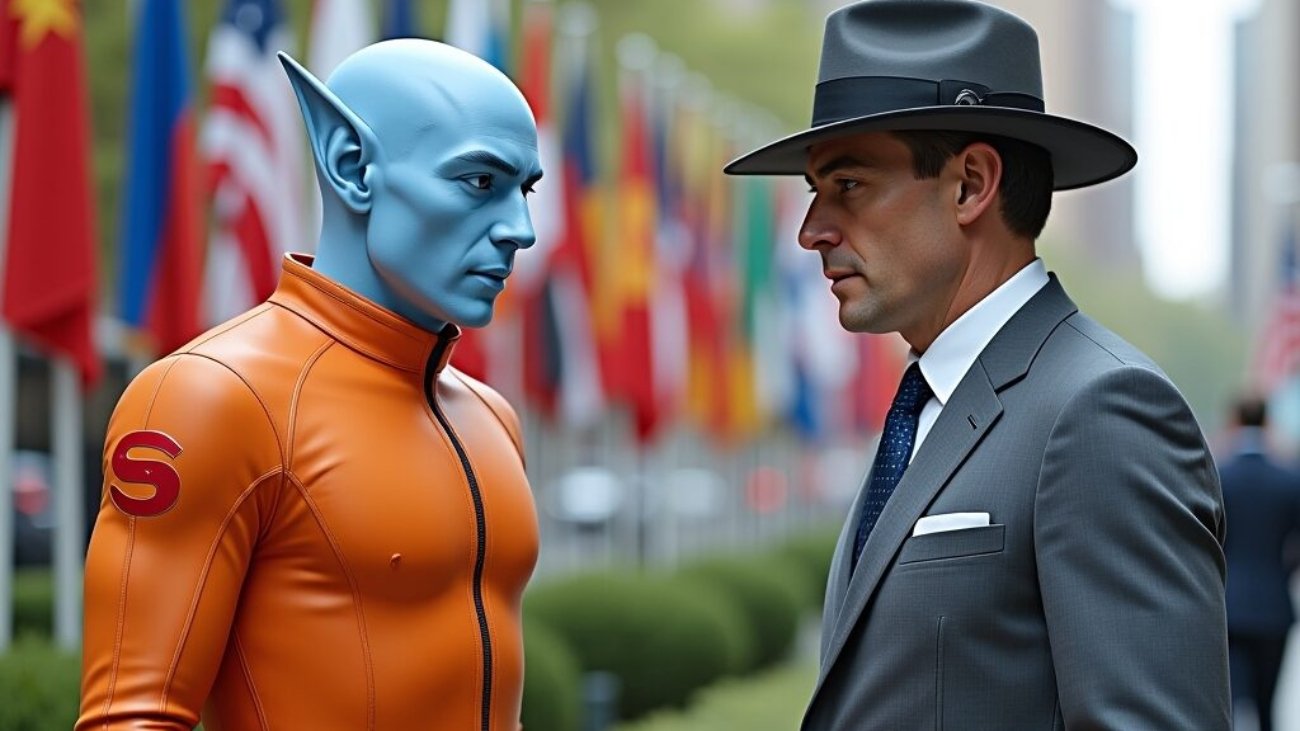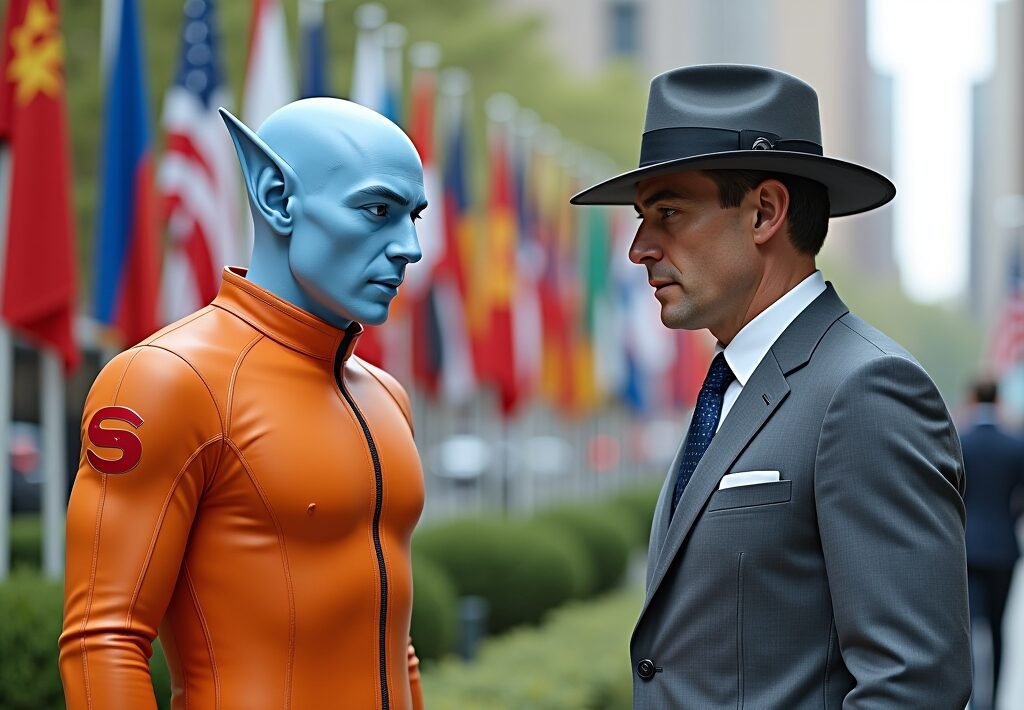
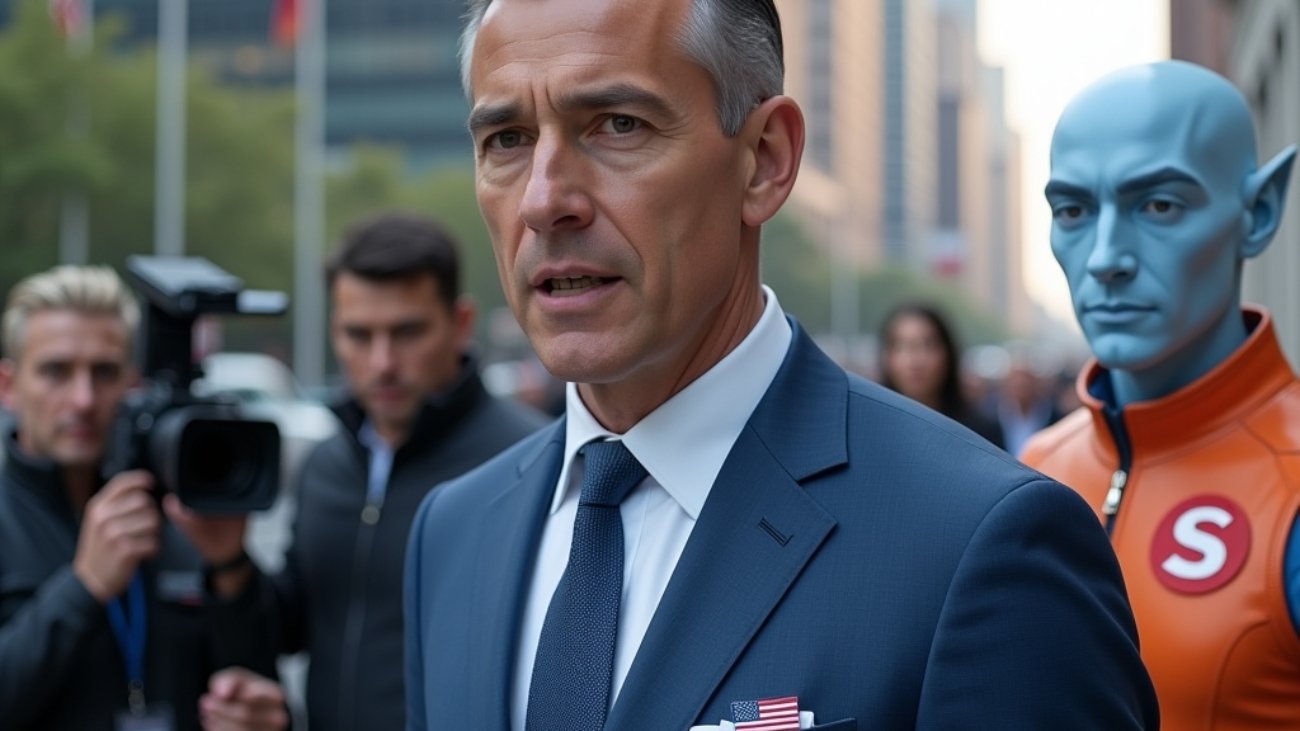
Shalzed with Mike Waltz outside the UN

Before It’s Too Late

Before It’s Too Late

Shalzed asks UN Ambassador Mike Waltz if a country is likely to become a threat someday, can you bomb it now?
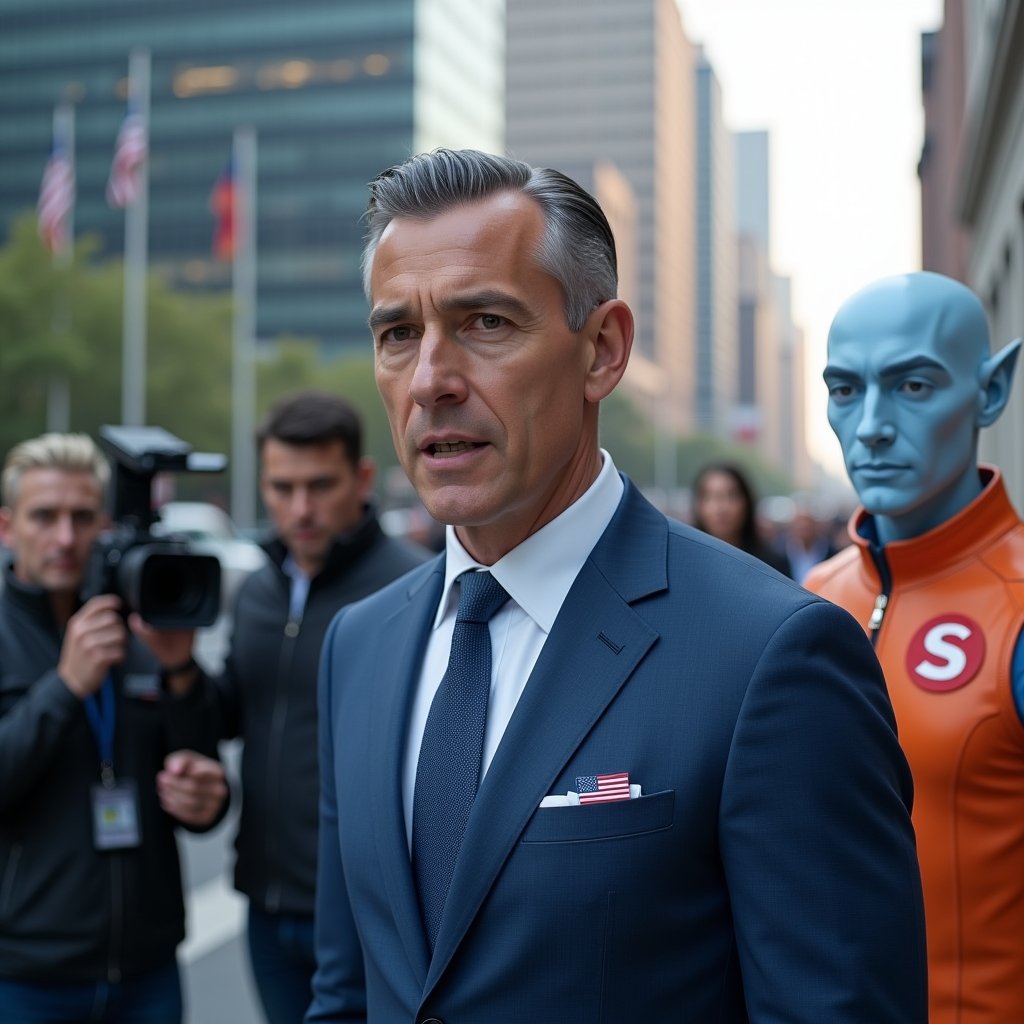
Shalzed wtih UN Ambassador Mike Waltz outside the United Nations

The United States and Israel claimed self-defense as the justification for their attack on Iran. But even though Iran is a hostile country that has threatened the U.S. and Israel many times, it didn’t seem to be a significant threat right now. Shalzed confronts U.S. Ambassador to the United Nations Mike Waltz with this question.

Before It’s Too Late

I was on the phone with my brother, who had moved to Israel four years ago. He was telling me about how his daughter was very upset about school being cancelled when the siren sounded. I hung up right away so he and his family could get to their shelter. Then Shalzed called.

“I don’t understand,” he said. “How could the U.S. and Israel launch such an attack?”

“Well, we can’t let Iran get nuclear weapons.”

“But that’s not a reason to start a war,” Shalzed said.

I figured Shalzed probably didn’t know much about Iran. Before I could say anything, though, I was in the black tunnel. By now I was used to it enough that I was no longer afraid, and I really wanted to find out how it worked. A moment later I was outside the United Nations in New York, with Shalzed next to me. A man wearing a blue suit with a U.S. flag pin on his jacket was standing nearby, trying to attach a lapel microphone to his jacket. “Ambassador Waltz,” Shalzed called.

The Ambassador turned and looked at Shalzed. “Who are you?” he asked.

“I don’t understand. Countries can only use force to defend themselves,” Shalzed began.

“I’m sorry, I’m just about to go live on Fox News,” Waltz replied, gesturing Shalzed and I to move along. A few steps away, a reporter was conferring with a cameraman.

“But didn’t the U.S. and Israel just violate the UN charter?” Shalzed persisted.

Waltz shook his head and sighed. “Absolutely not,” he said. “Iran has thousands of missiles and is attempting to develop nuclear weapons besides.”

“But how can you say it’s self-defense if they didn’t attack?” Shalzed asked.

“Almost ready,” the reporter called. “Do a sound check, please.”

Waltz nodded. “The Iranian government killed thousands of its own citizens in recent protests,” he said in a robot-like monotone. The reporter gave him a thumbs up. Then he continued in a normal voice, “Some say tens of thousands. We may never know the real number.”

“And that means you can bomb their nuclear facilities?” Shalzed asked.

“Iran’s leaders have been leading chants of death to America and death to Israel for decades,” I interjected. “They even put a clock in the center of Tehran counting down the days until Israel is destroyed.”

Shalzed looked shocked. “Well how can they do that? Didn’t the UN tell them to take it down?”

I laughed, and Waltz also chuckled. “No,” he said. “Evidently, there’s nothing against countdown clocks in the UN charter.”

The reporter walked over. “I’m sorry, we’re delayed just a couple of minutes,” she said. “They broke in with an update from Tel-Aviv.”

“What happened?” I asked, worried people may have been killed.

“Direct hit on a school. But it wasn’t occupied, no injuries.”

“You see, Iran doesn’t follow any international law,” Waltz said. “They shoot missiles at schools, they fire randomly at cities. Then we’re the ones that get criticized.”

“Can you say that when we’re live?” the reporter asked.

“Of course,” Waltz replied. “And I’ll also mention that right now they are carrying out aggression against Saudi Arabia and the Gulf States too. Then people make it out like the United States is the one that doesn’t follow the law.”

Shalzed crossed his hands against his chest. “I understand the government of Iran does bad things. But can that justify an invasion?”

The reporter looked at Waltz expectantly. I had a feeling she was interested to hear his reply, too.

“So should Israel wait until they have ten thousand missiles, many armed with nuclear warheads, and then it’s too late?” he asked.

“Israel can’t risk a nuclear armed Iran,” I added.

“Almost ready,” the cameraman called as he lifted a bulky tv camera onto his shoulder.

Waltz straightened his hair with his hand. “Bottom line,” he said. “Countries are entitled to defend themselves. Iran has been a threat in the past, and we have every reason to believe they will continue to be a threat in the future.”

“Say that on air,” the reporter said.

“But Iran wasn’t a threat right now,” Shalzed interjected. “And any country could potentially be a threat sometime in the future.”

A light on the camera turned on. “Five,” the cameraman said, then he started counting down.

The reporter stepped in front of us, right next to Waltz. As the light on the camera changed color she began. “I’m here at the United Nations with U.S. Ambassador Mike Waltz. Mr. Waltz, you just explained to the security council that the action against Iran is completely in keeping with international law. Give us a recap.”

As Waltz began speaking I was back in the black tunnel. I tried to feel around for any clues about what it was made of or how it operated, but before I found anything I was back in my apartment. My phone was ringing- it was my brother calling back.

“Everything alright?” I asked as I picked up.

“Yeah,” he said. “A missile got through the iron dome and hit a school. The building was destroyed, but no one was hurt.”

“Near you?” I asked.

“Just a few kilometers away. Thank God we’re fighting this war now, while Iran still doesn’t have nuclear weapons.”

I told him I was glad he was safe, then I shook my head. Once Iran got the bomb, it would be too late. But if every country struck before it was too late, war would also be endless.  

Subscribe to Receive Shalzed's adventures in your inbox

Sources:

To read a transcript of Mike Waltz’s explanation given to the Security Council, click here and here

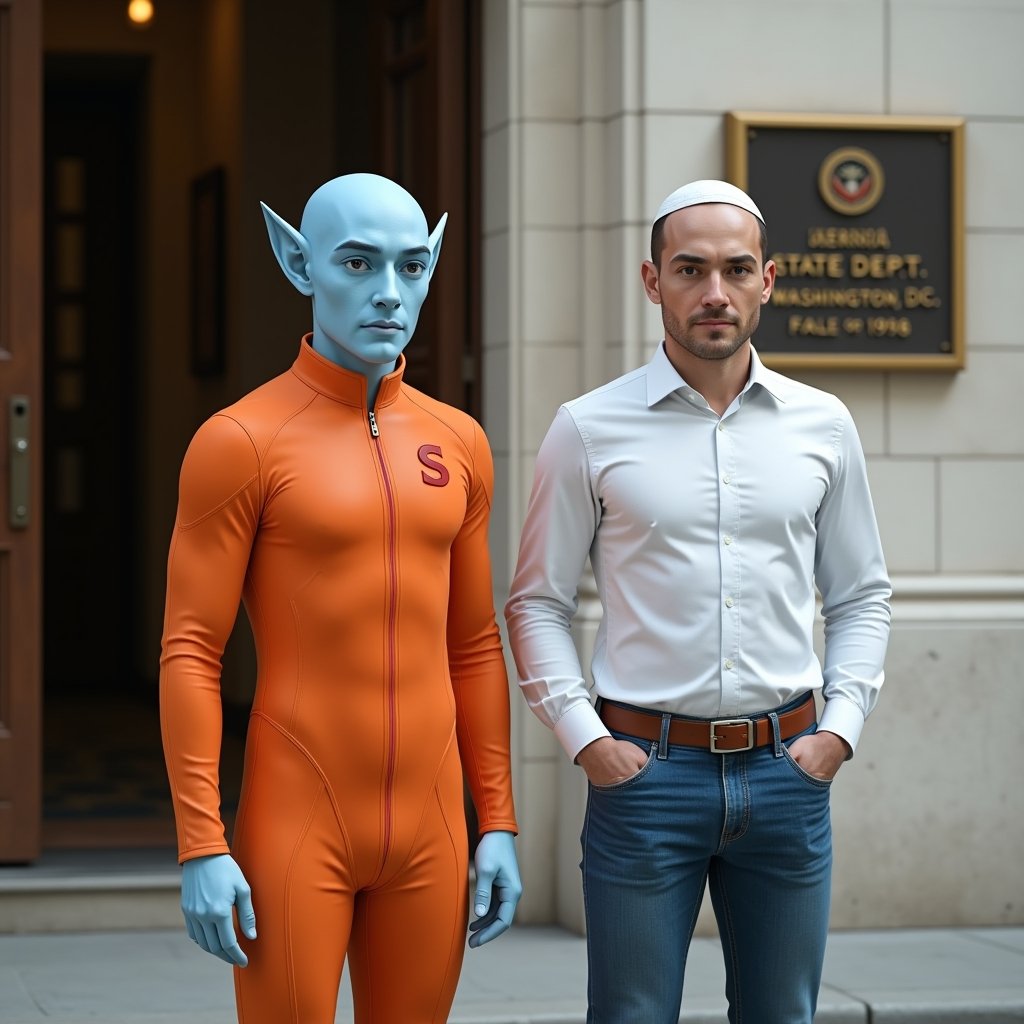
shalzed and simon at the state dept

From Green Onions to the United Nations

From Green Onions to the United Nations

Shalzed wants to know why the U.S. is pulling out of international organizations

Shalzed and Simon outside the State Dept. in Washington D.V.

Shalzed came to Earth believing international law — and the web of institutions built around it — offered a model for peace, not just here but across the galaxy.

But last week the U.S. withdrew from 66 international organizations. In this episode, Shalzed confronts U.S. Secretary of State Marco Rubio to find out whether this vision is falling apart.

From Green Onions to the United Nations

I hurried into shul with a bag full of groceries. Rabbi Shayerman trusted me, but the policy was very strict that he had to check everything in. I wanted to be able to start working on the kiddush before he got caught up with his ‘pizza and parsha’ class for youth.

It only took the rabbi a minute to find all the hechshers. He grabbed a stack of napkins and paper plates and headed to the social hall, and I started chopping green onions for the tuna salad. Then Shalzed called.

“Why is President Trump withdrawing the United States from international organizations?” he asked. “They are all places for countries to resolve disputes and work together.”

I hadn’t heard anything about this, but it did sound like something Trump would do. “What organizations?” I asked.

“About half are connected to the United Nations,” he said. “And the United Nations is the primary body you use to keep peace and security on your planet.”

Before I could say anything else, I was in the dark tunnel with points of light that by now had become familiar. This time I tried to listen as best I could for any sounds that would give information about how it worked. I didn’t hear anything like motion or machinery, though, and a moment later I was standing next to Shalzed in the office of Marco Rubio at Foggy Bottom.

Rubio was sitting behind an enormous, wood desk, looking at his computer. “Mr. Secretary,” Shalzed began. “Why are you trying to undermine the United Nations?”

Rubio looked up and wrinkled his forehead. “Where have I seen you two before?” he asked.

Just a week ago Shalzed had taken me to Mar-a-Lago to confront Rubio about the U.S. nabbing Maduro out of Venezuela. “We travel a lot,” I told him.

“I don’t know how you got in here, and I have a meeting in just a moment,” Rubio said. “But no, the United States is absolutely not trying to undermine the United Nations.”

Shalzed put his hands on his hips. “You just announced that you’re withdrawing from 31 UN organizations, and a bunch of other non-UN organizations too.” he said.

Rubio shook his head. “The United States strongly believes in the United Nations. But only as a forum for diplomacy. Why does the UN have dozens of little agencies, most of which are redundant, wasteful, and counter to our interests?”

“Does that mean you’re upset other countries don’t always go along and give the United States everything it wants?” I asked.

Rubio closed his laptop and crossed his arms against this chest. “Absolutely not. Take for example the UN Democracy Fund. It just gave money for a program that it claims helps youth in Argentina strengthen their critical thinking. And they sponsored a program to increase women’s political participation in Baluchistan.”

“Baluchistan?” I interjected.

“It’s a region in Pakistan,” Rubio said quickly. “The point is that these are things that if wanted, countries should do them on their own. The UN was never meant to have billions of dollars to spend on do-gooder projects wherever they please.”

“But maybe these projects are valuable?” Shalzed suggested.

Rubio shrugged. “Maybe. But the UN should be only the General Assembly and Security Council. It shouldn’t try to do the job of its member states, and when it does it’s an affront to states’ sovereignty besides.”

A man I didn’t recognize wearing a beige suit and striped tie entered the office. He had a senate pin on his suit jacket and was wearing a VIP badge around his neck. “Thanks for taking the time,” he said, striding over to Rubio’s desk. “Great work on cutting us out of 66 agencies, but I wish you had pulled out of a few more.”

Rubio stood up to shake his hand. The man turned to us. “Nice to meet you,” he said. “Rand Paul from Kentucky.”

“I am Shalzed,” Shalzed said. Paul stared at him expectantly. After an awkward silence Paul said, “You must both be awfully important if they let you in without ID badges.”

“We arrived a different way, not through downstairs,” I said, trying to laugh.

“I doubt you were able to parachute in through the window,” Paul said with a chuckle. He turned to Rubio. “Maybe some of the money we saved by withdrawing from those organizations ought to go towards State Department security.”

“It’s a form of tzedakah,” I said, as I had no idea how Shalzed could explain our arrival without getting us into all sorts of trouble. Rubio, Rand Paul, and Shalzed all gave me blank looks, and I realized I had used a Hebrew term. “Charity,” I told them. “A lot of the countries that benefit from these programs probably don’t have enough money to do these things themselves.”

Rand Paul waved a dismissive hand. “The U.S. is still a part of UNICEF and the World Food Programme,” he replied. “I never advocated against that. It’s just small bureaucracies that are ideologically driven and wasteful that we want to get out.”

“It’s only a miniscule part of the U.S. government’s budget,” Shalzed said.

“Let me tell you something,” Rand Paul said, turning towards us. “Imagine standing outside a gas station somewhere in Kentucky and asking folks as they walk by if they want their tax dollars going to the International Cotton Advisory Committee. Or the Venice Commission of the Council of Europe. Or the UN Permanent Forum on People of African Descent. Not one of them will say yes. Finally we have an administration that actually listens to the people.”

“It’s a lot more cost effective to resolve disputes in these forums than to risk them deteriorating into violence,” shalzed said.

“Exactly,” Rubio responded. “That’s what the United Nations General Assembly and Security Council are for. But no more unelected, unaccountable international bureaucracies pursuing their own agendas while the United States foots the bill.”

“I’m just curious,” Paul interrupted. “If you parachuted in, are you going to leave by parachute too? Because I think the fine gentlemen downstairs at the exit will be awfully concerned about your badges.”

“I have no worry,” Shalzed said simply.

Paul laughed. “If you have badges in your pocket you should take them out,” he said.

“And I think you should be going,” Rubio added.

I tugged Shalzed’s arm. “Time to leave,” I told him.

“Fine,” he said, not sounding happy. He turned to Rubio and Paul. “But most problems cannot be resolved by any one country. Aren’t international organizations the only way?”

“For that there are bilateral agreements,” Rubio said. “And I think I’ll call security, they’d like to see your badge.”

Just as he picked up his desk phone I was back in the black tunnel. I tried to concentrate on Marco Rubio’s face, to see if he had any reaction, but the transition was too fast. I wondered what he saw? A moment later I was in the synagogue kitchen, right in front of the cutting board with green onions waiting to be chopped.

I took a moment to get my bearings, then picked up the knife. Rabbi Shayerman came in and looked around. “I thought you were in a hurry,” he said to me.

“Right,” I said. He glanced at the onions waiting on the table, only half of the first one chopped. “I got a call on the phone,” I told him. That was at least partially true- Shalzed had called before he took me to Washington. But there was no way I could explain that.

Subscribe to Receive Shalzed's adventures in your inbox

Questions:

  1. The United Nations has grown far beyond a forum for diplomacy, taking on work in areas like development, democracy, environmental protection, and human rights.
    Do you see this expansion as necessary for solving global problems—or as an example of unaccountable bureaucracies encroaching on state sovereignty?

  2. Withdrawing from 66 international organizations saved the U.S. only a negligible amount of money. Even if some of these organizations are inefficient, was withdrawal worth the cost in lost influence—or does influence matter less than principle here?
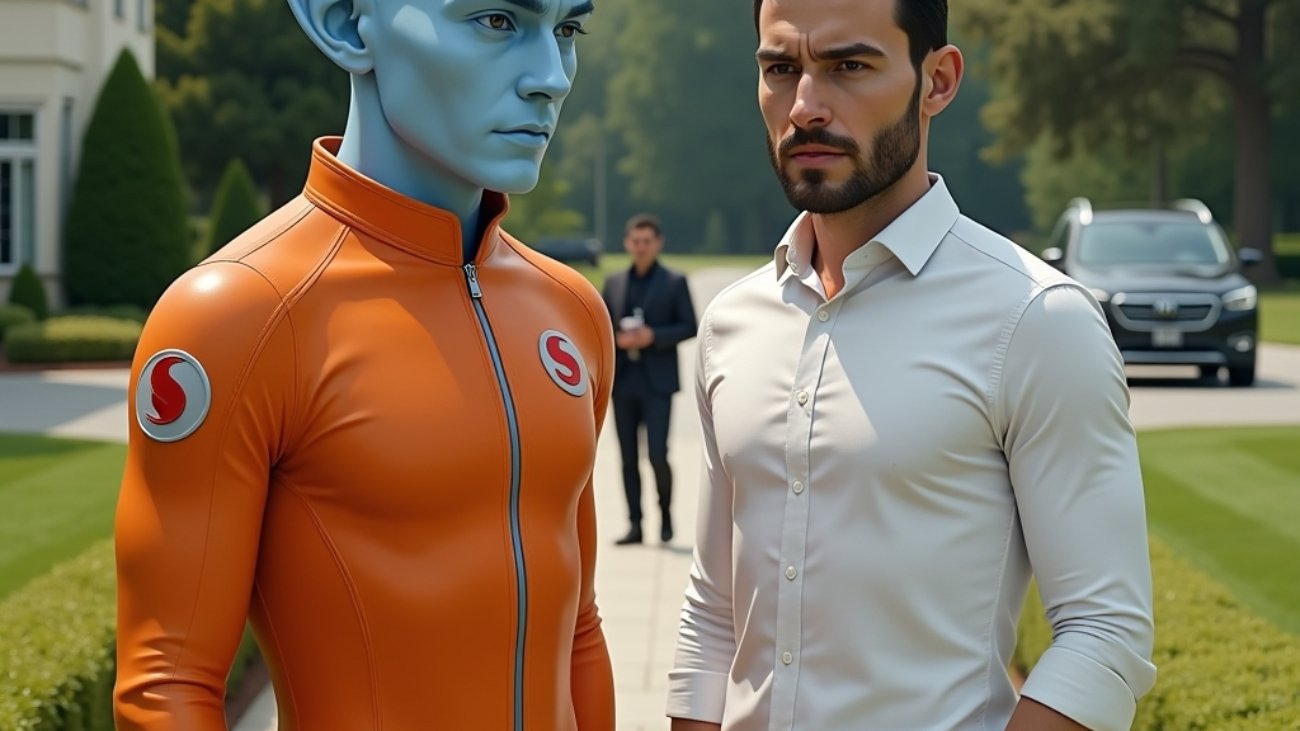
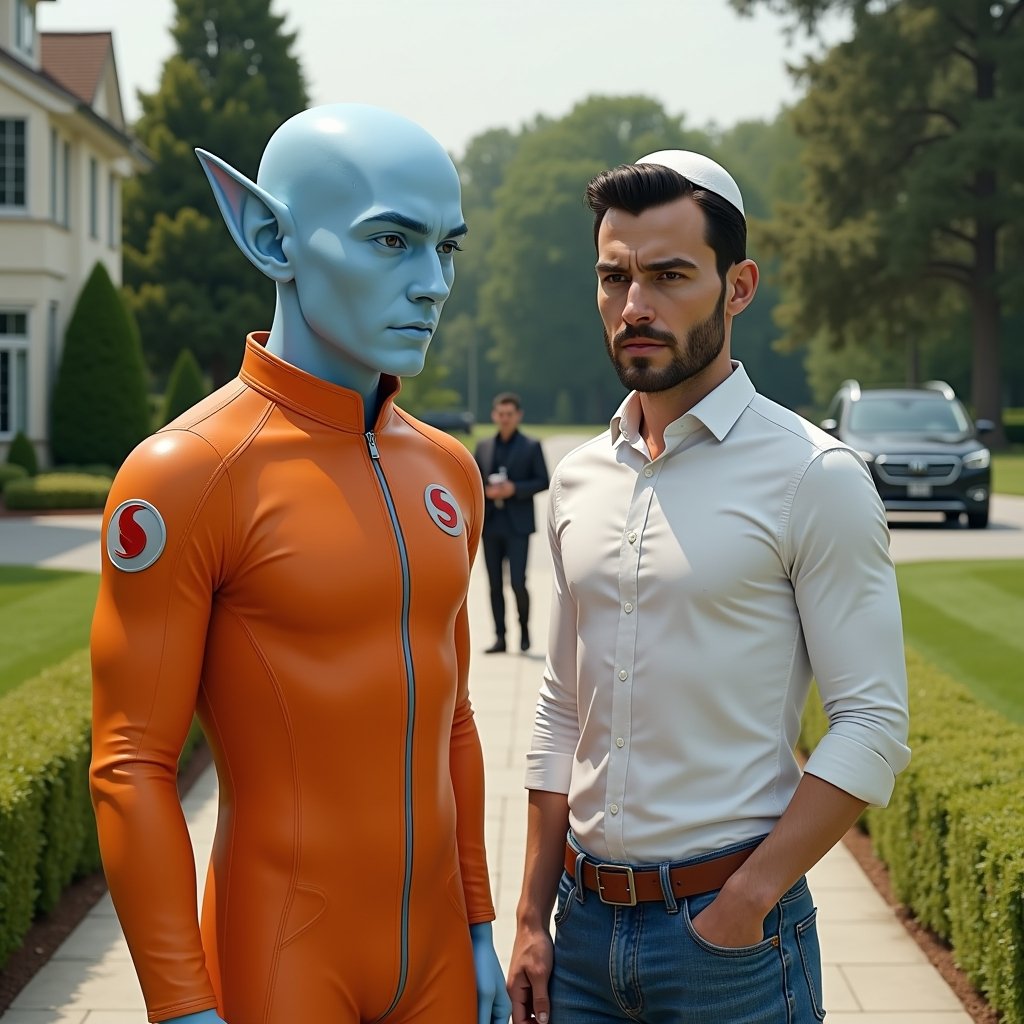
Shalzed and Simon at Mar-a-Lago

When the UN Charter Meets Black Ops

When the UN Charter Meets Black Ops

Shalzed Confronts Marco Rubio Over the Maduro Abduction

Shalzed and Simon waiting for Marco Rubio at Mar-a-Lago

International law says no. Reality is a maybe.
This week, Shalzed and Simon go to Mar-a-Lago to ask Marco Rubio what the rules mean when it comes to Venezuela.

When the UN Charter Meets Black Ops

I usually don’t watch the news, but I was surprised enough by the U.S. abduction of Nicolas Maduro to turn on the television while I made oatmeal and toast for my Sunday morning breakfast. Experts were speculating about what’s next for Venezuela. Then, just as Chuck Schumer was complaining that Trump failed to notify Congress, Shalzed called.

“How can one country send its army to capture the leader of another?” he asked. “Isn’t that against the most fundamental rules of international law?”

That’s pretty much what Schumer was now saying on TV. “The Democrats seem to agree with you,” I said as I turned the volume down.

“Democrats?” Shalzed asked. “But the prohibition on using force is in the charter of your United Nations. What does that have to do with Democrats or Republicans?”

Before I could say anything, I was in the black tunnel I had already grown accustomed to. This time, since by now I was no longer afraid or panicked, I tried to feel around to sense if there were walls or if I was traveling inside of some sort of vessel. I didn’t feel anything, and then a moment later I was outside Trump’s Mar-a-Lago country club in Palm Beach, Florida. Shalzed was next to me. We were standing on a wide sidewalk lined by neatly trimmed hedges with a vast, manicured lawn on either side. Through the palm trees, I could just make out the ocean.

“Mr. Secretary,” Shalzed exclaimed, starting up the path towards the main entrance. Marco Rubio was coming out. He looked tired. He had his suit jacket folded over his arm, with a red tie hanging out of his pants pocket.

“Who are you?” Rubio asked. He looked Shalzed over, then glanced at me as I came up behind.

“Wasn’t sending troops to abduct Maduro a flagrant violation of international law?” Shalzed asked.

Rubio shook his head. “Of course not. It was actually law enforcement. Maduro was indicted for trafficking cocaine, and now he’ll face trial in New York.”

“The U.S. can’t make arrests in other countries,” I said. I may not be a lawyer, but at least I know that much.

“And Maduro has immunity as a head of state,” Shalzed added.

Rubio scoffed. “Maduro was the head of a drug trafficking operation masquerading as a government,” he said. “He rigged the last election to stay in power, so he’s not a legitimate president at all.”

“So the United States gets to decide which governments are legitimate—and send in troops when needed?” Shalzed asked.

Rubio sighed. “It’s been a long night, gentlemen,” he said. “I don’t recall seeing either of you before in the ballroom, are you guests for just a few nights? Or are you here for a round of golf?” He raised his eyebrows. I read somewhere that joining Mar-a-Lago costs $1 million upfront, then $20,000 in dues annually. I was wearing jeans and an old Camp Ramah T-shirt, so I probably didn’t look like I belonged.

“He’s come from very far just to be here,” I said, gesturing to Shalzed. However he got us in, I hoped he would also get us out before we were picked up by the secret service.

“Do you really want to undo the principle that countries have to respect each other’s sovereignty?” Shalzed asked. “Isn’t that the key to peace, and fundamental to the UN Charter?”

Rubio shrugged. “The problem with sovereignty is that it usually winds up being used to protect tyrants and dictators.” He tossed his suit jacket over his shoulder and put his hands on his hips. “Do you realize that nearly 8 million Venezuelans have fled due to Maduro, and about 750,000 of them are in the United States. Biden gave most of them protected status because they face persecution back home. How can the U.S. be obligated to bear all these refugees, but not be allowed to do anything about what’s causing them to seek refuge in the first place?”

“But whatever is to be done has to be decided by the UN Security Council,” Shalzed said. “It can’t be left up to only one country.”

Rubio waved an arm. “That wouldn’t work. Russia and China would use their veto.”

“As if the United States doesn’t use its veto, too,” I added.

I felt a hand on my shoulder and turned to see a man in a dark suit with a listening device in his ear behind me. “Mr. Rubio is a busy man,” he said. “I think he needs to get going.”

“Enjoy the golf course, gentlemen,” Rubio said. “Assuming you’ve actually reserved a tee time.”

Rubio walked around us and headed towards the gate, where a black SUV was waiting.

“What are your names?” the man in the dark suit asked. He took a tablet computer from his jacket pocket and opened a page with a list of registered Mar-a-Lago guests. “And I may need to see some ID.”

“Listen,” I said, trying to think of something to say. I realized that I didn’t even have my wallet, my pockets were empty when Shalzed whisked me away. I turned to Shalzed, who was staring at Rubio as he left.

“Are the two of you not on the guest list?” the man asked, pretending to be surprised.

“Um,” I mumbled, touching Shalzed on the elbow. When he finally turned I gave him a pleading look.

I felt relieved to suddenly be back in the black tunnel. I wondered if Shalzed would still have been able to pull off his transportation trick if the guy had put us in handcuffs. Before I knew it I was in my apartment. I smelled something burning and look at the stove. The oatmeal had been on the fire the whole time. The water had all boiled off, and as I turned off the flame I wondered if the pot was ruined.

Shalzed was with me in the kitchen. “How long were we gone for?” I asked him, pointing to the burned oatmeal. I wondered if this could finally be a way to get some information on how his black tunnel worked.

But instead of answering, Shalzed stared at the television. This Week With George Stephanopoulos was still on, and the United Nations High Commissioner for Human Rights was explaining that even though Maduro had a longstanding, appalling record on human rights, that was no reason to justify U.S. intervention in Venezuela.

“But Maduro has been in power for over a decade,” Shalzed said. “And the Human Rights Council never did anything about it.”

“It does seem strange to see the High Commissioner for Human Rights arguing that Maduro should still be in power,” I added.

I wondered if Shalzed was hungry. “I’m going to make some more oatmeal,” I told him. “Would you like some?”

He looked at the burned pot. “Why?” he asked.

I smiled, thinking maybe this was my chance. “Because that pot was on the stove when you took us to Mar-a-Lago. Since we were there for only about seven or eight minutes, that must mean that we spent at least three or four minutes in transit each way, or the oatmeal wouldn’t be so burned. Right?” I asked.

“It looks delicious,” he said. He went to the pot and pulled out a few black, dried-out oats. He put them in his mouth and smiled. “It reminds me of the food we serve at festivals.”

“So you transported us from here to Florida in three or four minutes,” I repeated, hoping he would confirm or deny.

But instead, he turned back to the television. It was showing footage of Venezuelan exiles celebrating in Miami. One of them told a reporter that while he was fearful for his family back in Caracas, he was grateful to Trump and hoped this would finally be a chance for Venezuela to experience freedom.

“Is the High Commissioner for Human Rights going to tell them that they’ve got it all backwards?” I wondered out loud.

Shalzed shrugged. “Can I take that with me?” he asked.

“Sure,” I said, handing him the burned pot. I doubted I would be able to clean it anyway.

“Thanks,” he said. “I’m starting to wonder whether Earth’s international law and human rights work as well as I thought. But I’m glad that at least I discovered this delicious food called oatmeal.”

Subscribe to Receive Shalzed's adventures in your inbox

Questions:

  1. The prohibition on the use of force in international relations is a bedrock of peace and stability. However, human rights are also a key value, and oppressive regimes can use the prohibition on force as a shield to protect themselves from consequences. Which value is more important? How do we decide?
  2. Approximately 8 million Venezuelan citizens have fled their country, seeking refuge from Maduro’s regime. Many have settled in Central or South America, and about 750,000 are in the United States. Does bearing the cost of caring for refugees give states a special right to use force to change the conditions that caused their flight?
shalzed with spain's un ambassador two

Was the UN Walkout on Israel a Proper Protest or Dereliction of Diplomatic Duty?

Was the UN Walkout on Israel a Proper Protest or Dereliction of Diplomatic Duty?

Shalzed catches up with Spain’s ambassador to the UN

When Israel’s Prime Minister spoke recently at the UN, delegates from 70 or so countries walked out. Was this an appropriate protest, or is staying to listen to people we disagree with the better path towards peace and human rights? Shalzed catches up with Spain’s UN ambassador Hector Gomez, a leader of the walkout, to understand his view.

              The Katharine Hepburn garden isn’t much, but it’s nice they bothered to plant anything green in the middle of the midtown Manhattan urban jungle. A sign proudly proclaimed that Dag Hammarskjold Plaza contains 6 fountains and 49 benches. Not quite enough to make you feel like you are out in nature, but you’ve got to give credit for trying.

              I finally spotted Spain’s UN Ambassador. He was walking quickly towards his office on the 36th floor of One Dag Hammarskjöld Plaza, taking the sidewalk instead of detouring through the garden where I was. I guess it’s hard for him to find time to smell the roses. “El Senor Gomez,” I called. He glanced in my direction, then shook his head in surprise when he realized who I was.

              “I thought you’d be working on your wormhole machine, whatever you call it. Glad to see you’ve decided to take a break and enjoy looking at some of Earth’s beautiful flowers,” he replied.

              There’s no way to make any sort of device capable of opening a wormhole with Earth’s primitive technology, but no point in trying to explain that to him. “Let me guess, someone said something you disagree with, and that’s why you’re leaving in the middle of the afternoon,” I said.

              “I disagree with most of what goes on in there,” he said, pointing at UN headquarters at the end of the block. “But I’m heading to a meeting about the new independent panel on artificial intelligence. You know I was instrumental in getting that passed.”

              He co-chaired that committee with the ambassador from Costa Rica. “So it’s only Bibi Netanyahu you walk out on? Anyone else you disagree with it’s not such a big deal?”

              He crossed his arms. “I think genocide is something we all have to stand against, don’t you? Or on your planet is genocide not a problem?”

              “So let me get this straight- Israel is the only country you feel compelled to take a stand about? North Korea, with its vast forced labor camps, restrictions on information so harsh citizens are punished for years just for watching a foreign movie, and where citizens are forbidden to emigrate and border guards are instructed to shoot anyone trying to sneak out doesn’t require taking a stand? Iran, which oppresses women, disappears and tortures dissidents, and has executed over 1000 people in just the last nine months doesn’t require taking a stand? What about Russia, which not only invaded Ukraine but now brazenly attacks civilians in Kiev with drones every night? Officials from all those countries spoke at the UN last week without any sort of walkout.”

              A young man with a backpack covered in Bernie Sanders stickers had paused near us, listening to me. “The UN is one big joke,” he said loudly. “Somebody should kick them all out and use the building to house the homeless.”

              “This guy doesn’t want to lose his job,” I told the young man, gesturing towards Gomez.

              He suddenly looked embarrassed. “Do you. . .” he began.

              “He’s the ambassador from Spain,” I said.

              “Hola. Mucho amigo,” the man said. Hector Gomez laughed and the guy started to walk away.

              “So why only Bibi?” I asked Gomez again, anxious to hear his answer to that.

              He swallowed. “Look, you can’t justify a crime by saying there are also other criminals out there the same or worse. Right now the situation in Gaza is our main focus.”

              “It’s your main focus?” I asked.

              “My government is working with other countries across the European Union to bring an end to genocide and implement a peaceful two-state solution.”

              “Is that so?” I asked again.

              Gomez gave me a quizzical look. “Of course. The European Union is considering many measures to pressure Israel, and I personally have made many statements. . . ”

              I cut him off. “So when Bibi was at the UN, why did you walk out of the room?”

              He frowned. “To show that his government’s conduct. . . ”

              “With Bibi at the UN it would have been a great chance for negotiations,” I interrupted.

              “By walking out I wanted to make a statement. . .” he began.

              “Help me understand. Is the entire purpose of your United Nations to provide a place for people to make statements?” I asked. “Or is it supposed to be about dialogue intended to maintain peace and security?”

              “Dialogue for peace and security,” Gomez dutifully replied.

              “So why didn’t you stay in the room and listen carefully to Bibi? That would have helped you better understand his positions so you can help come up with an agreement to end the war that is acceptable to both sides. How can you do that if you walk out?”

              Gomez clicked his tongue. “Everyone knows already that Bibi is against a Palestinian state.”

              “You just told me a moment ago you are working to bring about a two-state solution. Why are you doing that if it’s hopeless?”

              Bob Rae, the Ambassador from Canada, had noticed our conversation and stopped by. “Nothing is ever hopeless,” he interjected.

              “We have to bring pressure on the Israeli government,” Gomez began.

              “You do good work,” I told Rae.

              “Thanks,” he said with a smile. Then he turned to Gomez. “I just want to let you know I support you on AI. Now I have to run to a meeting.”

              “And I have to get to my meeting as well,” Gomez said to me as Rae started off.

              “Peace will only come when people talk and begin to understand one another,” I said to Gomez. “What kind of example do you think it set when you walked out of the room? Especially with all the hate that’s accompanied the Gaza war. When people see even diplomats disrespecting one another and refusing to listen to each other’s speeches, why should they make an effort to have honest dialogue and try to understand the other side?”

              Gomez sighed. “Sometimes you have to take a stand,” he replied, turning to walk back to the sidewalk, out of the garden.

              “Fine, but if your stand is against listening how will there ever be progress?”

              “Let’s hope there’s a new peace deal soon,” Gomez called over his shoulder as he walked away.

              “I hope so too,” I said, even though he was probably too far away to hear. I thought about heading over to the United Nations, but for what? After the high level event last week, right now over there it’s mostly down time. But I’d already spent enough time in the Katharine Hepburn Garden- it isn’t much of a sight.

              I figured as long as I was in New York I’d go visit the Earth and Space Center at the American Museum of Natural History. I’m curious about the other planets orbiting Earth’s star, and I can find out a little more about the propulsion technology humans have so far invented. I’m not expecting much, but maybe there’s something I can adapt and do something with. I don’t expect to be able to travel all the way home, but I’d love to get out into nearby space at least a little bit.

Subscribe to Receive Shalzed's adventures in your inbox

Discussion Questions:

  1. Canada’s UN Ambassador, Bob Rae, did not participate in the walkout. He was quoted as explaining:

“My job is to listen to other people. . . In many cases, listen to people I don’t agree with. I’ve listened to, I don’t know, (Russian Foreign Affairs Minister Sergey) Lavrov, I’ve listened to the Russian Ambassador on Ukraine. I don’t agree with a word he says, but I listen to him, and I think that’s part of what diplomacy is all about.”

Do you agree with Rae, or with Gomez who participated in the walkout? Is it ever appropriate for diplomats to walk out on a UN speaker?


2. Why did Rae and his 70-odd colleagues target only Israel’s Prime Minister for a walkout? After all, every country commits human rights abuses. What prevents double standards or hypocrisy in these protests?