
Shalzed’s first World Cup game teaches him about soccer, hard cider—and something he finds much harder to understand about human rights.

Shalzed’s first World Cup game teaches him about soccer, hard cider—and something he finds much harder to understand about human rights.

England, Austria, and Canada announced plans to donate around $1 million each to support organizations that promote grassroots dialogue between Israelis and Palestinians. But Shalzed has a question. . .


South Africa: We need 18 months to prepare a thorough response to Israel’s utterly absurd rebuttal of our evidence that they are guilty of genocide.
Judge: But two years have already gone by. . .
Israel: If the evidence is so clear, why do you need another 18 months?
South Africa: To do a thorough job.
Judge: Fine. You have until November 2027.
Israel: Then we should get 18 months to write our response.
Judge: Fine. You have until May 2029.
South Africa: But this case is urgent!
Israel: So why don’t you let the judges decide today based on the evidence you’ve already submitted?
South Africa: No thanks, we’d rather not.
Based on a May 21, 2026 ruling of the ICJ giving South Africa 18 months to submit an additional brief, then Israel 18 months to reply.

Maryland Senator Chris Van Hollen wrote an essay in the NY Times saying that Israel has used U.S. weapons not just for defense but also ‘as a sword to bury the two state solution,’ and the U.S. should therefore end Israel’s weapon supply. But what does the U.S. use its own weapons for? Shalzed watches as an Israeli ambassador asks this question.

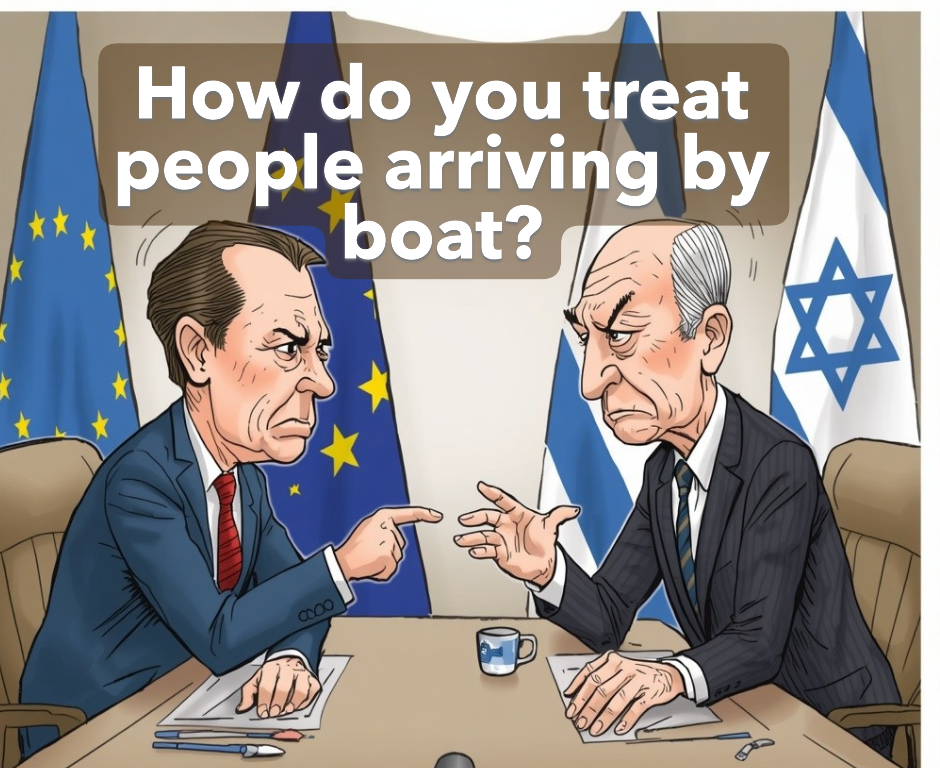
A conversation between unnamed Israeli and European diplomats overheard by Shalzed:
European: What Ben-Gvir did to the flotilla activists is absolutely unacceptable.
Israeli: You’re right, it should never have happened.
European: I demand he be removed from the government. Israel should pay compensation.
Israeli: How does Europe treat people attempting to enter illegally by boat?
European: Huh?
Israeli: Don’t you let them drown in the Mediterranean, and make rescue a crime?
European: That’s totally different.
Israeli: Oh, okay.
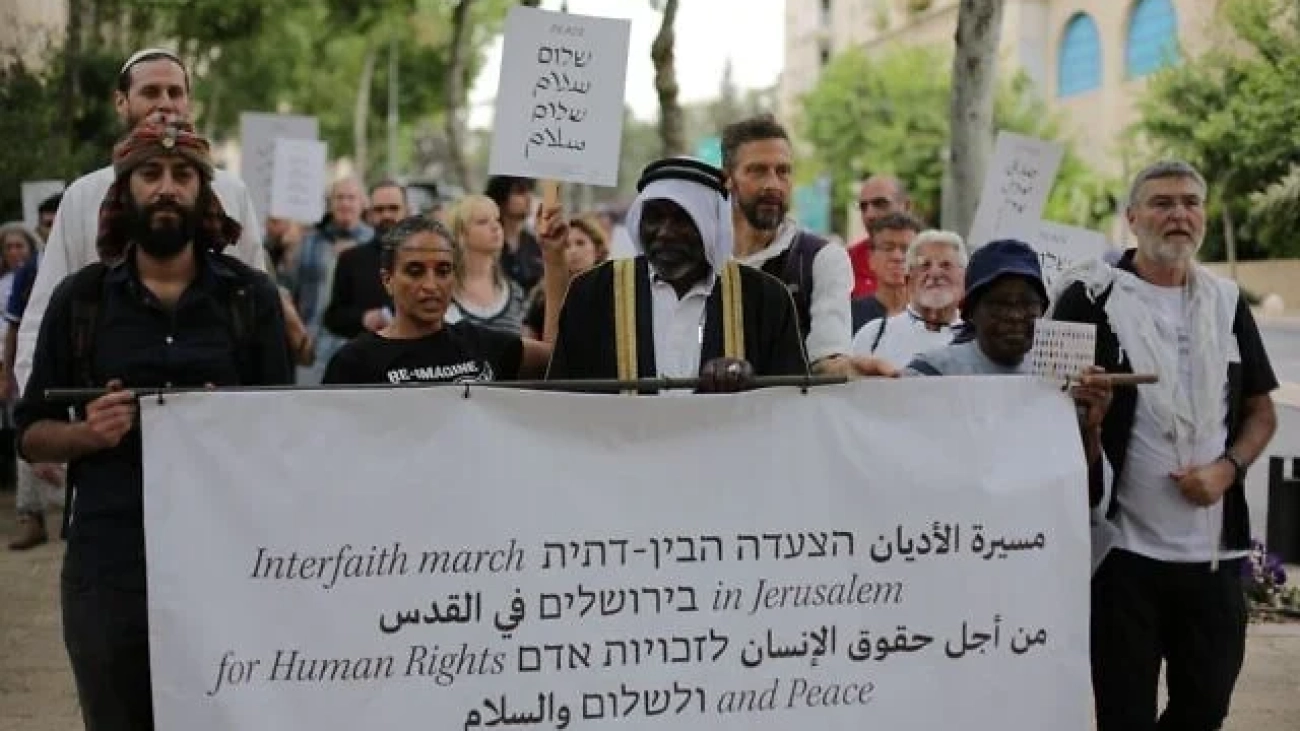
“There are at least a few hundred of us.”
“Yeah, but thousands just came on Jerusalem Day to chant ‘Death to Arabs.’”
“It’s easier to get people to turn out when they’re against something.”
“Well, we’re against hate. We’re against war. Doesn’t that matter?”
— A conversation Shalzed overheard at an interfaith “human rights and peace” march in Jerusalem, May 19 2026.

Why should Israel fund a religious authority that treats men and women differently? Shalzed discovers that the answer isn’t nearly so simple.

Shalzed thinks equal justice should be simple: the same crime, the same punishment. A conversation with Itamar Ben Gvir complicates things.
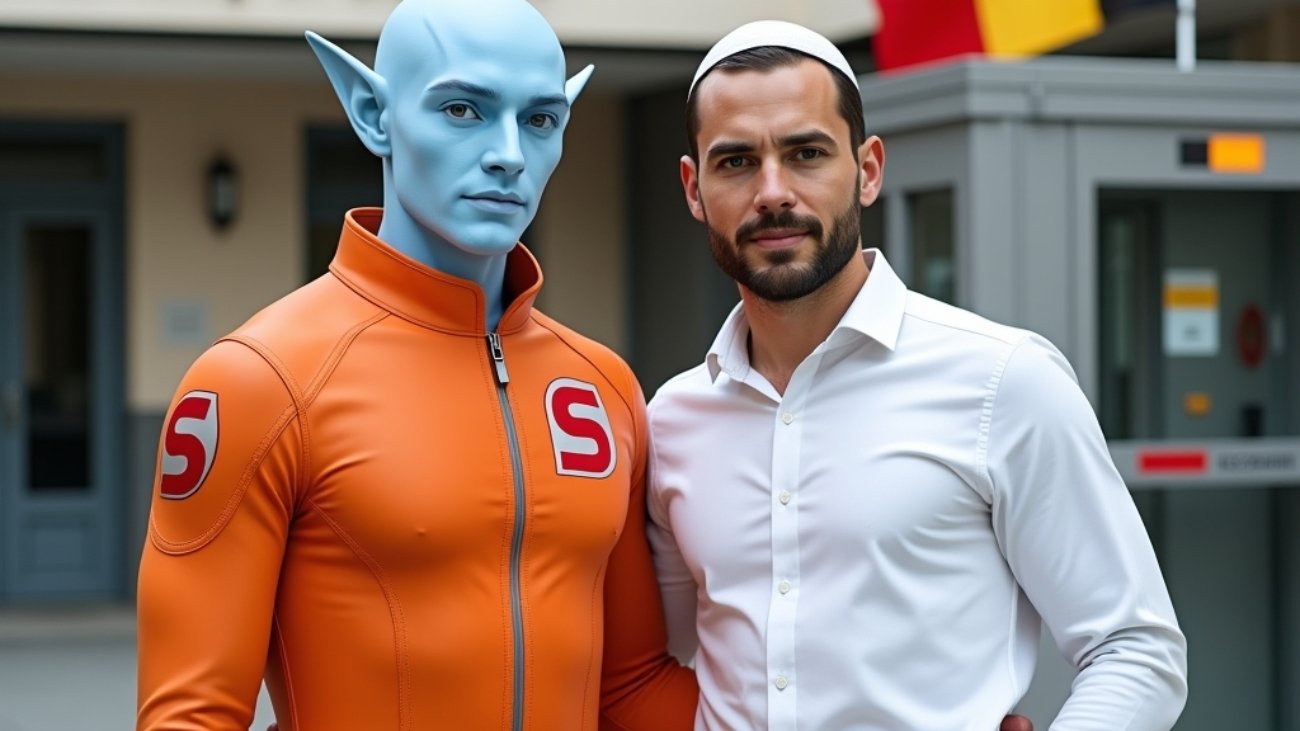
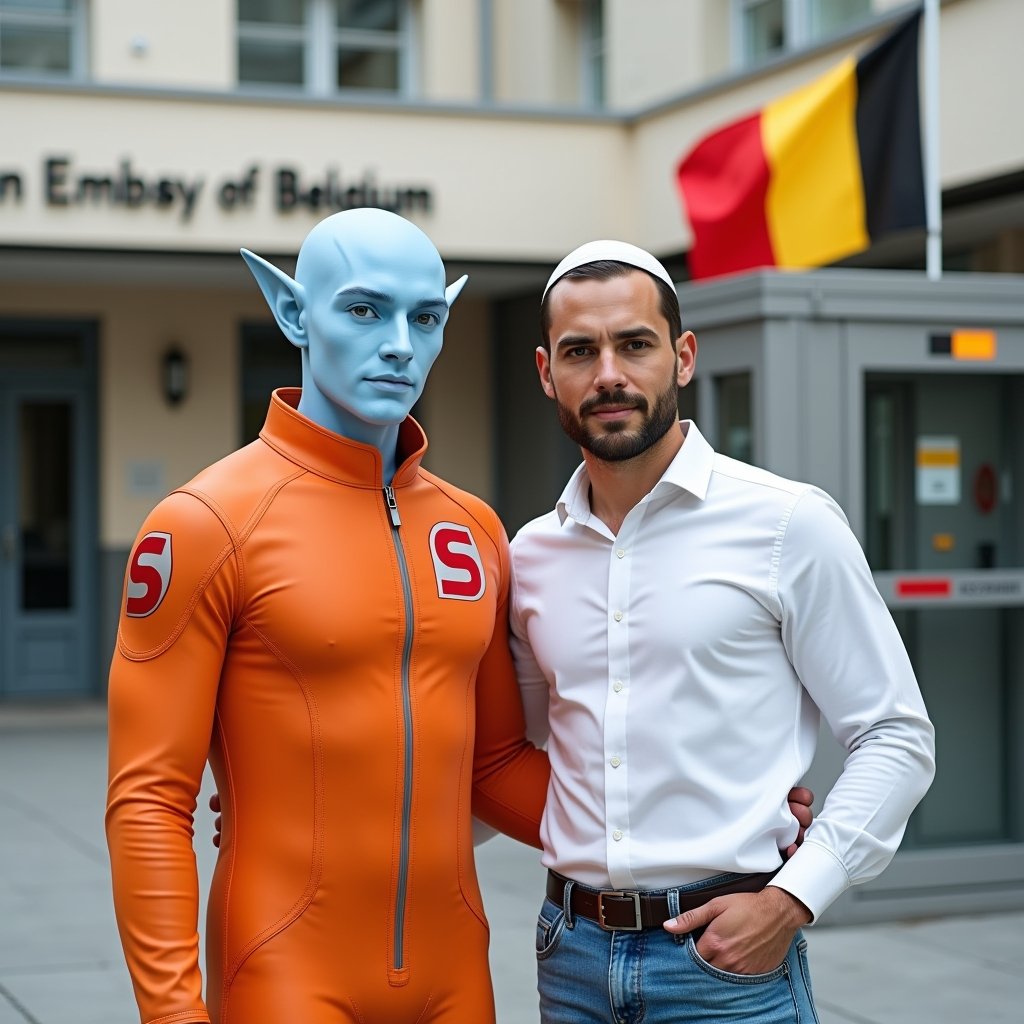
Belgium recently cut off consular services to Israelis living in what it calls “illegal settlements.” This week Shalzed and Simon head to the Belgian embassy to ask whether this is principled diplomacy—or discrimination based on where you live.
After school I got a call from Yehudah, a friend from high school who now teaches at a yeshiva in Gush Etzion. He told me that one of his Belgian students had ruined his passport in the washing machine, and his embassy refused to replace it.
“Why?” I asked. “Doesn’t he have some other ID?”
“It’s because Belgium considers Gush Etzion to be occupied territory.”
I sensed someone behind me and turned. Of course it was Shalzed. I still had no idea how he kept finding me. “One second,” I said into the phone. “I’ll call you back.”
Yehudah seemed surprised but said okay. I think Shalzed sensed something was on my mind, so I told him what Yehudah and I had been talking about. “Can an embassy do that?” Shalzed said. “Refuse their own citizens?”
I was suddenly in the black tunnel, with Shalzed next to me. I watched carefully, but didn’t see him turning any knobs or controls. Someday I would either get him to tell me how it works or figure it out. Then we were standing outside a security booth beneath a black, yellow, and red flag. There was a sign that said ‘Embassy of Belgium’, and from Hebrew up and down the street I could tell that we were in Tel Aviv.
A middle aged man in a suit and tie stepped out of the embassy. Shalzed called after him. “Ambassador Thijs, can you explain why you won’t replace the passport of a Belgian citizen studying at a yeshiva?” he asked.
The ambassador stopped and stared at him. “Consular services are only in the mornings,” he said.
A woman ran up, dragging a child along behind her. “My son put finger paint all over my passport,” she said, pulling a passport with red all over the cover from her purse. “You have to help me.”
“We do passports between eight and eleven AM,” the ambassador said again.
“But I have a flight back to Belgium at ten tonight. I have to go, it’s for my sister’s wedding,” the woman pleaded.
The ambassador asked for the passport and looked it over. “Perhaps someday your son will be a famous artist, but in the meantime this passport can’t be used,” he said. Just then, a man wearing suit pants and an elegant purple shirt came out of the embassy. The ambassador showed him the passport and asked a question in Dutch. The woman with the little boy gave him a pleading look.
“I can do it,” the man that had just come out from the embassy said. “As long as you have another valid form of ID, it shouldn’t take more than twenty minutes.” The woman started to say thank you. “But first,” the man continued, “I have to make sure where you live.”
The woman paused. “I live here, I made aliya 14 years ago,” she said. “But I still have a lot of family back in Antwerp.” She pursed her lips and looked back and forth between the man and the ambassador.
“He means what city?” the ambassador said. “Because we are no longer able to serve anyone residing in an illegal settlement.”
The woman frowned. “You mean Yehudah and Shomron?” The ambassador nodded. “I used to live in Ma’aleh Adumin, but we just recently moved to Netanya. I don’t understand why that should make any difference.”
The ambassador smiled, then directed her to the booth to go through security. She hurried to oblige.
“Even if you oppose Israel’s policies, what does that have to do with her?” Shalzed asked as the woman went inside. “Does she run the government? Does she command the army? Did she seize land?”
“And the kid in my friend’s yeshiva probably picked it based on the program, where his friends were going, and the price. He might not even know anything about the ’67 borders,” I added.
The ambassador held up a palm, signalling for me to stop. “Living in a settlement displaces Palestinians. Anyone who chooses to live there is complicit and has to face the consequences,” he said.
That made my stomach tighten. “I have a good friend named Yehudah who lives in Gush Etzion,” I told him. “He volunteers for an organization that works to facilitate dialogue between Israelis and Palestinians. . .”
The ambassador interrupted. “I very much support that type of activity, but it does not justify living on occupied land.”
“So are you also going to put Belgian citizens who live in settlements in jail if they return to your country?” Shalzed asked.
Thijs sighed. “Of course not. But the current situation calls for strong action. If we make life in the settlements harder, then fewer of our citizens will move there. This is my government’s way of making a statement.”
“So you are punishing your own citizens simply to make a statement?” Shalzed asked.
The ambassador shrugged. “It’s our only leverage. Now please excuse me,” he said. A black sedan was pulling up by the curb and he quickly got inside, and then Shalzed and I were back in the dark tunnel. I didn’t bother this time looking for more information about how Shalzed made it work because I was upset about the ambassador. He probably imagined that everyone who lived in the settlements was a violent extremist, and I knew very well that wasn’t the case.
A moment later I was back in the park across from my house, with Shalzed nowhere in sight. My phone rang, and I saw it was Yehudah calling back.
I swiped to answer. “Sorry,” I said. “I was away a bit longer than I thought.”
“No problem,” he said. “I just heard one of the rabbis here has connections with a member of the Knesset. He’s going to try to get help with that passport. But don’t you think withholding passports violates people’s rights?
I didn’t answer. I wasn’t sure Belgium would, either.
One story or question each Friday in your inbox
You'll receive an email each Friday, one week a story, a question the next.
All of Shalzed's emails are sent via Substack.
Sources:
Coverage of Belgium’s new policy from The Algemeiner
Protest press release from the Jewish Documentation and Information Center


What starts as a Bumble match turns into a sudden trip to a Doctors Without Borders field hospital in Gaza, as Shalzed asks who gets to decide what “neutral” means when humanitarian aid meets war.
I got a match on Bumble for the first time in two weeks. Her name was Rose, and I really liked her profile. As an ‘opening move question’ she asked, ‘What’s your ideal first date,’ so I responded, ‘Holding hands while sky diving- although that’s definitely not happening on our first date!’ Then I sat in the living room watching NBA highlights, hoping she would reply.
I grabbed my phone as soon as it chimed, but instead of Rose it was Shalzed. “Doctors Without Borders is planning to stop working in Gaza,” he said.
“Okay,” I replied, checking if maybe by chance Rose had also messaged at the same time.
“I can’t understand it,” Shalzed continued. “Israel is just asking basic questions for its own security. How could an organization devoted to helping victims of conflict pick up and leave because of that?”
Suddenly, I was in the black tunnel with points of light. I wished I had my phone with me, but it was no longer in my hand. It might not even work wherever Shalzed was taking me. Then I was outside a large, white medical tent. It had rows of folding chairs, filled with people waiting. Children were running and crawling around on the floor. There was a row of smaller tents with examining tables outside. Doctors and nurses wearing white scrubs with the Doctors Without Borders logo hurried about.
Shalzed was next to me, looking around. “Gaza city,” he said. Then he caught site of a woman with short hair and large, round glasses walking towards the road. He strode towards her, and so I followed.
“Excuse me,” Shalzed called. “Can you explain why Doctors Without Borders is threatening to leave?”
The woman turned, and I saw she was wearing an ID that said ‘Claire San Felippo, Emergency Coordinator for Palestine.’
“Are you with Israel?” she asked, looking at Shalzed suspiciously. “If so, you can’t be here.” She put her hands on her hips.
Even though I wasn’t an Israeli citizen, I still felt uncomfortable being in Gaza. I moved closer to Shalzed.
Shalzed shook his head. “I just want to understand why you are threatening to leave rather than complete the simple registration process the Israeli government now requires.”
San Felippo glanced towards the road, where a man holding a clipboard was waiting. “Simple process?” she asked. “They want to know the identities of all our staff, Palestinian and international. What if Israel uses the information to target them? Do you know how many humanitarian workers have already been killed by the Israeli army?”
“A lot of so-called humanitarian workers are also Hamas,” I told her.
“We would never knowingly employ anyone engaged in military activity,” she shot back.
To my surprise, Shalzed interrupted. “Israel says you have.”
San Felippo shook her head. “It was just a few isolated incidents. We dealt with it right away.”
A woman in her early twenties wearing a badge identifying her as a nurse passed by. “I don’t want you giving my name to the genocide army,” she said.
One of my brothers moved to Haifa and is in IDF reserves, and I have several cousins also in the army. It makes me mad to hear people say that.
“We won’t do anything without your consent,” San Felippo told to the nurse. Then she turned to Shalzed. “That’s what this is really about, Israel is trying to scare away all our employees to force us out.”
“If you go around accusing Israel of genocide, why would you expect its government to cooperate?” I asked San Felippo.
She turned to me. “Bearing witness is one of our key principles, no matter where we work. We see genocide with our own eyes as we struggle to treat the wounded. Our mission requires us to speak up.”
“You can’t see genocide,” I told her. “That’s just your opinion. Israel believes everything it does is necessary in self-defense.”
“Isn’t neutrality one of your core principles also?” Shalzed asked her. “Accusing Israel of genocide, along with calling for boycotts and arms embargoes, hardly seems neutral.”
I heard a siren in the distance. All three of us turned, and I saw what looked like an ambulance approaching.
“Neutrality means we give medical treatment to anyone in need without conditions,” San Felippo said. “But neutrality doesn’t stop us from speaking out about what we are witnessing here on the ground.”
A nurse went to the waiting tent and called a name. A boy who seemed like eight or nine got up. His left foot was in a bandage, and he hopped along by leaning on what looked like a broomstick under his armpit. The siren was getting louder. A man came by, pushing an empty wheelchair towards the road. “Just in case,” he said to San Felippo.
“Do you know what it is?” she asked.
The man shook his head. “Electricity is out, so there’s no internet. I know nothing.”
San Felippo turned to Shalzed as soon as the man passed by. “The security concerns are just lies Israel is using to try to push us out and deny Gaza residents medical care. And if we leave, they know exactly what will happen,” she said.
“Rather than address Israel’s concerns, you’re trying to stir up global outrage about hundreds of thousands of people left without medical care so you can keep doing everything exactly the way you want,” I told her.
“Look at the Red Cross,” Shalzed added. “They don’t go on social media campaigning for embargoes or boycotts, and Israel has never threatened to kick them out.”
“That’s their choice,” San Felippo said. “The Red Cross stays silent in order to preserve access. Our values are different than theirs.”
A Red Crescent ambulance pulled up and several people got out. The driver immediately started arguing with the man who had brought the wheelchair, who was helping an elderly man who was clutching both hands to his chest out the back. They spoke in Arabic, so I couldn’t understand them.
“I’ve got to go,” San Felippo said, starting towards the road. “But just to let you know, in the end we are planning to comply with Israel’s requirements. They’ll probably still try to kick us out anyway.”
The man with the wheelchair smiled when he saw her, and she said something to the driver that seemed to calm him down. Then I was back in the black tunnel, and a moment later in my apartment. It took me a moment to orient myself to being back home. I suddenly felt thankful that I lived in the United States, where we have electricity and health care, rather than Gaza.
My phone chimed. I looked around and Shalzed wasn’t with me, so I thought maybe he was calling. But instead it was a message from Rose. It said, ‘Ha ha. I’d rather donate the money we’d spend on sky diving to an organization that helps people in need, like Doctors Without Borderes. What about you?”
I chuckled. I’m all for helping people in need, but I’d prefer an organization that isn’t so anti-Israel. I wondered whether I should try to explain that to Rose, or if that would end our relationship before it even had a chance to get started.
One story or question each Friday in your inbox
You'll receive an email each Friday, one week a story, a question the next.
All of Shalzed's emails are sent via Substack.
Sources:
Israel Tells Doctors Without Borders to End Its Work in Gaza- New York Times article click here.
Text of Israel’s new requirements law, click here.
Israel’s report on Doctors Without Borders non-compliance, click here.
Doctors Without Borders press release protesting Israel’s requirements, click here.
Doctors Without Borders Jan. 24th statement agreeing to comply with Israeli requests, click here.