shalzed and simon at South African airport

Gaza Refugees on the Runway: Free Choice or Forced Out?

Gaza Refugees on the Runway: Free Choice or Forced Out?

Shalzed and Simon at the Johannesburg airport
shalzed and simon at South African airport

Why Did South Africa Hesitate?

Shalzed and Simon go to South Africa, where on Nov. 17th the government would not allow a plane filled with Gaza refugees to unload. South Africa says accepting refugees allows Israel to take over Palestinian lands. But don’t Gaza residents have the right to leave and attempt to rebuild their lives somewhere more secure? Shalzed investigates. For more background on Shalzed and Simon click here.

I was at home grading Mishnah tests when Shalzed contacted me. He said he saw on the news that a plane filled with Gaza refugees had landed in South Africa. Even though South Africa has been extremely critical of Israel and supportive of Palestine, its government wasn’t allowing them to enter. “What’s the problem?” he asked. “It says in your Universal Declaration of Human Rights that everyone can leave and return to their country whenever they wish.”

I decided to give a kid half credit for writing ‘The Torah’ as her answer to ‘What is the reason we fast on Yom Kippur?’ before replying. “It’s complicated,” I told Shalzed. “But I agree with you. South Africa should let them settle there if they want.”

“I need you to help me understand what’s happening,” he said. Then, before I could say anything else, there was light all around me and I felt like I was floating. Then I was standing next to Shalzed on an airport tarmac in Johannesburg, where an old yellow school bus was driving towards the stairs leading down from a plane.

“How did you. . .” I began.

Shalzed shook his head.

“But it’s not possible to get somewhere this quickly!”

He smiled like I was a little kid asking to be let in on some adult secret. “Eventually, humans will invent better means of transportation,” he said. Then he pointed at two people standing at the foot of the airplane stairs. “I recognize the man on the left- Ronald Lamola, South Africa’s foreign minister. Who’s the other one?” he asked.

Lamola was wearing a fancy suit and tie, while the guy next to him was dressed in jeans and a wrinkled shirt that looked like it had just been picked up from a second-hand store. “Not sure,” I said, still trying to think of a way to get Shalzed to tell me how he got us here.

The bus brakes squealed as it came to a stop, and the driver turned off the engine and opened the door. Lamola gestured up towards the aircraft, and a man in military uniform stepped aside from the exit. A man, holding the hands of two young children, started down the stairs. He looked relieved but also very tired.

“We wouldn’t need airplanes if you’d just tell us how you transport,” I said to Shalzed.

He ignored me and headed towards the stairs, so I followed. “Welcome,” the fellow in jeans said as the man got off the airplane. He was wearing a large ID saying he was with the charity ‘Gift of the Givers’. “The bus will take you to the place we’ve arranged for you to stay for the next week.”

The man from the airplane smiled. I had a feeling he didn’t speak much English. He went right to the bus.

“Why just a week?” Shalzed asked. “Aren’t they resettling?”

Both Lamola and the charity guy gave us funny looks, probably trying to figure out who we were. Lamola answered. “They should be returned to Gaza. South Africa will not help facilitate ethnic cleansing of Palestinian lands.”

The guy in jeans sighed. “He’s only letting them off the plane because Gift of the Givers agreed to take full responsibility for their care.”

“How can you say ethnic cleansing? These people are freely choosing to relocate. . .” Shalzed began.

The second man off the plane had just reached us. “I paid $2000 for this ticket,” he said with a thick Arabic accent. He raised his right hand and rubbed his fingers together, looking directly at Lamola. “Please, sir, please do not make me go back to Gaza. I have nothing left there, none of us do. Please, please let us stay.”

Lamola made a half-smile and nodded the way diplomats do when they want to appear to agree while remaining noncommittal. The man grabbed the hand of a boy who had come down the stairs behind him and went to the bus.

“After everything you know about living conditions in Gaza, how could you even consider not accepting them here?” the charity guy asked.

Lamola crossed his arms. “If countries agree to accept Gaza refugees, Israel will get away with stealing their land.”

“Did you forget already about Oct. 7th?” I chimed in. “The purpose of this war was for Israel to defend itself from Hamas, not to drive people away.”

A woman carrying an infant was next off the plane. The man from the charity welcomed her, but she rushed right past him, like she was afraid the bus might leave without her.

“They didn’t freely choose to leave,” Lamola said to Shalzed. “They are only coming because of Israel’s bombardment.”

“And Hamas oppresses them,” I added.

Shalzed wrinkled his forehead. “Sometimes humans are hard to comprehend,” he mumbled to me. Then he turned back to Lamola. “That is exactly what I just said. They have freely chosen to leave Gaza, because of the difficult conditions there caused by the war and perhaps to escape Hamas also.

“The problem is that while South Africa loves to issue statements supporting Palestine, it doesn’t want to have to pay to take in refugees,” the charity guy said.

“And why should South Africa foot the bill?” Lamola asked.

The guy from Gift of the Givers interrupted. “What does it matter who is at fault in a conflict thousands of miles away? These people are here now, and they are entitled to food, clothing, and shelter. That’s all that matters”

Next off the airplane were a man and a woman, with a little girl between them, her hand inside the back pocket of her father’s pants. The woman looked at all four of us. “Water?” She asked, also in a thick accent. She made a drinking gesture with her arm.

“There are water bottles on the bus,” the charity guy said, motioning her along. Then he turned to Shalzed and me. “They were stuck on the plane for ten hours while the government decided whether or not to let them off. I’m sure they need water and food.”

“We gave them some supplies to have on the airplane,” Lamola interjected. Then he put his hands on his hips. “And who are you two?”

Shalzed smiled. “I’m just trying to understand more about human rights,” he said.

“Well how did you get in here?” Lamola asked. “And I think maybe you’d better get going.” He glanced towards a police car waiting off to the side.

I started to worry. Could we be arrested? But just then I saw the same lights that were by now becoming familiar. I felt for a moment like I was in some sort of tunnel, or on a path, and then I was standing next to Shalzed right in front of my apartment building.

“But. . .” I began.

“Just tell me one thing,” Shalzed said, ignoring me. He scratched his chin, like he was thinking. “It seems like Palestinians as a people have the right to remain in Gaza, but any given Gaza resident should be able to leave if they so choose.”

“Right,” I said, wondering whether we had traveled in some kind of machine, or maybe he had a way of beaming, like in Star Trek?

“So what if most or all Gaza residents want to leave? Should they be able to do that, because seeking refuge elsewhere is their right? Or if everyone wants to leave, even if it’s voluntary, does that become some form of ethnic cleansing?”

I chuckled. “I don’t think anyone has to worry. Look how hard it was to get South Africa to accept even one airplane,” I told him. I checked the time. However we got to South Africa, it must have taken a while because it was already after midnight. “I have grading to finish for tomorrow,” I said.

Shalzed put his hands on his hips, and I sensed he was reluctant to let me go. “But this doesn’t make sense,” he said.

“The opposite of a correct statement is a false one. But the opposite of truth is usually just another truth,” I said. “It’s a quote from a physicist named Niels Bohr. It’s one of the only sayings I use at school that’s not from the Talmud.”

“I need you to help me understand,” Shalzed said.

I started up the stairs to my building. “Sure,” I told him. “And I wish you would help me understand how you transport us from one end of the world to the other, too.”


Sources:

AP coverage of the plane of Gazans landing in South Africa

Reuters coverage

BBC coverage


Questions:

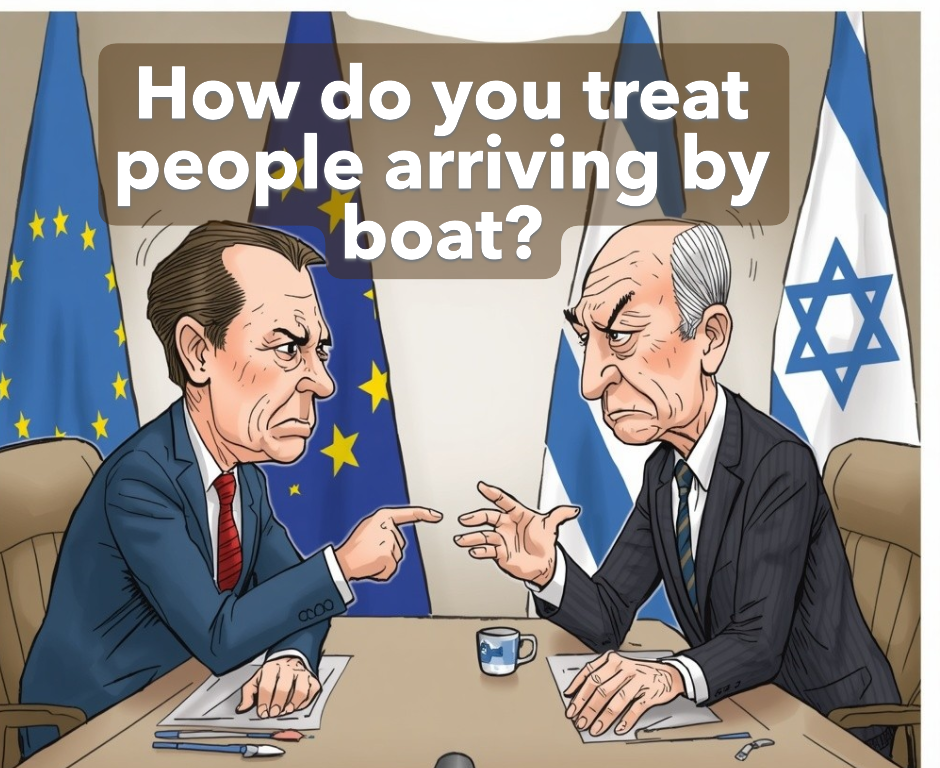
  1. According to human rights law, Palestinians should have the right to leave Gaza if they freely choose and can find another country to accept them. They also have the right to remain in Gaza if they wish, and they cannot be forced to leave their land or homes. But how can we determine whether a decision to leave is free of compulsion in a situation with so much economic and military hardship, and also so politically charged?
  2. Is it inconsistent to condemn U.S. deportations—arguing that people shouldn’t be sent back to dangerous places—while also opposing efforts to let Gazans leave and rebuild their lives elsewhere?
abandoning weapons

Amnesty for Atrocities?

Amnesty for Atrocities?

abandoning weapons

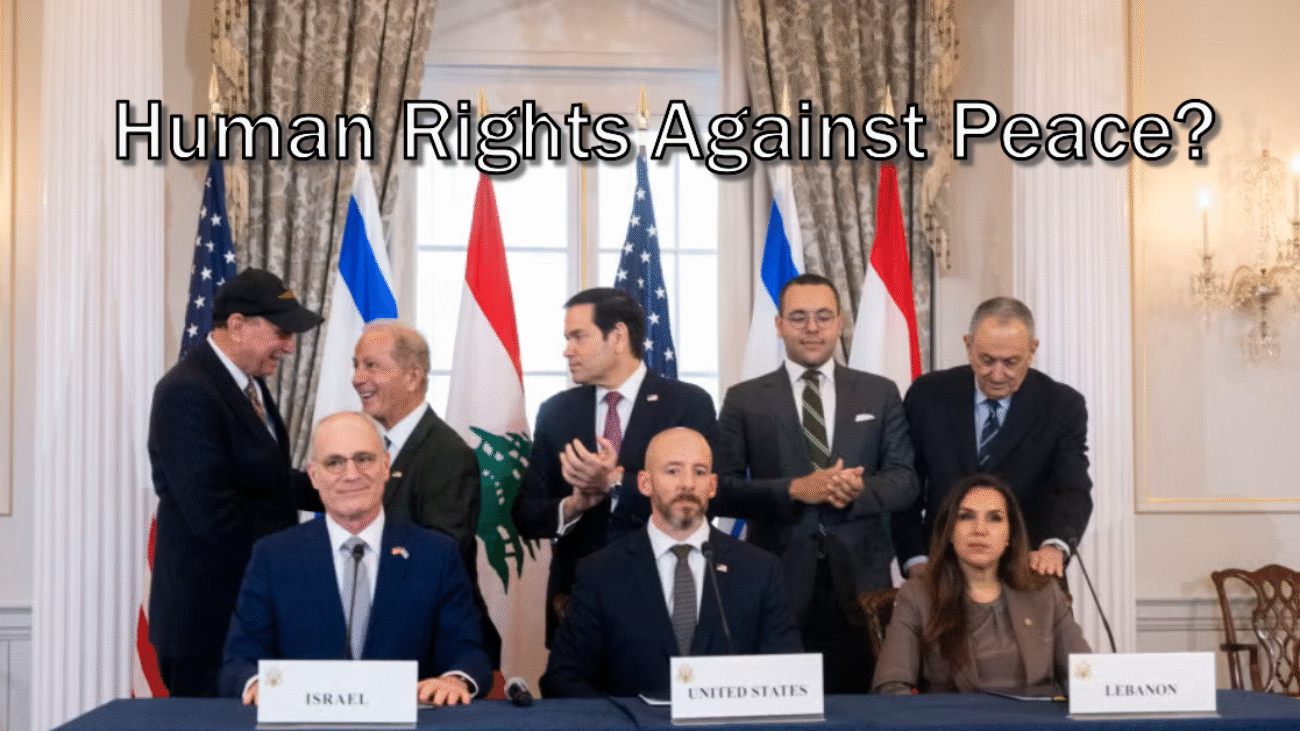
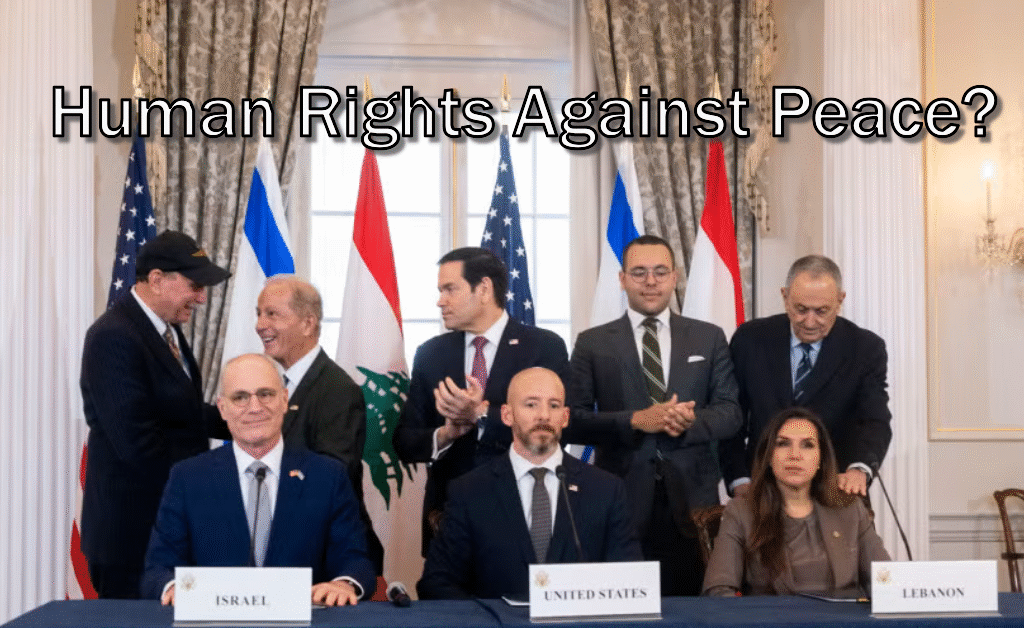
Paragraph 6 of Trump’s peace plan for Gaza states as follows:

Once all hostages are returned, Hamas members who commit to peaceful co-existence and to decommission their weapons will be given amnesty. Members of Hamas who wish to leave Gaza will be provided safe passage to receiving countries.


There does not seem to be any limitation with regards to what Hamas members are eligible to receive amnesty for. This would seem to mean, then, that even Hamas members who are guilty of torture, hostage taking, or other war crimes or crimes against humanity would be eligible for amnesty if they ‘commit to peaceful co-existence and decommission their weapons.’

This does not accord with international law. The Red Cross makes clear that while a government can grant a general amnesty to the members of groups that have rebelled or fought against it, when it comes to atrocity crimes no amnesty is possible. This is because every government has an obligation to prevent, put a stop to, and punish war crimes and crimes against humanity should that be needed. No government, or in this case coalition of governments signing the Gaza peace agreement, can bargain away this obligation. Furthermore, no amnesty is binding on the International Criminal Court, which would maintain jurisdiction and be able to prosecute atrocity crimes regardless.

The problem, of course, is that there is often a tension between justice and peace. On the one hand, peace requires some modicum of justice- any arrangement in which longstanding injustice is entrenched or ignored will not endure. But on the other hand, a single-minded focus on justice will likely get in the way of peace. If the enemy knows it faces prosecution, it will likely refuse to lay down its arms. To actually achieve peace usually requires an element of forgiveness and willingness to let go of trying to right at least some past wrongs.

It is unclear whether any Hamas members will actually try to avail themselves of this amnesty. But it still raises an important question about how far we are willing to go in offering forgiveness.

The case in favor of negotiating a ceasefire arrangement was overwhelming. If Hamas insisted on a blanket amnesty as part of the deal, was agreeing to it the right thing to do? Was it better to make an agreement that ends end suffering in the present, even if it means potentially letting Hamas members responsible for the most heinous crimes permanently evade punishment?

Or are there some crimes that cannot be forgiven, no matter what? Are there some crimes that are worth more fighting, more suffering, and more death in the here and now in order to make sure they are punished? Is amnesty for atrocity crimes actually the more dangerous path, because it increases the chances atrocity crimes will be repeated in the future? I’m interested to hear your thoughts.